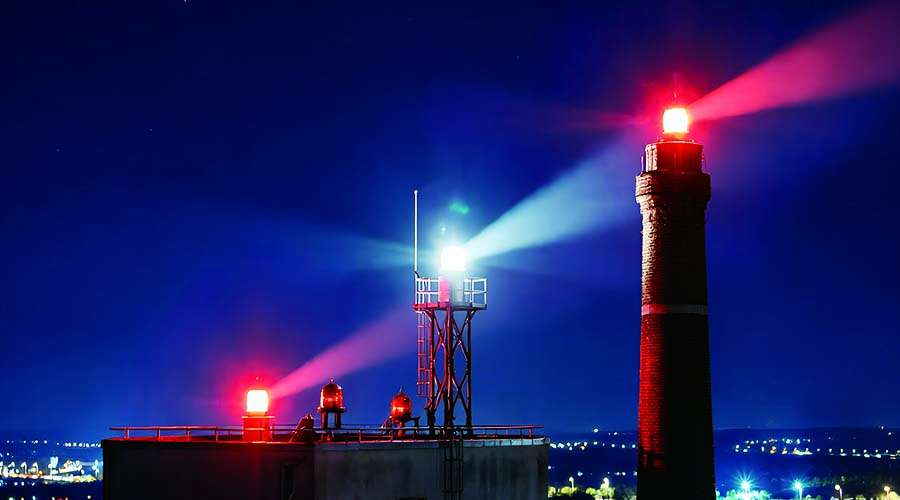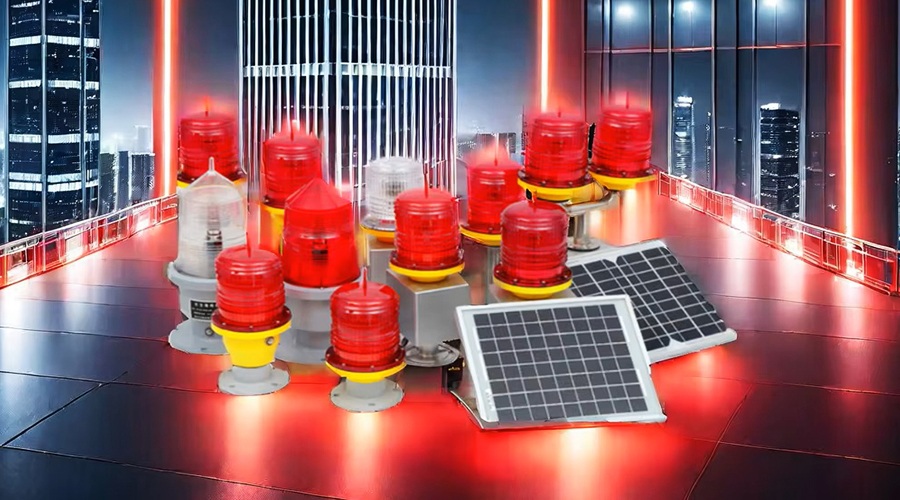
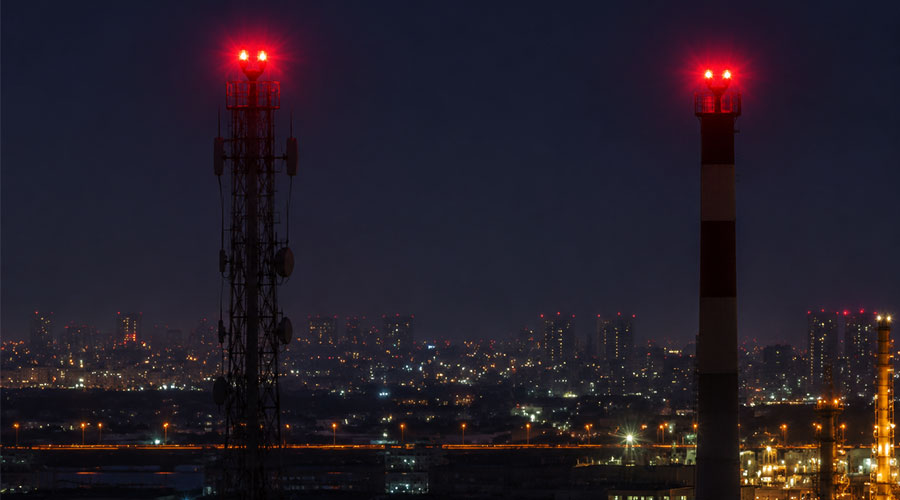
High-rise building safety warnings generally rely on Aviation obstruction lights. In the construction and management of urban high-rise buildings, communication towers, power transmission towers, wind turbines, and facilities around airports, Dual-head obstruction lights are indispensable visual identification markers to ensure aircraft safety at night and in low-visibility weather.
Different countries and international organizations have extremely strict mandatory regulations on the light intensity, luminous color, vertical/horizontal beam spread angle, weather resistance, and fault redundancy capabilities of Obstruction Lights. Among them, global standards represented by the International Civil Aviation Organization (ICAO Annex 14) and the US Federal Aviation Administration (FAA AC 150/5345-43) form the core of project compliance acceptance.
I. Compliance Checklist for Dual-Head Obstruction Lights

When procuring and installing Aviation Obstruction Warning Lights, it is recommended to verify the compliance of obstruction warning lights from the following 5 core dimensions:
1. Photometric & Optical Property Compliance
- Luminous Color: Whether it conforms to the specific wavelength required by regulations (low-intensity/medium-intensity lights usually adopt aviation red light that is steady-burning or flashing at night).
- Light Intensity and Beam Angle: Must possess 360° horizontal omnidirectional light emission capabilities, and the vertical beam spread angle must meet the effective luminous coverage required by standards to ensure high-altitude pilots can clearly identify it from a distance.
2. Electrical Safety & Electromagnetic Compatibility (EMC)
- Surge and Lightning Protection: Outdoor high-rise structures are extremely susceptible to lightning strikes; equipment must be equipped with overvoltage and surge protection.
- Electromagnetic Compatibility (EMC): Obstruction Lights must not cause electromagnetic interference to radio signals of nearby communication towers or airport navigation signals.
3. Extreme Environment Adaptability
- Protection Rating: Feature at least an IP65 protection rating against dust and water to withstand rainstorm weather.
- Weather and Corrosion Resistance: Structural components should use anti-corrosion metals (such as die-cast aluminum with powder coating), and lenses must have UV-Stabilized capabilities to prevent aging and yellowing caused by long-term sunlight exposure.
4. 24/7 Uninterrupted Operation and Fault Redundancy
- Intelligent Light Sensing: Equipped with a photocell sensor that automatically turns on when ambient light drops below a standard threshold (such as at night or on hazy days) and automatically turns off during the day.
- Zero-Interruption Automatic Fault Switching: For unattended or high-risk obstacles, if a single light fails, the system must have the ability to seamlessly switch to the backup light to prevent non-compliance caused by a “blackout.”
II. Why Are Dual-Head Obstruction Lights the Preferred Choice for High Compliance Requirements?
Compared with traditional single-head obstruction warning lights, the core advantage of Dual-head aviation obstruction lights lies in their main/backup redundancy mechanism.
1. Flexible Operating Modes
- Main/Backup Mode: The main light operates normally. When the sensor detects a fault in the main light (such as light source damage or circuit abnormality), the system automatically and seamlessly switches to the backup light within seconds to continue working and outputs an alarm signal.
- Dual-Lighting Mode: Both aviation lights remain steadily lit at the same time without interfering with each other, suitable for working conditions with special superposition requirements for light intensity.
2. Reducing Maintenance and Compliance Risks
High-altitude facilities (such as communication towers over 45 meters tall, tall chimneys) have high maintenance costs and high risks for high-climb operations. The Dual-head obstruction lights structure ensures that even if the main light is damaged, the backup light can take over instantly without requiring immediate dispatch of personnel for emergency high-altitude repairs, thereby avoiding heavy fines from civil aviation authorities and safety accident liabilities due to “extinguished obstruction lights.”
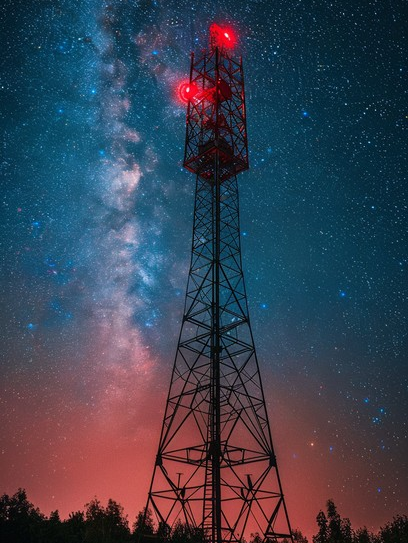
III. Benchmark Compliant Product Solution: YFFY-DL10D LED Dual-Head Obstruction Lights
In the field of low-intensity Dual-head obstruction lights, the YFFY-DL10D Aviation Obstruction Warning Light is a typical representative that perfectly meets the above compliance standards and industrial durability requirements.
This product integrates a high-quality LED light source with an integrated main/backup control system:
- Complies with ICAO / FAA Regulations: Luminous intensity and 360° beam spread angle strictly benchmark against international low-intensity Type A standards.
- Smart Redundancy Switching: Built-in intelligent controller featuring photocell sensing and seamless main/backup switching functions, supporting dry contact remote fault alarm output.
- Industrial-Grade Protection: YFFY’s Aviation obstruction lights generally use UV-resistant polycarbonate lampshades and die-cast aluminum anti-corrosion bases, paired with a bird-spike design to ensure long-life stable operation under extreme climates ranging from -40°C to +55°C.
FAQ
Q1: What is a “Dual-Head Obstruction Light”? What Are its Core Advantages Compared To Single-head Obstruction Warning Lights?
A: Dual-head obstruction lights integrate two sets of independently working light sources and control circuits onto a single mounting base. Their core advantage lies in redundant safety:
- Seamless Fault Switching: When the main light goes out due to reaching the end of its lifespan or accidental damage, the internal control circuit automatically turns on the backup obstruction light within seconds while sending an alarm signal to the Building Automation System (BAS).
- Avoiding Non-Compliance Risks: Aviation regulations impose severe penalties on high-altitude obstacles experiencing “nighttime blackouts.” The dual-head design guarantees that Obstruction Lights still 100% meet civil aviation compliance requirements without needing immediate high-altitude maintenance.
Q2: In Which Scenarios Are Low-intensity Dual-head Obstruction Lights Mandatory or Recommended As a Priority?
A: They are generally suitable for the following scenarios:
- Buildings, communication towers, power towers, or chimneys under 45 meters in height.
- Facilities with extremely high high-altitude maintenance costs or high climb risk factors (such as cross-sea bridge towers, offshore wind turbine towers).
- Rooftops of buildings around airports (Obstacle Free Zone) with extremely high safety requirements for night navigation.
- Serving as top or intermediate auxiliary markers in medium/high-intensity Aviation Obstruction Warning Lights systems.

Q3: What Is The Difference Between the “Main/Backup Mode” and “Dual-Lighting Mode” of Dual-head Obstruction Lights? How To Choose?
A:
- Main/Backup Mode (Service + Standby – Default Recommended): Normally only one light (main light) works, while the other (backup light) is on standby. When the main light fails, the backup light automatically takes over seamlessly. This mode maximizes the overall lifespan of the equipment and reduces energy consumption.
- Dual-Lighting Mode (Service + Service): Both Aviation obstruction lights remain steadily lit at the same time without interfering with each other. It is suitable for scenarios where local regulations or special working conditions require superimposed luminous intensity.
Q4: Do Dual-head Obstruction Warning Lights Require Manual Switching? Can They Work Automatically on Cloudy Days or In Severe Daytime Weather?
A: No manual intervention is required. High-quality Dual-head obstruction lights (including solar series) are equipped with intelligent photocell sensors:
- Automatic Light Control: When ambient illuminance drops to a set threshold (such as at night, during thunderstorms, or in dense fog), the obstruction light turn on automatically.
- Energy-Saving and Eco-Friendly: During the day when sunlight is sufficient, the light automatically turns off to save power and extend LED lifespan.
Q5: When Installing Dual-head Obstruction Lights, How Can Remote Fault Monitoring and Alarm Be Achieved?
A: Industrial-grade Dual-head obstruction lights usually provide a Dry Contact signal output interface.
During installation, you only need to connect this signal line to the local PLC, communication base station Remote Terminal Unit (RTU), or Building Automation System (BAS). Once the main light fails and switches to the backup light, the contact closes/opens, which can immediately trigger audible and visual alarms or SMS notifications at the monitoring center to remind maintenance personnel to schedule a replacement, achieving fully automated unattended monitoring.