
Aviation Obstruction Lighting System
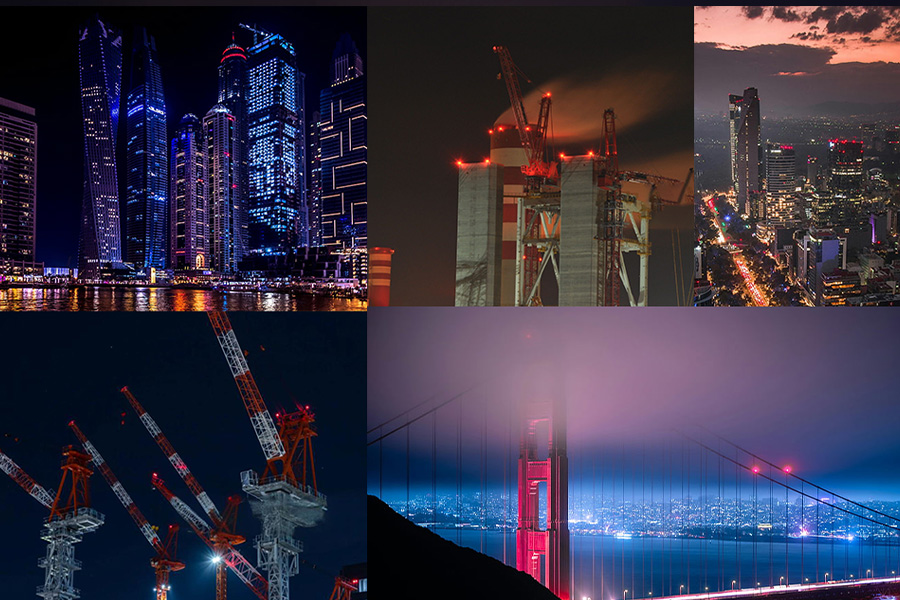
Aviation obstruction lighting systems are essential for marking tall structures — telecom towers, wind turbines, high-rise buildings, chimneys, bridges, and cranes — to protect low-flying aircraft and helicopters from collision hazards, day and night, in all visibility conditions.
Aviation Obstruction Lighting System
Aviation obstruction lighting systems are essential for ensuring the visibility of tall or elevated structures to pilots operating aircraft and helicopters at low altitude. These lighting systems provide a continuous or flashing visual warning to prevent mid-air collisions, especially near airports, low-level flight corridors, and mountainous or offshore terrain — under low-visibility conditions such as fog, haze, heavy rain, and at night.
Typical applications include telecom & radio towers, wind turbine obstruction lights, high-rise building warning lights, chimney lights, bridge lights, crane lights, and offshore platform aviation markers, designed to comply with international standards such as ICAO Annex 14, FAA AC 70/7460-1L, and EASA/national CAA regulations for safe airspace operations.
Aviation Obstruction Lights Application

Telecom & Tower Warning Lights
Telecom & Tower Obstruction Lights are a core part of aviation obstruction lighting systems, designed to mark radio masts, communication towers, and transmission towers for aircraft visibility. These lights ensure telecom infrastructure complies with civil aviation authority height-marking requirements while maintaining reliable operation in harsh outdoor environments.

Wind Turbine Obstruction Lights
Wind Turbine Aviation Warning Lights protect low-altitude aircraft and helicopters near wind farms by marking turbine nacelles and blade tips. As wind energy projects grow taller and move offshore, these lights are increasingly required to include radar-synchronized or aircraft detection lighting (ADLS) to reduce light pollution while maintaining full compliance.

High-Rise Building Warning Lights
Building Warning Lights are installed on the rooftops and highest points of skyscrapers, chimneys, and industrial structures to alert pilots of elevated obstacles in urban and industrial airspace. These systems are engineered for long-term outdoor exposure, corrosion resistance, and minimal maintenance.

Chimney & Smokestack Lights
Chimney Obstruction Lights are engineered to withstand extreme heat, corrosive flue gases, and constant vibration while providing reliable visual warning at industrial sites, power plants, and refineries — locations where structure height and thermal exposure demand specialized lighting design.

Bridge Aviation Warning Lights
Bridge Obstruction Lights mark the towers, cables, and highest structural points of long-span bridges to protect low-flying aircraft and helicopters, particularly near coastal crossings, river deltas, and mountainous terrain where bridges intersect low-altitude flight paths.

Crane & Construction Site Obstruction Lights
Crane Obstruction Lights provide temporary or permanent aviation warning for tower cranes and construction equipment near airports or urban flight corridors, ensuring ongoing construction projects remain fully compliant with aviation safety authorities throughout the build cycle.
Aviation Obstruction Lights Regulation

ICAO Annex 14 Compliant Lights
ICAO Annex 14 Compliant Lights refer to obstruction lighting systems designed in accordance with the International Civil Aviation Organization’s Annex 14 — Aerodromes, which sets the global technical standard for the marking and lighting of obstacles that may hazard air navigation. These standards define light color, intensity, flash characteristics, and mounting positions to ensure global recognition and safety compliance.

FAA AC 70/7460-1L Explained
The FAA Advisory Circular 70/7460-1L is the primary U.S. standard governing obstruction marking and lighting for structures exceeding specified height thresholds, including towers, wind turbines, and buildings near airports. It defines requirements for Low, Medium, and High Intensity obstruction lights (Type A/B/C/D/E/F), red vs. white lighting configurations, and flash synchronization — essential technical guidelines every U.S. project developer must follow before FAA determination approval.

Beyond ICAO and FAA, individual civil aviation authorities — including EASA (Europe), CAAC (China), CASA (Australia), and other national regulators — issue supplementary obstruction lighting requirements. These regional variations affect light color, mounting height intervals, and flash rate, making local compliance verification essential before installation.

Aviation Obstruction Lights Country Approval Guides cover the specific regulations and certification processes required by aviation authorities in different countries. While ICAO Annex 14 sets the global baseline, national authorities often add local requirements for photometric testing, product certification, and installation documentation before project sign-off.
Aviation Obstruction Lighting Solutions
The Low, Medium & High Intensity Obstruction Lighting Solution provided by YFFY Lights ensures full compliance across structure heights from under 45m to over 150m, in accordance with ICAO Annex 14 and FAA Type A/B/C/D/E/F classifications. Key features include high-efficiency LED optics, dual red/white configurations for day and night operation, and intelligent controllers with photocell auto-dimming. Benefits include reduced energy consumption, extended service life exceeding 50,000 hours, and seamless integration with structural monitoring systems. Ideal for telecom towers, wind turbines, and high-rise buildings requiring layered intensity marking.
Solar Aviation Obstruction Light Solution
YFFY Lights’ Solar Aviation Obstruction Light Solution uses high-efficiency solar panels to charge integrated batteries during daylight, powering LED obstruction lights automatically at night or in low-visibility conditions. Designed for remote towers, offshore wind turbines, and locations without reliable grid power, the system features IP66/IP67 waterproofing, corrosion-resistant housings, and fully autonomous operation. This eco-friendly configuration significantly reduces installation costs and cabling requirements, ideal for remote infrastructure and hard-to-access sites.

For multi-structure projects such as wind farms, tower clusters, and long-span bridges, YFFY Lights’ GPS-Synchronized Obstruction Lighting System ensures all obstruction lights flash simultaneously across the entire site, meeting synchronization tolerance requirements set by ICAO and FAA. Centralized monitoring detects lamp failures in real time and sends automatic alerts, minimizing compliance risk and reducing on-site maintenance visits.

The Aircraft Detection Lighting System (ADLS), increasingly required for wind farm projects, uses radar or transponder-based aircraft detection to activate obstruction lights only when aircraft are present in the vicinity, reducing light pollution for surrounding communities while maintaining full aviation safety compliance. YFFY Lights offers ADLS-compatible obstruction lighting for wind energy developers pursuing next-generation compliance standards.

Engineering Resources

Aviation Obstruction Lights Installation Guides
The Aviation Obstruction Lights Installation Guides provide comprehensive step-by-step instructions for correctly positioning, wiring, and mounting obstruction lights on towers, buildings, and wind turbines in compliance with international aviation regulations. Guides cover optimal mounting height intervals, waterproofing techniques, and integration with structural lightning protection systems, supporting both EPC contractors and maintenance teams.

Aviation Obstruction Lights Maintenance Manuals
The Aviation Obstruction Lights Maintenance Manuals provide detailed guidance for inspection intervals, LED module replacement, battery health checks, and troubleshooting of controller faults. Designed for facility managers and maintenance contractors, these manuals help extend equipment lifespan, prevent compliance lapses, and reduce total cost of ownership.
Frequently Asked Questions
An aviation obstruction light (also called an aircraft warning light or obstacle light) is a red or white LED/xenon signal light mounted on tall structures — such as towers, wind turbines, buildings, chimneys, and bridges — to warn pilots of the structure’s presence and height, as required by ICAO, FAA, and national civil aviation authorities.
Light intensity classification (Type A/B/C/D/E/F under FAA guidance, or Low/Medium/High under ICAO Annex 14) is determined primarily by structure height, proximity to airports, and terrain context. Structures above certain height thresholds, or located near approach/departure flight paths, typically require medium or high intensity white strobes in addition to red lighting.
Yes. Wind turbines typically require obstruction lights on the nacelle, and in many jurisdictions, GPS-synchronized flashing across the entire wind farm is mandatory. Newer projects increasingly adopt Aircraft Detection Lighting Systems (ADLS) to reduce nighttime light pollution while maintaining full compliance.
Yes. Solar-powered obstruction lighting is widely used for remote towers, offshore structures, and sites without reliable grid access. A properly sized solar-battery system, calculated for local sunlight conditions, ensures uninterrupted operation throughout the year, including winter and low-sunlight periods.
Reputable suppliers should be able to provide ICAO Annex 14 and FAA AC 70/7460-1L compliance documentation, third-party photometric test reports, IP66/IP67 waterproof ratings, and ISO 9001 manufacturing certification. Always request country-specific approval documents for your project location.