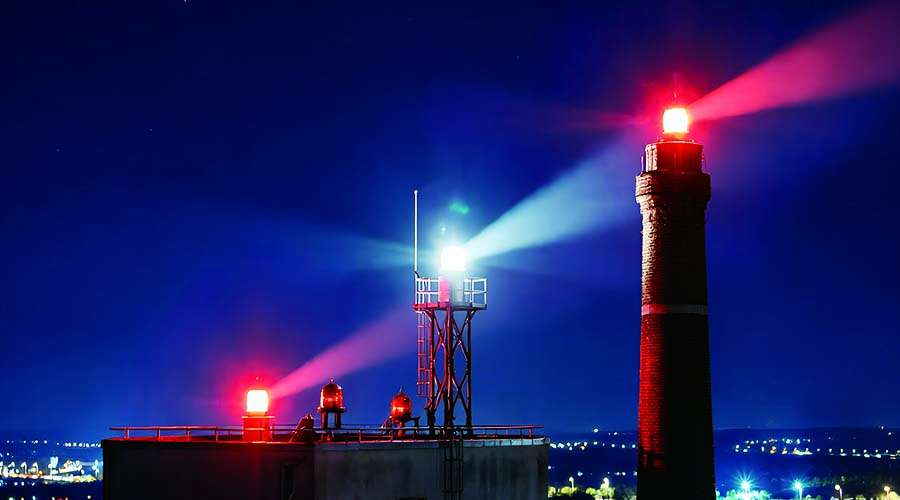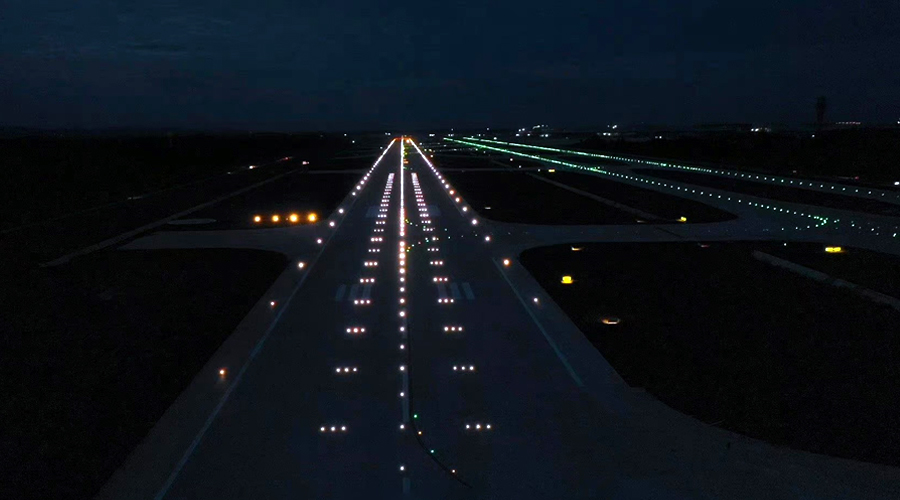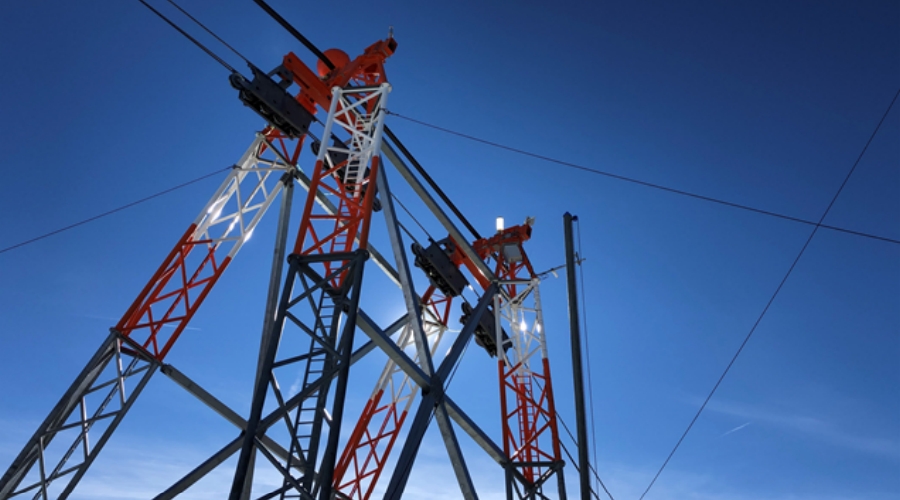
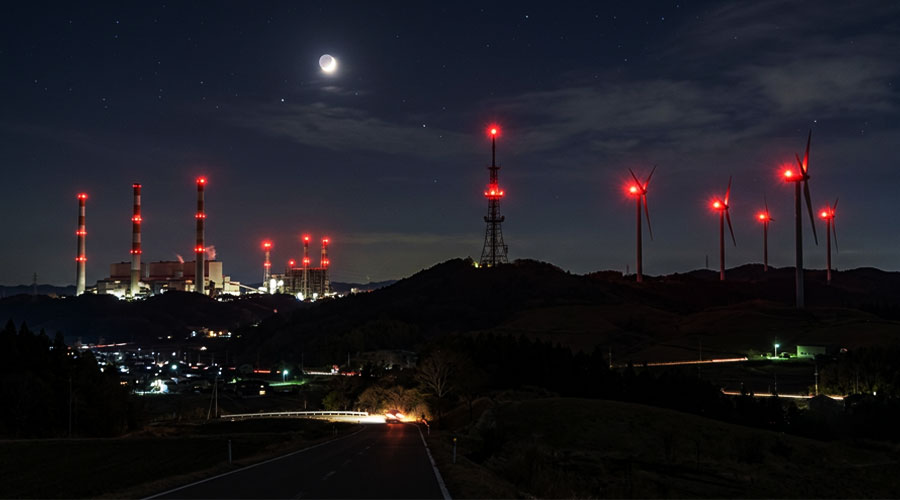
In the construction and operation of high-altitude facilities such as power towers, communication towers, high-rise buildings, and industrial chimneys, installing compliant and reliable Medium Intensity Type B obstruction lights is not only a mandatory requirement to ensure low-altitude flight safety, but also a critical step for projects to pass engineering acceptance by civil aviation authorities or local construction departments.
If high-altitude structures are not equipped with compliant nighttime anti-collision warning lights according to regulations, they may face legal risks such as suspension of work for rectification and heavy fines, and pose severe safety hazards to night-flying helicopters, drones, and other aircraft at low altitudes.
For engineering contractors, construction teams, and project procurement personnel, given that high-altitude operations involve extremely high labor costs and high construction difficulty, choosing an aviation obstruction light that is accurately selected, durable in quality, and easy to install is particularly important.
This article will sort out the core application scenarios and construction key points of Medium Intensity Type B aviation obstruction lights for you, and answer the most common practical questions in engineering procurement.
1. Application Scenarios & Compliance Requirements for Medium Intensity Type B Obstruction Lights
According to the standards and specifications of the International Civil Aviation Organization (ICAO Annex 14) and the Federal Aviation Administration (FAA):
1) Applicable Height:
Medium Intensity Type B aviation obstruction lights are mainly used on the top of buildings or structures with a height between 45 meters and 150 meters (if exceeding 150 meters, they usually need to be used in conjunction with high intensity or multi-tier marking obstruction warning lights).
2) Light Characteristics:
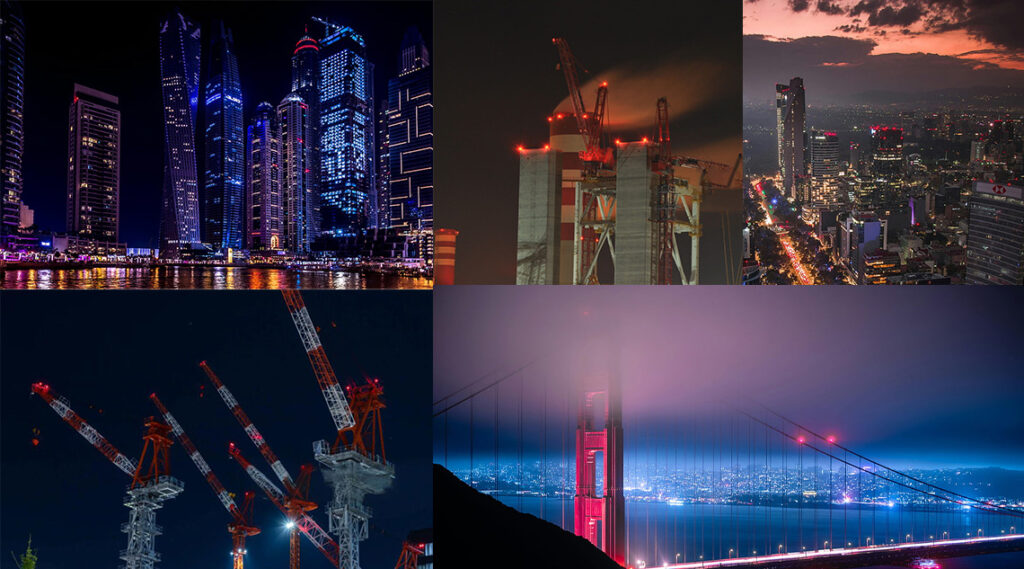
High-altitude obstruction lights emit red flashing light at night (standard effective intensity is 2,000 cd ±25%), which can provide highly recognizable visual warnings in severe weather and at night.
3) Typical Applications:
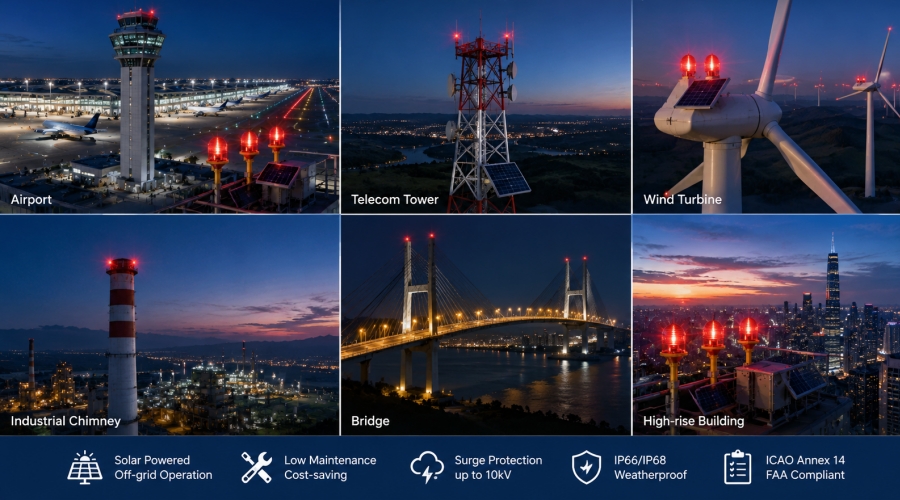
- Communication towers and microwave towers
- Wind turbines (wind farms)
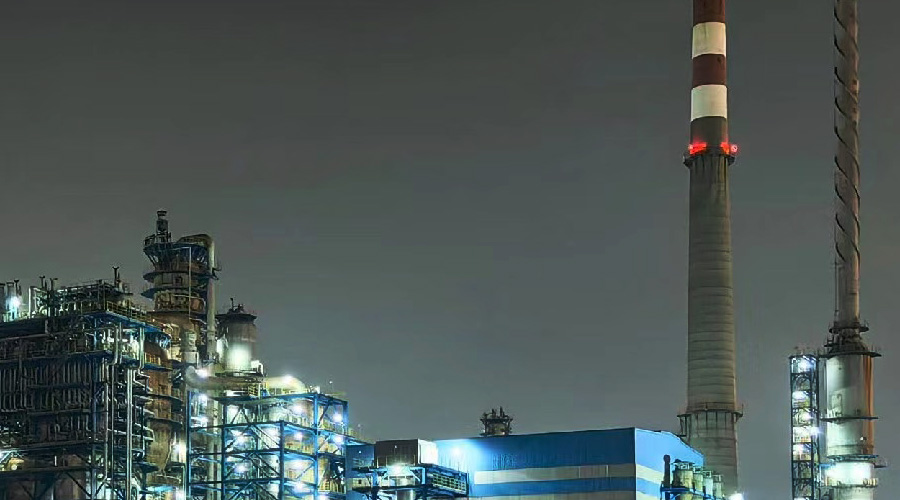
- Industrial chimneys and cooling towers
- High-rise commercial and residential buildings
- Large construction tower cranes
2. Installation & Wiring Guide for Medium Intensity Type B Obstruction Lights
Medium Intensity obstruction lights are usually installed in harsh high-altitude environments, and the construction process and details directly affect the service life of aviation obstruction lights:
1. Physical Fixing Before Installation
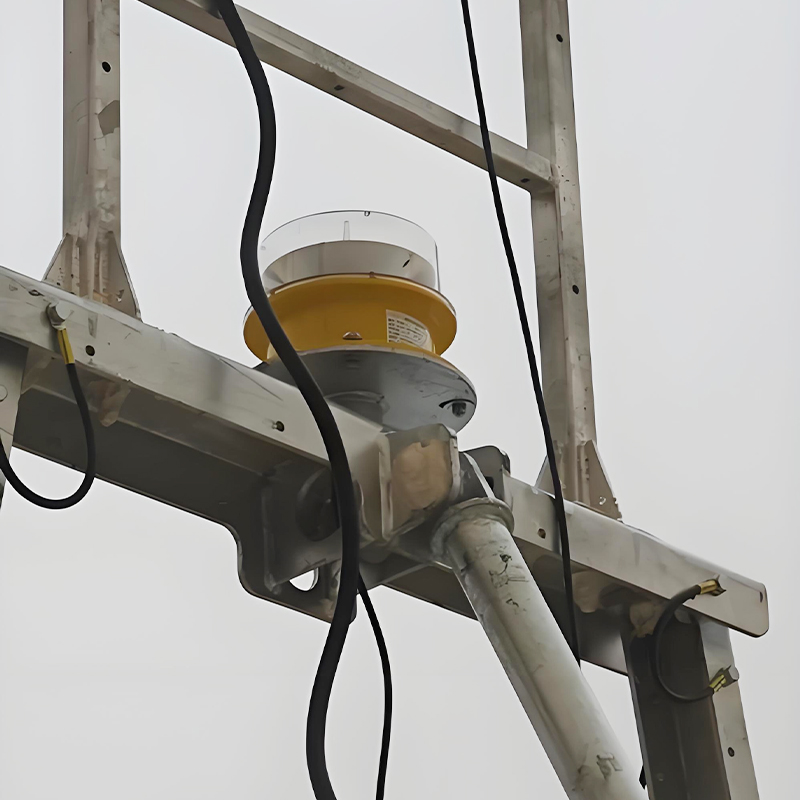
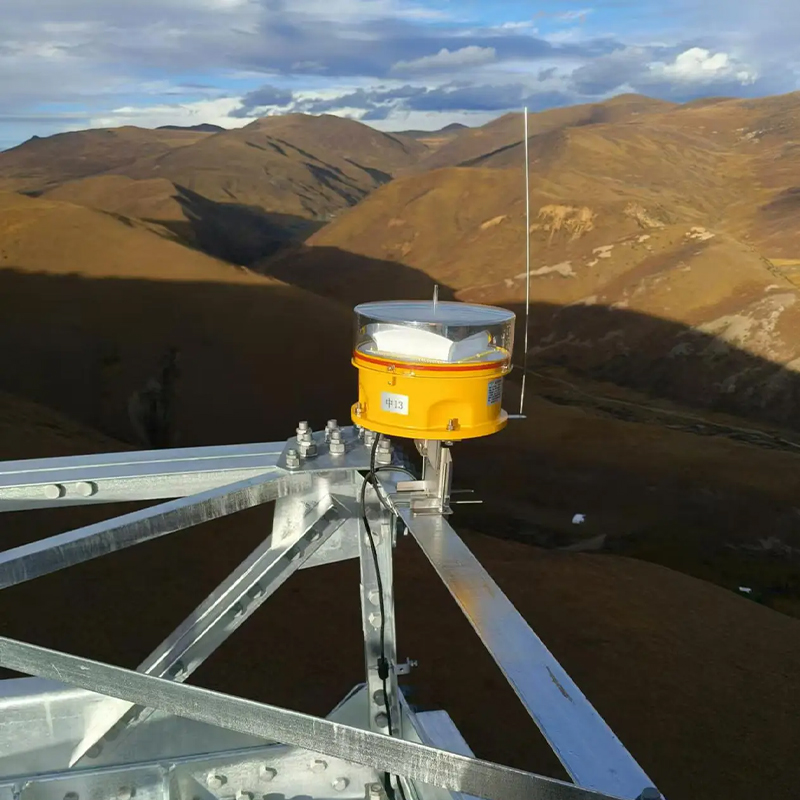
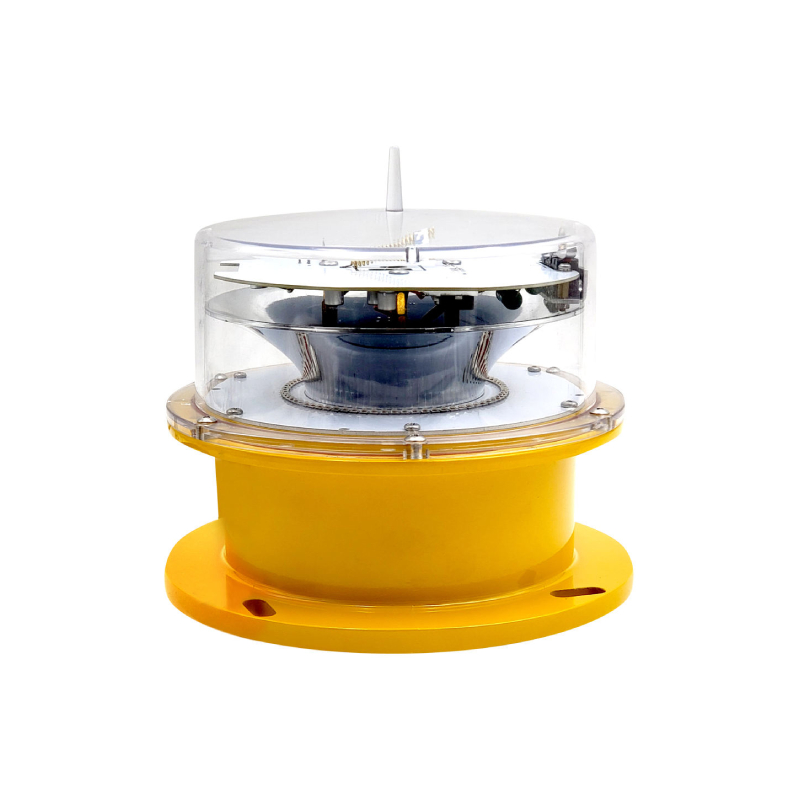
- Base Fixing: For example, the base of the YFFY-MB-01L Medium Intensity Type B Obstruction Lights usually adopts standard mounting holes (such as 4-M10/M12 bolts). When fixing at high altitudes, please be sure to use stainless steel lock nuts and spring washers to prevent bolts from loosening and falling off due to long-term wind vibration.
- Lightning Protection: Although industrial-grade aviation obstruction lights have built-in lightning surge protection modules, when installing at high altitudes, it is still necessary to ensure that the base of the aviation obstruction warning light maintains good electrical grounding with the lightning protection tape (rod) of the main tower/building.
2. Wiring and Power Supply Preparation
- Power Supply Voltage: Before construction, verify the on-site power supply scheme (such as AC100-240V universal mains power, or DC12V/24V/48V solar/battery power supply).
- Waterproof Sealing: Use matching waterproof cable glands and ensure they are tightened after wiring is completed to prevent rainwater from seeping into the lamp body along cable capillary action.
3. Automatic Light Control & Synchronization Control
- Automatic Light Control Sensor: Qualified Medium Intensity obstruction warning lights are equipped with built-in high-sensitivity photosensors, which can automatically turn on (at night) and off (during the day) according to ambient light, without the need for manual switches.
- Multi-Light Synchronous Flashing: When a high-altitude tower or building cluster requires multiple lights to flash simultaneously, aviation obstruction warning lights with signal line synchronization or wireless GPS synchronization function can be selected to ensure neatness and aesthetics of the engineering project.
3. Engineering Procurement Practical FAQ
Q1: If Our Project Site Is In A Remote Area Without On-Site Mains Electricity (AC Power), How Can We Solve The Power Supply Problem?
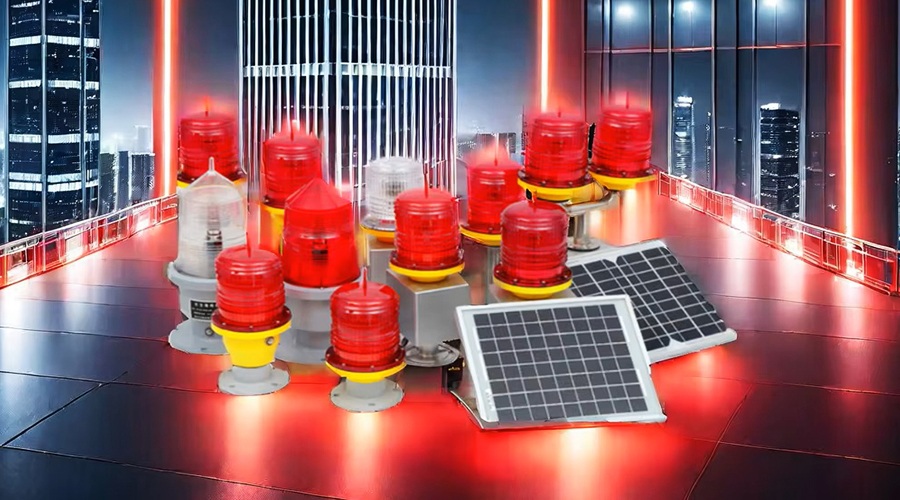
A: A complete solar aviation obstruction light power supply system supporting solution can be adopted. For Medium Intensity Type B obstruction lights, YFFY Lights can accurately match solar panels of suitable power and long-life lithium battery components according to the sunlight conditions at your project location to achieve 24/7 autonomous power supply.
Q2: Can The YFFY-MB-01L Medium Intensity Lights Withstand Harsh Environments In High-Altitude Coastal Areas Or Extremely Cold Regions?
A: Yes. Qualified industrial-grade Medium Intensity Type B aviation obstruction lights adopt high-strength anti-UV polycarbonate (PC) lampshades and anti-corrosion shell surface treatments, with a protection rating reaching IP66/IP67. They feature excellent waterproof, dustproof, salt spray resistance, and impact resistance performance, and can work stably in extreme temperature differences from -40°C to +55°C.
Q3: Labor Costs For Replacing Lights At High Altitudes Are Extremely High. How Long Is The Service Life Of Medium Intensity Type B Aviation Lights?
A: Currently, mainstream high-quality products use high-efficiency industrial-grade LED light sources paired with optimized heat dissipation design. The theoretical lifespan of the LED light source can reach 100,000 hours (about 10 years). Compared with traditional light sources, it can significantly reduce later climbing maintenance and replacement costs.
Q4: If We Need Bulk Procurement Or Customized Voltage/Mounting Brackets, What Is The Delivery Lead Time?
A: As a source factory and professional supplier, we support customizing voltages (such as DC48V for telecom base stations), special mounting brackets, or power distribution control boxes according to the specific engineering requirements of customers. Regular samples or small-batch orders can be shipped quickly, and large-batch engineering orders have stable production capacity guarantee.
Ensuring the safety of high-altitude facilities is not only about engineering compliance, but also about the safety of life and property.
If you are looking for a cost-effective and reliable Type B Medium Intensity Lights, we recommend learning about our flagship product: YFFY-MB-01L Medium Intensity Type B Aviation Obstruction Lights. Relying on reliable weatherability, low power consumption design, and convenient installation methods, it has been widely used in various high-altitude engineering projects.
If you need to obtain product quotes, technical parameters, and supporting solutions for aviation obstruction warning lights, please feel free to contact our professional team at any time!