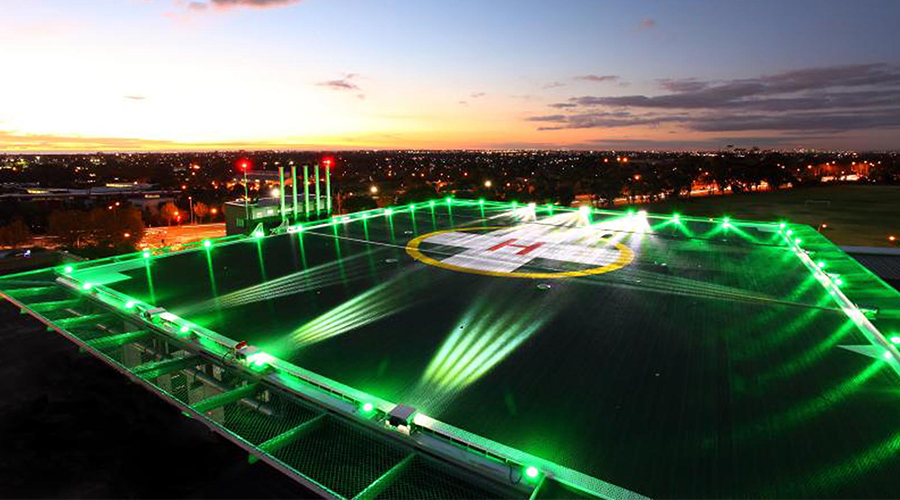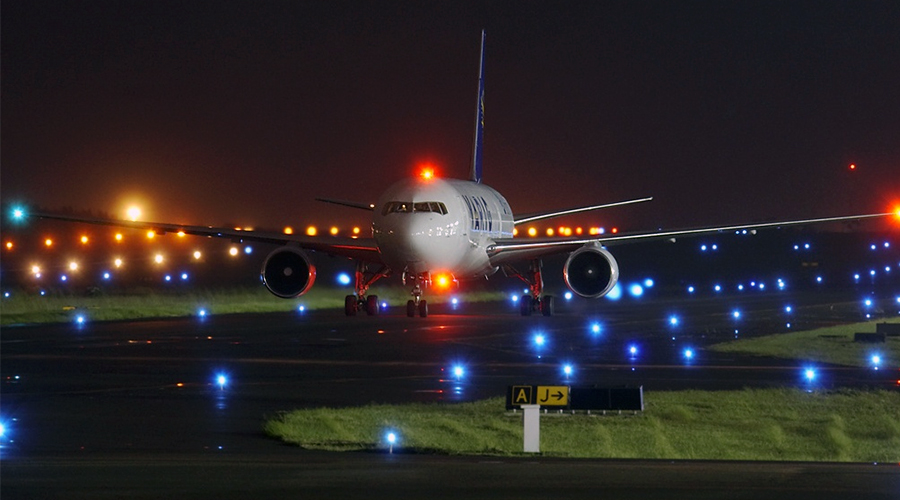
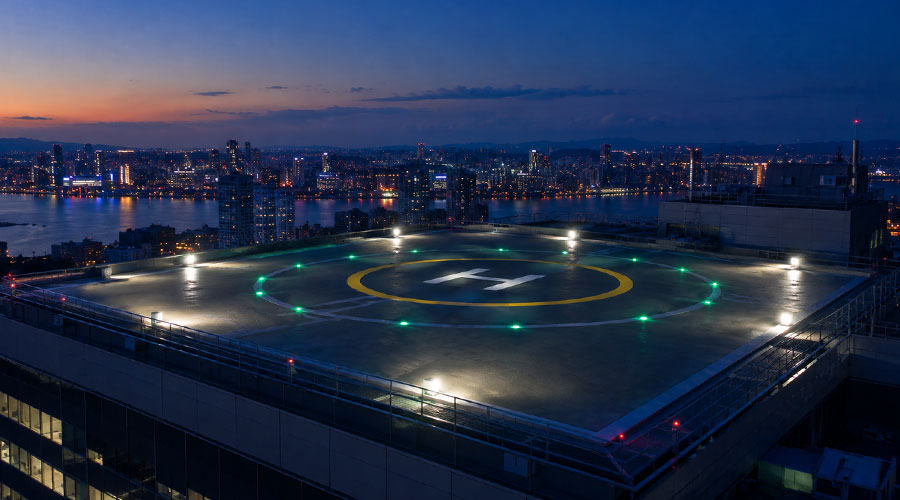
Heliport floodlighting plays an important role in providing clear illumination for helicopter landing areas, especially during nighttime operations and low-light conditions.
Unlike general outdoor floodlights, heliport lighting needs to provide sufficient surface illumination while minimizing glare that could affect pilots during approach, landing, or departure.
When selecting a heliport floodlight, project teams should consider more than just wattage or brightness. The heliport layout, illuminated area, beam distribution, mounting position, environmental conditions, and compatibility with other heliport lighting equipment can all affect the final lighting performance.
Here are eight important factors to consider before choosing a floodlight for a heliport or helipad project.
1. Lighting Purpose & Application Area
The first step is to determine exactly what area the floodlight needs to illuminate. Heliport floodlighting may be used to provide illumination for areas such as:
- TLOF (Touchdown and Lift-Off Area)
- FATO (Final Approach and Take-Off Area)
- Helicopter parking areas
- Aprons and adjacent operational areas
- Elevated or rooftop heliports
- Large offshore or platform landing areas
Different applications may require different lighting arrangements. A small rooftop helipad, for example, may have very different lighting requirements from a large platform apron.
Before selecting a floodlight, confirm the area that needs to be illuminated and how the lighting will work together with perimeter lights, approach lights, beacons, or other heliport lighting equipment.
2. Illumination Level
Illumination is one of the most important factors when selecting a heliport floodlight.
Illumination is generally expressed in lux (lx) and describes how much light reaches a surface. The required level depends on the application, heliport layout, surrounding conditions, and applicable standards or project specifications.
A floodlight that is simply described as “bright” may not provide the right illumination across the required landing or apron area. When evaluating a floodlight, consider:
- Required illumination level
- Size of the illuminated area
- Distance between the helipad light and the surface
- Mounting height
- Beam distribution
- Number and arrangement of floodlights
For project applications, the target illumination should be confirmed according to the applicable heliport design requirements rather than selected based only on LED wattage.
3. Light Intensity and Beam Distribution
Light intensity and beam distribution determine how effectively the helipad floodlight delivers light to the target area.
A floodlight with high power does not automatically provide better coverage. If the beam is too narrow, some areas may remain poorly illuminated. If the beam is too wide, light may be unnecessarily distributed outside the target area.
Therefore, look at the overall optical design rather than wattage alone. Important specifications may include:
- Light intensity
- Beam angle
- Beam distribution
- Light output
- Mounting distance
- Target coverage
The optical characteristics should match the heliport layout and the intended mounting position.
4. Glare Control
Glare is a particularly important consideration in heliport floodlighting. Excessive or poorly directed light can create unwanted visual interference for pilots, especially when floodlights are installed close to the approach or departure area.
A suitable floodlighting system should provide adequate surface illumination without creating unnecessary direct glare. When evaluating a helipad floodlight, consider:
- Light direction
- Mounting angle
- Beam distribution
- Distance from the landing area
- Potential light spill
- Reflection from the landing surface
The objective is not simply to maximize brightness. The lighting should illuminate the required area while keeping unwanted light away from the pilot’s line of sight.

5. Mounting Position and Installation Method
The location of the floodlight can have a significant effect on its performance.
Heliport floodlights may be installed on structures around the landing area, depending on the heliport design and available mounting locations. Before purchasing, check:
- Mounting type
- Mounting dimensions
- Installation height
- Available installation space
- Adjustment angle
- Cable routing
- Access for maintenance
For elevated or rooftop heliports, available installation space may be limited. The floodlight should therefore be compatible with the existing structure and positioned so that it can provide the required coverage without interfering with helicopter operations.
6. Environmental Protection & Durability
Heliport lighting equipment is often exposed to rain, wind, dust, sunlight, temperature changes, and other outdoor conditions.
For outdoor heliport applications, environmental protection is therefore an important part of product selection. Consider specifications such as:
- IP rating
- Operating temperature
- Housing material
- Corrosion resistance
- Mechanical durability
- UV resistance
- Expected service life
Offshore platforms and coastal heliports may require additional consideration because of salt spray, humidity, and corrosive environments.
Selecting equipment designed for the actual installation environment can help reduce maintenance requirements and improve long-term reliability.

7. Power Supply & Energy Efficiency
The power supply should also be considered during the early project stage. A heliport floodlight may be integrated into an existing lighting system, so its electrical specifications should be compatible with the project’s power supply and control system. Check:
- Rated power
- Input voltage
- Power consumption
- Frequency
- Wiring requirements
- Control method
- Compatibility with the existing lighting system
LED technology is widely used for outdoor lighting because it can provide efficient illumination with relatively low power consumption and a long service life.
However, energy efficiency should be evaluated together with the actual illumination performance rather than used as the only selection criterion.
8. Compatibility With the Complete Heliport Lighting System
A airport floodlight is only one part of a complete heliport lighting system. Depending on the project, other lighting equipment may include:
- Perimeter lights
- Approach lights
- Heliport identification beacons
- Taxiway lights
- Aviation obstacle lights
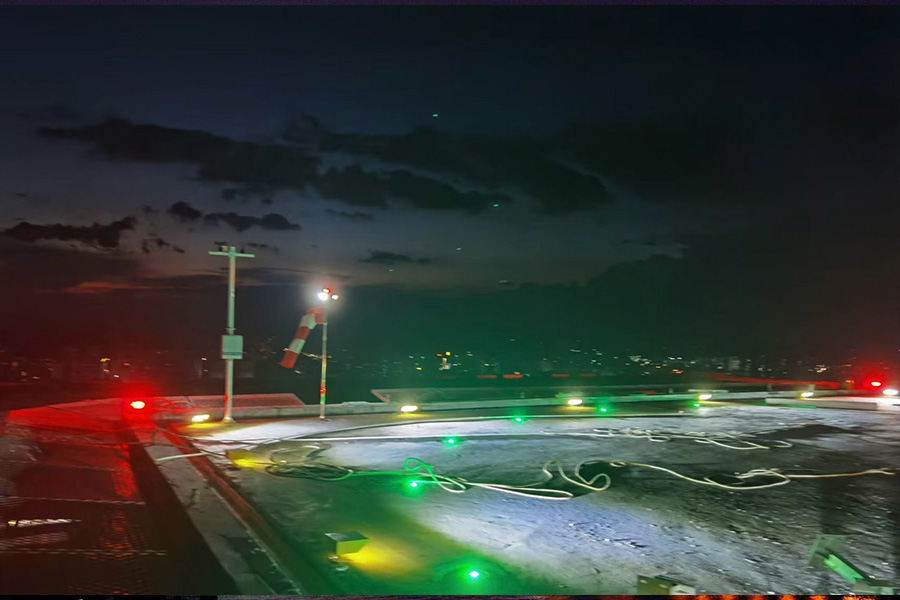
- Windsock lighting
The helipad floodlight should work as part of the overall lighting arrangement rather than being considered as an isolated product.
Before ordering, confirm the required lighting functions, installation locations, electrical specifications, and applicable standards for the complete heliport.

YFFY Heliport Combination Floodlight
The YFFY-HP/F Heliport Combination Floodlight is designed for heliport applications where both surface illumination and perimeter lighting functions are required.
It uses an LED light source and provides a white, steady light for applications including surface heliports, elevated heliports, and large platform apron areas.
Its directional lighting design allows the light to be positioned toward the required area, helping provide effective illumination while reducing unnecessary glare.
For projects requiring a dedicated heliport floodlighting solution, the YFFY-HP/F can be considered as part of the overall heliport lighting system.
Frequently Asked Questions
1. What Is a Heliport Floodlight?
A heliport floodlight is a lighting fixture designed to illuminate the surface or operational areas of a heliport or helipad. It is different from perimeter lights or beacons, which serve other lighting functions.
Why Is Glare Control Important in Heliport Floodlighting?
Glare can create unwanted visual interference for pilots during helicopter approach, landing, or departure. Floodlights should therefore provide sufficient illumination while minimizing unnecessary direct or reflected light.
2. What Is the Difference Between Lux and Candela?
Lux measures the amount of light reaching a surface, while candela measures luminous intensity in a particular direction. Both can be relevant when evaluating heliport lighting, but they describe different aspects of light performance.
3. How Many Floodlights Does a Helipad Need?
There is no universal number for every helipad. The required quantity depends on the heliport size, layout, mounting positions, beam distribution, required illumination, and applicable project requirements.
4. Can Heliport Floodlights Be Used on Rooftop Helipads?
Yes. Floodlights can be used for elevated and rooftop heliport applications when their mounting arrangement, lighting distribution, environmental protection, and other specifications are suitable for the project.
5. What Should I Provide When Requesting a Heliport Floodlight Quotation?
Useful information includes the heliport dimensions, illuminated area, mounting position and height, required illumination, power supply, environmental conditions, and applicable standards or project specifications. Providing these details helps suppliers recommend a suitable configuration.