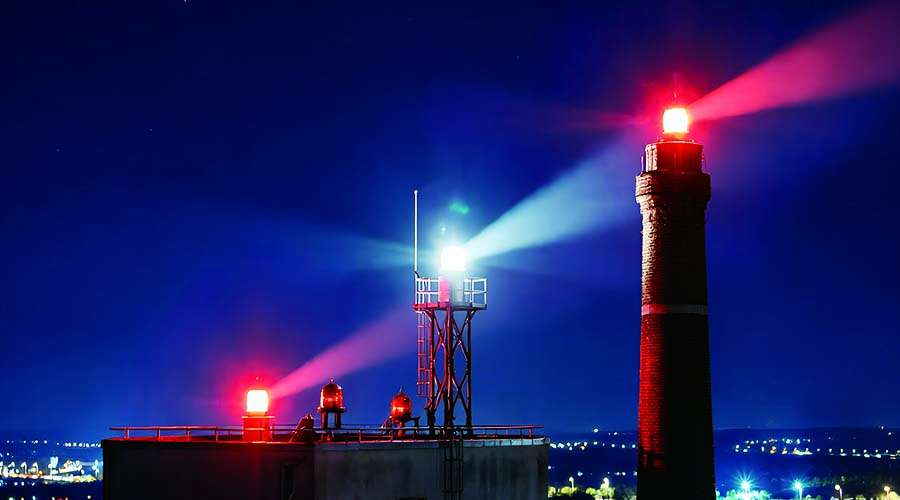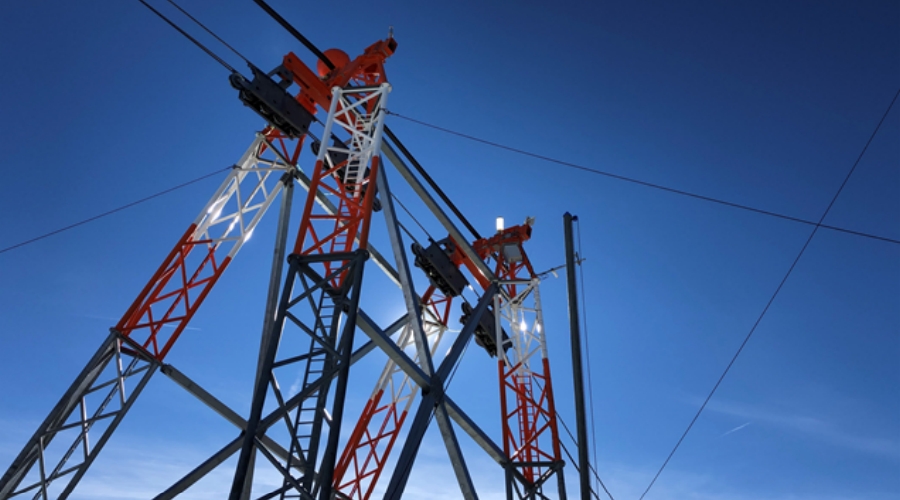
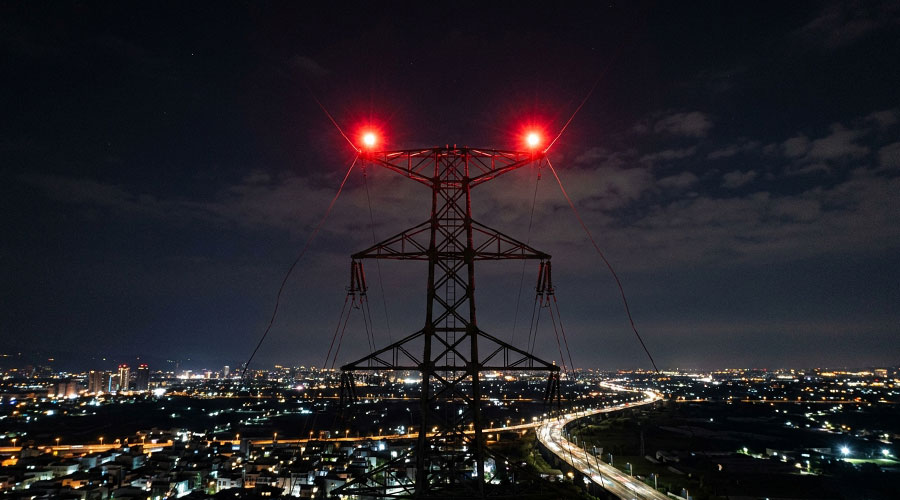
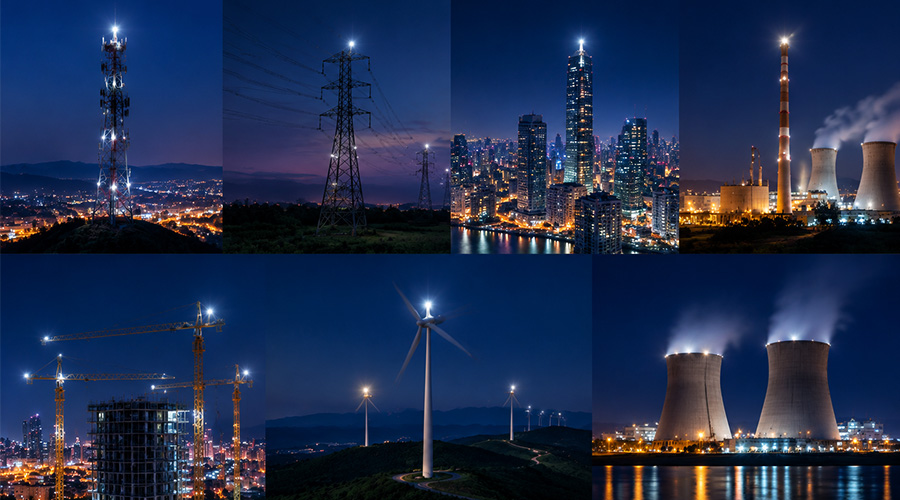
For tall structures such as communication towers, industrial chimneys, wind turbines, and high-rise buildings, Obstruction Lighting helps make the structure visible to aircraft and supports aviation safety requirements. But when selecting dual aviation obstruction lights, a common question is: Why use two lights instead of one?
A dual-head configuration is not simply about producing more light. In many projects, the two lighting units are designed to provide additional operational redundancy, helping maintain obstruction marking when one light experiences a fault. The actual lighting configuration, intensity, flashing mode, and installation arrangement should always be determined according to the structure, location, and applicable aviation requirements.
This article explains why dual obstruction lights are used, how they differ from single-head systems, where they are commonly applied, and what to consider before choosing a medium intensity obstruction light for a tower project.
What Are Dual Obstruction Lights?
Dual aviation obstruction lights are aviation warning light systems that use two lighting units in one configuration.
Depending on the product and control system, one lighting unit may serve as the primary light while the other functions as a standby light. If the primary unit experiences a fault, the standby unit can maintain the required obstruction marking when the system is configured for automatic changeover. This provides an additional level of operational redundancy compared with a single-head obstruction light.
Dual configurations are commonly considered for structures where continuous or highly reliable obstruction marking is important, including:
- Communication towers
- Radio and broadcast towers
- Industrial chimneys
- High-rise buildings
- Wind turbines
- Bridges and elevated structures
- Utility and power infrastructure
- Other tall structures subject to aviation obstruction marking requirements
The exact configuration should be based on the applicable aviation authority requirements and the project’s technical specifications.
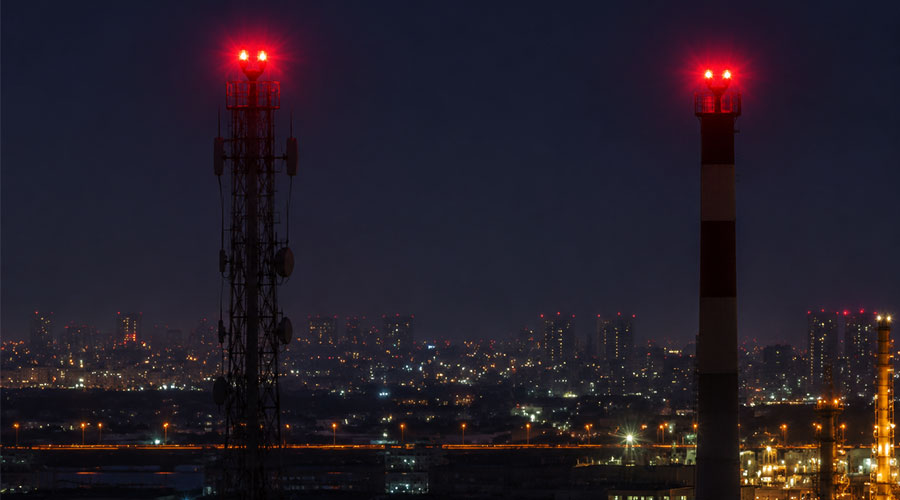
Why Use Two Lights on a Tower?
1. Additional Lighting Redundancy
The main reason to consider a dual-head system is redundancy. With a single-head system, a failure of the only light can result in a loss of obstruction marking at that position until the problem is identified and repaired.
A dual system provides another lighting unit within the same configuration. For products equipped with automatic changeover, the standby light can take over if the primary light fails. This can be particularly useful for towers and other structures where access for inspection or maintenance is difficult.
However, dual lighting should not be interpreted as automatically satisfying every local aviation requirement. The required configuration depends on the project and the applicable regulations.
2. Better Operational Reliability
For a communication tower in a remote location, for example, maintenance personnel may not be able to reach the site immediately after a lighting fault. A dual obstruction light can reduce the impact of a single light failure by providing a backup lighting source. This can help project owners and maintenance teams improve the operational availability of the obstruction lighting system.
For critical infrastructure, the question is therefore not only: “Is the light bright enough?” It is also: “What happens if the light stops working?”
This is one reason dual obstruction lights can be considered during the planning stage of a tower lighting system.
3. Suitable for Tall and Critical Structures
Tall structures can create aviation hazards because they may extend into areas used by aircraft.
Depending on the structure’s height, location, surrounding terrain, and applicable regulations, different types and levels of obstruction lighting may be required.
Medium intensity lights are commonly used for a range of tall-structure applications, but the correct light type should not be selected based on height alone. Project teams may also need to consider:
- Structure height
- Structure shape
- Location
- Nearby obstacles
- Aircraft traffic environment
- Required visibility
- Lighting levels
- Flashing or steady-light requirements
- Local aviation authority requirements
For example, FAA guidance includes specific configurations for obstruction lighting, including dual medium-intensity lights systems for certain applications.
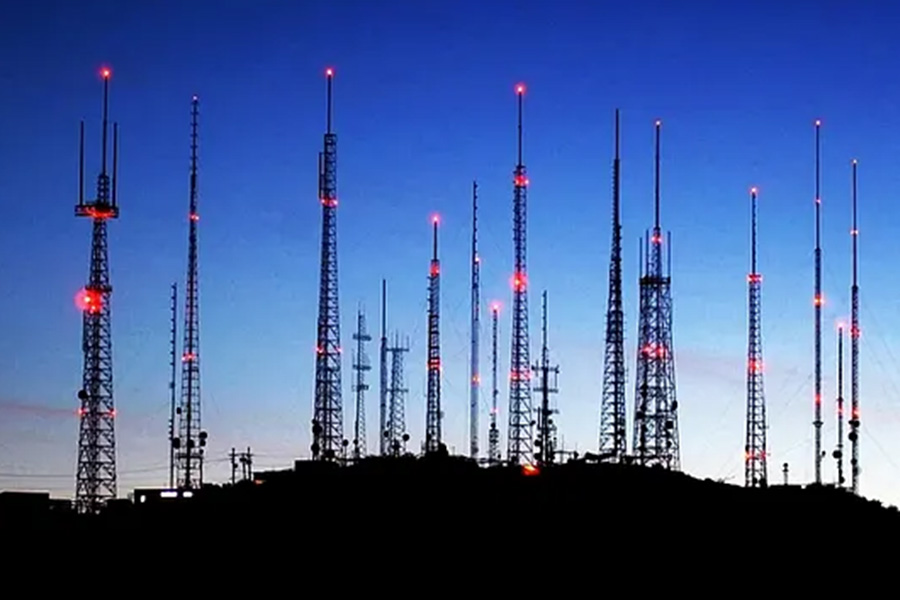

Single Obstruction Lights vs. Dual Obstruction Lights
The difference between single and dual systems is mainly related to system configuration and redundancy, rather than simply the amount of light produced.
| Feature | Single-Head Aviation Obstruction Lights System | Dual-Head Aviation Obstruction Lights System |
|---|---|---|
| Lighting units | One | Two |
| Backup capability | Limited | Additional backup capability |
| Fault tolerance | Lower | Higher |
| Maintenance consideration | One light source | Primary and standby configuration |
| System complexity | Simpler | More integrated |
| Typical use | Depending on project requirements | Projects where additional redundancy is required or preferred |
A dual-head system doesn’t necessarily mean that two lights should always operate at the same time. The operating logic depends on the product design and project requirements.
For example, a system may use one primary light and one standby light with automatic changeover. Therefore, when comparing products, buyers should check not only the number of light heads but also the control logic, fault switching method, monitoring functions, and applicable certification or compliance documentation.
Where Are Dual Medium-Intensity Obstruction Lights Used?
1. Communication Towers
Telecommunication and radio towers are among the common applications for aviation obstruction lighting.
These structures may be tall, narrow, and difficult to access for maintenance. A dual configuration can therefore provide an additional level of operational reliability.
For large communication tower projects, multiple lighting levels may also be required depending on the structure and applicable regulations.
2. Industrial Chimneys
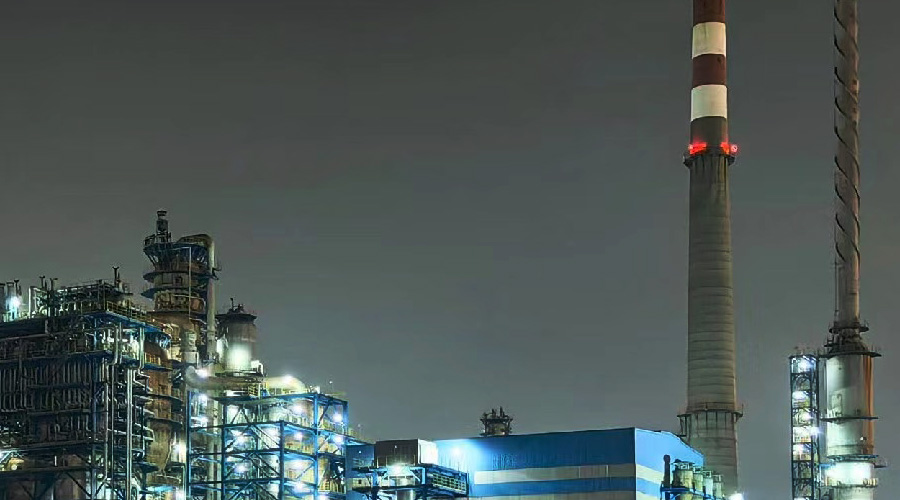
Power plants, chemical plants, steel mills, and other industrial facilities may have tall chimneys or exhaust stacks that require obstruction marking.
Industrial sites can also present challenging operating environments, including heat, dust, wind, rain, and corrosive conditions.
For these projects, buyers should consider both the required lighting performance and the environmental protection of the equipment.
3. Wind Turbines
Wind turbine towers are another important application for medium intensity obstruction lights.
Wind farms may contain many turbines distributed across a large area. Lighting synchronization, power supply, monitoring, and maintenance can therefore become important considerations.
For multi-turbine projects, synchronized obstruction lights can help create a coordinated lighting system when required by the project.
4. High-Rise Buildings
Tall buildings and rooftop structures may also require aviation warning lights depending on their height, location, and surrounding environment.
For building applications, installation space, electrical supply, maintenance access, and the relationship between rooftop structures and obstruction lights should be considered during system design.
5. Bridges & Elevated Structures
Large bridges and other elevated structures can also require aviation obstruction marking in specific locations.
Because these structures can extend over long distances, the lighting arrangement may require careful consideration of visibility, installation position, and synchronization.
What Should You Check Before Choosing a Dual Obstruction Light?
Choosing a suitable dual obstruction lights involves more than checking whether the product has two light heads.
1. Light Intensity and Light Type
First confirm whether the project requires a low-, medium or high-intensity obstruction light.
For a medium intensity obstruction light, check the specified effective intensity, emitted color, beam characteristics, and operating mode. Don‘t select the light type based only on the structure’s height. Local aviation requirements and project specifications should also be reviewed.
2. Dual-Light Operating Logic
Ask the supplier how the two light heads operate. Important questions include:
- Does one light serve as the primary unit?
- Is the second light a standby unit?
- Does the system automatically switch after a failure?
- Is fault detection available?
- Can the system provide remote status monitoring?
These details can make a significant difference when comparing apparently similar dual-head products.
3. Synchronization
For projects with multiple obstruction lights, synchronized operation may be required or beneficial.
GPS or BeiDou synchronization can allow multiple lights to operate according to a coordinated timing signal. This can be particularly useful for large towers, wind farms, and multi-light installations.
Always confirm whether synchronization is required by the project before selecting the control system.
4. Power Supply
The power system should match the installation environment. Depending on the project, obstruction lights may use:
- AC power
- DC power
- Solar power
- Hybrid power systems
For remote towers and infrastructure without convenient grid access, solar-powered obstruction lights can simplify installation by eliminating the need for long power cables.
For solar systems, also check the solar panel capacity, battery capacity, charging management, and expected operation during periods of limited sunlight.
5. Environmental Protection
Outdoor tower lighting can be exposed to severe weather throughout its service life. Important specifications may include:
- IP rating
- Operating temperature
- Wind resistance
- Corrosion resistance
- Salt spray resistance
- UV resistance
- Lightning and surge protection
- Mechanical durability
For coastal, offshore, mountainous, or high-wind locations, environmental conditions should be included in the product selection process.
6. Maintenance & Monitoring
A good obstruction lighting system should also be practical to maintain. Consider:
- Ease of access
- Fault indication
- Remote monitoring
- Automatic fault switching
- Battery maintenance for solar systems
- Expected service life
- Availability of replacement components
For remote structures, monitoring and redundancy can be especially valuable because a maintenance visit may require significant time and cost.
Why Solar-Powered Dual Obstruction Lights Can Be Useful for Remote Towers?
Not every tower has convenient access to grid electricity.
For remote communication towers, wind turbines, mountain structures, and other isolated installations, a solar-powered obstruction light can reduce the need for external power infrastructure. The system can integrate a solar panel, rechargeable battery, LED light source, and intelligent charge/discharge management into one unit.
For a solar-powered dual obstruction lights, buyers should pay particular attention to:
- Solar panel power
- Battery capacity
- Consecutive rainy-day operation
- Charging efficiency
- Battery management
- Day/night automatic control
- Low-temperature performance
The solar system should be selected according to the local climate and project requirements rather than simply choosing the largest available battery or solar panel.
YFFY-MC-01(L) Medium-Intensity Dual Obstruction Lights
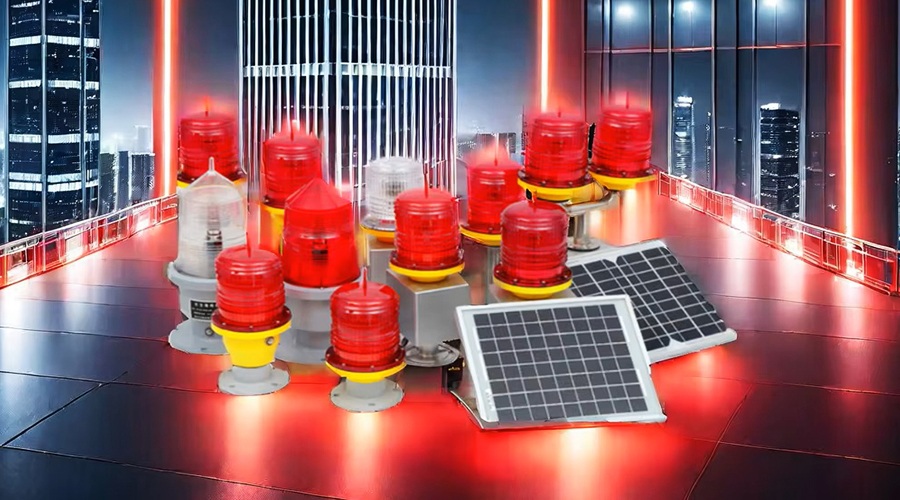
The YFFY-MC-01(L) is a dual-head medium-intensity aviation obstruction lights designed for tall structures including communication towers, industrial chimneys, high-rise buildings, wind turbines, and bridges.
The system uses a primary and standby lighting configuration. According to the product specification, the standby light can automatically switch on when the primary light fails, providing additional operational redundancy.
The solar-powered version integrates a 25W solar panel and 12.8V 24Ah battery, with automatic day/night control and intelligent battery charge/discharge management. The product page specifies an effective intensity of 2,000 cd ±25%, red light output, 360° horizontal coverage, IP65 protection, and an operating temperature range of -40°C to +55°C.
Optional functions include GPS/BeiDou synchronization, LoRa wireless synchronization, remote control, and telemetry monitoring, allowing the configuration to be adapted to different multi-light projects.
For projects involving tall towers or other aviation obstacles, the appropriate obstruction lighting configuration should be determined according to structure height, installation conditions, location, and applicable aviation requirements.

Frequently Asked Questions
1. What Are Dual Obstruction Lights?
Dual obstruction lights are aviation warning light systems that use two lighting units in one configuration. Depending on the product and control system, one unit may operate as the primary light while the other provides standby capability.
2. Why Use Two Obstruction Lights on a Tower?
The main reason is additional operational redundancy. If the primary lighting unit experiences a fault, a properly configured standby unit can help maintain obstruction marking.
3. Where Are Dual Medium-Intensity Obstruction Lights Used?
Dual medium-intensity obstruction lights are commonly used on communication towers, industrial chimneys, wind turbines, high-rise buildings, bridges, and other tall structures requiring aviation obstruction lighting. Under current FAA guidance, medium-intensity flashing white obstruction lights are generally used for structures above 200 ft (60.96 m) and up to 700 ft (213.36 m) AGL.
4. Can Dual Obstruction Lights Be Solar Powered?
Yes. Solar-powered dual obstruction lights can be used for suitable off-grid applications. The solar panel, battery capacity, charging system, and expected local weather conditions should be evaluated before selection.
5. Can Multiple Obstruction Lights Be Synchronized?
Yes, depending on the product configuration. Some systems can use GPS, BeiDou, LoRa, or other synchronization methods to coordinate multiple obstruction lights.
6. Do Dual Obstruction Lights Automatically Switch When One Light Fails?
This depends on the specific product and control system. For YFFY-MC-01(L), the product specification states that the standby light can automatically switch on when the primary light fails.
7. What Should I Provide When Buying Dual Obstruction Lights?
Provide the supplier with the structure type and height, installation location, number of structures, power supply, required lighting configuration, synchronization or monitoring requirements, local aviation requirements, and environmental conditions.