
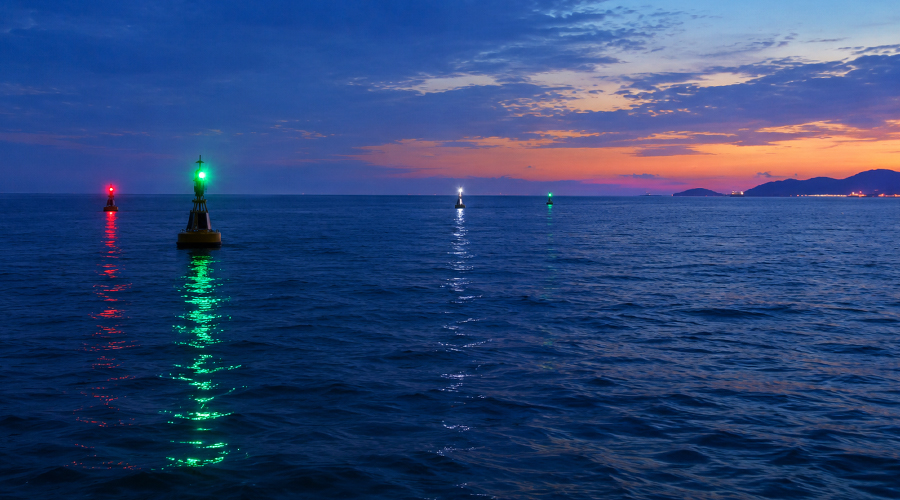
Marine buoy light: used on navigation buoys, warning buoys, aquaculture areas, ports, offshore construction sites, and other marine facilities that require identification and positioning at night.
For procurement teams, selecting a Marine Buoy Light is not simply about confirming whether the light can turn on. Different projects have different requirements for visibility range, flashing patterns, operating time, waterproof performance, and mounting methods.
If relatively complete technical specifications can be provided before requesting a quotation, suppliers can more accurately determine the suitable product and reduce the time spent repeatedly confirming specifications later. Below are 8 key parameters recommended for consideration when purchasing a marine buoy warning light.
I. Marine Buoy Light: 8 Key Purchasing Factors
1. Light Color
Light color is one of the most basic parameters of a marine lights. Common colors include: Red, Green, White, Yellow / Amber, and Blue.
Different colors are generally used for different navigation, warning, or area identification purposes. Therefore, the color should not be selected simply according to personal preference.
When requesting a quotation, it is best to tell the supplier directly: Required light color: Red / Green / White / Yellow
If the project has specific requirements based on a navigation system, maritime regulations, or local standards, these requirements should also be provided so the supplier can confirm whether the marine navigation light is suitable.
2. Luminous Intensity
Luminous intensity determines how strong the light signal provided by the buoy light can be at night.
For marine applications, its not accurate to simply assume that “higher power means a better light.” What really needs to be considered is the optical design and effective luminous intensity of the marine navigation light. When purchasing, you can confirm:
- Luminous intensity
- Light source
- Optical lens design
- Required intensity for the project
If you already know the required luminous intensity, you can provide the specific value to YFFY directly. If you do not know the required value, you can also tell the supplier:
- Approximate distance from which the light needs to be visible
- Whether there are other strong light sources nearby
- Whether the light is used for navigation, warning, or area identification
Based on the actual application, the supplier can recommend a suitable LED or solar buoy light.
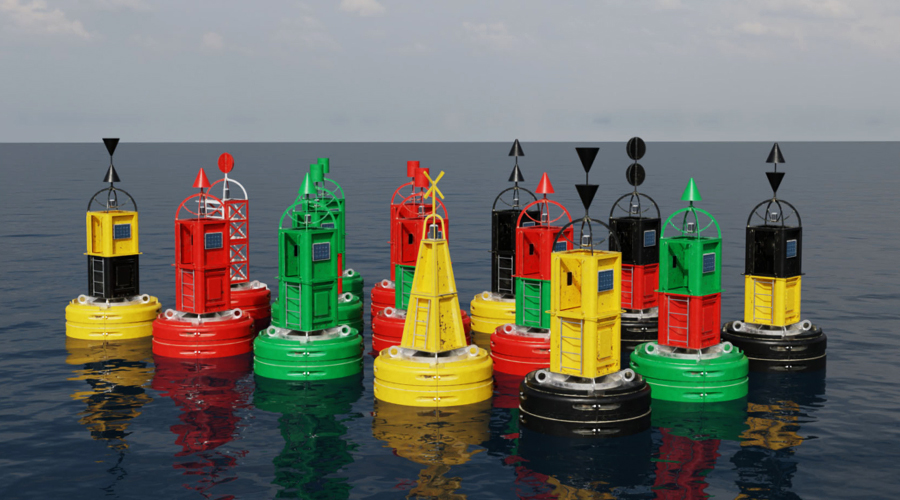
3. Visibility Range of Marine Buoy Light
Visibility range is a very important parameter when selecting a Marine Buoy Lights.
For example, even when used for buoys, different projects may require:
- Short-range visibility
- Medium-range visibility
- Long-range visibility
It is important to note that visibility range is not determined only by the brightness of the buoy light. Actual performance can also be affected by light intensity, color, flashing pattern, fog and humidity, and marine environmental conditions.
Therefore, if you need to purchase a buoy light, it is better not to simply tell the supplier that you “need a very bright light.” A more effective description would be: The buoy light needs to be clearly visible from approximately XX nautical miles. Or: Required visibility range: XX km / nautical miles. This allows YFFY or other marine navigation light suppliers to determine the appropriate product specifications more accurately.
4. Flashing Pattern
A marine navigation light used on a buoy does not necessarily operate continuously. Depending on the project requirements, the light may use: Steady light / Flashing light / Single flash / Group flash / Quick flash / Custom flashing pattern. The flashing pattern not only affects visual identification but may also help distinguish different marine marks.
IALA documents refer to these light characteristics as rhythmic characters and provide guidance on the characteristics and selection of lights used on Aids to Navigation. For projects that need to follow a navigation system, it is therefore recommended to confirm the specific IALA flashing character, rather than simply specifying how often the light should flash.
When purchasing, its best to clearly specify: Does the light need to be steady or flashing? If flashing is required, what is the specific flashing character or IALA rhythmic character?
For example: Flashing characteristic: 1 flash every 3 seconds. If multiple buoy lights need to maintain the same flashing pattern, you can also confirm whether synchronized flashing is required.
5. Power Source & Battery Capacity (Solar Marine Buoy Light)
Marine buoys are often installed in locations far from the power grid, so the power supply solution is particularly important. Common options include:
- Solar powered
- Battery powered
- External power supply
- Solar + rechargeable battery
For buoys deployed at sea for long periods, solar power is often convenient because it does not require frequent battery replacement or connection to an external power supply. However, if you choose a solar buoy light, simply confirming that it is solar powered is not enough. You should also consider:
- Battery type
- Battery capacity
- Charging efficiency
- Solar panel power
- Expected operating time
- Autonomy during cloudy or rainy days
Battery capacity is particularly important. For example, if the project requires: Continuous operation for 5–7 days without sufficient sunlight. The supplier needs to consider the power consumption, flashing frequency, solar panel, and battery capacity of the solar light as a complete system, rather than simply providing a marine buoy light.

6. IALA Flashing Characters & GPS Synchronization
For projects that need to operate according to a navigation system, in addition to the basic flashing pattern, it is also important to confirm whether the light supports IALA-compliant flashing characters.
IALA standards classify and define rhythmic characters for Aids to Navigation and provide guidance on flashing character selection and light synchronization. When purchasing, you can confirm:
- IALA flashing characters
- Programmable flashing patterns
- Flashing character programming
- GPS synchronization
- Synchronized flashing between multiple lights
For a single buoy light, it is usually sufficient to confirm whether the required flashing character can be achieved. For multiple buoys, navigation marks, or applications where a consistent flashing rhythm is required, you can further confirm GPS synchronized flashing.
GPS synchronization allows multiple lights to operate according to a common time reference and maintain a consistent flashing rhythm. IALA G1116 also specifically addresses synchronization and sequencing for Aids to Navigation lights.
Therefore, if your project requires a specific IALA flashing character or synchronized operation between multiple lights, it is recommended to state this directly when requesting a quotation: Required IALA flashing character: XXX Or: GPS synchronized flashing required: Yes / No
This allows the supplier to confirm whether the control system and solar marine warning light configuration can meet the project requirements.
7. IP Rating & Operating Environment
Marine environments generally place higher requirements on LED navigation lights than ordinary outdoor environments.
Buoy lights may be exposed to: Salt spray, Rain, High humidity, Strong wind, UV exposure, Temperature changes, Waves and vibration
Therefore, the IP rating and overall structural design are very important. When purchasing, it is recommended to confirm: IP Rating
The specific IP rating should be determined according to the installation location and actual operating environment. Its also recommended to confirm:
- Operating temperature
- Housing material
- UV resistance
- Corrosion resistance
- Salt spray resistance
- Sealing design
If the marine navigation light will be installed in an environment with long-term exposure to seawater and salt spray, attention should be paid not only to the IP rating but also to the material and corrosion-resistant design.
8. Mounting, Material
Finally, there are two easily overlooked aspects that should also be confirmed: mounting and material.
1) Mounting Dimensions
The top structure and mounting interface can vary between different buoys.
Before purchasing, it is best to confirm: Mounting hole pattern, Mounting diameter, Bolt size, Overall dimensions, Installation height
These specific parameters are usually included in the product specifications provided by YFFY.
If you already have an existing buoy, you can also provide photos, dimensions, or drawings of the installation position. This allows the supplier to confirm whether the LED marine buoy light can be installed directly or whether an additional mounting bracket is required.
2) Material
Buoy lights used in marine environments generally need to withstand corrosion and long-term outdoor exposure.
Common materials include: UV-resistant PC / ABS / Aluminum alloy / Stainless steel / Other corrosion-resistant materials. The specific material should be selected according to the product structure and operating environment.
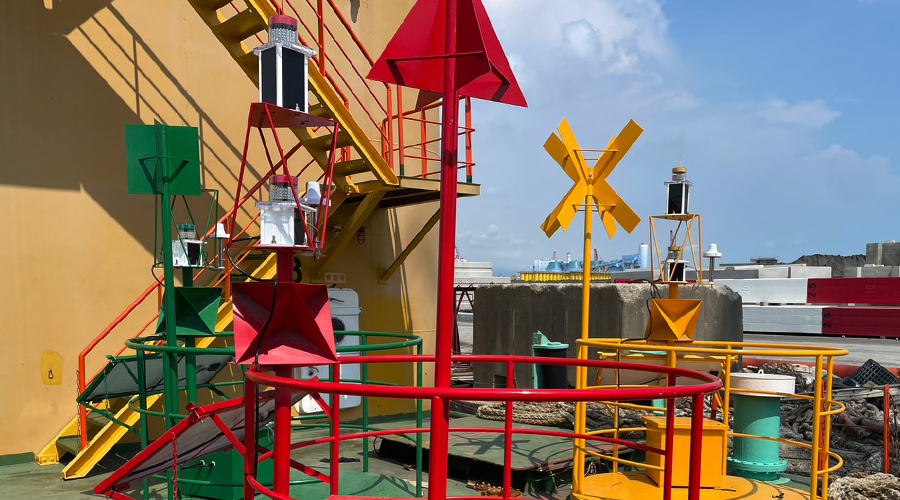
II. What Information Should You Send When Requesting a Marine Buoy Light?
If you are preparing to request a quotation from a marine buoy light supplier, you do not necessarily need to know all the technical specifications at the beginning. At minimum, you can provide the following information:
| Item | Information to Provide |
|---|---|
| Application | Navigation buoy / warning buoy / aquaculture / offshore project |
| Light Color | Red / Green / White / Yellow |
| Visibility Range | XX km / nautical miles |
| Flashing Pattern | Steady / Flashing / Specific characteristic / IALA flashing character |
| Power Source | Solar / Battery / External power |
| Required Autonomy | XX days |
| Installation Location | Country / Region |
| Mounting | Existing buoy / New buoy / Mounting dimensions |
| Quantity | Required quantity |
| Certification | Required certification, if any |
If some parameters have not yet been determined, that is also fine. For example, you can simply tell the supplier: We need a Solar Marine Buoy Light for an offshore warning buoy. The required visibility range is approximately 3 nautical miles. Please recommend a suitable model based on the application.
For projects without complete technical specifications, this type of description will usually make it easier for the supplier to provide a targeted product recommendation than simply saying: Please send us your Marine Buoy Light catalogue.
In conclusion, when selecting a Marine Buoy Light, the most important thing is not simply to compare the price or power of an LED marine warning light, but to confirm whether the product truly matches the project’s operating environment and technical requirements.
Preparing information such as light color, luminous intensity, visibility range, flashing pattern, IALA flashing character, power source, battery capacity, IP rating, mounting dimensions, and certification requirements before requesting a quotation can help suppliers recommend suitable products more quickly and reduce subsequent specification changes and repeated communication.
If the project uses a solar light, special attention should also be paid to battery capacity, the solar power system, and operating autonomy during cloudy or rainy weather. If multiple buoy lights need to maintain a synchronized flashing rhythm, GPS synchronization can be further considered.
If you are temporarily unable to determine all the parameters, you can first provide the application, installation location, required visibility range, and expected operating time. A professional supplier can use this information to further assist with product selection.
