How to Install Telecom Tower Lights (Step-by-Step Guide)
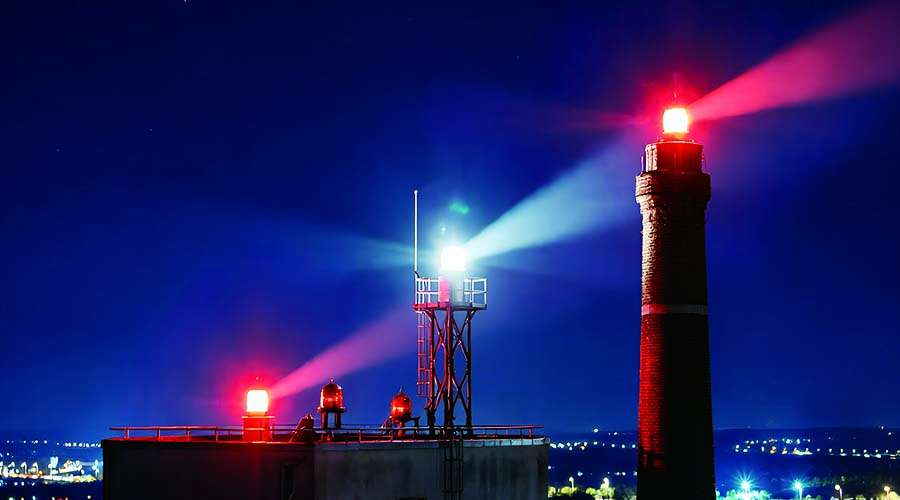
Installing communication tower lights requires proper planning, correct product selection, and compliance with ICAO and FAA aviation obstruction light standards.
Quick Answer
To install telecom tower lights:
- Assess tower height and environment
- Select the correct aviation obstruction lights
- Choose power supply (mains or solar)
- Install lights at tower top and sides
- Ensure synchronized flashing (GPS)
- Test and verify compliance
👉 This ensures safe and compliant tower lighting installation.
This tower installation guide will walk you through configuring telecommunications tower lights from scratch, analyze ICAO / FAA standards, and recommend the most suitable aviation obstruction lights for different scenarios.
Step 1: Site Selection & Structural Assessment
Before installing aviation obstacle lights, the tower height and surrounding environment must be clearly defined.
According to international standards (FAA & ICAO):
- Structures exceeding 45 meters (≈150 feet) typically require tower lights
Key Considerations of Telecom Tower Lights
1. Environmental Survey
- Check nearby airports, flight paths, or nature reserves
2. Power Supply Configuration
- With mains power → standard LED aviation lights
- Without mains power → solar aviation lights for towers (recommended)

Step 2: Telecom Tower Lights Selection Strategy
This is the most critical step in the installation process. Incorrect selection may lead to compliance risks or safety hazards.
1. Select Light Intensity Based on Height
Depending on tower height, different aviation obstruction light levels are required:
| Tower Height | Recommended Lighting Types | Key Features |
| Lower floors (below 60m) | Low-intensity obstruction lights | It typically emits a constant red light and does not require a daylight switch. |
| Mid-rise floors (60m – 150m) | Medium-intensity obstruction lights | Typically, it is a white flash (such as Type A, B, C), which requires a sunlight sensor. |
| High-rise floors (above 150m) | High-intensity obstruction lights | The intense white flashes necessitate the use of redundant systems in case of failure. |
2. Select Power Supply Solution of Telecom Tower Lights
With Mains Power
- Use LED aviation obstruction lights
- Advantages:
- Long lifespan
- Low energy consumption
- Strong vibration resistance
Without Mains Power / Remote Areas
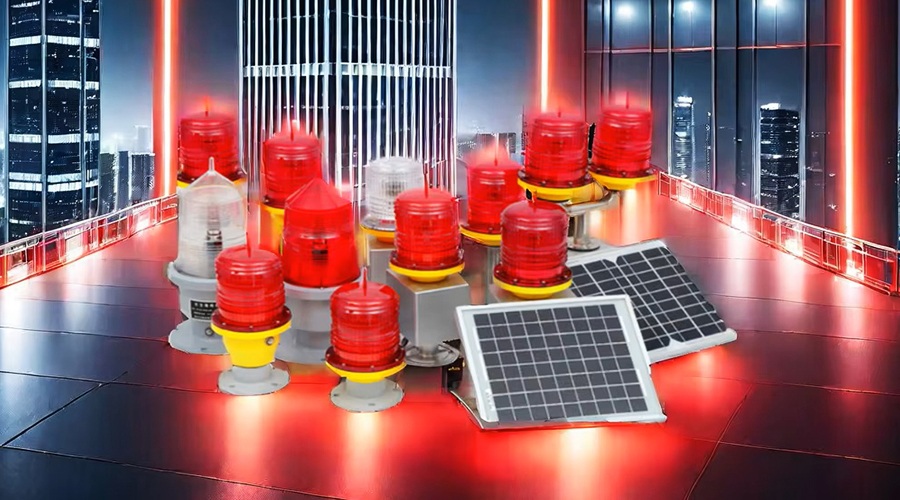
- Use solar aviation lights for towers
Features:
- Monocrystalline solar panels
- Long-life lithium batteries
- Zero wiring required
- Significantly reduces installation and construction costs
Step 3: Tower Installation Guide – Layout and Installation Tips
1. Top Installation (Mandatory)
- The LED lights must be installed at the highest point of the tower
2. Side Marking
- Large towers require additional side lights
- Helps define tower outline for pilots
3. Synchronized Flashing
- Multiple lights must flash simultaneously
- Recommended: GPS synchronization
- Creates a clear visual “light structure” for pilots

People Also Ask (FAQ)
Q1: Should telecom tower lights be red or white?
Answer:
- Red (low intensity)
- Used for towers under 60 meters
- Constant light in all weather
- White (medium/high intensity aviation light)
- Used for towers over 60 meters
- Usually equipped with light sensors
- Automatically turns on at night
Q2: Can solar aviation obstruction lights work in cloudy or rainy weather?
Answer:
Yes. Qualified solar aviation lights for towers are designed for continuous operation.
Typical performance:
- 7–20 days of autonomy
- Intelligent charge/discharge system
- Reliable in extreme weather
Q3: How to maintain telecom tower Lights safely?
Answer:
Maintenance at height is risky, so choosing the right product is essential:
- LED lifespan: 50,000–100,000 hours
- IP67 waterproof design
- Minimal maintenance required
👉 Recommended: dual-head aviation obstruction lights
- Automatic backup if one fails
- Reduces maintenance urgency
Recommended LED Telecom Tower Lights Solutions
For complex telecom tower environments, YFFY Lights provides complete telecom tower lighting solutions.
Solution 1: Solar Aviation Obstruction Lights (Remote Areas)
Best for: No power / off-grid towers
Features:
- Dual-head design (redundancy)
- Integrated die-cast aluminum body
- Resistant to severe weather (typhoons)
Advantages:
- Zero wiring
- Quick installation
Solution 2: Medium Intensity Aviation Light (60–150m Towers)
Best for: Urban and mid-to-high-rise towers
Features:
- ICAO Annex 14 compliant
- White flashing (Type B)
- Visibility up to 20 km
- Built-in light sensor
Advantages:
- High brightness
- Energy efficient
- Intelligent operation
Solution 3: Low Intensity Aviation Obstruction Lights
Best for: Smaller towers or auxiliary lighting
Features:
- Constant red light
- Simple structure
- Low failure rate
Advantages:
- Extremely durable
- Maintenance-free
Conclusion
Installing telecom tower lights is not just a simple task—it is a critical aviation safety engineering project.
Choosing compliant and reliable aviation obstruction lights can:
- Ensure aviation safety
- Reduce long-term maintenance costs
- Improve project acceptance success rate
Call to Action
Visit the YFFY Lights Communication Tower Lighting Zone for professional selection advice.
Our team provides:
- Compliance guidance (ICAO / FAA)
- Customized solutions
- Technical support
👉 Ensure your tower lighting project passes acceptance smoothly.