Navigation Lights | Solar Marine Lights Configuration for Offshore Wind Farms (IALA Standard Guide)
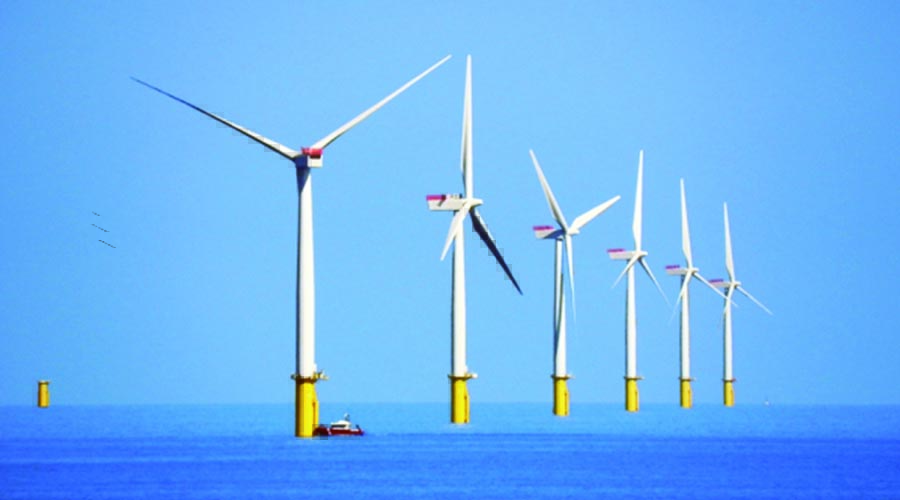
Equipping offshore wind farms with dedicated navigation warning lights (especially solar marine warning lights) is a clear requirement of the International Maritime Organization (IMO) and IALA (International Association of Lighthouse Authorities), and a fundamental measure to ensure the safety of wind farm facilities and passing vessels.
However, the marine environment is characterized by:
- No mains power access
- Short maintenance windows
- High salt spray
- Strong typhoons
These factors make traditional marine navigation light solutions unreliable for long-term operation.
This article, based on IALA guidelines and internationally accepted technical specifications, systematically outlines:
- Configuration principles
- Lighting technical requirements
- Power supply reliability indicators
- Deployment recommendations
I. Navigation Lights Configuration Principles (IALA Special Mark Standards)
According to the IALA offshore buoy system, offshore wind farms are considered “underwater structures” and must be marked with special marks.
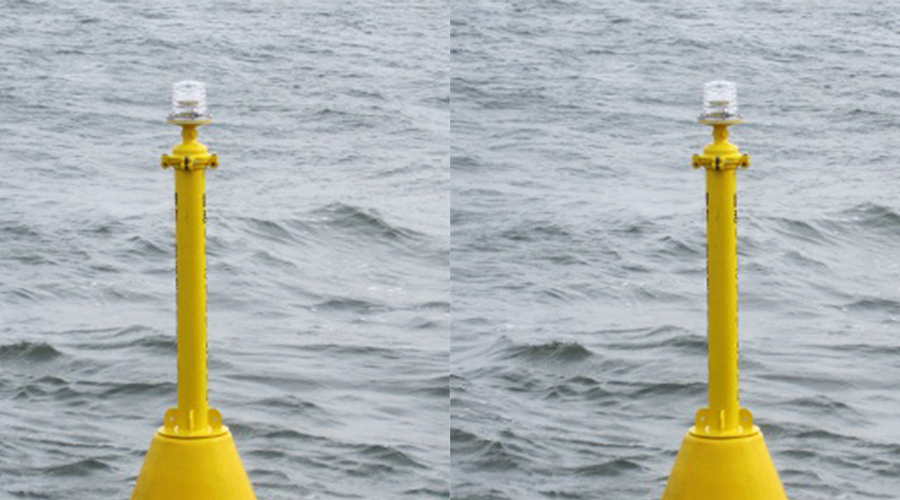
1. Light Color: Yellow (Designated Standard)
- Navigation lanterns must emit yellow light
- Indicates: special areas (wind farms, cable zones, restricted zones)
- Red, green, and white are prohibited to avoid confusion
2. Physical Markings (Day & Night Identification)
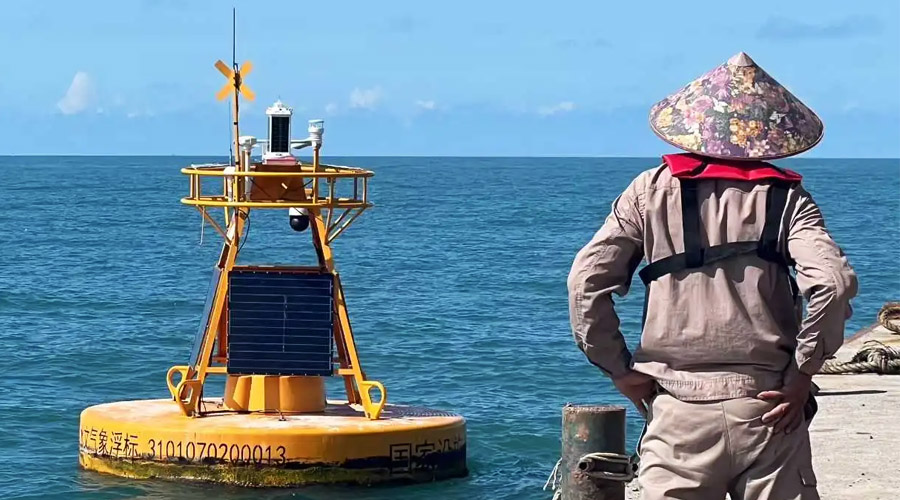
- Top Mark: Yellow “X” shape (two cones tip-to-tip)
- Mark Color: Yellow and black stripes
👉 Ensures visibility even during daytime without lighting
3. Recommended Light Rhythm (Flash Pattern)
IALA recommends:
- Morse code “C” (· — · —)
- Yellow light
- 12-second cycle
Other rhythms may be used, but must remain distinguishable from standard navigation markers.
II. LED Navigation Lights Technical Requirements
Offshore wind farms are large and far from shore, requiring higher standards for solar marine navigation lights.
2.1 Satellite Synchronized Flashing
Purpose: Define the overall boundary of the wind farm
- Without synchronization → visual confusion
- With synchronization → clear “light boundary”
Technical Requirements:
- Built-in GPS or BeiDou module
- Millisecond-level synchronization
2.2 Multi-Light Coding for Different Zones
Different areas require different warning levels:
| Deployment Area | Light Pattern | Function |
|---|---|---|
| Wind farm boundary | Morse “C”, Yellow | Define outer boundary |
| Channel entrance/exit | Morse “K” or double flash | Guide vessel entry |
| Internal turbines/substations | Rapid flashing (100–120/min) | Warn of hazards |
👉 Ensures clear differentiation and improved navigation safety
2.3 Visibility Range Requirements
- Nearshore (≤10 NM): ≥5 nautical miles
- Recommended: 10–20 nautical miles for major shipping lanes
👉 Provides early warning for large vessels

III. Solar Marine Lights Power & Reliability Requirements
Offshore wind farms rely entirely on solar marine lanterns due to lack of grid power.
3.1 Battery Endurance of Navigation Lights
- Minimum: ≥7 days
- Recommended: 7–20 days
👉 Ensures continuous operation during storms and cloudy periods
3.2 Structural Design & Protection
- Integrated design (solar panel + light)
- Avoid external brackets
Protection Requirements:
- IP68 waterproof
- IK10 impact resistance
- Salt spray resistance ≥1000 hours
3.3 Battery & Charging System
- Lithium iron phosphate or NiMH batteries
- Temperature range: -30℃ to +60℃
- ≥2000 charge cycles
- Built-in MPPT controller
IV. Deployment Recommendations for Navigation Lights
Typical Deployment Locations
| Location | Navigation Type | Lighting Parameters | Power Supply | Notes |
|---|---|---|---|---|
| Wind farm corners | Dedicated beacon | Morse “C”, ≥10 NM, GPS sync | Solar ≥10 days | Boundary marking |
| Channel entrances | Dedicated buoy | Custom flash, ≥10 NM | Solar ≥7 days | Entry guidance |
| Substation foundation | Hazard marker | Rapid flash, ≥5 NM | Solar ≥7 days | High warning |
| Turbine foundation | Small beacon | Single/Morse “C”, ≥3 NM | Solar ≥7 days | Optional |
| Cable landing points | Beacon | Morse “C”, ≥5 NM | Solar ≥7 days | No anchoring zone |
👉 Final deployment must follow navigation safety assessments
V. Maintenance & Management of Navigation Lights
- Inspection cycle: Every 6–12 months
- Remote monitoring: Recommended (GPS sync, status, brightness)
- Spare strategy: Keep 2–3 backup navigation lights
VI. Product Selection Reference (Solar Marine Lights)
Typical specifications of modern solar marine navigation lights:
- Range: 5–20 nautical miles
- Synchronization: GPS
- Light patterns: ≥350 IALA-compatible modes
- Battery life: 7–20 days
- Protection: IP68, salt spray ≥1000 hours
YFFY Lights can provide solar marine lights that meet these requirements.

VII. Summary of Navigation Lights
Configuring solar lights for offshore wind farms must:
- Follow IALA special mark standards (yellow light, Morse “C”)
- Use GPS/BeiDou synchronized flashing
- Adopt solar marine lights with 7–20 day endurance
👉 This ensures long-term, reliable operation in harsh offshore environments.
References
- IALA O-139: Recommendations for Marking Offshore Structures
- Maritime Safety Administration regulations (China)
- JTS 165-5-2021 Offshore buoy installation specifications