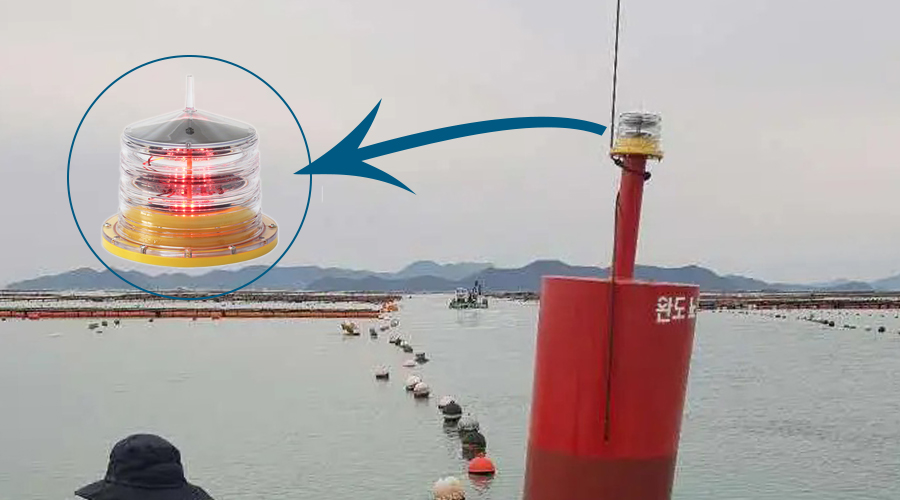
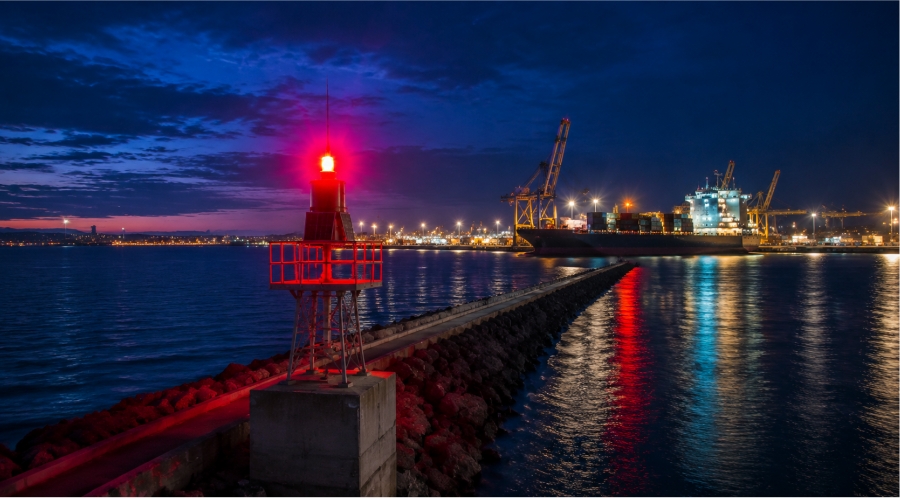
Global Ports Are Accelerating the Deployment of Solar Marine Lantern Systems How Solar Marine Lantern Enables Low-Carbon and Zero-Maintenance Night Navigation in Modern Ports
In the context of global port digitalization and the transition toward green energy, the solar navigation light is rapidly replacing traditional grid-powered navigation lighting systems and has become a standard component of modern port and waterway infrastructure.
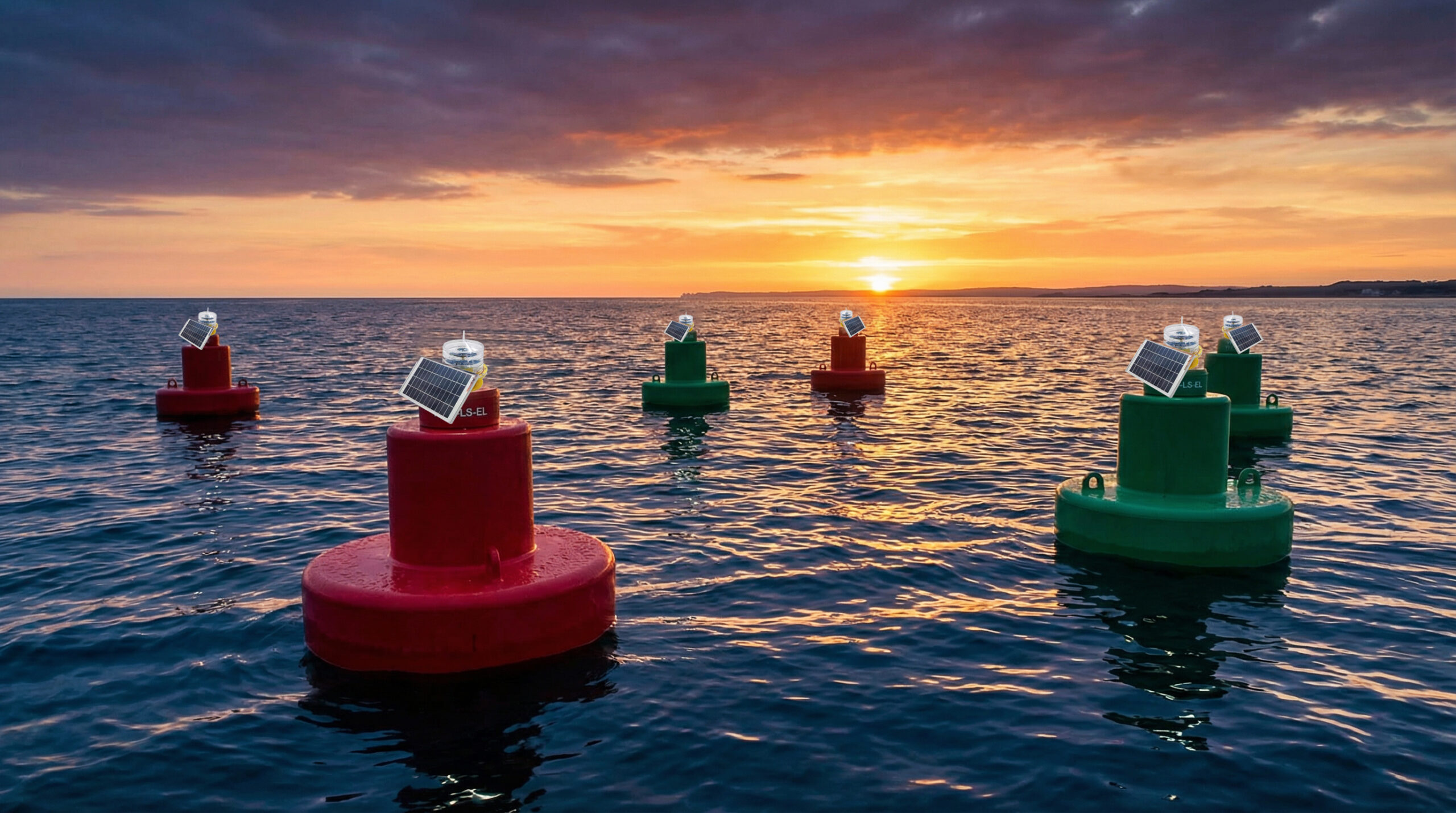
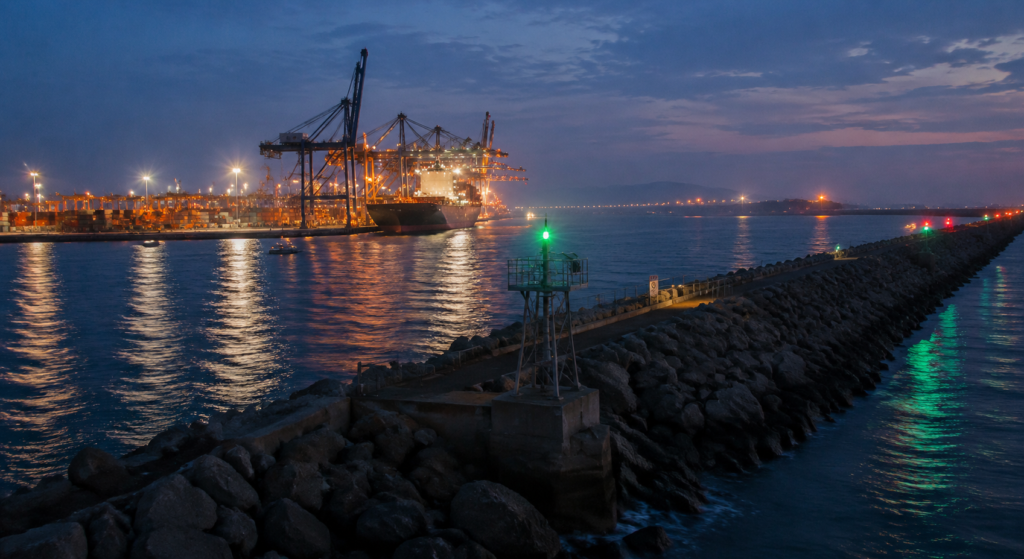
In a port upgrade project at Laem Chabang Port, Thailand, multiple key navigation points were successfully equipped with our YFFY-LS/B 6NM solar marine lantern system for port applications, covering:
- Breakwater boundary markers
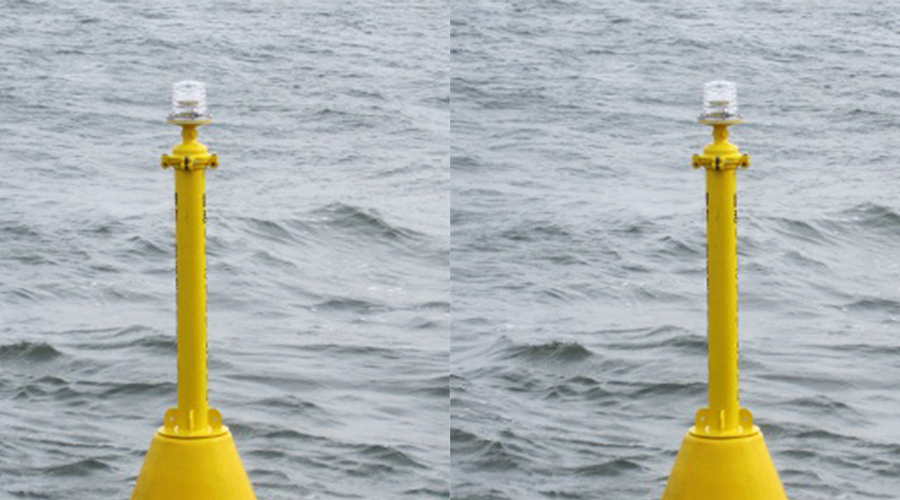
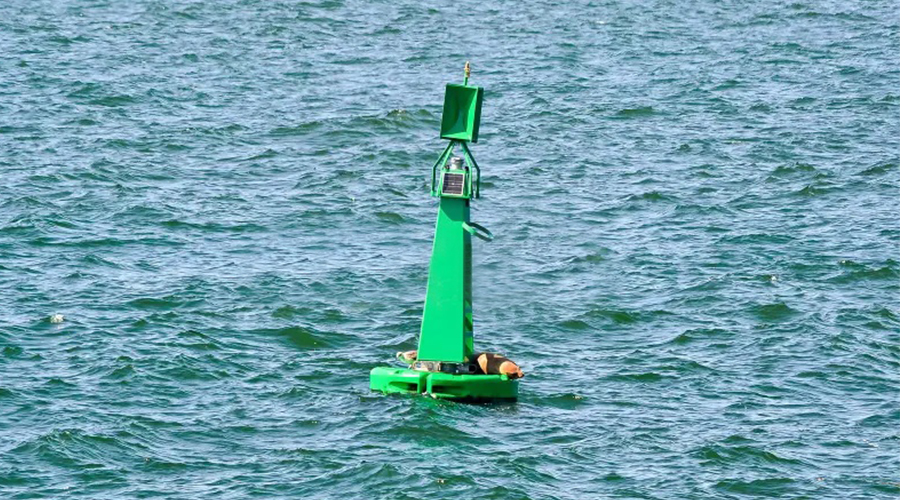
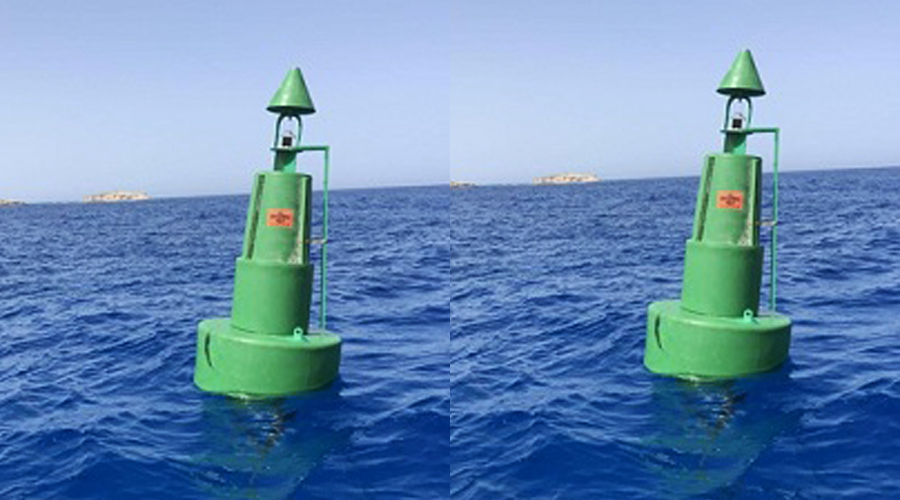
- Offshore buoy navigation systems
- Berth guidance points
- Port entry and channel navigation lights
This project enabled a full transition of the AtoN (Aid to Navigation) system to solar power, significantly reducing long-term operational and maintenance costs.
Why Did Laem Chabang Port Choose Solar Marine Lantern Systems?
As one of the busiest deep-sea ports in Southeast Asia, Laem Chabang Port faces several operational challenges:
- High vessel density during nighttime navigation
- High maintenance costs for offshore navigation infrastructure
- Corrosion issues caused by traditional cable-based lighting systems
As a result, the port adopted a next-generation integrated solar marine navigation lights system to improve navigational reliability and reduce maintenance dependency.
Project Product: 6NM Solar Marine Lantern YFFY-LS/B
The core equipment deployed in this project is an industrial-grade solar navigation light system, specifically engineered for harsh marine and port environments, also classified as a solar marine light solution.
Why Is This Solar Marine Lantern More Suitable for Port Applications?
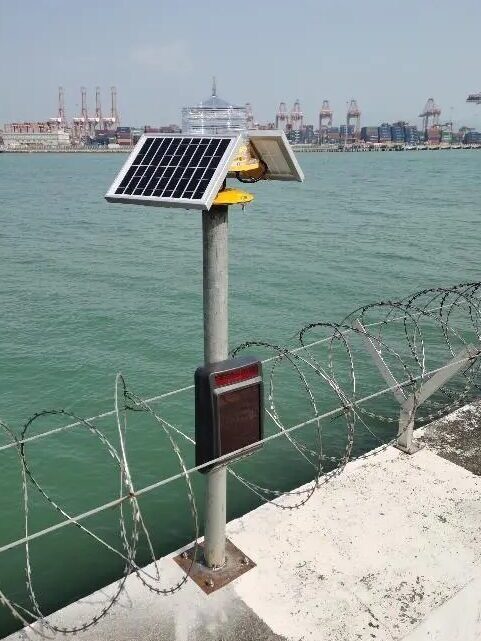
1️⃣ Dual Solar Panel Structure | Enhanced Charging Efficiency for Solar Marine Navigation Light Systems
The system adopts:
- Top + side dual solar panel configuration
- High-efficiency monocrystalline solar cells
- 360° all-weather solar harvesting design
Even in crane-shadowed or container-dense port environments, the solar marine lantern for port maintains stable and continuous charging performance.
2️⃣ LiFePO4 Battery System | Ensuring Long-Term Marine Operation
Built-in industrial-grade lithium iron phosphate battery system:
- Operating temperature: -40°C to +80°C
- Deep-cycle charging and discharging support
- Service life ≥ 5 years
- Intelligent Battery Management System (BMS)
YFFY solar warning lights supports stable operation for 15–21 days under continuous rainy conditions, making it ideal for off-grid solar marine light applications.
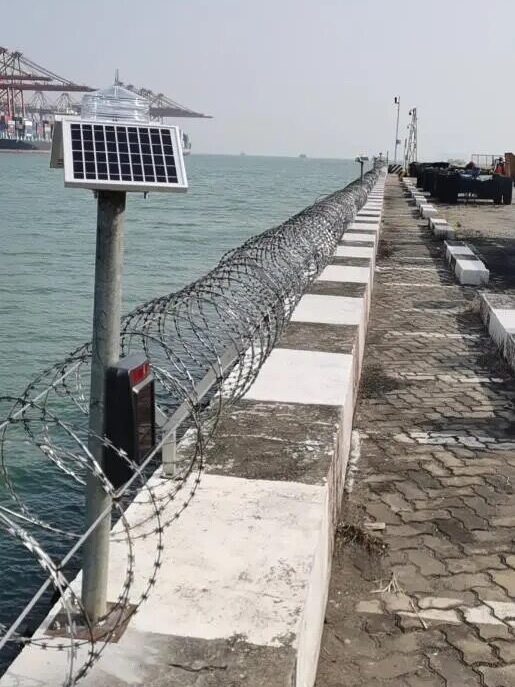
3️⃣ 6NM Visibility Range | Compliant with IALA Standards
This solar marine navigation lights system is designed in compliance with the standards of the International Association of Marine Aids to Navigation and Lighthouse Authorities (IALA):
- Maximum visibility range: 6 nautical miles (6NM marine lantern)
- 360° uniform light distribution
- High-transmittance UV-resistant optical lens
- Available in red / green / white color options
It fully meets the requirements of port-level and coastal solar navigation light systems.
4️⃣ Industrial-Grade Protection | Designed for Harsh Marine Environments
- IP68 waterproof and dustproof rating
- Resistant to salt spray and UV corrosion
- Bird deterrent structure design
- Heavy-duty die-cast aluminum + polycarbonate housing
Specifically engineered for ports, buoys, and breakwater installations.
Operational Benefits from the Laem Chabang Port Project
| Item | Before Upgrade (Traditional System) | After Upgrade (Solar Marine Lantern) |
|---|---|---|
| Energy System | Grid power + cable system | 100% solar-powered |
| Offshore Construction | Requires cabling | No wiring required |
| Maintenance Frequency | High (vessel-based maintenance) | Low (5+ years maintenance cycle) |
| Nighttime Stability | Vulnerable to power failure | Independent stable operation |
| Expansion Capability | Limited | Modular and scalable |
Port Operation Performance Improvements
After deploying the solar marine lantern for port system, Laem Chabang Port achieved:
- Improved nighttime navigation visibility
- Significant reduction in operational costs (near-zero electricity cost)
- 30–40% increase in vessel entry/exit efficiency
- Substantial reduction in maintenance workload
Where Else Can Solar Marine Lantern Systems Be Used?
In addition to ports and harbors, solar marine light / solar navigation light systems are widely used in multiple maritime and infrastructure scenarios:
1️⃣ Offshore Navigation Channels & Marine Engineering Zones
- Offshore buoy marking systems
- Deep-water navigation channel markers
- Oil & gas platform warning lights
- Cross-sea bridge construction zones
Solar marine lights operate reliably in fully off-grid offshore environments.
2️⃣ Islands & Remote Coastal Areas
- Small island ports
- Fishing harbors and supply points
- Non-electrified coastal zones
Solar navigation lights provide independent and low-cost deployment solutions.
3️⃣ Ports & Industrial Infrastructure (Core Applications)
- Cargo terminals and container yards
- Breakwater and port boundary lighting
- Nighttime safety zoning systems
The solar marine lantern system significantly reduces maintenance costs while improving operational safety.

4️⃣ Transportation & High-Risk Warning Zones
- Cross-sea bridge structural markers
- Coastal airport obstacle lighting
- High-risk maritime crossing areas
Solar marine navigation lights provide continuous and reliable visual warning signals.
5️⃣ Temporary Engineering & Emergency Deployment
- Dredging temporary navigation channels
- Port construction marking systems
- Post-disaster navigation restoration
Solar warning lights no wiring required; rapid deployment and removal.
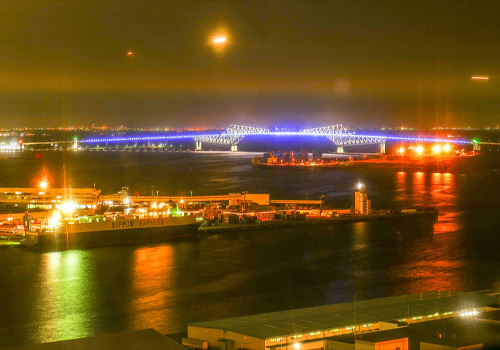
Solar-powered Navigation Light Case
FAQ About Solar Marine Lights
Q1: Can Solar Marine Lantern Systems Operate During Long Periods of Cloudy or Rainy Weather?
Yes. Fully charged systems can operate for 15–21 days continuously.
Q2: Are They Suitable For High-salinity Marine Environments?
Yes. The solar warning lights system uses IP68 protection and industrial-grade anti-corrosion materials.
Q3: Do They Comply With International Navigation Standards?
Yes. Fully compliant with IALA standards, supporting multiple flash modes and color configurations.
Q4: How To Choose Between 6NM and Higher-range Models?
- 6NM: Internal port channels / buoys / berths
- 10NM: Offshore lighthouses / deep-water channels
Solar Marine Lantern Systems Are Transforming Modern Port Infrastructure
As global ports continue to move toward low-carbon and intelligent operations, the solar marine lantern for port applications is becoming a standard configuration.
The Laem Chabang Port project demonstrates that solar navigation lighting systems not only reduce costs but also significantly improve port efficiency and navigational safety.
Contact us for:
- Solar marine lantern selection guidance
- AtoN system design recommendations
- 6–10NM solar navigation light technical documentation