1. Introduction
Power transmission towers are tall structures that may pose hazards to low-flying aircraft, especially when located near airports, heliports, or flight paths. Installing transmission tower obstruction light helps make these structures more visible to pilots during daytime and nighttime operations, depending on the lighting system used.
However, proper transmission tower obstruction lights installation involves more than choosing a suitable light. Engineers must also determine where to install the lights, how many levels need to be marked, and which light intensity meets the applicable aviation requirements.
So, where should obstruction lights be installed on power transmission towers? This guide covers the main installation positions, light intensity selection, and key requirements for planning a reliable tower lighting system.
2. Where Should Aviation Obstruction Lights Be Installed on Transmission Towers?
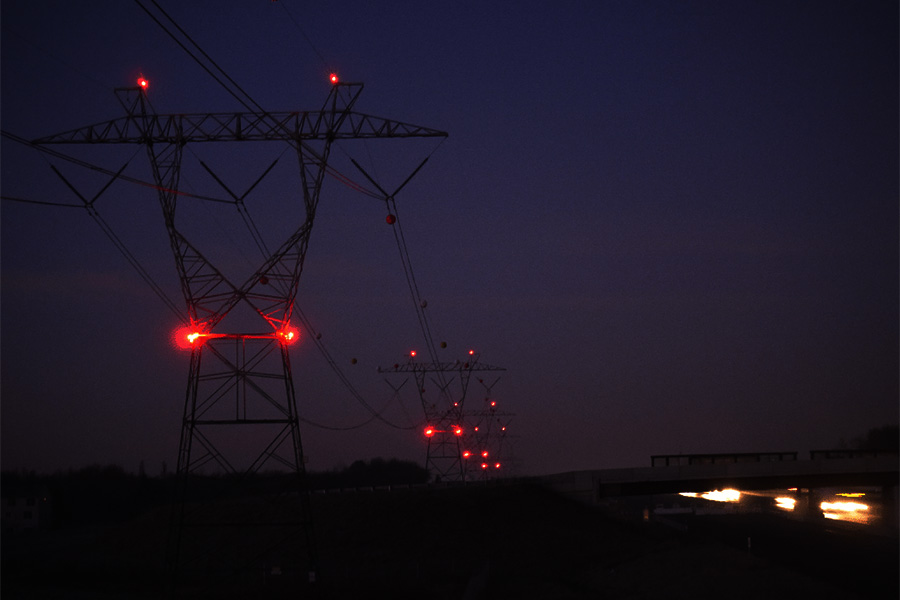
The installation layout should make the tower’s overall height and shape recognizable to pilots. The tower top, intermediate sections, and projecting structures may all need to be considered when developing the lighting plan. The exact arrangement should follow the approved lighting configuration and the requirements of the relevant aviation authority.
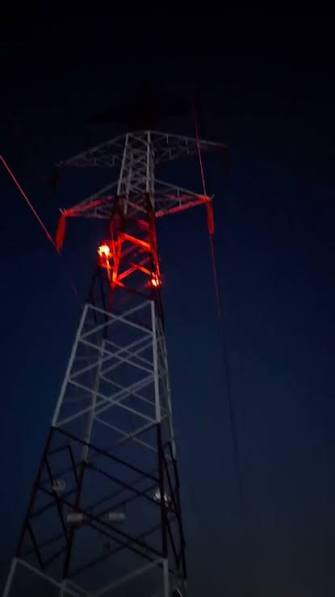
1). Tower Top: Marking the Highest Point
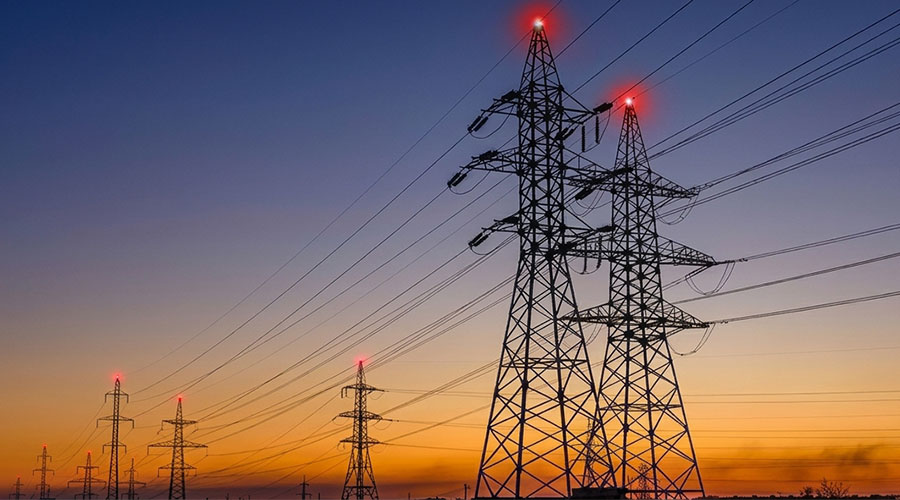
The top of a transmission tower is one of the most important positions to consider. It marks the highest point of the structure and helps pilots identify the tower’s vertical extent.
An obstruction light is generally positioned at or near the highest point, where it can provide clear visibility from the required viewing directions. When selecting the installation position, engineers should consider:
- Whether the light clearly marks the highest point of the tower.
- Whether steel members or other structures block the light.
- Whether the mounting position provides the required visibility around the tower.
- Whether the light can be safely accessed for inspection and maintenance.
The mounting bracket should also be suitable for the tower structure and local environmental conditions.
2). Intermediate Levels: Lighting the Tower Body
For taller transmission towers, a light at the top may not be enough to make the entire structure recognizable. Intermediate lights may be required to identify different sections of the tower. These lights help pilots understand the tower’s height and overall shape, particularly when the structure has a complex framework.
The number and vertical arrangement of intermediate lights should not be determined by a fixed rule for every tower. Instead, engineers should check the applicable obstruction-lighting standards and the approved project design.
When planning these positions, consider the tower’s total height, structural layout, visibility from different directions, and any possible obstruction caused by crossarms or other steel members.
3). Crossarms & Other Projecting Structures
Transmission towers usually have crossarms that support overhead conductors. Depending on the tower design, these structures may extend considerably beyond the central tower body.
These projecting sections should be considered when planning the placement of tower lights because they affect the tower’s overall shape and visibility.
Engineers should check whether the approved lighting arrangement adequately identifies the tower’s widest sections and whether additional lights are required at specific projecting points.
It’s also important to distinguish between lighting the tower structure and marking the overhead conductors. Tower obstruction lights do not automatically replace conductor markers or other aviation warning systems that may be required for the wires themselves.
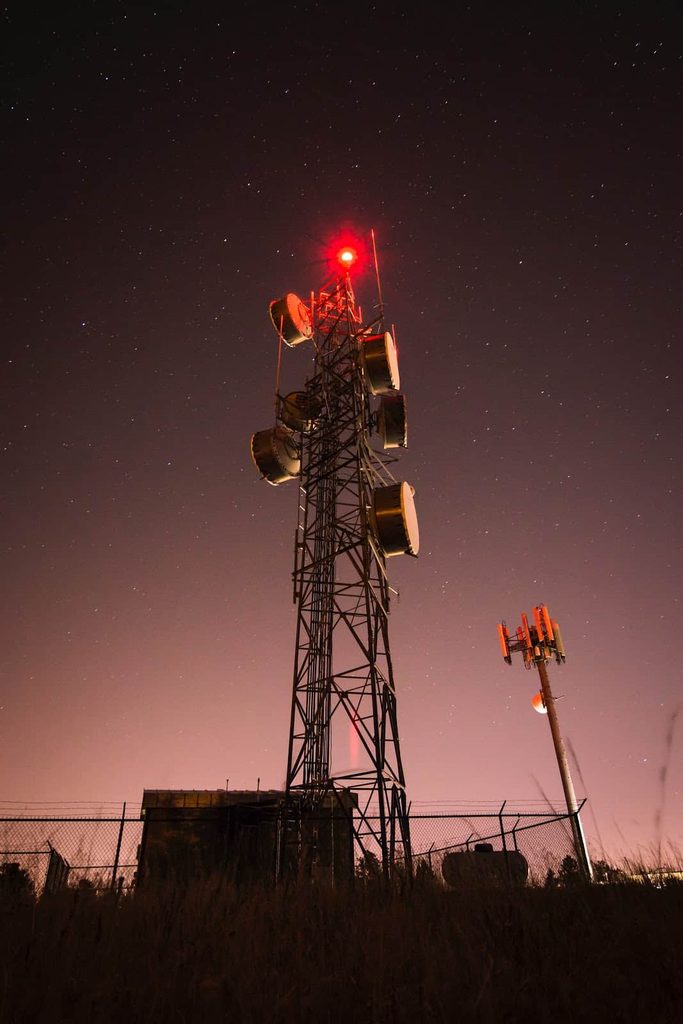
3. How to Choose Low, Medium, or High-Intensity Obstruction Lights
Light intensity light is an important factor when selecting aviation obstruction lights for power transmission towers. The appropriate type depends on factors such as tower height, location, surrounding environment, and the applicable aviation requirements.
Low-, medium-, and high-intensity lights serve different purposes. They should not be selected based on tower height alone. The final choice and combination must follow the approved lighting configuration.
1). Low-Intensity Obstruction Lights: Transmission Tower Obstruction Light
Low-intensity obstruction lights are commonly used to mark structures where a lower level of light output is suitable under the applicable requirements.
They can be considered for certain structures or as part of a lighting system designed for a specific project. For transmission tower applications, engineers should confirm whether low-intensity lights are permitted for the tower’s location and height before selecting them.
YFFY offers both AC-powered and solar-powered options:
- Solar Option: The YFFY-02-L Low-Intensity Solar Obstruction Light Type B is an option for projects where independent solar power is preferred.
- AC Option: The FAA L-810 Low-Intensity Obstruction Light is an AC-powered option for installations with a suitable power supply.
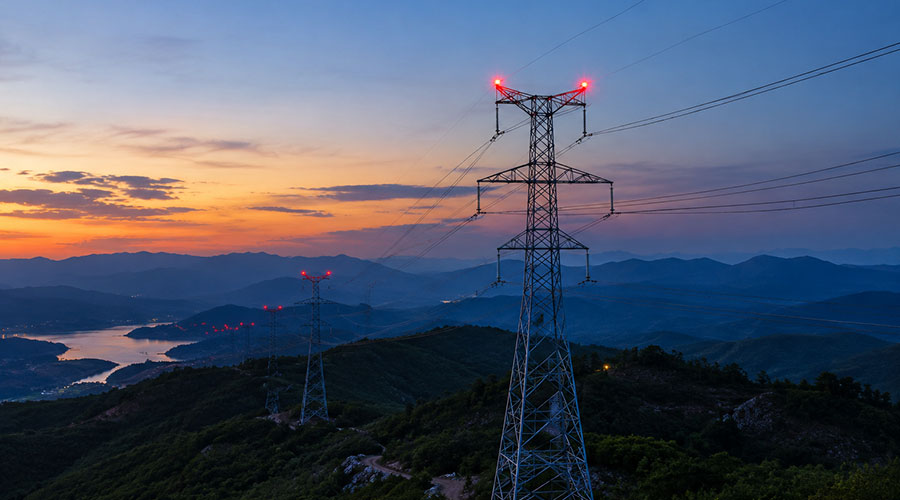
2). Medium-Intensity Obstruction Lights
Medium-intensity obstruction lights are used in applications that require greater visibility than low-intensity lighting can provide. They may be considered for taller structures and other installations where the approved aviation lighting plan specifies medium-intensity lights.
The required light color, flashing characteristics, operating mode, and arrangement should all be checked against the project specifications.
YFFY provides two options for different power supply conditions:
- Solar Option: The YFFY-MB-01(L) Medium-Intensity Type B Solar Aviation Obstruction Light is designed for applications where solar power is preferred.
- AC Option: The Medium-Intensity Aviation Obstruction Light YFFY-MI-B2 is an AC-powered option for projects with an available electrical supply.
3). High-Intensity Obstruction Lights
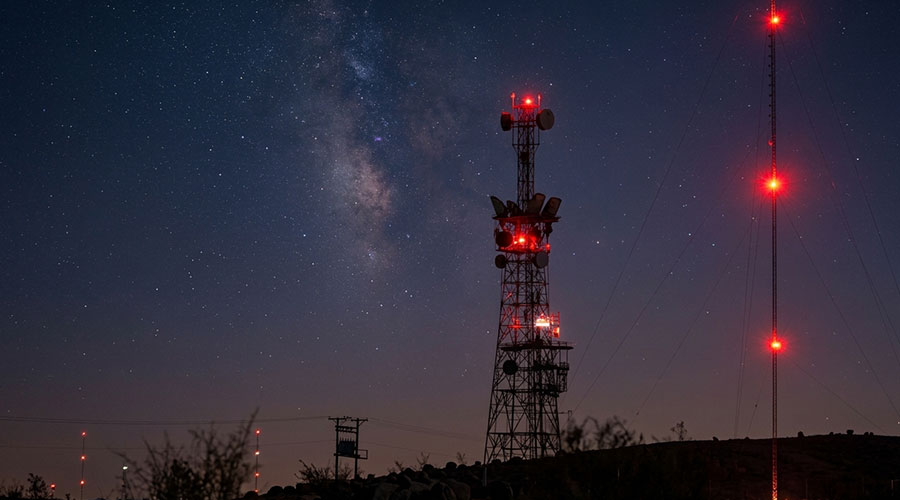
High-intensity obstruction lights are used for structures and locations where a higher level of daytime visibility is required by the applicable aviation standards or approved project design.
For transmission tower projects, engineers should confirm whether high-intensity lighting is required and which type is specified. High-intensity Type A lights should not be treated as interchangeable with other warning beacons.
YFFY offers an AC-powered High-Intensity Type A LED Aviation Obstruction Light for projects requiring this type of lighting.
For projects considering solar-powered warning equipment, YFFY also offers the YFFY-JC/DB Solar Warning Beacon Light. This is a separate solar warning beacon, not a High-Intensity Type A obstruction light. Its suitability should be evaluated against the project’s actual lighting requirements.
4). AC or Solar Power Transmission Tower Obstruction Light: Which Is More Suitable?
The power supply is another important factor when selecting obstruction lights for transmission towers.
AC-powered lights may be suitable when a reliable electrical supply is available at the installation site. Solar obstruction lights and solar warning lights can be considered for remote towers where connecting to the grid or extending power cables is difficult. Before choosing a power supply, engineers should evaluate:
- Availability and reliability of the power source.
- Local sunlight conditions for solar installations.
- Battery capacity and expected operating time.
- Maintenance access and replacement requirements.
- Environmental conditions, including temperature, wind, and rain.
The power supply should support reliable operation throughout the required service period.

4. Do All Transmission Towers Along a Power Line Need Obstruction Lights?
Not necessarily. Whether every tower along a transmission line needs obstruction lights depends on the route, tower locations, structural heights, and applicable aviation requirements.
In some projects, only specific towers may need lighting. These may include towers located near airports, heliports, flight paths, or other areas where tall structures could create an aviation hazard.
However, engineers should not assume that lighting only the tallest tower is sufficient. The entire transmission route may need to be assessed to identify structures that require marking or lighting.
– Special Considerations for Overhead Transmission Lines
Overhead transmission lines create an additional consideration because the conductors may extend between towers over long distances.
Even when the towers are clearly marked, the wires themselves may still present a hazard to low-flying aircraft. Depending on the location and project requirements, additional measures such as conductor markers or other wire-marking systems may be necessary.
When planning obstruction lighting for a transmission line, consider:
- The location and height of each tower along the route.
- The distance between towers and the layout of the conductors.
- Whether the line crosses valleys, rivers, roads, or other open areas.
- Whether any section is close to an airport or helicopter operating area.
- Whether separate marking is required for the conductors.
A route-wide assessment helps ensure that the lighting and marking plan addresses the actual aviation risks rather than focusing only on individual towers.
5. Installation Requirements and Applicable Standards for Transmission Tower Obstruction Light
Before installing obstruction lights, engineers should review both the technical requirements of the lighting system and the aviation regulations that apply to the project.
A suitable installation plan should address more than the choice of light. It should also consider mounting positions, visibility, power supply, maintenance, and the relationship between tower lighting and conductor marking.
1). Regulatory Requirements: Transmission Tower Obstruction Light
Obstruction-lighting requirements vary by country and project location. The relevant aviation authority may specify which structures need marking or lighting, the required light types, and their arrangement.
For projects in the United States, FAA AC 70/7460-1N, Obstruction Marking and Lighting, provides guidance on marking and lighting structures that may affect aviation safety. Engineers should check the current revision and applicable requirements when preparing the project design.
For projects outside the United States, engineers should check the national aviation authority’s requirements and any applicable local standards. FAA guidance should not automatically be treated as the governing standard for projects in other countries.
2). Installation Height and Light Arrangement
The position and number of obstruction lights should follow the approved lighting plan. Before installation, check:
- The total height and structural shape of the tower.
- The required marking of the highest point and any intermediate levels.
- Whether crossarms or other components affect visibility.
- Whether the aviation lights can be seen from the directions relevant to aircraft approaching the structure.
- Whether the arrangement provides the required coverage without significant obstruction from the tower framework.
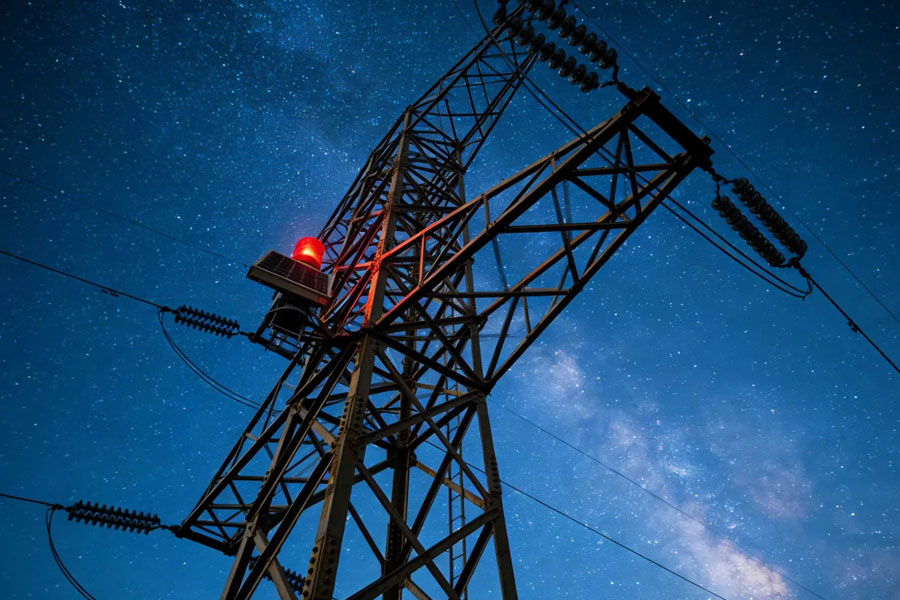
Lights should be mounted securely and positioned so that the tower structure does not unnecessarily block their output. The mounting design should also account for wind loads, vibration, corrosion, and other site conditions.

3). Power Supply and Maintenance Considerations
Transmission towers may be located far from roads, buildings, or maintenance facilities. This makes power supply and long-term maintenance important parts of the design.
For AC-powered systems, engineers should check the availability of a suitable power source, cable routing, electrical protection, and the reliability of the supply.
For solar-powered systems, the design should consider local sunlight conditions, solar panel orientation, battery capacity, and the expected operating time during periods of limited sunlight.
The maintenance plan should also address safe access, routine inspection, battery replacement where applicable, and how light failures will be detected and handled.
4). Standards to Check Before Installation LED/ Solar Transmission Tower Obstruction Light
Before finalizing the design, confirm the applicable requirements with the project owner, aviation authority, and relevant engineering team.
Depending on the project location, useful references may include:
- FAA AC 70/7460-1N: Obstruction marking and lighting guidance for projects subject to FAA requirements. Check the current revision before use.
- ICAO Annex 14: International standards and guidance related to aerodromes and obstacle marking and lighting, where applicable and adopted by the relevant authority.
- National aviation regulations: Local rules governing obstacles to air navigation and obstruction lighting.
- Project-specific approvals: Requirements established through an aviation assessment, permit, or approved lighting design.
Also check the specifications for the selected obstruction lights, including light intensity, color, flashing characteristics, environmental protection, and power supply. A product’s description or model name alone does not establish that it meets the requirements of a particular project.
6. Frequently Asked Questions About Transmission Tower Obstruction Light
1). Where Should Obstruction Lights Be Installed on a Transmission Tower?
The tower top is an important position because it marks the highest point of the structure. Depending on the tower height and approved lighting plan, additional lights may be required at intermediate levels or on projecting sections.
2). Do All Transmission Towers Need Obstruction Lights?
No. The requirement depends on the tower’s location, height, surrounding airspace, and the applicable aviation regulations. A route-wide assessment may be needed to identify which towers and other parts of the transmission line require marking or lighting.
3).Can Solar Obstruction Lights Be Used on Transmission Towers?
Yes, solar-powered obstruction lights can be considered, particularly for remote towers where AC power is difficult to access. However, the solar system must provide reliable operation under local sunlight and weather conditions, and the selected light must meet the project’s approved specifications.
4).Do Overhead Transmission Lines Need Separate Warning Markers?
In some cases, yes. Lighting the supporting towers does not necessarily make the overhead conductors sufficiently visible. Depending on the route and aviation requirements, the conductors may need separate marking or lighting measures.
5).How Do You Choose the Right Transmission Tower Obstruction Light Intensity?
The choice depends on the approved aviation lighting configuration, not tower height alone. Engineers should confirm the required intensity, light color, flashing characteristics, and installation arrangement before selecting a product.
7. Conclusion
Installing obstruction lights on power transmission towers requires careful planning. The tower top, intermediate sections, and projecting structures should all be considered when determining the lighting arrangement.
Engineers also need to assess the full transmission route, distinguish tower lighting from conductor marking, and select suitable light intensity and power supply options.
Most importantly, the final installation should follow the applicable aviation regulations and approved project requirements. By considering these factors during the design stage, project teams can develop a reliable transmission tower obstruction light system that meets the applicable aviation requirements.