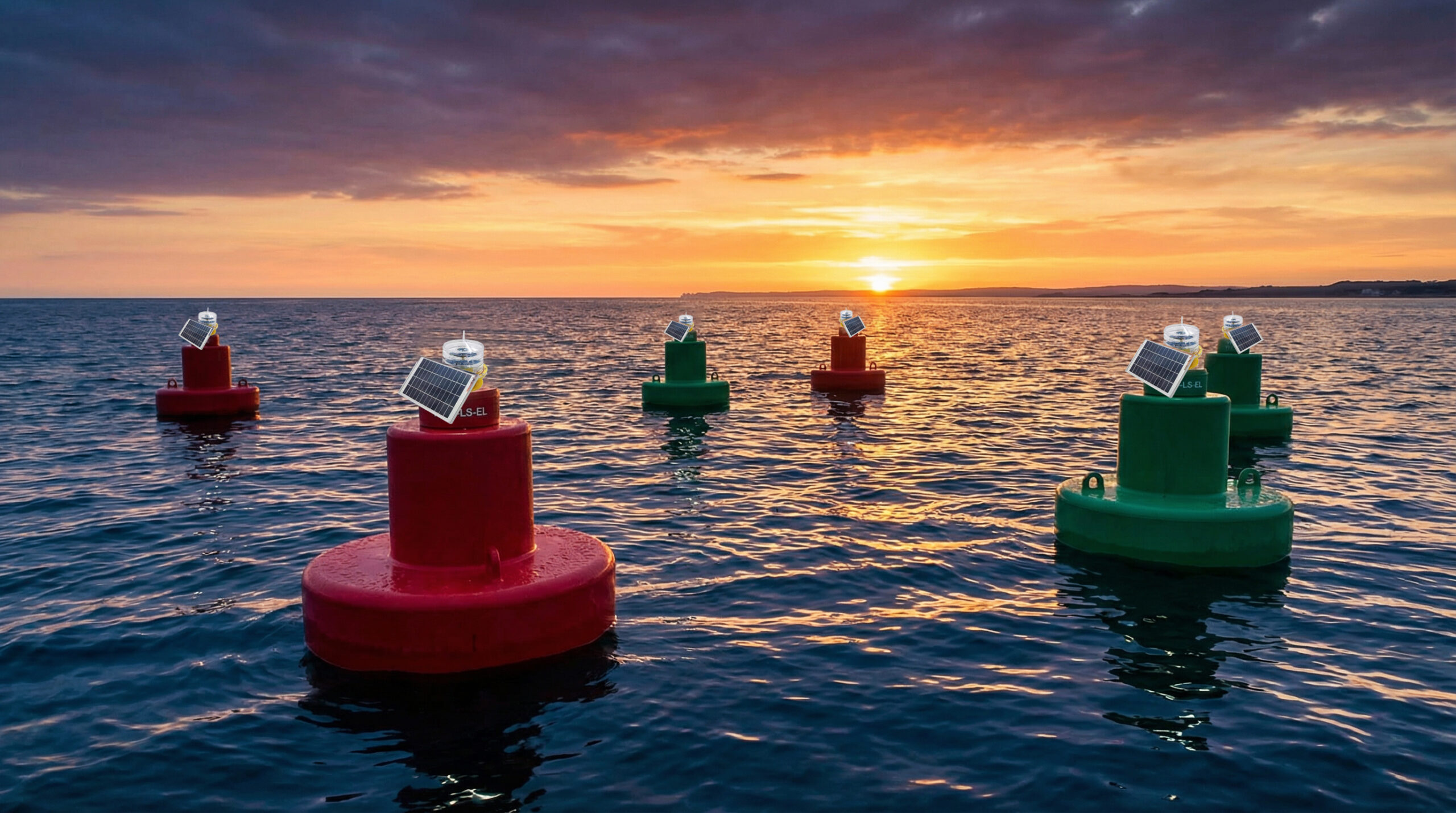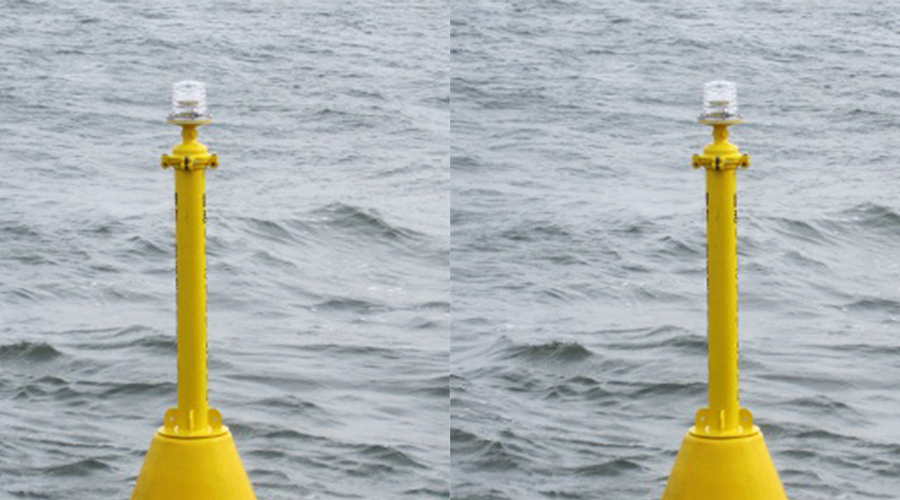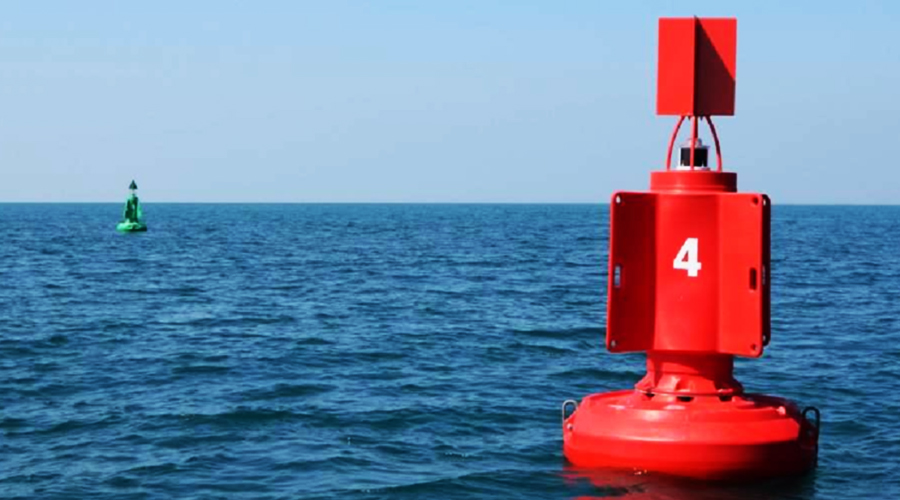
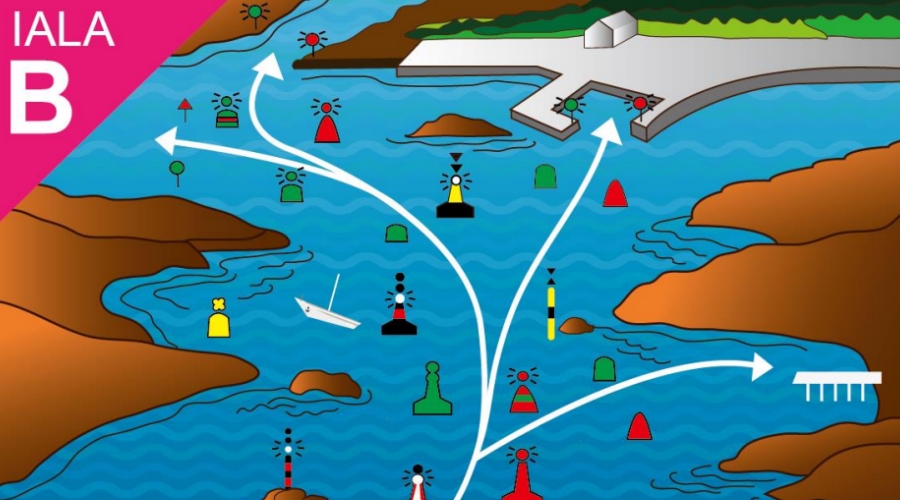
Marine buoyage lights play a critical role in maritime safety. Beyond providing visibility at night, their flashing patterns communicate important navigational information to mariners, helping vessels identify channels, hazards, safe waters, and navigation routes.
Whether installed on buoys, beacons, lighthouses, offshore platforms, bridges, or harbor entrances, navigation lights follow internationally recognized standards established by the International Association of Marine Aids to Navigation and Lighthouse Authorities (IALA).
Understanding these flashing characteristics is essential for both safe navigation and proper marine lighting system selection.
In this guide, we explain the most common marine navigation light flashing patterns, their meanings, and how they are used within the IALA buoyage system.
Why Do Marine Buoyage Lights Use Different Flashing Patterns?
At sea, multiple navigation aids may appear similar at night. Colors and shapes are often difficult to distinguish from a distance or during adverse weather conditions.
To help mariners identify navigation aids quickly and accurately, each marine light is assigned a unique flashing characteristic.
These light rhythms allow navigators to differentiate between:
- Lateral Marks
- Cardinal Marks
- Safe Water Marks
- Isolated Danger Marks
- Special Marks
- Harbor Entrances
- Offshore Structures
- Marine Beacons
- Port & others
By observing the light rhythm, vessels can determine the purpose of the navigation aid even when the physical structure is not clearly visible.
What Are IALA Light Characteristics?
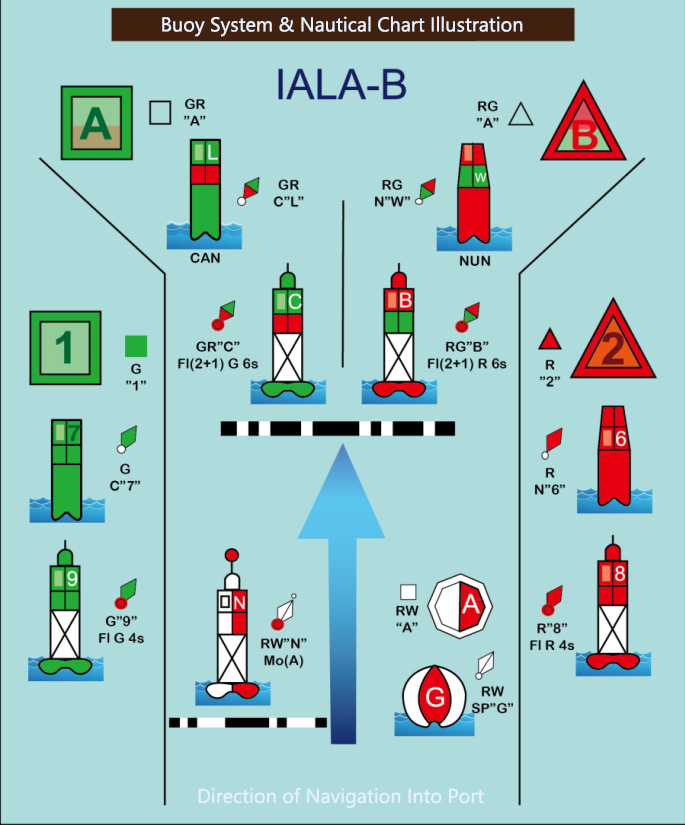
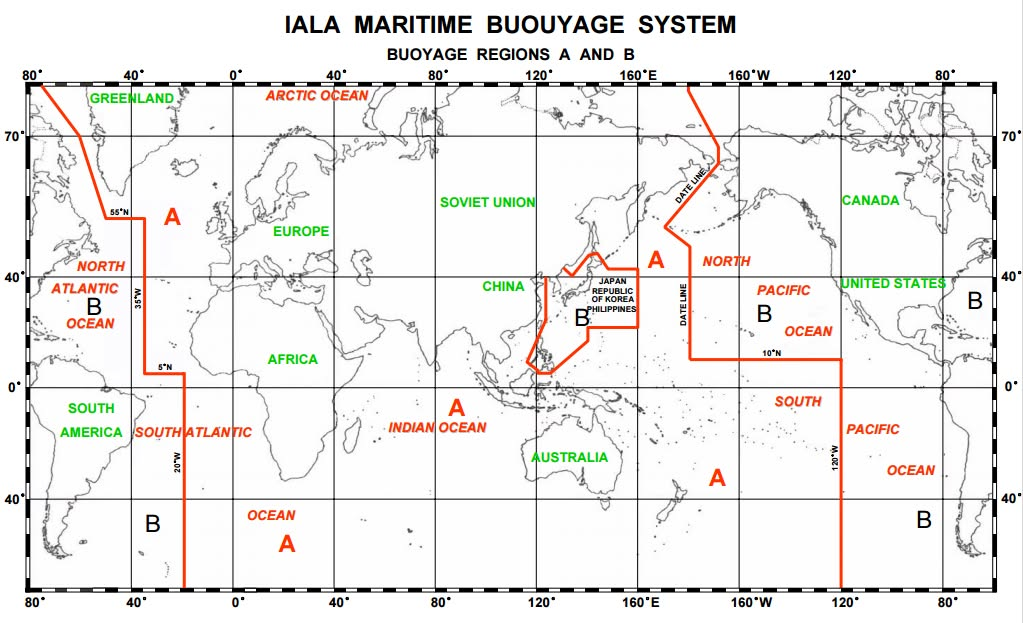
IALA defines a set of standardized light characteristics used throughout the global marine navigation system.
Each characteristic follows a specific pattern of light and darkness that helps identify the navigation aid.
The most commonly used light characteristics include:
| Abbreviation | Meaning |
|---|---|
| F | Fixed |
| Fl | Flashing |
| LFl | Long Flashing |
| Q | Quick Flashing |
| VQ | Very Quick Flashing |
| Iso | Isophase |
| Oc | Occulting |
| Mo | Morse Code |
These characteristics are widely used on marine lanterns, navigation buoys, lighthouses, channel markers, and offshore navigation systems.
Common Marine Navigation Light Flashing Patterns
1) Fixed Light (F)
A fixed light remains continuously illuminated without interruption.
Typical applications:
- Harbor lighting
- Dock lighting
- Marina facilities
- Local navigation aids
Because fixed lights provide no identification rhythm, they are generally used where navigational distinction is less critical.
2) Flashing Light (Fl)
A flashing light produces a brief flash followed by a longer period of darkness.
Example:
Fl 5s
One flash every five seconds.
Typical applications:
- Lateral marks
- Channel buoys
- Harbor navigation aids
Flashing lights are among the most commonly used marine light characteristics due to their simplicity and visibility.
3) Group Flashing (Fl(2), Fl(3), Fl(4))
Group flashing lights emit multiple flashes before a period of darkness.
Examples include:
- Fl(2)
- Fl(3)
- Fl(4)
The number of flashes helps distinguish one navigation aid from another.
Typical applications:
- Channel markers
- Buoy identification
- Port navigation systems
4) Long Flashing (LFl) of Marine Buoyage Lights
A long flashing light has a flash duration of at least two seconds.
Typical applications:
- Fairways
- Major navigation routes
- Harbor entrances
Long flashes are highly visible and easily distinguished from standard flashing rhythms.
5) Isophase (Iso)
An isophase light displays equal periods of light and darkness.
Example:
Iso 6s
3 seconds on, 3 seconds off.
Typical applications:
- Safe Water Marks
- Selected navigation beacons
Its balanced rhythm makes it easy to recognize at night.
6) Occulting (Oc)
An occulting light remains illuminated longer than it remains dark.
This characteristic is effectively the opposite of a flashing light.
Typical applications:
- Lighthouses
- Coastal navigation aids
- Prominent marine beacons
Occulting lights are often selected when a more continuous visual reference is desired.
7) Quick Flashing (Q)
Quick flashing lights produce between 50 and 79 flashes per minute.
Typical applications:
- Cardinal Marks
- Hazard warnings
- High-priority navigation aids
Their rapid rhythm makes them highly conspicuous against background lighting.
8) Very Quick Flashing (VQ)
Very quick flashing lights produce between 80 and 159 flashes per minute.
Typical applications:
- Major cardinal marks
- Areas with significant background light interference
- High-risk navigation zones
These lights offer enhanced visibility in challenging environments.
9) Morse Code Lights (Mo)
Morse code lights use sequences of short and long flashes to represent letters.
Example:
Mo(A)
• —
One of the most recognized examples is the Safe Water Mark, which may display Morse Code “A”.
Typical applications:
- Safe Water Marks
- Special navigation aids
- Landmark identification
Morse code characteristics provide an additional layer of navigational information when required.
Understanding Cardinal Mark Light Characteristics
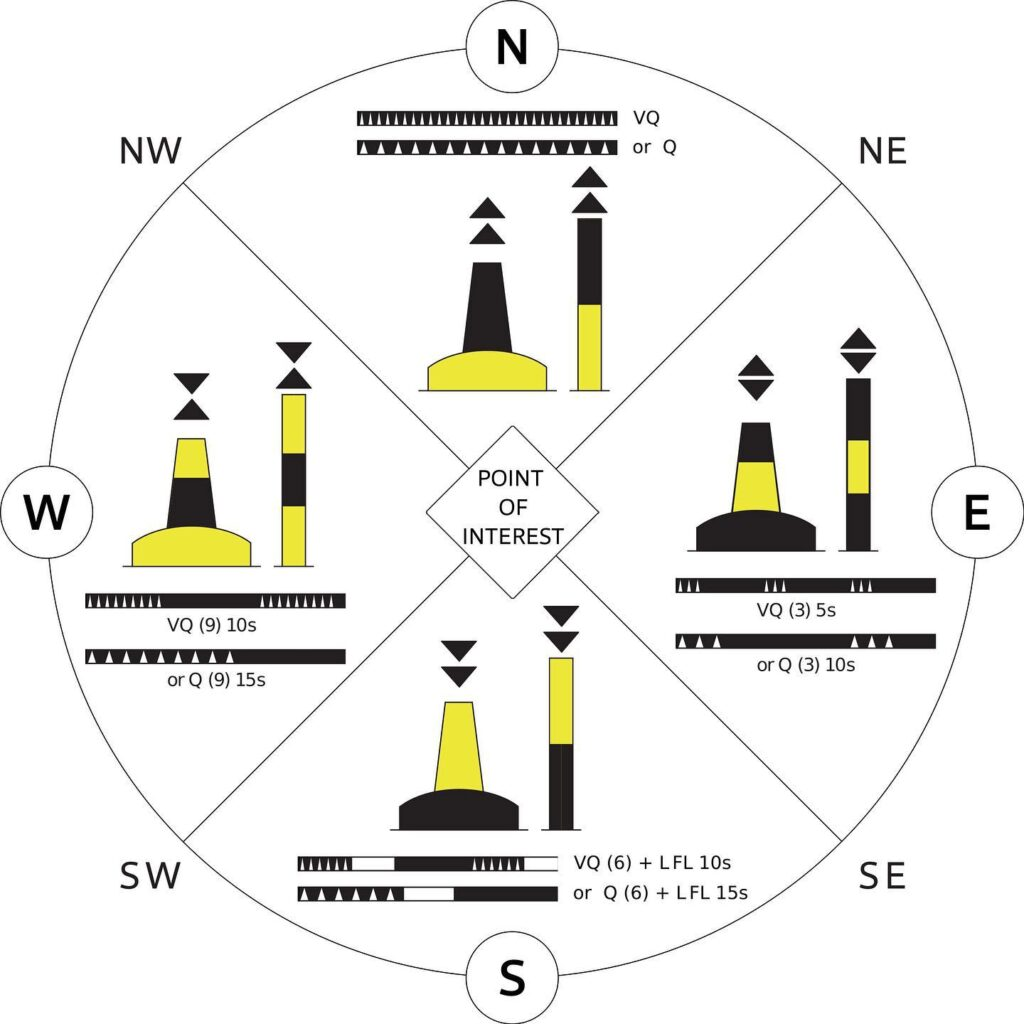
Cardinal Marks are among the most important navigation aids in the IALA system.
They indicate the safest side on which vessels should pass an obstruction or hazard.
Each cardinal mark uses a unique quick flashing sequence that corresponds to a compass direction.
| Cardinal Mark | Light Characteristic |
|---|---|
| North | Q or VQ |
| East | Q(3) or VQ(3) |
| South | Q(6)+LFl |
| West | Q(9) or VQ(9) |
Easy Memory Method: Clock Face Rule
Think of a clock:
- East = 3 o’clock = 3 flashes
- South = 6 o’clock = 6 flashes + long flash
- West = 9 o’clock = 9 flashes
- North = 12 o’clock = continuous quick flashing
This simple method is widely used by mariners around the world.
How to Read Marine Buoyage Lights Codes
Marine charts and navigation publications often use abbreviated light descriptions.
Understanding these codes is essential for interpreting navigation aids correctly.
Example 1: Fl(3) 10s
Meaning:
- Fl = Flashing
- (3) = Three flashes
- 10s = Complete cycle repeats every 10 seconds
Example 2: Q(6)+LFl 15s
Meaning:
- Q = Quick Flashing
- (6) = Six quick flashes
- LFl = One long flash
- 15s = Complete cycle repeats every 15 seconds
This characteristic is commonly used for South Cardinal Marks.
Example 3: Mo(A) 6s
Meaning:
- Mo = Morse Code
- A = Morse letter A (• —)
- 6s = Cycle repeats every six seconds
Commonly used on Safe Water Marks.
Typical Applications of Marine Navigation Light Characteristics
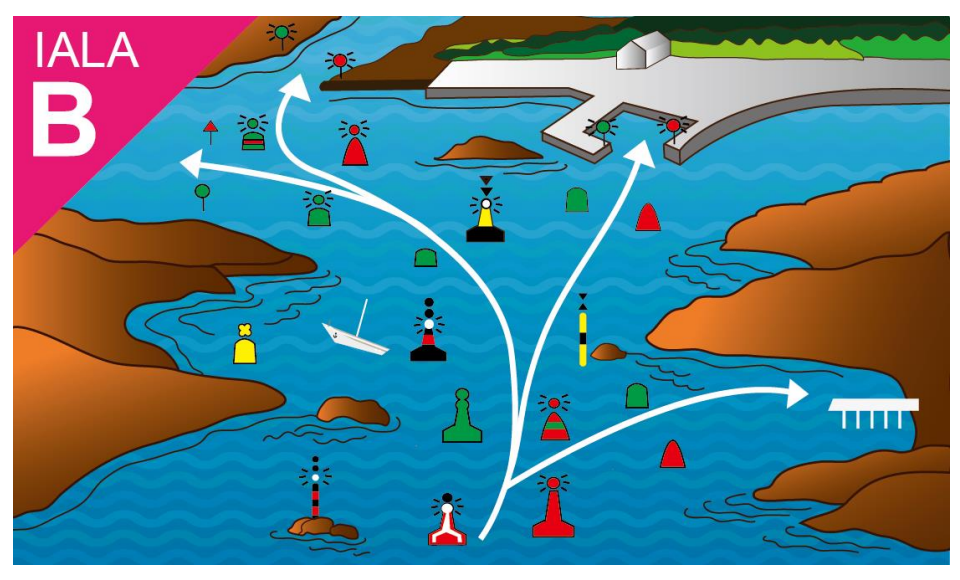
Different navigation aids require different flashing characteristics.
| Navigation Aid | Common Light Characteristic |
|---|---|
| Lateral Mark | Fl |
| Cardinal Mark | Q / VQ |
| Safe Water Mark | Iso / Mo(A) |
| Isolated Danger Mark | Fl(2) |
| Special Mark | Fl(Y) |
| Harbor Entrance | LFl |
| Offshore Platform | Custom Flash Pattern |
| Bridge Navigation Aid | Fl or Oc |
Selecting the correct light characteristic ensures compliance with navigation standards and improves safety for vessel traffic.
Modern Marine Lanterns and Programmable Flash Characters
Modern LED marine lanterns offer far greater flexibility than traditional navigation lights.
Many marine lanterns can support:
- More than 256 programmable flash characters
- More than 350 programmable flash characters
- GPS synchronization
- Remote monitoring
- Adjustable intensity settings
- Multiple IALA-compliant flashing patterns
This allows a single marine lantern model to be configured for a wide range of applications, including buoys, beacons, offshore platforms, bridges, and port navigation systems.
Choosing the Right Marine Navigation Light for Your Project
When selecting a marine navigation light, consider:
- Required visibility range
- IALA compliance requirements
- Navigation aid type
- Power supply method
- Solar autonomy requirements
- Flash character programming options
- Remote monitoring needs
Projects involving offshore wind farms, ports, waterways, bridges, and marine infrastructure often require customized flashing characteristics to meet local authority requirements.
Working with an experienced marine navigation lighting supplier can help ensure regulatory compliance and long-term operational reliability.
Need Help Selecting the Right Flash Character?
Choosing the correct flashing pattern is critical for safe navigation and regulatory compliance.
Whether your project involves navigation buoys, marine beacons, offshore platforms, bridge structures, or harbor entrances, our engineering team can help identify the appropriate IALA-compliant light characteristic and recommend a suitable marine lantern solution.
Contact us today to discuss your marine navigation lighting project or request technical specifications for our solar-powered marine lanterns.
Reliable IALA Compliant Marine Signal Solutions
When deploying these flashing patterns in harsh sea conditions, choosing high-visibility and durable hardware is crucial.
YFFY provides industry-leading Marine Navigation Lights System Solutions that natively support custom programable flashing codes including Isophase, Occulting, and Morse Code.
Example of Application Scenarios & Featured Product
- Featured Model: YFFY-LS-C-1 Solar Marine Buoyage Lights
- Description: Perfect for port entries, aquaculture fields, and offshore oil platforms. It features ultra-low power consumption, IALA-compliant color outputs, and an integrated wireless synchronizer supporting over 360 flashing patterns.
Frequently Asked Questions about Buoyage Lights
1) What Does Fl Mean On a Marine Navigation Light?
Fl stands for Flashing. The light flashes briefly and remains dark for a longer period before repeating the cycle.
2) What is The Difference Between Fl and Oc?
Flashing lights are off longer than they are on, while occulting lights are on longer than they are off.
3) What Does Q(6)+LFl Mean?
It indicates six quick flashes followed by one long flash and is commonly used for South Cardinal Marks.
4) What is a Morse Code Marine Buoyage Lights?
A Morse code light uses short and long flashes to represent letters. One common example is Morse Code “A” used on Safe Water Marks.
5) How Many Flash Characters Can Marine Lanterns Support?
Modern LED marine lanterns commonly support 256, 350, or even more programmable flash characters, depending on the model.