I. Project Background
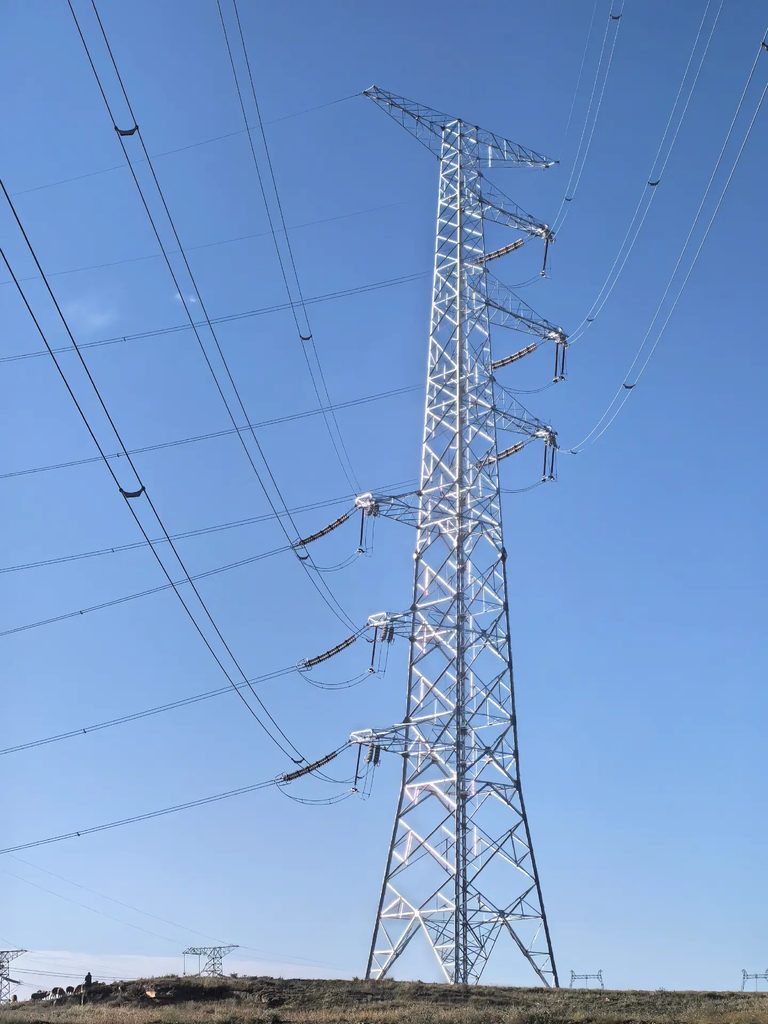
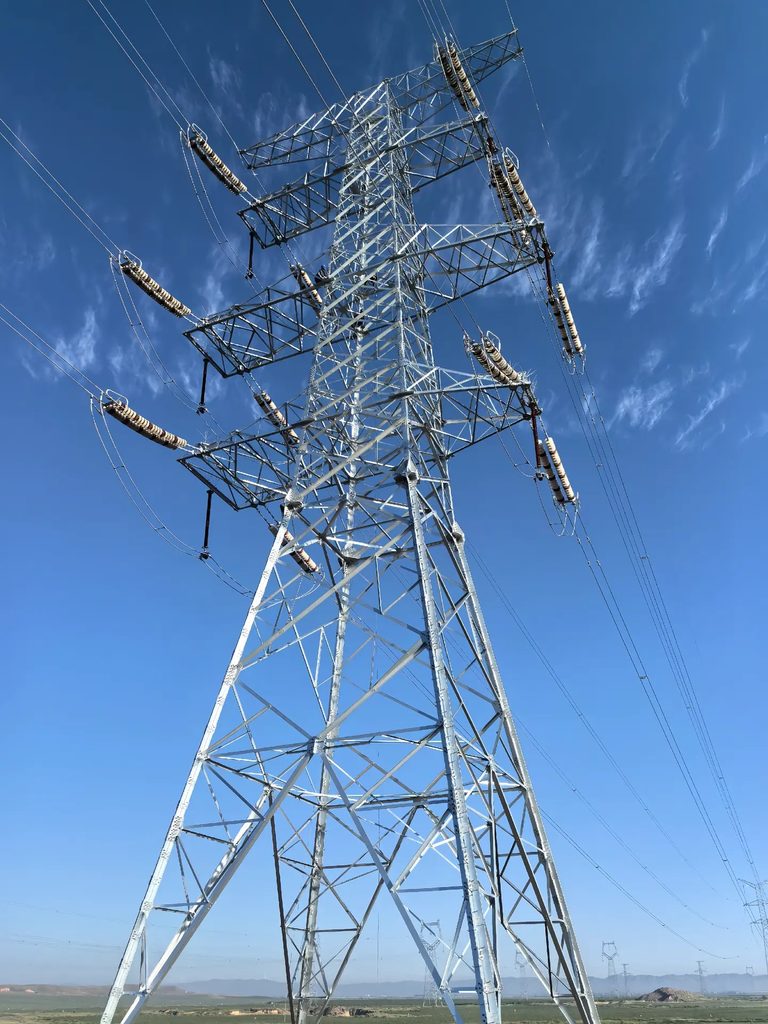
In Gansu, China, YFFY completed an aviation warning light and fall protection rail project for a 330 kV double-circuit transmission tower. The project included the installation of Solar Aviation Obstruction Lights and a fall protection rail system to support both aviation visibility and safer access for future tower inspection and maintenance.
The transmission tower is part of a high-voltage overhead power transmission system. Because of its height and location in an open outdoor environment, the tower may need to be marked and illuminated as an aviation obstacle according to the requirements applicable to the project site.
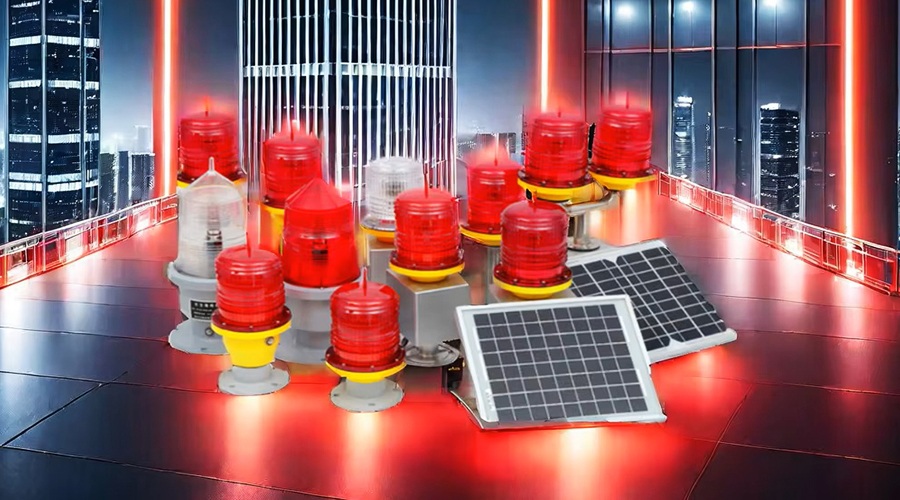
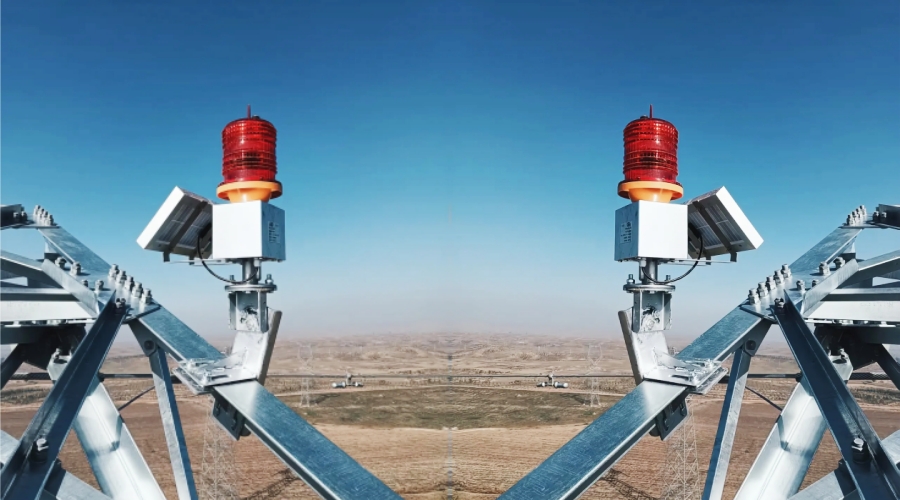
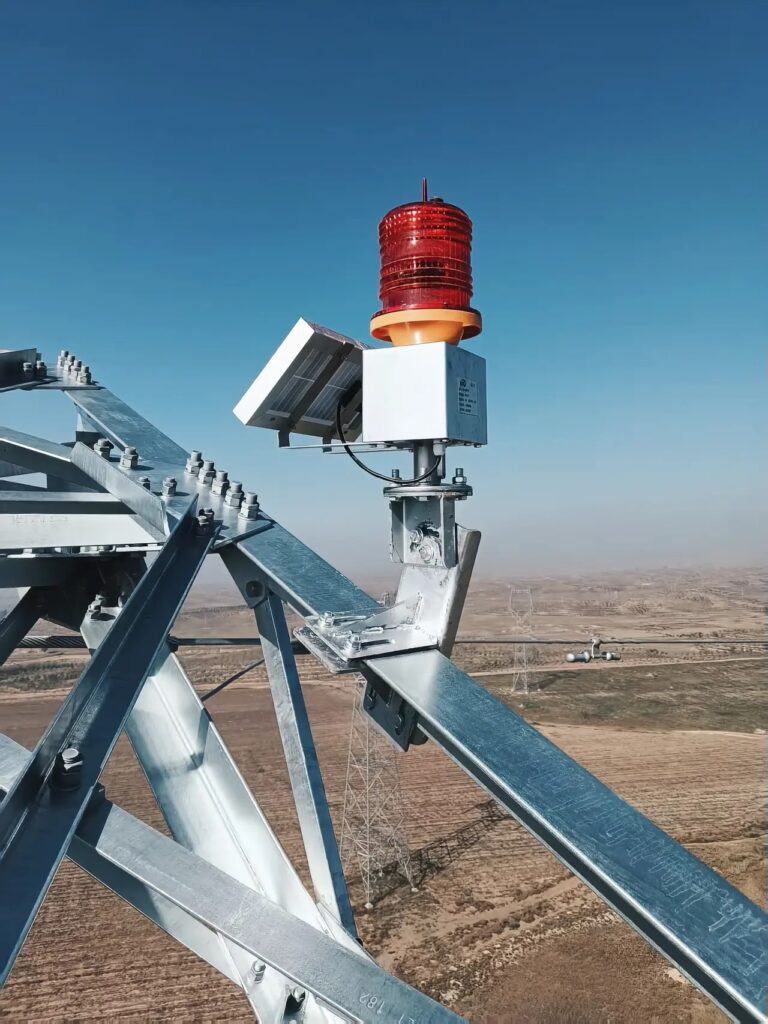
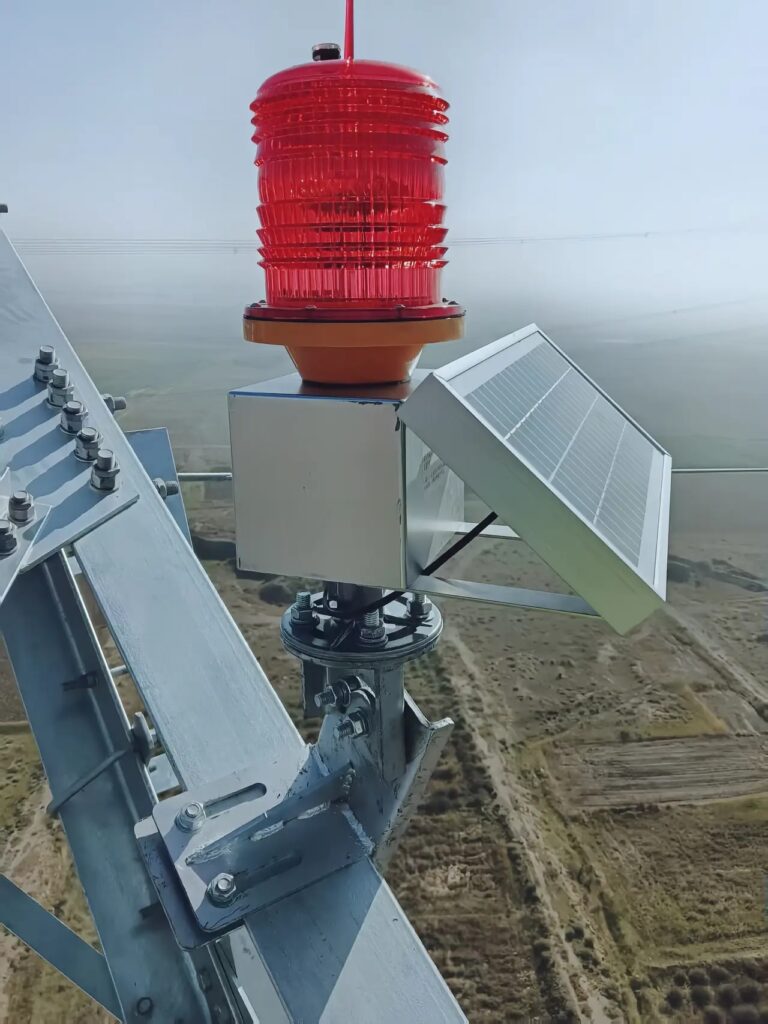
For this project, the selected product was the YFFY-MS/S L864 Medium-Intensity Type B Solar Aviation Obstruction Lights. The solar-powered light was installed directly on the transmission tower, eliminating the need to extend a conventional external power supply to the tower.
The project also included a fall protection rail. This was important because the obstruction light is installed at an elevated position and may require inspection, maintenance, or replacement after installation. Providing a safe access system as part of the same project allowed the lighting installation and future maintenance requirements to be considered together.
II. Why Were Solar Aviation Obstruction Lights Used on the Transmission Tower?
High-voltage transmission towers are often installed across large areas, including rural land, mountains, open fields, and locations far from convenient electrical infrastructure. Supplying power to an obstruction light on an individual tower can therefore be more complicated than installing a light on a building with an existing electrical system.
For this 330 kV transmission tower, a conventional wired obstruction light would require an external power connection and additional cable installation. Depending on the tower location, this can increase installation work and make future inspection of the power system more complicated.
Solar Aviation Obstruction Lights provide an alternative by combining the light source, solar panel, battery, and control system into an independent unit. This means the obstruction light can operate without relying on a separate grid connection at the tower.
For transmission line projects where access to external power is limited, Solar Lights for Transmission Towers can therefore be considered as part of the initial lighting design rather than being added after the tower has already been constructed.
III. Why Was Medium-Intensity Type B Aviation Obstruction Light Selected?
The project used the: YFFY-MS/S L864 Medium-Intensity Type B Solar Aviation Obstruction Lights
Medium-intensity lights are commonly used on structures that require a higher level of aviation conspicuity than can be provided by low-intensity obstruction lights alone.
Type B configurations are generally associated with red flashing aviation warning lights used during nighttime operation. The exact required light intensity, flash characteristics, installation arrangement, and operating period should always be determined according to the applicable aviation requirements for the project location.
For a tall transmission structure, the choice of a Medium-Intensity Type B Aviation Obstruction Light is therefore not simply a product preference. It should be based on factors such as:
- Tower height and overall structure
- Location and surrounding airspace
- Required aviation conspicuity
- Applicable local or international aviation requirements
- Required light intensity and flashing characteristics
- Installation position on the tower
This project selected a medium-intensity Type B configuration to provide the required aviation warning function for the 330 kV transmission tower.
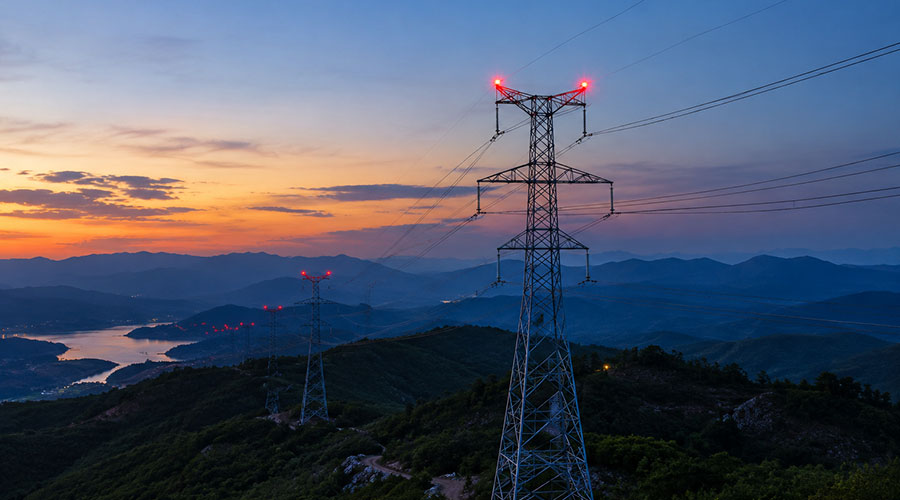
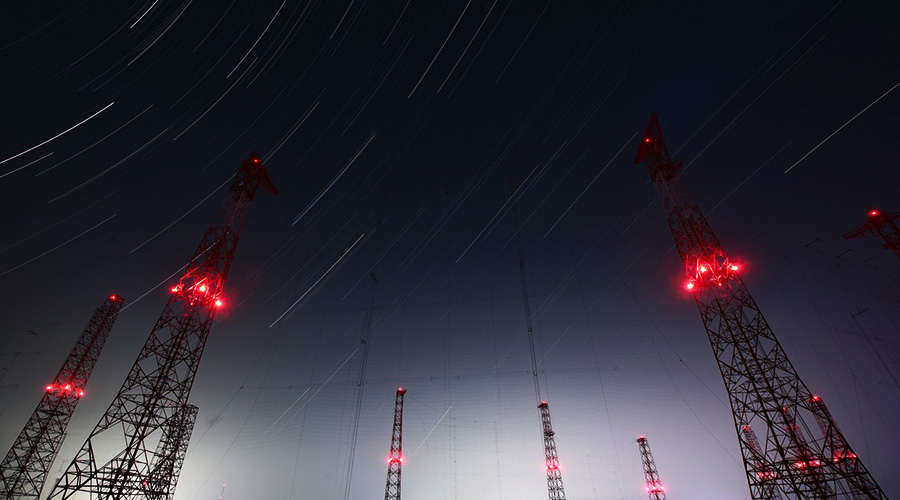
IV. How Does a L864 Solar Aviation Obstruction Lights Work on Transmission Tower?
A L864 Solar Obstruction Light combines the lighting system and power supply into an independent outdoor unit.
The solar panel collects energy during daylight hours and stores it in the battery. The LED light source then operates according to the programmed control system, typically switching to its warning mode automatically when the surrounding light level decreases.
For a transmission tower, this integrated design has a practical advantage: the lighting system does not require a separate power cable running from a nearby building or electrical source. The system therefore reduces the amount of electrical infrastructure required at the tower itself.
However, solar performance still depends on the local environment. Solar panel orientation, available sunlight, battery capacity, power consumption, and seasonal weather conditions should all be considered when selecting a solar obstruction light for a specific transmission tower.
V. Installation Considerations for a 330 kV Double-Circuit Transmission Tower
Installing an aviation obstruction warning light on a transmission tower is different from installing one on a building or a simple pole.
A 330 kV double-circuit transmission tower contains multiple structural members, crossarms, conductors, insulators, and other electrical components. The obstruction warning light and its mounting system therefore need to be installed in a position that provides appropriate visibility while respecting the tower’s structural and electrical safety requirements.
1. Selecting the Mounting Position
The mounting position should be determined based on the actual tower structure and the required aviation warning arrangement.
Several factors need to be considered during installation:
- Visibility of the obstruction light from the surrounding airspace
- Overall height and profile of the transmission tower
- Relationship between the light and the tower’s structural members
- Clearance from conductors and other energized components
- Strength and compatibility of the mounting point
- Accessibility for future inspection and maintenance
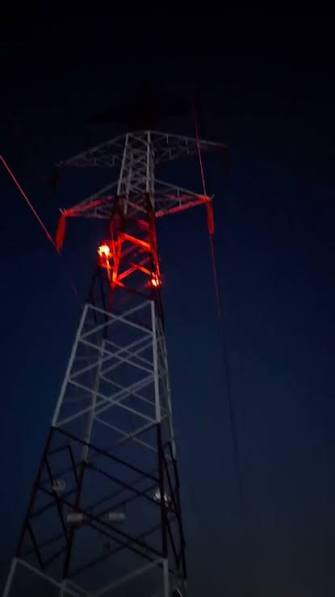
For this reason, installing an obstruction light is not simply a matter of placing a light at the highest point of the tower. The final position should be coordinated with the tower structure and the project’s electrical and aviation requirements.
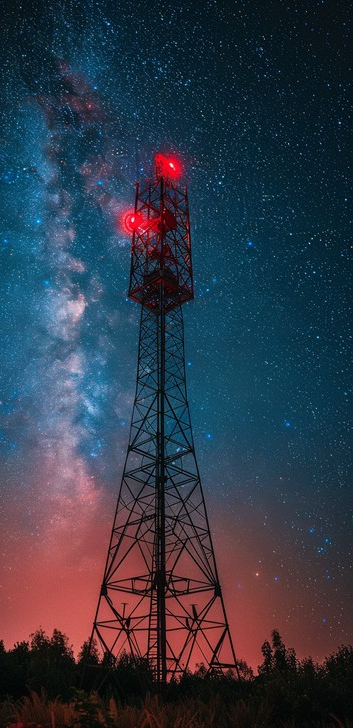
2. Solar Panel Orientation
Solar-powered obstruction lights require an additional installation consideration that conventional wired lights do not: the solar panel needs adequate exposure to sunlight.
Transmission tower structures contain numerous steel members that can create partial shading at different times of the day. The orientation and mounting position of the solar panel should therefore be considered together with the obstruction light position.
Local sunlight conditions and seasonal changes should also be evaluated to ensure that the solar charging system can provide sufficient energy for the required operating schedule.
This is an important part of designing Solar Aviation Obstruction Lights for Transmission Towers: the selected position needs to work for both aviation visibility and solar energy collection.
VI. Why Was a Fall Protection Rail Installed Alongside the Obstruction Light?
The project included not only the aviation warning light installation but also a fall protection rail system. These two systems serve different purposes, but they are closely connected during long-term operation.
The aviation obstruction light is installed at a high position on the transmission tower. Even when the lighting system is designed for long-term operation, it may still require periodic inspection, cleaning, troubleshooting, or component replacement.
Without an appropriate fall protection system, reaching the light can create additional risks for maintenance personnel.
The fall protection rail provides a controlled route for workers accessing elevated areas of the tower and supports safer movement during inspection and maintenance.
In this project, the two systems can therefore be viewed as complementary:
The Solar Aviation Obstruction Light provides visibility for aviation safety, while the fall protection rail supports safer access for the people responsible for maintaining the equipment.
Considering both requirements during the same project can make future maintenance planning more practical.
VII. Outdoor Requirements for Solar Aviation Obstruction Lights
Transmission towers remain exposed to outdoor weather throughout their service life. Depending on the location, equipment may need to withstand sunlight, rain, snow, wind, dust, and seasonal temperature changes.
For this reason, outdoor protection is an important consideration when selecting a Solar Aviation Obstruction Light for a Transmission Tower.
The YFFY-MS/S solar warning lights uses an integrated solar power and LED lighting design intended for outdoor installation. Its sealed housing and weather-resistant construction help protect the internal components during long-term outdoor operation.
The solar panel and battery system also need to be selected according to the expected environmental conditions. For locations with significant seasonal variation, the design should take into account available solar radiation, low-temperature conditions, battery performance, and periods of reduced sunlight.
The goal is not simply to install a solar light, but to ensure that the complete lighting system can operate reliably in the environment where the transmission tower is located.
VIII. Project Completion of Solar Aviation Obstruction Lights
The Gansu project successfully completed the installation of YFFY-MS/S L864 Medium-Intensity Type B Solar Aviation Obstruction Lights and the associated fall protection rail system on a 330 kV double-circuit transmission tower.
The solar-powered lighting system eliminated the need for a separate conventional power cable at the tower, while the medium-intensity Type B configuration provided the required aviation warning function for the project.
At the same time, the fall protection rail provided safer access for personnel who may need to inspect or maintain the obstruction light at height.
The project therefore brought together three practical requirements of a high-voltage transmission tower:
Aviation visibility + independent solar power + safe maintenance access.
For transmission infrastructure in remote or open areas, this type of integrated approach can help simplify the installation of aviation warning equipment while considering its long-term operation and maintenance.
IX. Frequently Asked Questions
1. What Type of Aviation Obstruction Light Is Suitable for a 330 kV Transmission Tower?
The appropriate light type depends on the tower height, location, surrounding airspace, and applicable aviation requirements. For this project, a Medium-Intensity Type B Aviation Obstruction Lights was selected for the 330 kV double-circuit transmission tower.
The required intensity, flashing characteristics, number of lights, and mounting positions should be confirmed during project design rather than determined only by the voltage level of the transmission line.
2. Why Use Solar Aviation Obstruction Lights on Transmission Towers?
Transmission towers are often distributed across large areas where grid power is not readily available at each individual tower. Solar Aviation Obstruction Warning Lights can operate independently using solar energy, reducing the need for external power cables and additional electrical infrastructure.
This solar lights can be particularly useful for remote transmission towers where extending a conventional power supply would be difficult or costly.
3. What Is a L864 Solar Obstruction Light?
A L864 Obstruction Light is a solar-powered aviation warning light designed around the L864 medium-intensity obstruction light category. It typically uses a red flashing light for aviation warning applications and combines the light source with an independent solar charging and battery system.
The exact performance and configuration should be selected according to the requirements applicable to the installation site.
4. Can Solar Aviation Obstruction Lights Work in Areas With Limited Sunlight?
Yes, but the solar power system needs to be designed according to local conditions.
Solar panel capacity, battery storage, power consumption, panel orientation, seasonal sunlight, and consecutive periods of poor weather all affect operating performance.
For transmission towers located in areas with long winters, frequent cloud cover, or other challenging solar conditions, these factors should be evaluated before selecting the solar lighting system.
5. Does a Solar Obstruction Light Need a Separate Power Cable?
No. A properly designed solar obstruction warning light can operate as an independent system using its solar panel and built-in energy storage.
This is one of the main advantages of Solar Lights for Transmission Towers, particularly when the tower is located far from existing electrical infrastructure.
6. Why Is Fall Protection Important When Installing Transmission Tower Obstruction Lights?
Transmission Tower Obstruction Lights are normally installed at elevated positions, so inspection and maintenance require personnel to work at height.
A fall protection rail or other appropriate fall protection system can provide safer access for inspection, maintenance, and replacement work. The exact system should be designed according to the tower structure and applicable working-at-height safety requirements.

X. What Should Be Considered Before Choosing Solar Aviation Obstruction Lights for Transmission Tower?
A complete evaluation should include:
- Tower height and structure
- Aviation warning requirements
- Required light intensity and flashing characteristics
- Number and location of obstruction lights
- Solar radiation and seasonal weather conditions
- Battery capacity and expected autonomy
- Mounting and structural compatibility
- Clearance from energized transmission components
- Future inspection and maintenance access
Considering these factors together helps ensure that the selected Solar Aviation Obstruction Light for Power Transmission Tower is suitable not only for initial installation but also for long-term operation.