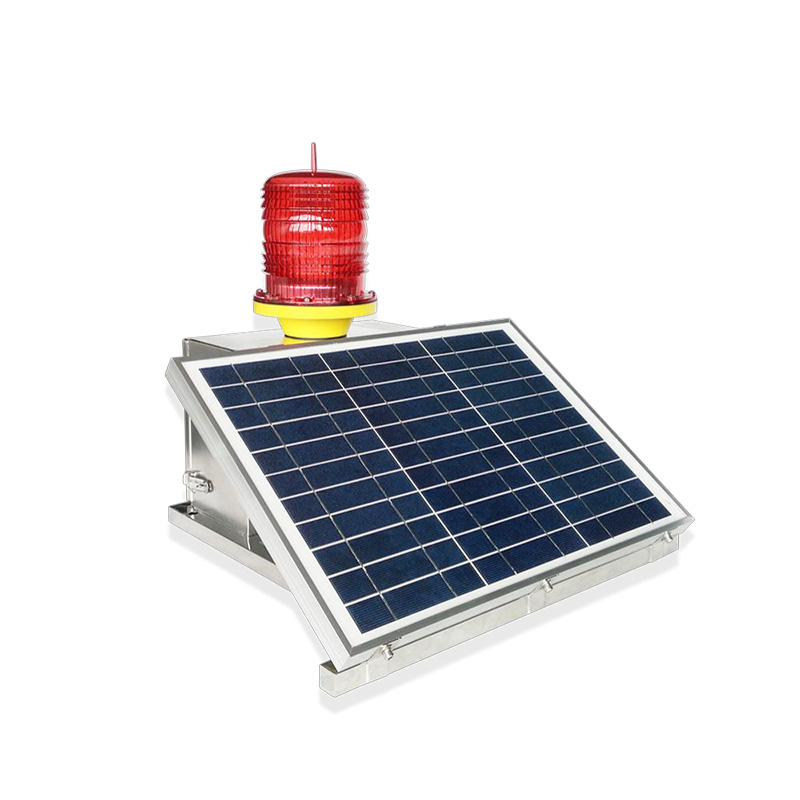
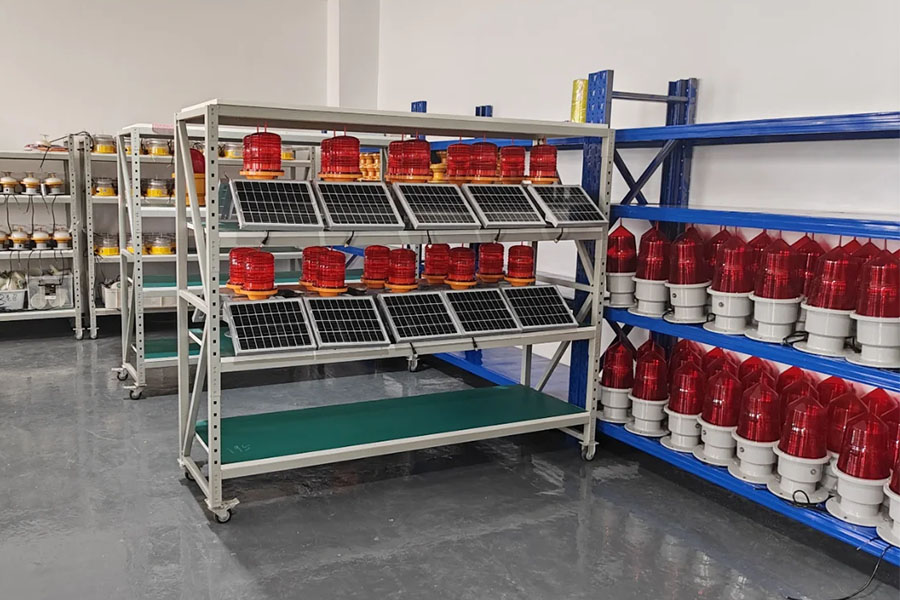
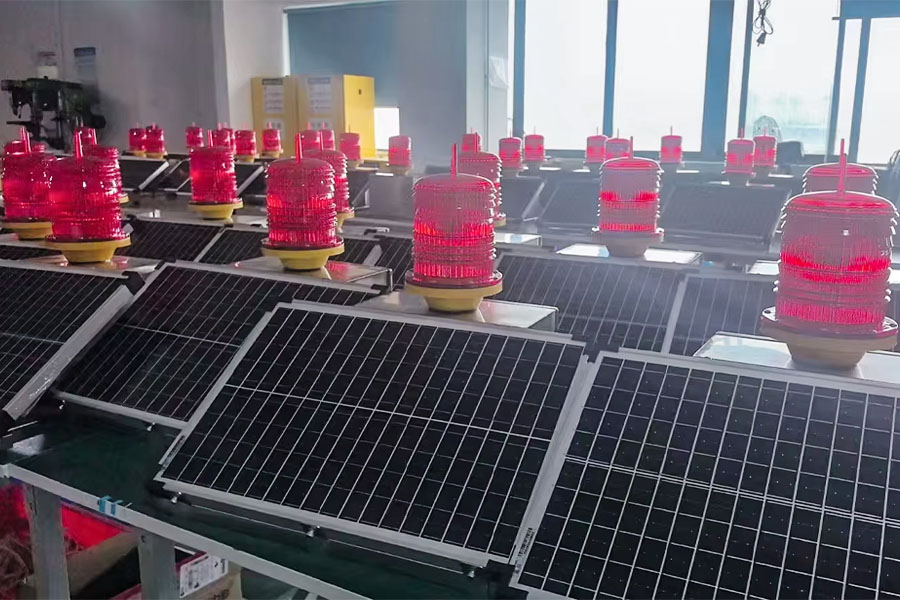
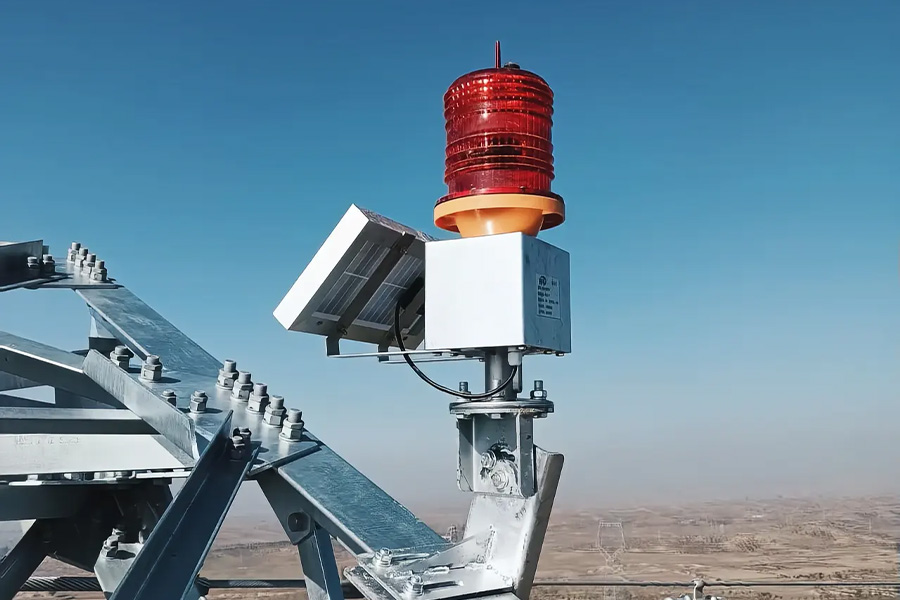
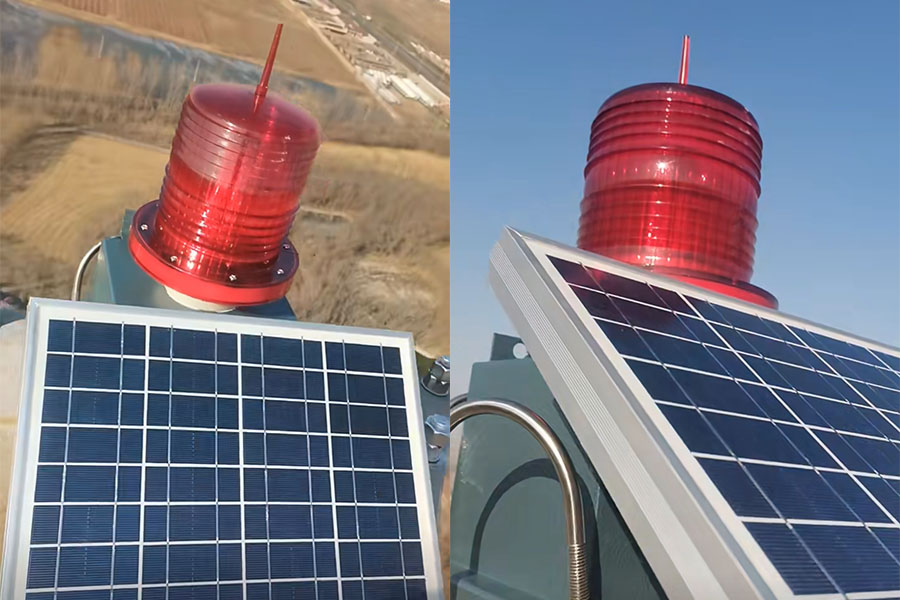
The YFFY-MS/S is a self-contained, solar-powered medium-intensity Type B aviation obstruction light. It flashes red at 2000 cd (±25%) through 360° to mark the top of structures 45 to 105 m tall, and it is designed to ICAO Annex 14 Volume I, Table 6.3 (medium-intensity Type B), with an FAA L-864 configuration available. With no grid cable to install, it suits telecom towers, chimneys, wind turbines and remote pylons where trenching and wiring are costly or impractical.
Manufactured by Shaanxi Yuefeng Feiyao Technology Co., Ltd. (YFFY Lights), Xi’an, China. Technical data sheet, compliance documents and a factory quote are available within 12 hours of your inquiry.
Key Features of the YFFY-MS/S Solar Aviation Obstruction Light
- Off-grid operation. Solar panel, controller and battery in one unit: no power cable, no trenching, no wiring job. With no mains cable running up the structure, there is also no cable path for lightning-induced surges, which matters on exposed towers.
- 2000 cd red flashing LED. Cold LED source rated for more than 100,000 hours, low power draw, 20 flashes per minute.
- Automatic dusk-to-dawn mode. The solar panel doubles as the photocell, so no separate light sensor is needed.
- 150 hours of battery autonomy. That is roughly 12 consecutive 12-hour nights without useful sunshine.
- Built for exposed sites. IP65, −45 to 65 °C, 80 m/s wind rating, UV- and vibration-resistant polycarbonate lens, 304 stainless steel base.
- Service-friendly. Side-opening stainless steel battery box, and a fuse that serves as the ON/OFF switch for fewer failure points.
- Optional upgrades. GPS synchronization, GSM cellphone monitoring, infrared LED for pilots using night-vision goggles (NVG), remote ON/OFF control.
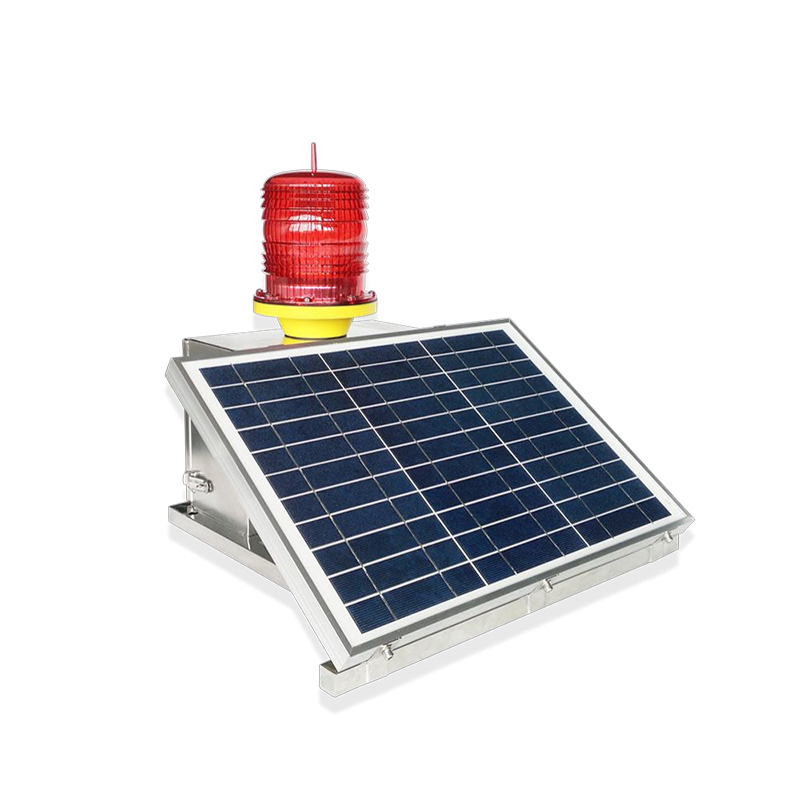
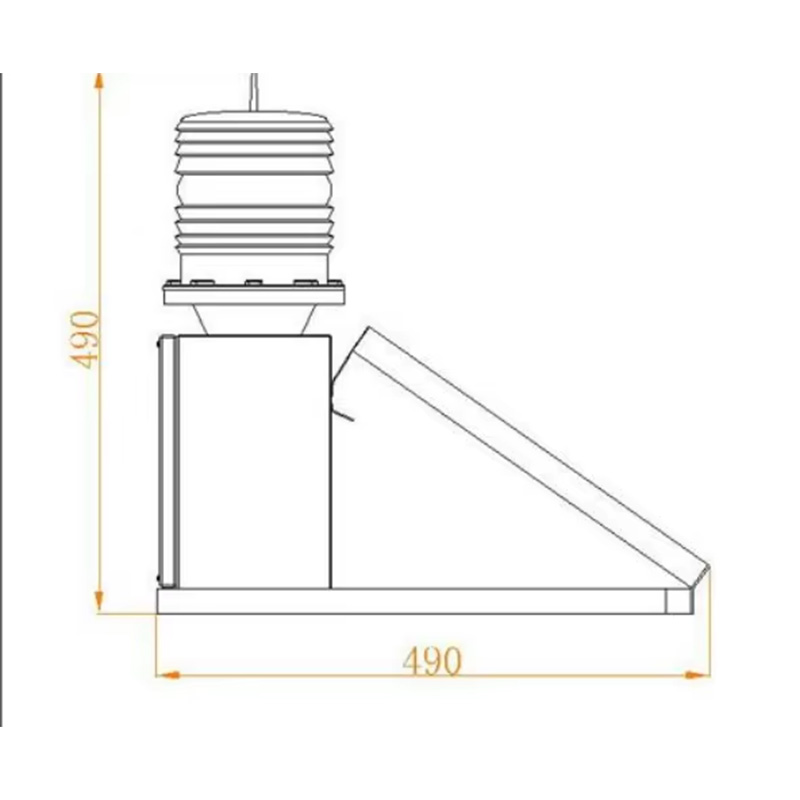
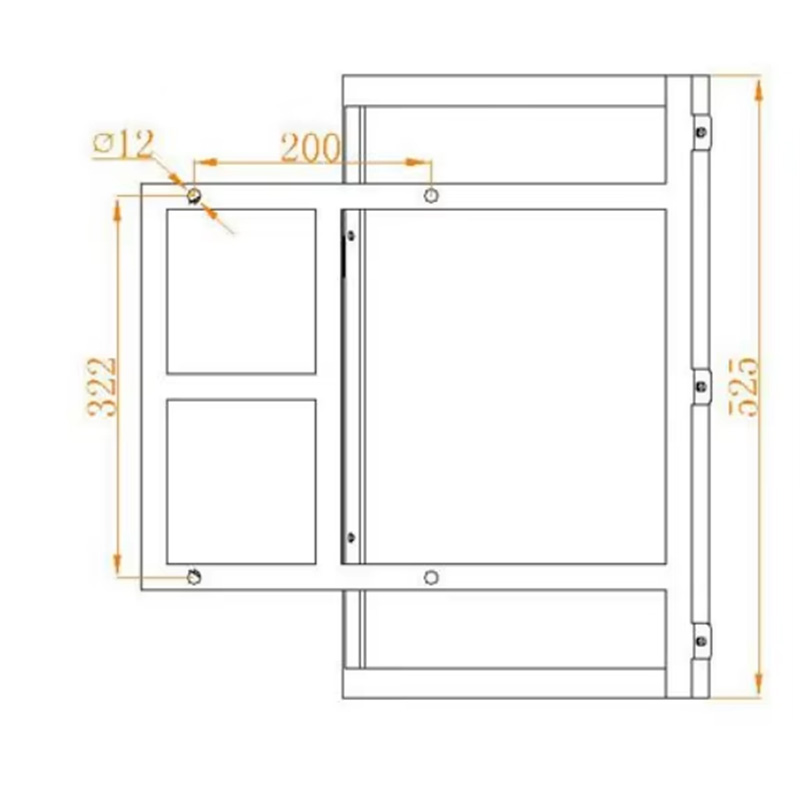
YFFY-MS/S Medium-intensity Type B L864 Solar Aviation Obstruction Light
| Category | Item | Specification |
| Light Characteristics | Light Source | LED |
| Emitting Color | Red | |
| Intensity (cd) | 2000cd±25% | |
| Horizontal Output (degrees) | 360 | |
| Vertical Divergence (degrees) | ≥7 | |
| Flash Characteristics | Flashing 20FPM | |
| Operation Mode | Dusk-to-Dawn operation | |
| LED Life Experience (hours) | >100,000 | |
| Electrical Characteristics | Operating Voltage (Vdc) | 12 |
| Circuit Protection | Integrated | |
| Solar Characteristics | Solar Module Type | Mono crystalline Silicon |
| Output (watts) | 30W | |
| Charging Regulation | Microprocessor controlled | |
| Battery Characteristics | Battery type | Valve-Regulated Lead Acid Battery (VRLA) |
| Nominal Voltage (V) | 12 | |
| Battery Service Life | Average 3 years | |
| Autonomy (hours) | 150 | |
| Physical Characteristics | Lamp Body Material | UV protected Polycarbonate |
| Base Material | Stainless steel 304 | |
| Installation Size | 200×322×M10 | |
| Overall Size (mm) | 525×490×490 | |
| Weight (kg) | 16 | |
| Product Life Expectancy | Average 3 years | |
| Environmental Factors | Ambient Temperature (°C) | -45~65 |
| Humidity | 10~90% | |
| Wind Speed | 80m/s | |
| Waterproof | IP65 | |
| Compliance | ICAO | Annex 14 Volume 1 ‘Aerodrome Design and Operations’ Sixth edition July 2013, table 6.3 Medium-intensity Type B Obstacle Light |
| Optional | FAA | L-864 |
| GPS Synchronization | ||
| GSM cellphone monitoring | ||
| NVG – compatible infrared (IR) LED |
Standards: ICAO medium-intensity Type B and FAA L-864 Explained
Medium-intensity Type B (often abbreviated MIOL-B) is a red flashing obstruction light of 2000 cd, used alone or together with low-intensity Type B lights on lower levels. ICAO Annex 14 defines three medium-intensity types: Type A is white flashing at 20,000 cd, Type B is red flashing at 2000 cd, and Type C is red steady-burning at 2000 cd. FAA L-864 is the U.S. equivalent of the red flashing medium-intensity light, specified in FAA Advisory Circular 150/5345-43.
The YFFY-MS/S flashes at 20 FPM, inside the flash-rate ranges of both ICAO Type B and FAA L-864. The ≥7° vertical divergence gives margin over the 3° minimum beam spread commonly specified for medium-intensity lights. Which lighting layout a structure needs depends on your national civil aviation authority, so confirm the requirement before ordering; our engineers can help review it.
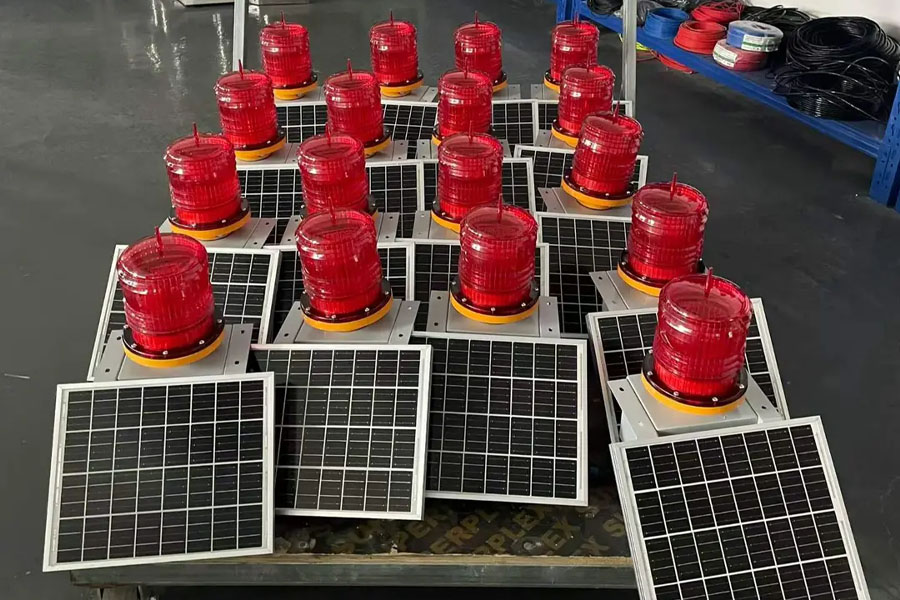
Where to Use a Solar Medium-intensity Obstruction Light?
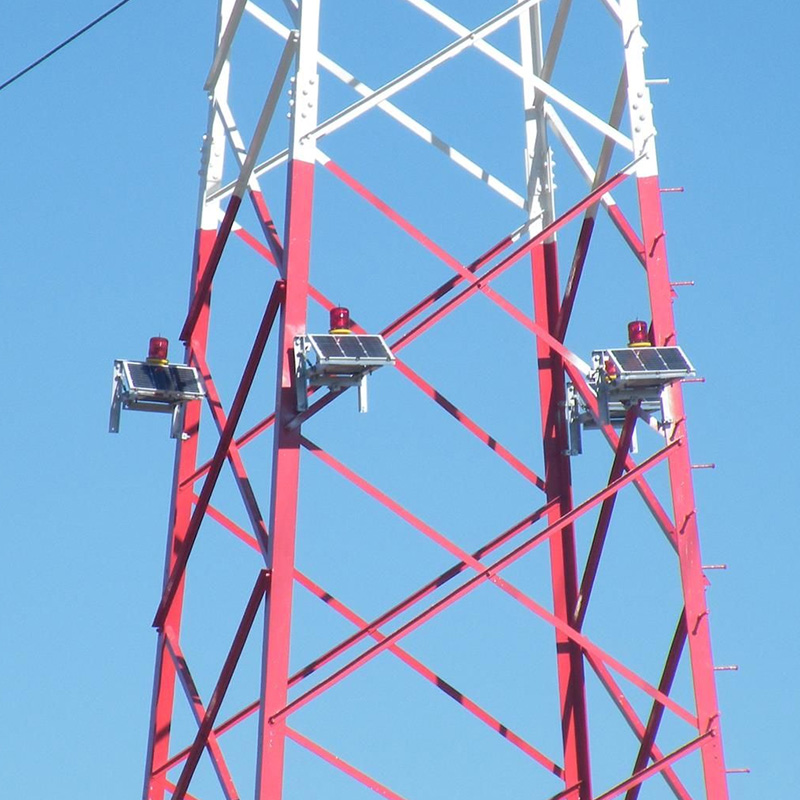
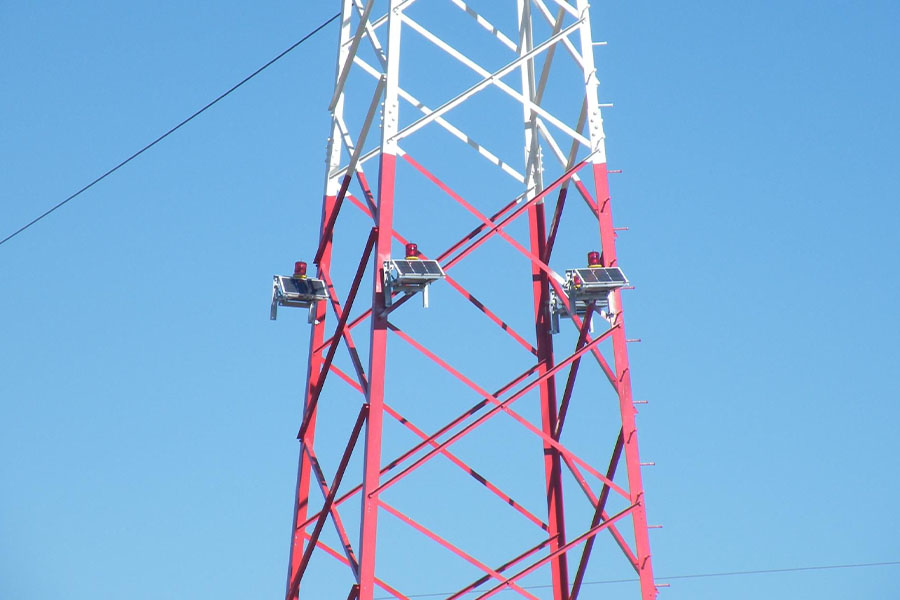
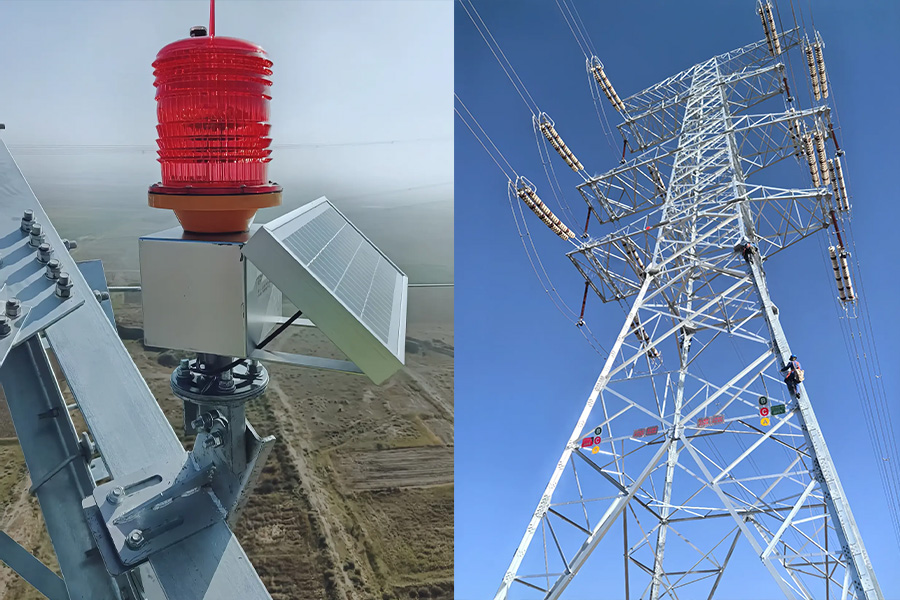
The YFFY-MS/S is built for tall structures without a convenient power supply, or where lightning protection is a priority:
- Telecom and broadcast towers (GSM, microwave, TV): see our Telecom & Tower Lights and Telecom & Tower Warning Lights Solution.
- Industrial chimneys: see Chimney Lights and the Chimney Obstruction Lights Solution.
- Wind turbines: see our wind turbine lighting articles.
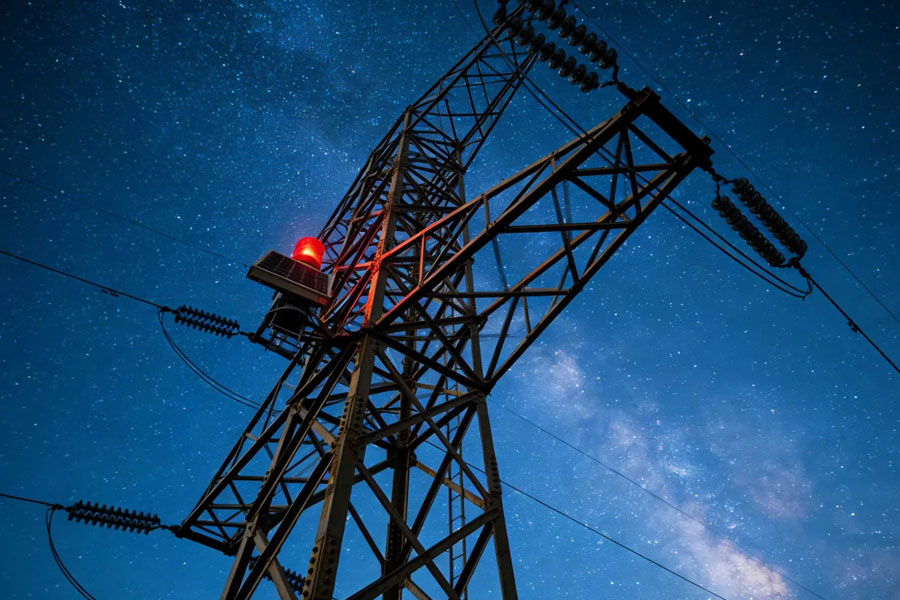
- Power-line towers, masts and remote tall structures: where running a cable would cost more than the light itself.
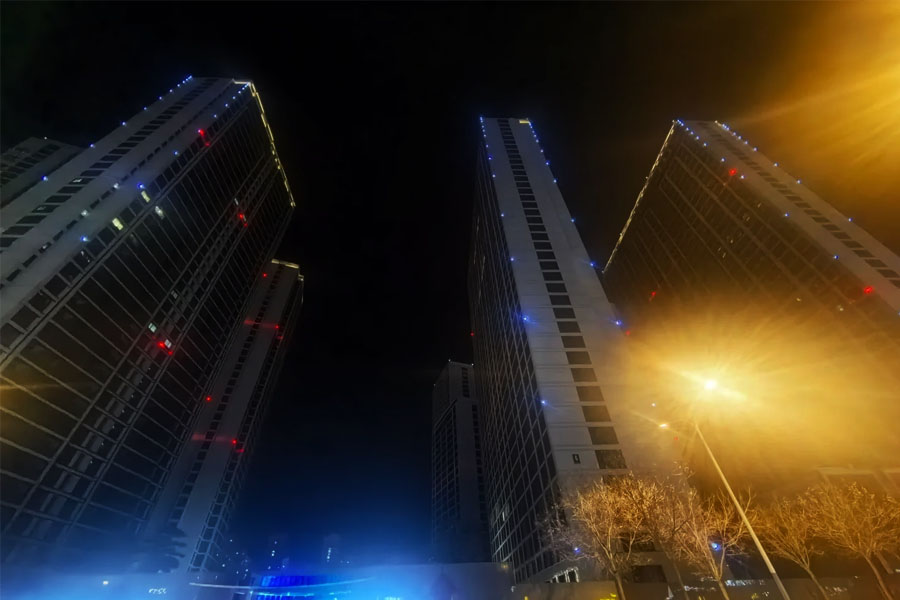
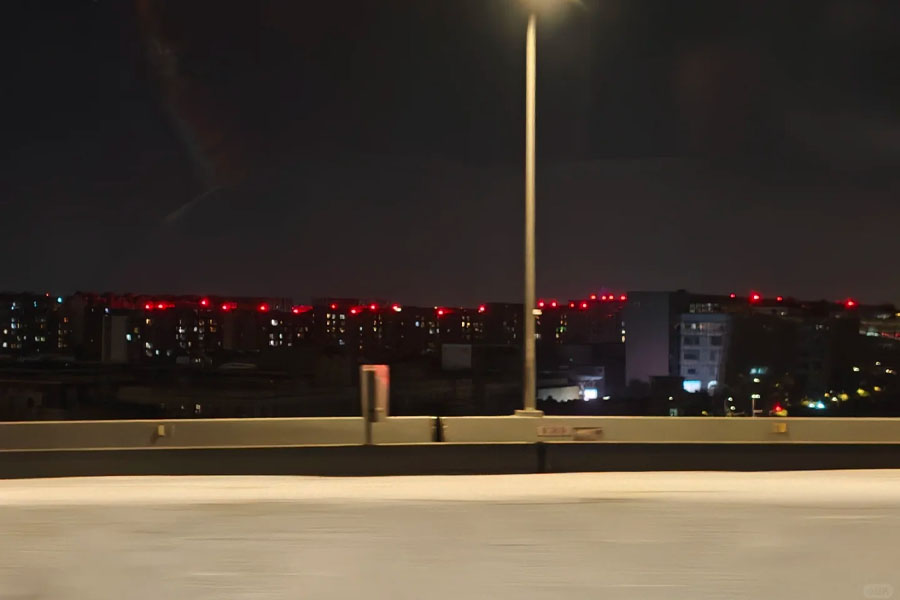
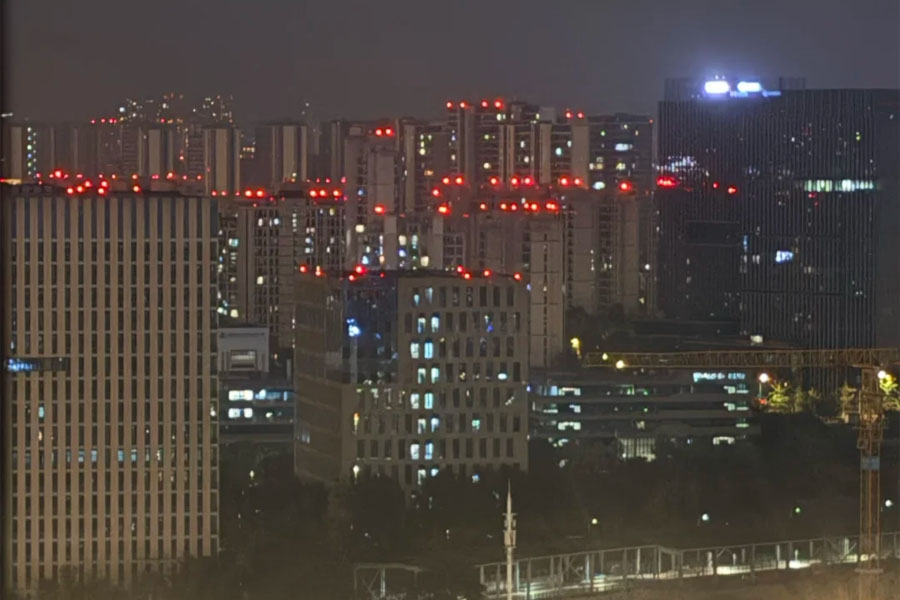
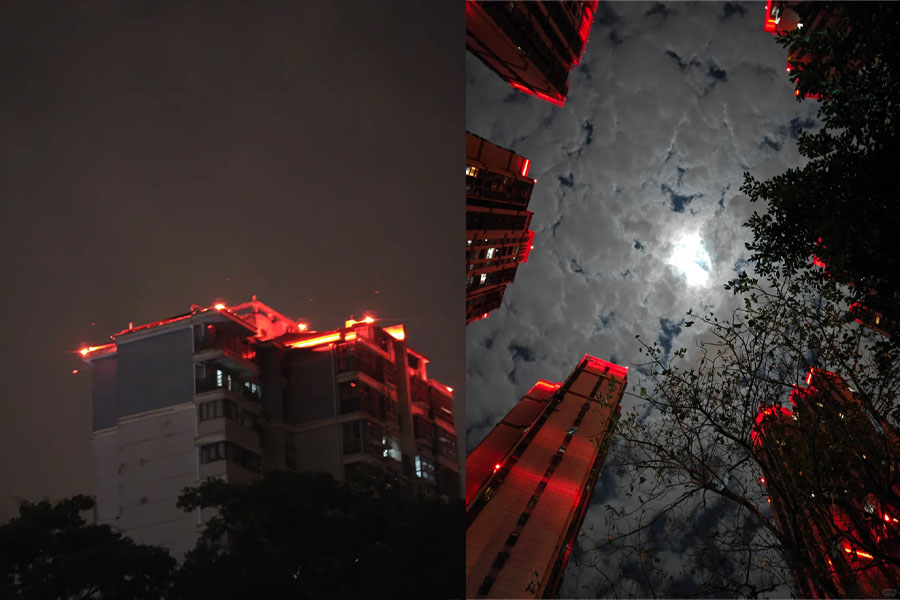
- High-Rise Building.
On taller or tiered structures, the medium-intensity light marks the top and is usually combined with low-intensity lights on lower levels. For a complete layout, see our Aviation Obstruction Lighting System page.
Is a Solar Obstruction Light Right for Your Site?
Solar is the better choice when there is no grid nearby, when cabling would be expensive or a lightning risk, or when the structure is remote and hard to reach for wiring work. A grid-powered medium-intensity LED obstruction light is the better choice where reliable mains power already reaches the top of the structure, or at high-latitude sites with long, dark winters where solar charging is weak. Tell us your latitude and the month with the least sunshine and we will check the solar sizing for you.
Installation and Maintenance
- Aim the panel. Face the solar panel toward the equator (south in the Northern Hemisphere, north in the Southern Hemisphere). Set the tilt angle equal to the local latitude, and keep the panel clear of shadows from the structure.
- Connect. Plug the solar panel into the socket on the enclosure and tighten the screws.
- Switch on. Close the fuse switch; the light then runs automatically from dusk to dawn.
For routine upkeep, wipe dust and bird droppings from the panel and lens, check the housing and cable gland seals, and plan a VRLA battery replacement at about year 3, the average service life. The side-opening stainless steel battery box lets the crew service the battery without removing the whole unit.
Why buy from YFFY Lights?
- Direct from the manufacturer: Shaanxi Yuefeng Feiyao Technology Co., Ltd., Fengdong New Town, Xi’an, China. Customization and OEM options available.
- Documentation on request: data sheet, ICAO/FAA compliance documents, technical drawings and CAD files.
- Warranty: 2-year full warranty covering maintenance and materials, then free maintenance labor from year 3 to year 5.
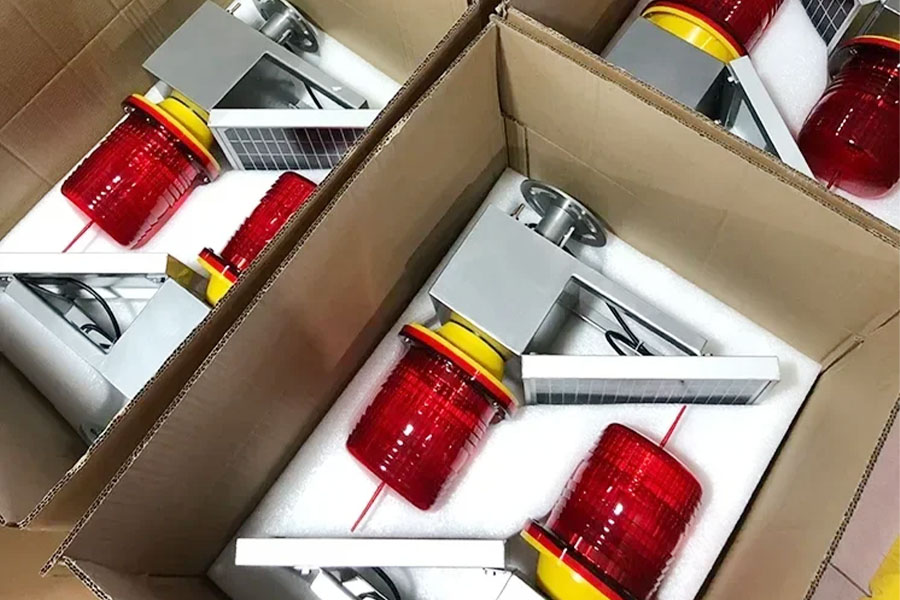
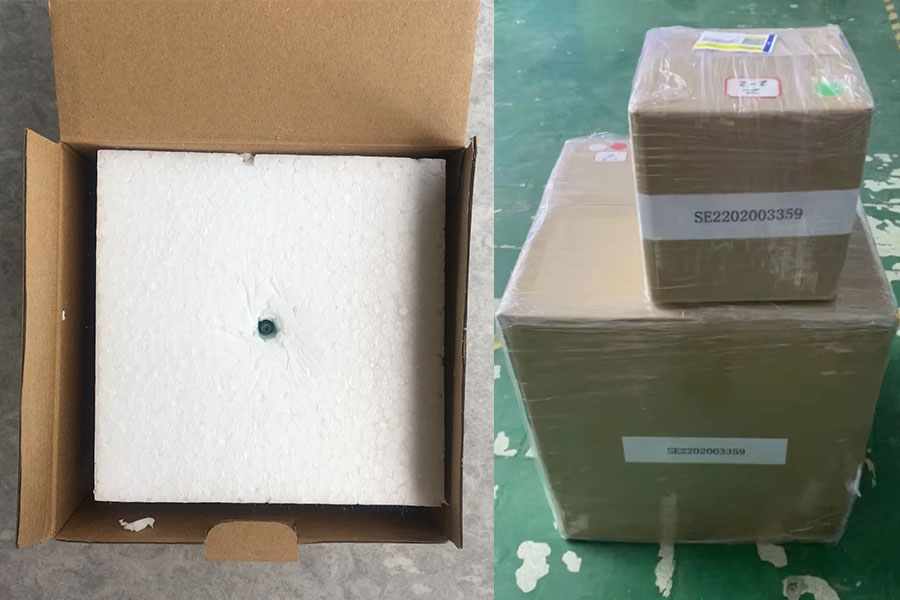
- Fast delivery: 2–10 days after payment; packed 1–9 pieces per carton.
Frequently Asked Questions
1. What is an L864 obstruction light?
L-864 is the FAA designation for a red flashing, medium-intensity obstruction light of 2000 cd with 360° horizontal coverage. Its ICAO equivalent is medium-intensity Type B. The YFFY-MS/S is a solar-powered unit in this class.
2. What is the difference between medium-intensity Type A, B and C?
Type A is white flashing (20,000 cd), Type B is red flashing (2000 cd), and Type C is red steady-burning (2000 cd). The YFFY-MS/S is Type B.
3. How tall must a structure be to need obstruction lights?
It depends on the country and on proximity to airports. Medium-intensity lights are generally used on structures above about 45 m, and the YFFY-MS/S is designed for 45 to 105 m. Always confirm with your civil aviation authority.
4. What is the difference between L-864 and L-810?
L-810 is a low-intensity, steady-burning red light installed on lower levels. L-864 is the flashing medium-intensity light for the top. They are normally used together.
5. How many nights can the light run without sun?
The 12 V VRLA battery provides 150 hours of autonomy, roughly 12 consecutive 12-hour nights. The 30 W monocrystalline panel recharges it through a microprocessor-controlled regulator.
6. Does it switch on and off automatically?
Yes. The solar panel acts as the photocell, so the light runs from dusk to dawn without a separate sensor.
7. Can it be monitored remotely or synchronized?
Yes. GPS synchronization, GSM cellphone monitoring, an infrared LED for NVG use, and remote ON/OFF control are optional.
8. How long does the battery last?
The VRLA battery has an average service life of 3 years and is replaceable. The LED source is rated for more than 100,000 hours.
Request a Factory Quote
Email: inquiry@yffylights.com · WhatsApp: +86 157 9508 6788 / +86 157 8083 7875