Airport Wind Sensors – In the aviation field, safety is the eternal highest principle. Every takeoff and landing relies on precise control of the micro-meteorological environment around the runway. Real-time, accurate wind speed and direction data are crucial for pilots and air traffic controllers to make critical decisions.
Airport wind speed and direction sensors are the first line of defense for the safety of this “skyway,” and their reliability directly affects the safety of life and property.
Unlike ordinary environmental monitoring, airports have almost stringent requirements for wind sensors: absolute accuracy, extreme reliability, and stable operation 365 days a year.
Challenges & Requirements of Airport Wind Monitoring
1. Low-altitude wind shear warning:
Micro-downbursts or wind shear, commonly known as “invisible killers,” can instantly change wind speed and direction, posing a significant threat to aircraft during takeoff and landing.
Sensors must be able to capture these drastic wind field changes on a second-by-second basis.
2. Accurate reporting of local runway wind fields:
Wind conditions may vary at different locations on the runway. Sensors need to provide the control tower with the most accurate real-time data to determine the optimal runways and directions for takeoffs and landings.
3. Resilient Operation in Extreme Weather:
Whether it’s typhoons, thunderstorms, or icy weather, sensors must withstand extreme impacts and continuously provide uninterrupted data services.
4. Zero False Alarms & High Availability:
False alarms or data loss in the system can lead to widespread flight delays or diversions, causing significant economic losses and social impact.
Recommended Airport Wind Sensors
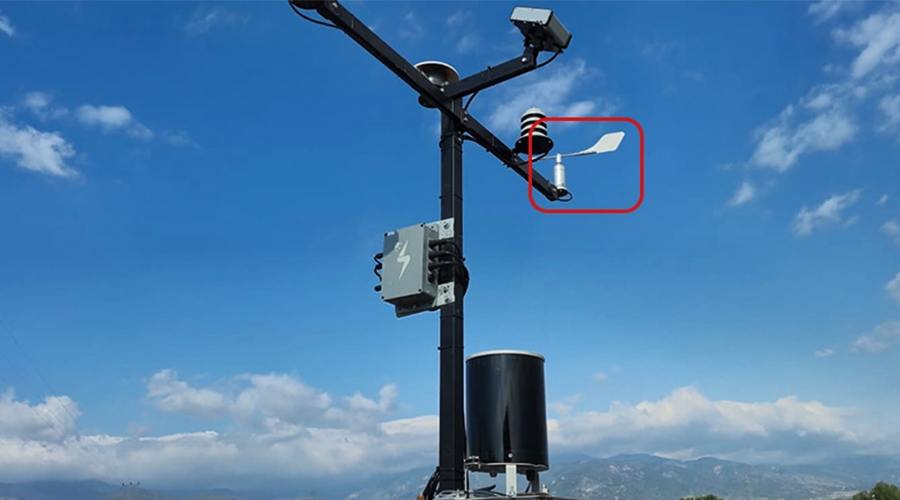
Faced with such stringent requirements, a high-performance wind speed and direction transmitter designed specifically for the aviation industry has emerged: Wind Speed and Direction Airport Wind Sensors YFFY-HP/FSY.
Its not an ordinary industrial sensor, but a precision instrument built strictly according to aviation safety logic. Its core advantages perfectly meet the rigid requirements of airports:
1. Millisecond-level response, accurately capturing deadly wind shear:
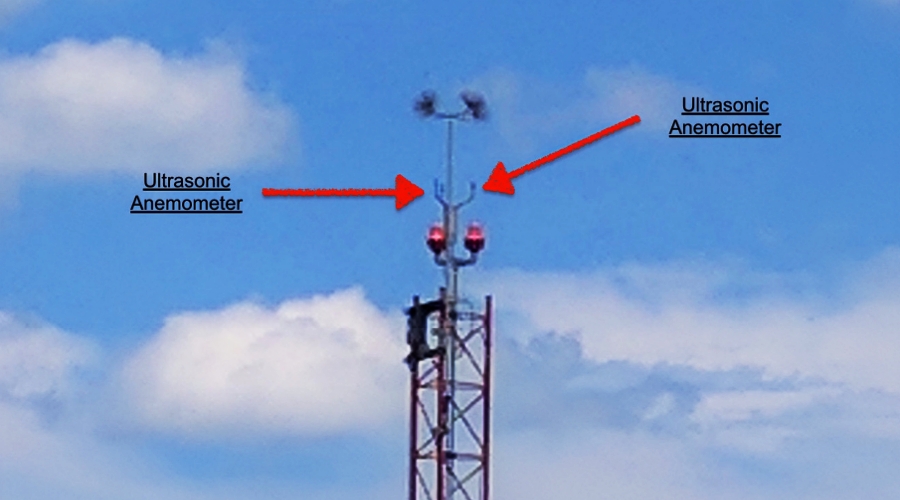
Traditional mechanical wind cups have inertial delays and cannot reflect instantaneous changes in wind speed in time. Advanced ultrasonic measurement principles enable inertia-free, zero-start wind speed measurement.
The sensor can capture instantaneous changes in the wind field at millisecond speeds, providing crucial reaction time for early warning systems and becoming a powerful weapon against low-level wind shear.
2. No moving parts, achieving “never-downtime” reliability.
Airport environments require equipment to be as maintenance-free as possible. This sensor has absolutely no moving mechanical parts, fundamentally eliminating the risks of jamming, data anomalies, or downtime caused by bearing wear, freezing, dust accumulation, or bird perches, as seen in traditional wind cup sensors. This “inherently robust” design ensures a continuous and reliable data stream even in the worst weather conditions.
3. Exceptional durability & environmental adaptability.
The sensor body uses high-strength materials and an IP66 or higher level of protection design, capable of withstanding salt spray, humidity, long-term UV exposure, and the corrosive effects of rain, snow, and ice. Its robust structure can withstand the extremely high wind pressure during typhoons, ensuring consistent performance in the year-round outdoor environment of airports.
4. Seamless Integration & Standard Protocol Output
The wind speed and direction sensor supports standard industrial communication protocols such as MODBUS-RTU, allowing for easy and seamless integration with existing airport Automated Weather Observation Systems (AWOS), air traffic control systems, and low-altitude wind shear warning systems, enabling real-time, stable data transmission and centralized processing.
We deeply understand that countless lives are entrusted to us at the end of the runway. Choosing an airport wind sensors that meets aviation safety standards is the best interpretation of our safety responsibility. The deployment of airport wind speed and direction sensors provides a solid data foundation for runway safety, flight punctuality, and ground operational efficiency.
If you are seeking the most reliable wind monitoring solution for your airport project, this high-performance wind speed and direction transmitter, designed specifically for harsh environments, deserves your attention. Contact us for better service and pricing!