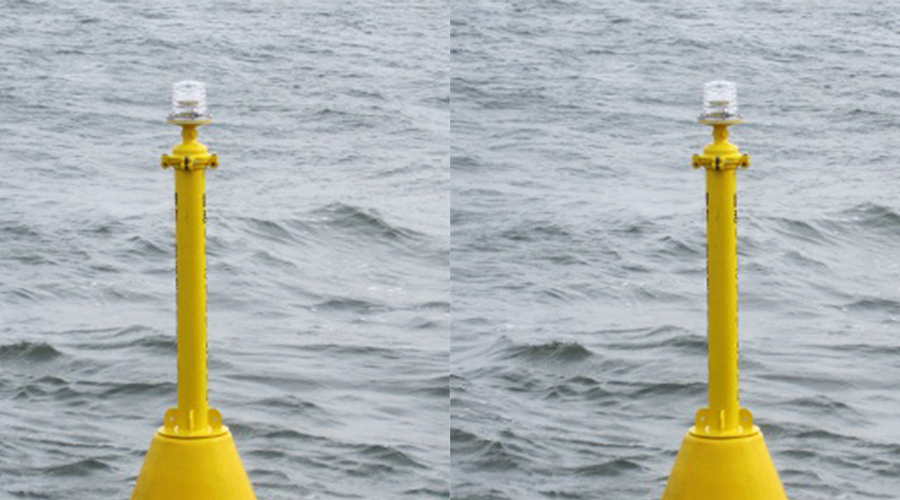
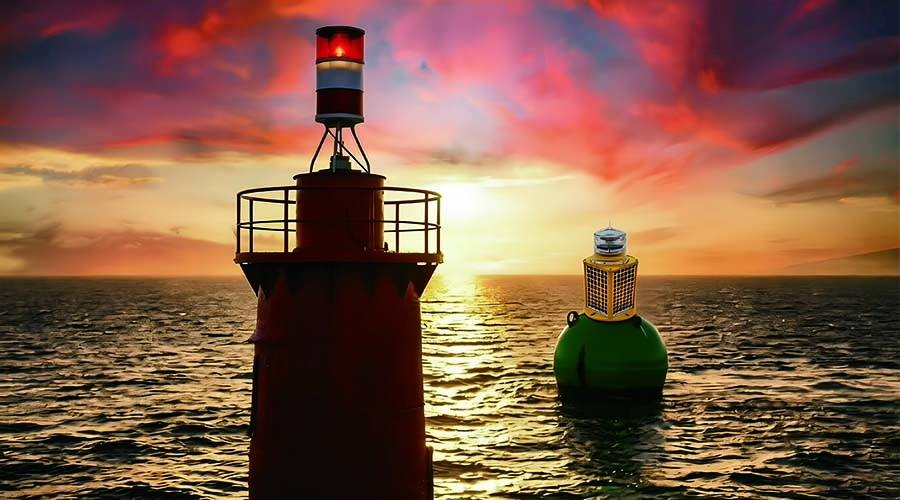
In the busy Port of Tanjung Priok, Jakarta, the safe entry and exit of every giant vessel, along with marine warnings such as navigation aids, depends on seemingly inconspicuous but vital solar navigation lights on the sea surface.
In the recently completed project at Indonesia’s Port of Jakarta (Tanjung Priok), we not only delivered a batch of solar integrated navigation lights, but more importantly, we customized a precise optical signal system for the customer based on waterway rules.
For port authorities and marine engineers, choosing navigation aid equipment is not just buying a light — it means selecting a safety system that complies with IALA (International Association of Marine Aids to Navigation and Lighthouse Authorities) standards.
Today, combined with our practical experience in Jakarta Port, we would like to take you deeper into how we build a “zero-maintenance” maritime safety net using color, flash patterns, and extreme protection in tropical waters with high temperature and high salinity.
🚦 The Language of Solar Navigation Lights Colors
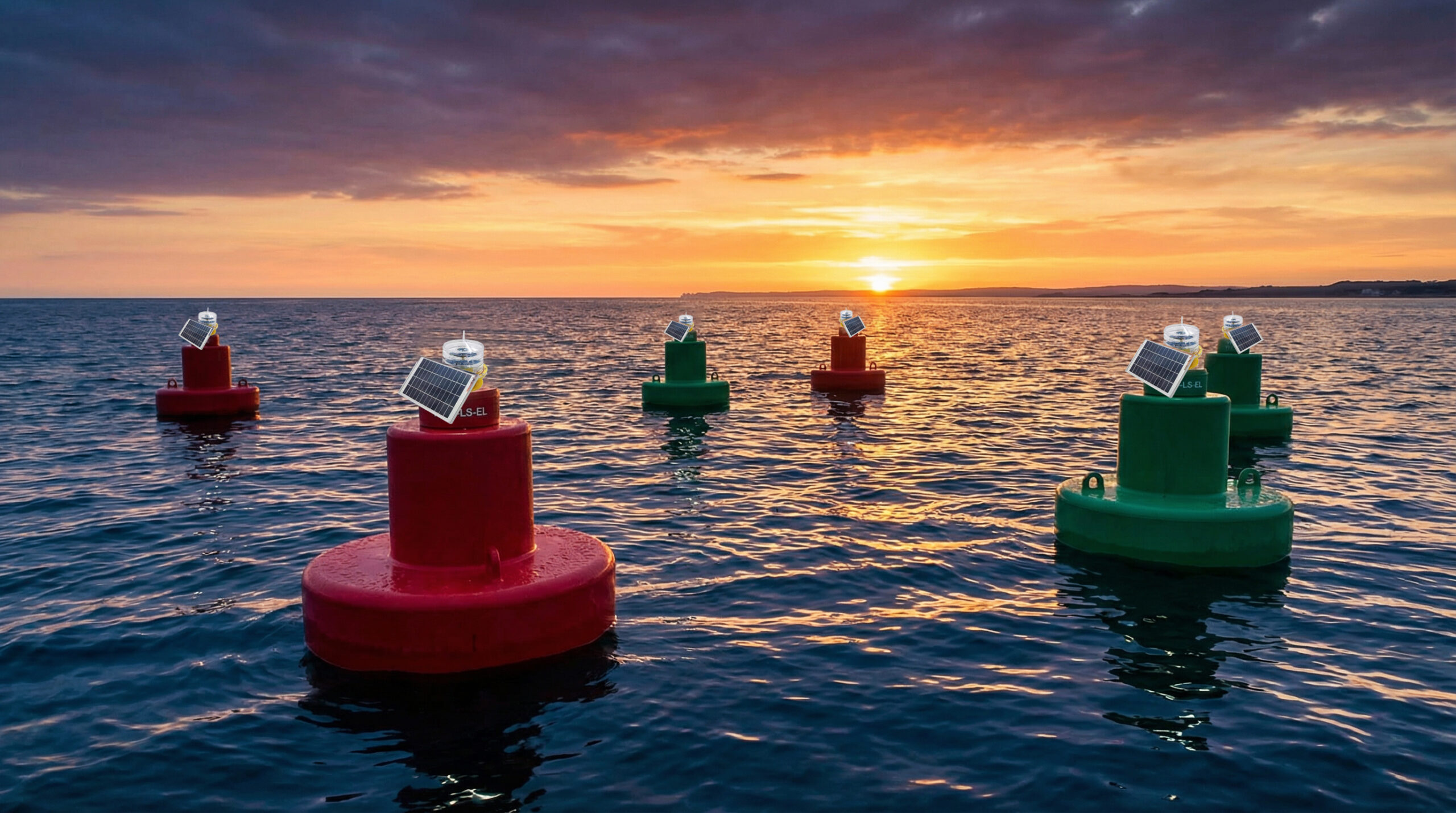
On the buoys of Jakarta Port, you will see different colors of light. This is not a random choice, but strictly follows the IALA Maritime Buoyage System. Each color carries a specific instruction:
🔴 Red:
Meaning: Usually marks the left side of a channel (in Region A, e.g. Europe, Asia, Australia).
Application: Warns vessels to “keep red on port side” to avoid grounding.
🟢 Green:
Meaning: Usually marks the right side of a channel.
Application: Indicates the centerline of safe water.
🟡 Yellow:
Meaning: Special purposes.
Application: In busy ports like Jakarta, yellow solar warning lights are often used to mark Traffic Separation Schemes (TSS), pipeline areas, or military exercise zones, alerting vessels to special controls.
⚪ White:
Meaning: Safe water or isolated danger.
Application: Commonly used on mid-channel buoys or as obstruction warning lights on offshore platforms.
YFFY’s marine navigation lights use high-purity polycarbonate (PC) lenses to ensure that red does not shift in color and green remains bright and vivid, enabling accurate identification from 5–10 nautical miles away.
⚡ Beacon Flash Patterns: Morse Code in the Dark
If all solar marine lights remained steady (fixed light), it would be very difficult for a captain to distinguish between a lighthouse, a buoy, or a shore light. Therefore, flash patterns are critical.
In the Jakarta project, YFFY’s solar marine navigation lights used the built-in intelligent controller to set specific rhythms required by the local maritime authority:
- Single flash / group flash: used to mark channel sides or bifurcations.
- Quick flash / very quick flash: used to mark sharp turns or high-risk areas, providing the highest warning level.
- GPS synchronization technology: This is our technical highlight. By integrating GPS, we make an entire line of buoys flash at the same millisecond, forming a continuous “light band” in complex channels and eliminating visual errors.
Solution: Supports 350 different light character programming, allowing the solar navigation lights to “speak” a language that meets international standards.
🛠️ Special Requirements for Offshore & Port Solar Navigation Lights
Besides color and pattern, what other hard requirements do customers typically have for tropical ports like Jakarta and offshore environments?
- Anti-Corrosion:
Sea breeze contains high salt concentration. YFFY’s solar lights use SUS316 stainless steel screws and UV-resistant polycarbonate housings, passing rigorous salt spray tests to ensure they do not rust after years of sea exposure. - Ingress Protection (IP68):
Waves will hit the buoys. Our marine warning lights must achieve IP68 rating — even if submerged by a huge wave, the internal circuitry remains completely dry. - Solar Autonomous:
Running cables in offshore areas is not realistic. Our integrated design combines high-efficiency monocrystalline silicon solar panels and lithium iron phosphate batteries to maintain high-intensity flash patterns even during continuous cloudy/rainy days.
💡 Our Solar Navigation Lights Engineering Solution


In response to the above challenges, our deployed integrated solar navigation light system provides a standard answer:
- Extreme Protection: Weather Resistance Beyond IP68
To cope with tropical climates, we use a “double protection” strategy:
- Material innovation: Light housing uses UV-resistant PC or 316L stainless steel, passing 1440+ hours of salt spray testing.
- Sealing process: Achieves IP68 rating, ensuring the internal circuitry remains dry and safe even under typhoon and wave impact.
- Smart Maintenance: Making Maintenance “Invisible”
We transform traditional “breakdown maintenance” into “predictive maintenance”:
- Remote telemetry: Supports GPS synchronization, enabling simultaneous on/off and flash pattern adjustment.
- Ultra-long endurance: High-efficiency monocrystalline silicon PV panel + LiFePO₄ battery ensures normal operation for 15 consecutive cloudy/rainy days, greatly reducing offshore maintenance frequency.
📊 On‑Site Evidence: Data Speaks
At the Jakarta Port site, you can see our solar marine lights firmly installed on buoy brackets:
- Red lights clearly mark the inbound channel edge.
- Yellow lights warn of nearby construction areas.
- The integrated design allows installation without complex cabling — truly “plug‑and‑use”.
Actual operational data shows that this batch of navigation lights maintains a stable visible range of 5–10 nautical miles, with a failure rate near zero — perfectly validating their reliability in tropical marine environments.
🌏 Customizing Maritime Safety for You
From busy Southeast Asian ports to offshore oil fields in Africa, YFFY Lights is committed to providing international-standard navigation aid solutions for maritime customers worldwide.
We deeply understand that a qualified marine beacon light carries the safety of countless lives and cargo. If you are planning port navigation aid facilities or offshore wind power warning systems, please ensure your equipment meets the following core criteria:
- Compliant with IALA E-200 light intensity standards
- IP68 or higher ingress protection
- Remote monitoring (telemetry) capability
- Possesses the certifications you need
Whether you need IALA-standard red/green lights, special Morse code flashes, or white obstruction lights for offshore platforms, YFFY Lights provides solar navigation light solutions that meet international standards.
We don’t just sell Solar Marine Lanterns — we design visible safe waterways for you.