What Do Aviation Obstacle Lights Mean for Towers?
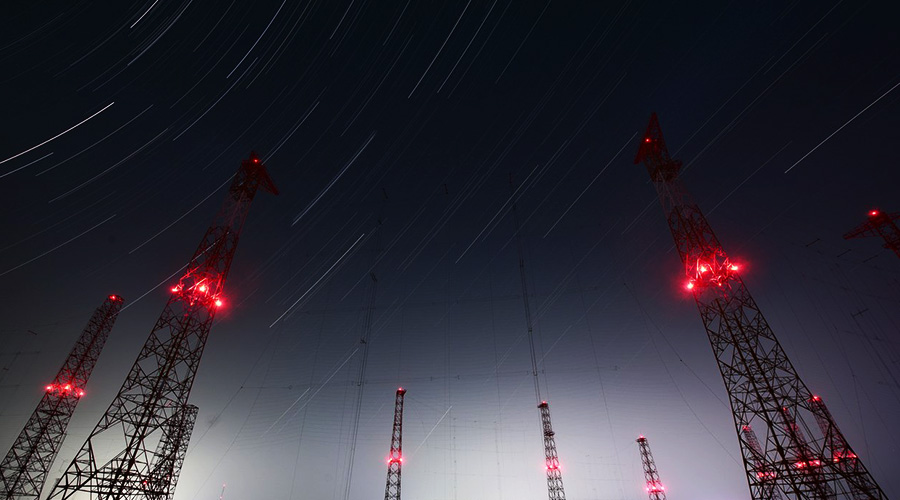
Whether it’s a communication tower, transmission tower, or broadcast tower, as long as the structure rises high into the air, it becomes a potential threat to low-flying aircraft.
In today’s era of rapidly developing drone logistics and urban air mobility, installing compliant aviation obstruction warning lights on towers is no longer just a regulatory requirement—it is a responsibility to ensure public safety.
However, tower environments vary greatly around the world:
- Some stand in scorching deserts
- Some on windy, snowy mountains
- Some adjacent to high-voltage power lines
- Some with no access to grid electricity
How do you choose an LED warning light that can operate reliably over the long term with minimal maintenance, all while meeting international standards? Let’s explore this together.

Step 1: Determine Your Tower Height (Light Intensity Selection)
The core global standard for LED aviation lights comes from Annex 14 of the International Civil Aviation Organization (ICAO).
Different countries have their own regulations based on this, such as:
- FAA AC 70/7460-1M (United States)
- GB/T 46906-2025 (China, effective July 1, 2026)
Although there are slight differences, the fundamental logic is the same:
👉 The taller the tower, the higher the required light intensity
Light Intensity Selection Table of Aviation Obstacle Lights
| Tower Height (H) | Required Light Intensity | Typical Light Type and Operating Mode |
|---|---|---|
| H ≤ 45m | Low Intensity Lights | Steady-burning red light, operates only at night |
| 45m < H ≤ 105m | Medium Intensity Lights | Type B: Flashing red light for nighttime warning |
| 105m < H ≤ 150m | Medium Intensity Lights | Type A: White light (day) + red light (night) |
| H > 150m | High + Medium Intensity | High-intensity white at top + layered medium lights |
Important Installation Principle of Aviation Obstacle Lights
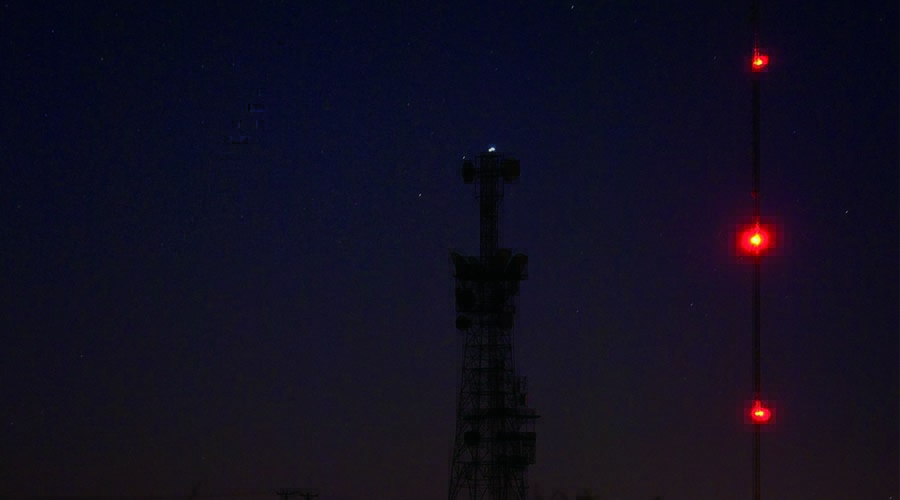
For towers exceeding 45 meters, intermediate layers of obstacle lights must be installed at equal intervals (generally no more than 45 meters).
The top light should be installed as close as possible to a point 2 meters above the structure’s highest point.
Step 2: Evaluate Your Tower Environment
Meeting lighting parameters is only the first step. The durability of aviation obstruction lights depends on environmental compatibility.
High-Voltage Transmission Towers (EMC Requirement)
Strong electromagnetic fields can affect light performance.
- Risk: erratic flashing or system failure
- Requirement: EMC Class B or above
- Solution: lights with built-in electromagnetic shielding
Coastal, High-Altitude, and Wind-Prone Areas
Protection Requirements
- Inland: ≥ IP66
- Coastal / industrial: ≥ IP67
Structural Strength
- Wind resistance: Level 12
- Seismic resistance: Level 8
Temperature Range
- Must operate within -40℃ to +70℃
Material Selection
- Corrosion-resistant alloy recommended for coastal environments

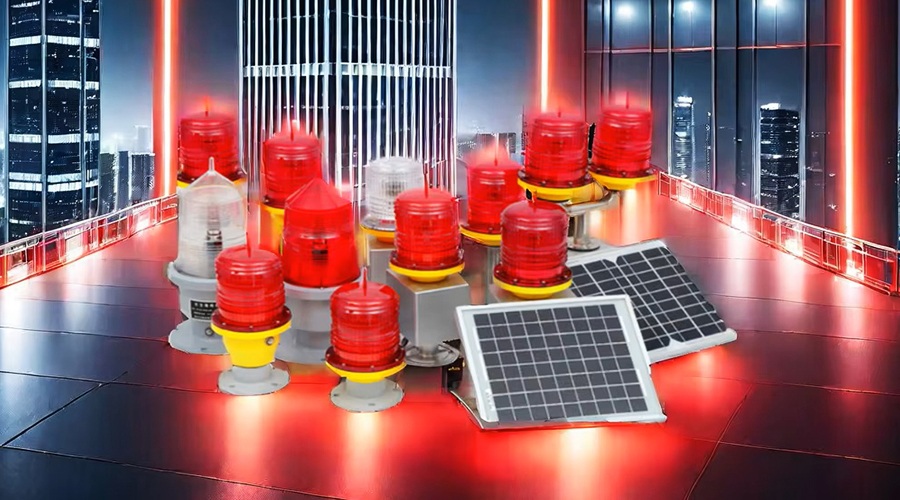
Step 3: Choose Solar or AC-Powered Aviation Obstacle Lights
Power supply selection affects both installation cost and long-term operation.
Power Supply Comparison
| Comparison Dimension | Solar-Powered System | AC Grid-Powered System |
|---|---|---|
| Best Suited For | Remote areas with no grid access | Areas with stable grid access |
| Core Advantage | No wiring, low long-term cost | Stable power supply |
| Points to Note | Battery lifespan ~5 years | Requires lightning protection |
| Maintenance Focus | Battery + panel cleaning | Electrical system maintenance |
Supplementary Solution: Hybrid Power
- Solar + grid combined system
- Solar during the day, grid backup at night or rainy periods
- Balances reliability and cost
Practical Selection Tip
Split-type solar aviation obstruction lights are more suitable for towers, as they distribute weight (panel, battery, lamp head), reducing structural load.
Step 4: Synchronized Flashing & Smart Control
For multi-tower environments, synchronized flashing is essential.
GPS Wireless Synchronization
- Satellite-based synchronization
- Millisecond-level accuracy
- No wiring required
IoT Smart Monitoring
- Remote status monitoring
- Fault alerts
- Firmware upgrades
👉 Reduces manual inspection costs
Checklist of Aviation Obstacle Lights
Use this checklist when selecting tower lights:
- ✅ Standard Confirmation
- Verify ICAO / FAA / local certification
- Match light intensity with tower height
- ✅ Environment Confirmation
- Check IP rating, temperature, corrosion resistance
- Verify EMC for transmission towers
- ✅ Power Supply Confirmation
- Solar vs AC vs hybrid
- Evaluate long-term cost
- ✅ Functional Confirmation
- GPS synchronization
- IoT monitoring capability
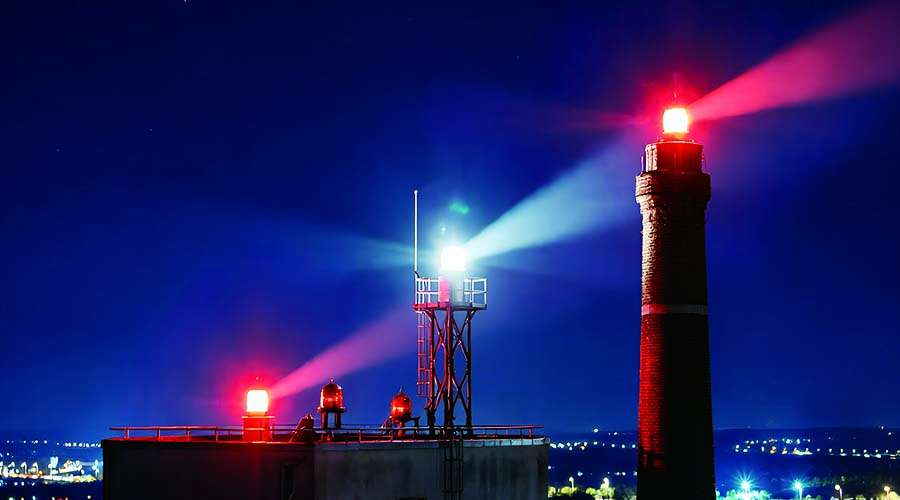
In the era of the low-altitude economy, aviation obstruction warning lights represent a long-term commitment to flight safety.
The goal is not just to install a light, but to create a reliable, maintenance-free “lighthouse” that silently safeguards the sky for years to come.