
YFFY-LS-T Double Solar Aviation Obstruction Light – ICAO Type A/B & FAA L-810 Low-Intensity Aircraft Warning Light
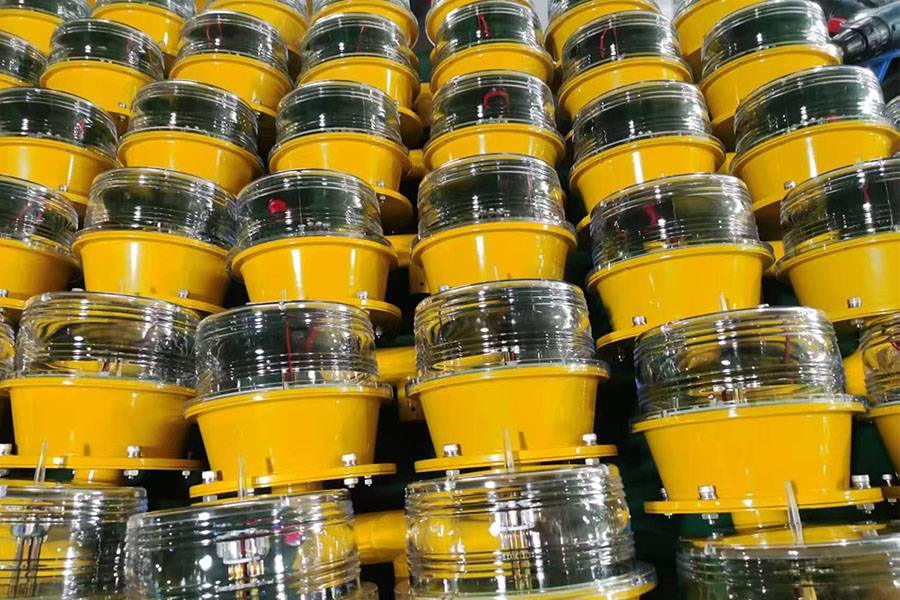
The YFFY-LS-T is a self-contained, solar-powered low-intensity double solar aviation obstruction light with two lamps on two arms: a main lamp and an automatic standby. It emits red light at 32.5 cd with 360° horizontal coverage and is designed to ICAO Annex 14 low-intensity Type A/B and FAA L-810 requirements. It is used to mark structures lower than 45 m, such as tower cranes, high-rise rooftops, telecom towers, chimneys and wind turbines, wherever mains power is unavailable or impractical.
Key facts
- Light output: red LED, 32.5 cd, 360° horizontal, vertical divergence ≥ 10°
- Redundancy: main lamp plus standby lamp, automatic switch-over if the main lamp fails
- Power: built-in monocrystalline silicon solar panel (3.6 W) and lithium-ion battery, with no power cable to run up the structure
- Autonomy without sun: 60 h in steady mode, 150 h in flashing mode
- Modes: steady or flashing (20 fpm), dusk-to-dawn photocell control
- Durability: IP68, −55 to +70 °C, 80 m/s wind resistance
- Service life: LED > 100,000 h, product life about 5 years on average
- Warranty: 1-3 years
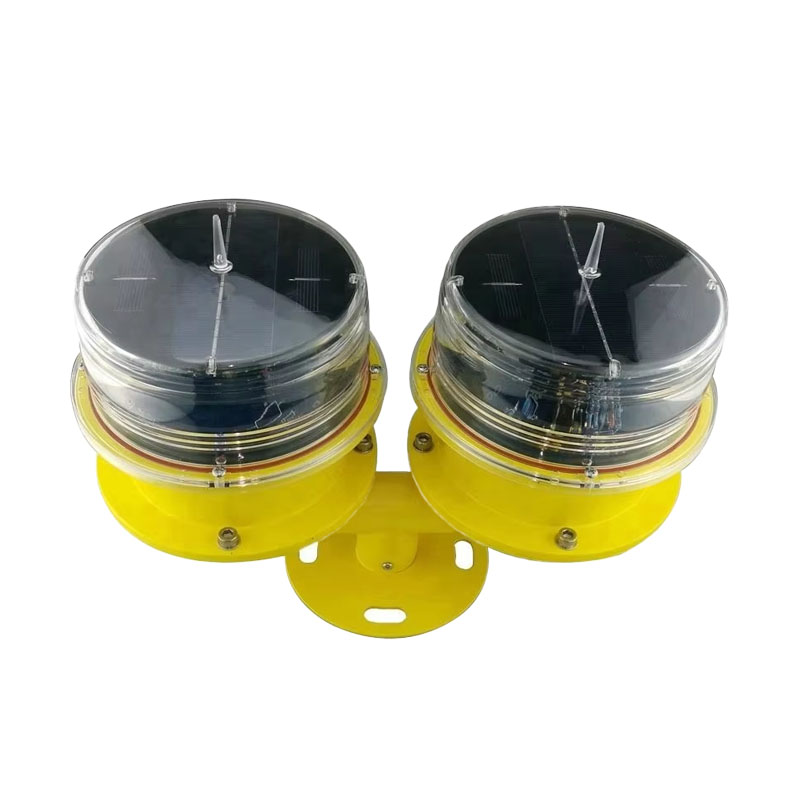
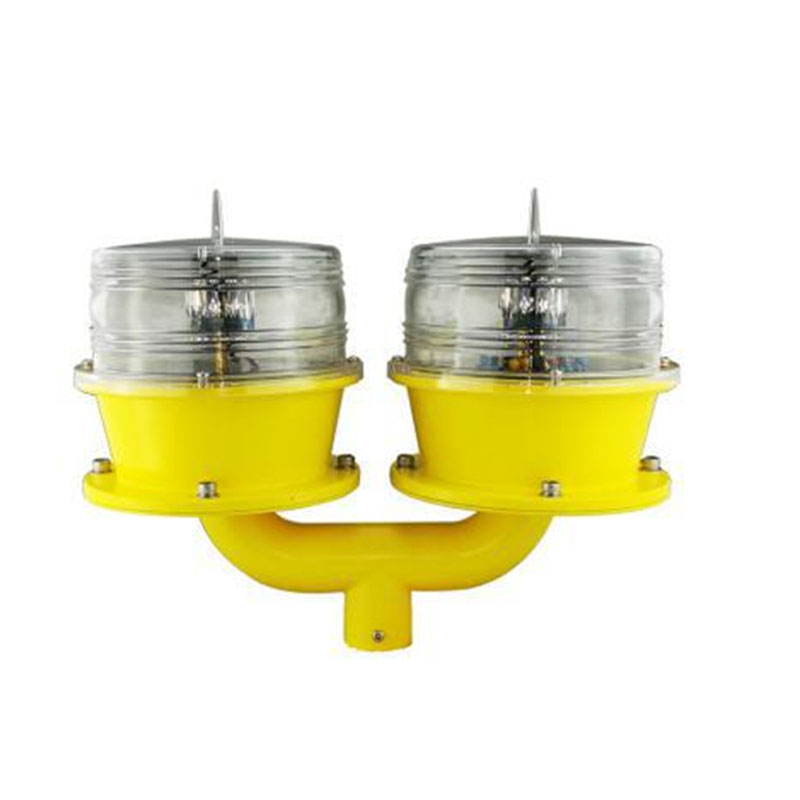
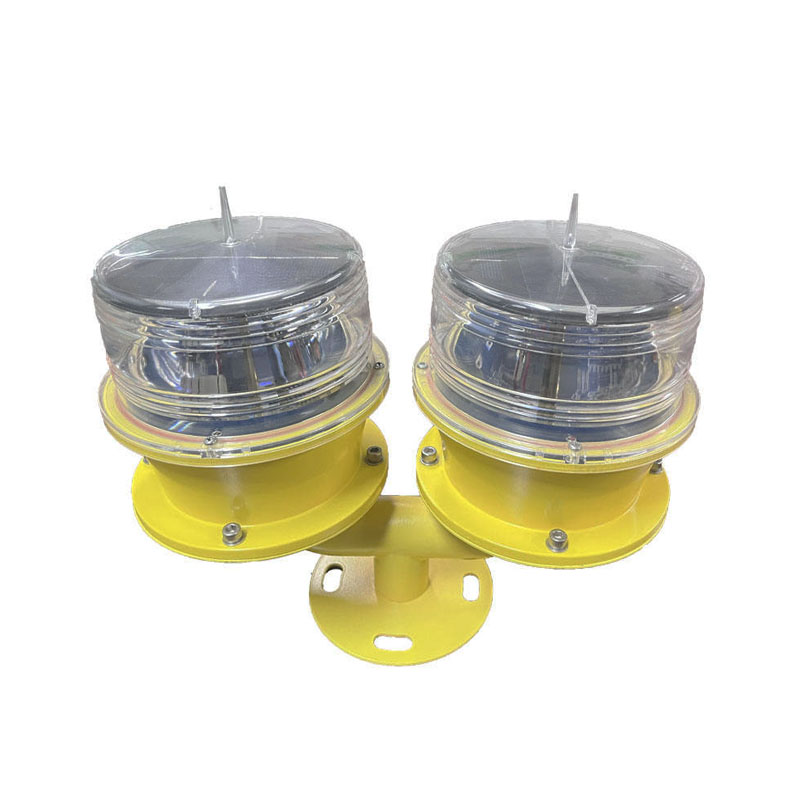
YFFY-LS-T Double Solar Aviation Obstruction Light Technical Specifications
| Parameter | YFFY-LS-T |
|---|---|
| Product type | Low-intensity, double (main + standby) solar aviation obstruction light |
| Light source | LED |
| Emitting color | Aviation red |
| Peak intensity | 32.5 cd |
| Horizontal output | 360° |
| Vertical divergence | ≥ 10° |
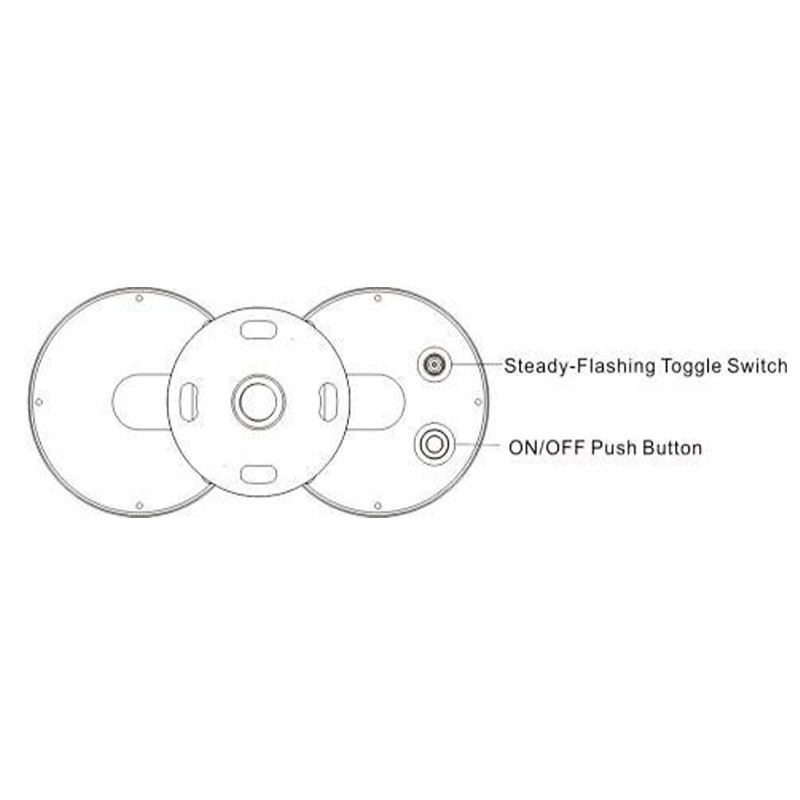
| Flash characteristic | Steady-burning, or flashing 20 fpm (selectable by switch) |
| Operation mode | Main/standby; dusk-to-dawn (built-in photocell) |
| LED lifetime | > 100,000 hours |
| Operating voltage | 3.7 V DC |
| Circuit protection | Integrated |
| Solar module | Monocrystalline silicon, 3.6 W |
| Charge control | Microprocessor-controlled |
| Battery | Lithium-ion, 3.7 V nominal [add capacity, Ah]; average service life about 3 years |
| Autonomy (fully charged, no sunlight) | 60 h steady / 150 h flashing |
| Lens | UV-protected polycarbonate, vibration-resistant |
| Base | Powder-coated die-cast aluminum |
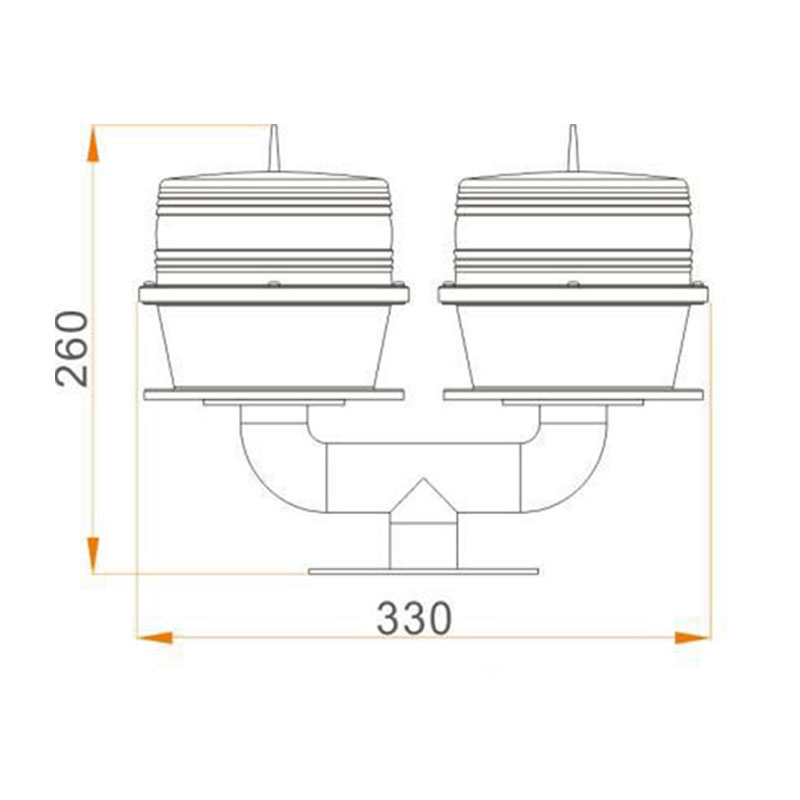
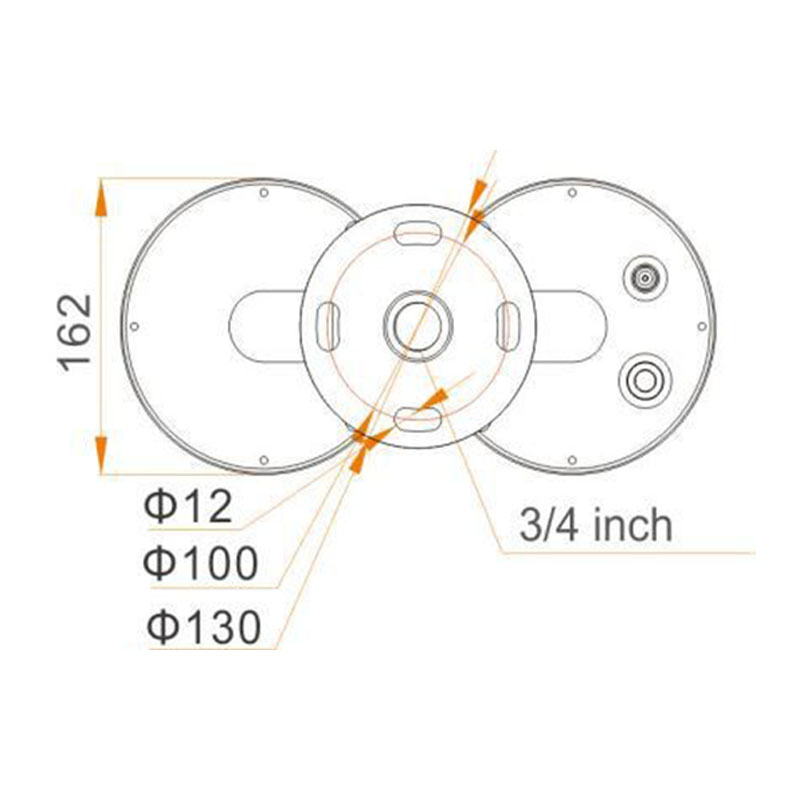
| Overall size | 330 × 162 × 262 mm [verify against drawing] |
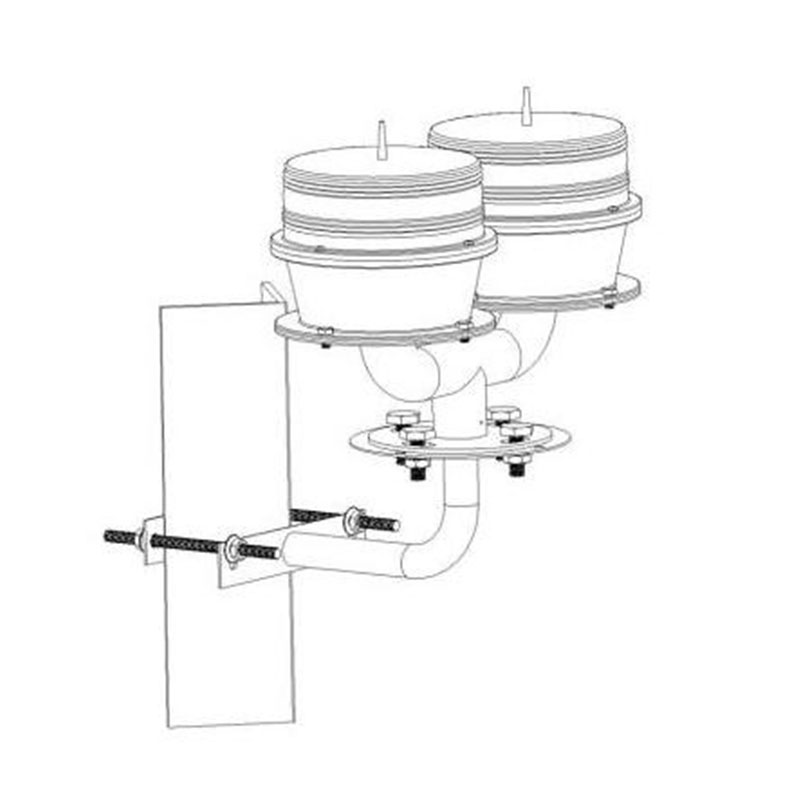
| Mounting | 100 × 100 mm pattern, Φ12 holes [verify]; 3/4-inch threaded hole under the base for pole mounting |
| Weight | 2.5 kg |
| Ingress protection | IP68 |
| Ambient temperature | −55 to +70 °C |
| Humidity | 0–100% |
| Wind resistance | 80 m/s |
| Product life expectancy | About 5 years (average) |
| Standards | ICAO Annex 14 Vol. I, Chapter 6, Table 6-3 – Low-intensity Type A/B; FAA L-810 |
| Options | GSM cellphone monitoring; NVG-compatible infrared (IR) LED; wireless remote ON/OFF; external battery charger |
YFFY-LS-T Double Solar Aviation Obstruction Light Drawings
Why Use a Double (Main + Standby) Solar Obstruction Light?
An obstruction light that goes dark at night leaves a structure unmarked, and on a remote tower or a tall crane, repairing it means a climb. In many jurisdictions a failed top light is also a reportable outage. In the United States, for example, tower owners must notify the FAA when a required light stops working.
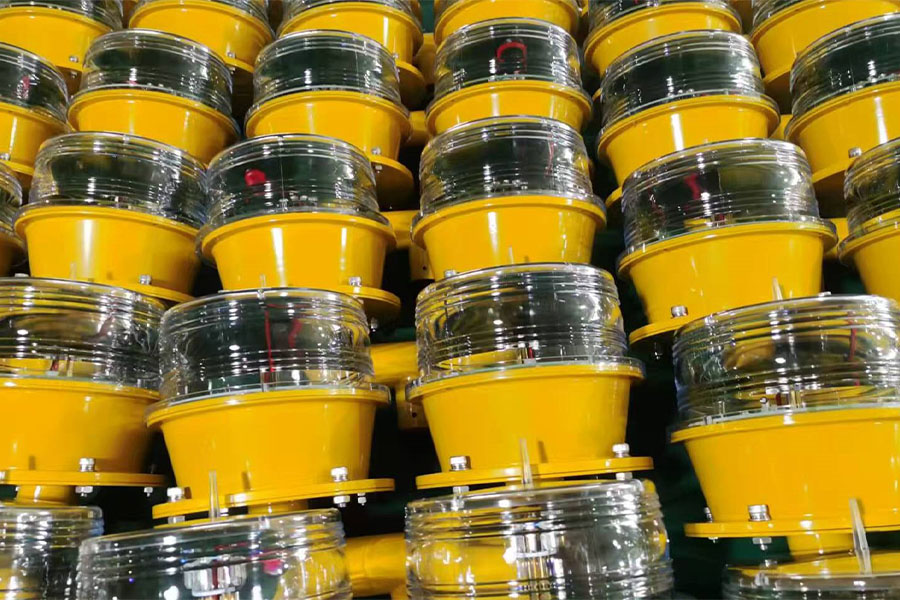
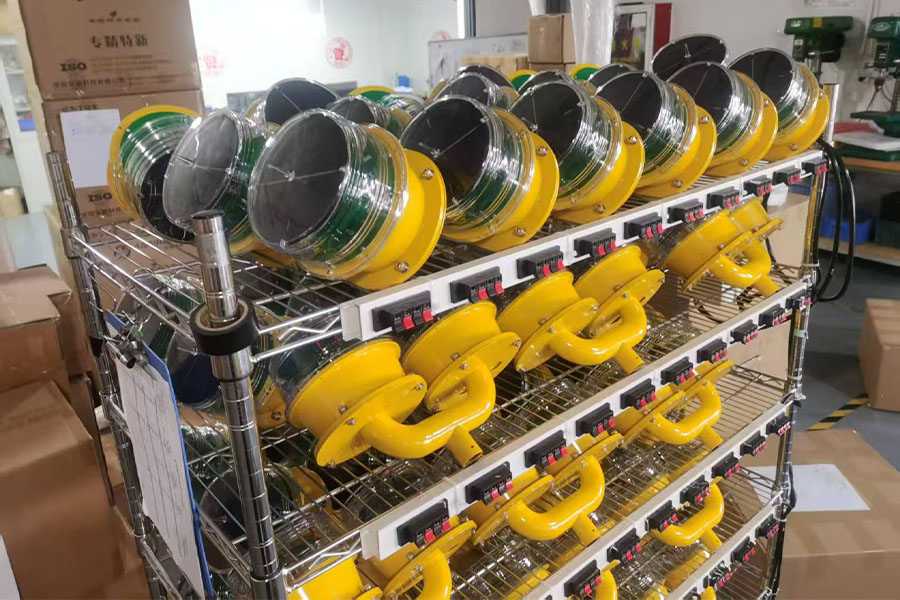
The YFFY-LS-T carries two lamps on two arms. The main lamp operates normally. If it fails, the standby lamp turns on automatically, so the structure stays marked until your maintenance team can reach it. For sites that are hard to access, this is the main reason to choose a double light over a single one.
ICAO Type A/B and FAA L-810: What the Standards Require
ICAO Annex 14, Volume I, Chapter 6 (Table 6-3) defines two fixed-red low-intensity obstacle lights: Type A with a minimum of 10 cd and Type B with a minimum of 32 cd. Both need a minimum vertical beam spread of 10°. The FAA’s L-810 is a steady-burning red obstruction light specified in Advisory Circular 150/5345-43, with a minimum intensity of 32.5 cd.
| Standard | Light | Color / mode | Minimum intensity | Typical use |
|---|---|---|---|---|
| ICAO Annex 14 | Low-intensity Type A | Red, steady | 10 cd | Objects lower than 45 m, used alone |
| ICAO Annex 14 | Low-intensity Type B | Red, steady | 32 cd | Objects lower than 45 m, alone or with medium-intensity Type B on taller structures |
| FAA AC 150/5345-43 | L-810 | Red, steady | 32.5 cd | Structures marked under FAA rules |
| YFFY-LS-T | Double solar | Red, steady (flashing selectable) | 32.5 cd, ≥ 10° vertical | Designed to the three lines above |
About the flashing mode. ICAO Type A/B and FAA L-810 are steady-burning lights, so steady mode is the reference setting. The 20 fpm flashing mode is provided for projects where the local aviation authority permits or requires a flashing low-intensity red light, for example alongside medium-intensity lighting. Please confirm with your authority before selecting it.
ICAO and FAA documents are revised from time to time, and national authorities may apply their own rules. ICAO/FAA compliance documents and the datasheet for the YFFY-LS-T are available on request.
When Is a Low-Intensity Light Enough?
ICAO guidance uses object height as the main selector:
- Lower than 45 m above the surrounding ground: low-intensity lights (Type A or B) are generally sufficient. Type A is used alone.
- Above 45 m, or an extensive object: medium-intensity lights are required. Type B low-intensity lights can be combined with medium-intensity Type B lights.
- Above about 150 m, or where an aeronautical study requires it: high-intensity lights.
Place at least one light as close as possible to the top of the structure. On taller or wider structures, additional levels and spacing follow your authority’s rules. Low-intensity lights are night-time lights; daytime marking (paint, flags or markers) is specified separately.
For structures above 45 m, see our Medium Intensity Lights and the guide When Do You Need Type A Medium Intensity Obstruction Light?. If you are unsure about the layout, send us the structure height and location and our engineers will suggest the number of lights and levels.
Applications
Tower cranes and construction sites
A solar light needs no cable along a moving jib or a temporary structure. Fit one at the crane top, and at the jib and counter-jib ends where your rules require. See our crane and construction site obstruction lights solution.
High-rise buildings and rooftops
Used at rooftop corners and parapets of buildings under 45 m, or as supplementary levels on taller buildings. See building and high-rise warning lights.
Telecom and broadcast towers
Remote towers often have no reliable grid. A solar unit with a standby lamp reduces tower climbs for lamp changes. See telecom and tower warning lights.
Chimneys and stacks
Mounted at the top of chimneys where running power cables is difficult. See chimney obstruction lights.
Wind turbines
Typical low-intensity use on the nacelle or as part of a wind-farm lighting scheme. See wind turbine lights.
Bridges and other obstacles
Bridge pylons and piers, temporary obstacles, and airfield construction zones. See bridge aviation warning lights.
Design Details That Matter in the Field
- LED light source, over 100,000 hours: long service life for hard-to-reach structures.
- UV- and vibration-protected polycarbonate lens: keeps the optical output stable on vibrating cranes and turbines and resists yellowing in strong sunlight.
- Powder-coated die-cast aluminum base: resists rain, snow and corrosion.
- Bird spikes: reduce bird droppings on the lens and the solar panel.
- Monocrystalline silicon panel: higher conversion efficiency than polycrystalline in the same area, which helps in short winter days.
- Microprocessor charge control and integrated circuit protection: regulate charging and protect the lithium-ion battery.
- IP68, −55 to +70 °C, 80 m/s wind resistance, 0–100% humidity: designed for cold plateaus, desert heat and exposed coastal or high-altitude sites.
Solar Autonomy and Battery: What 60 h and 150 h Mean
With a fully charged battery and no sunlight, the YFFY-LS-T runs for 60 hours in steady mode and 150 hours in flashing mode. Assuming 12-hour nights, that is about 5 consecutive nights in steady mode and 12 in flashing mode.
Real performance depends on the site:
- Latitude and season: long, low-sun winters and long overcast periods reduce charging. If your site is at high latitude or has a rainy season, tell us the coordinates so we can advise on mode selection or the external battery charger option.
- Panel condition: shade from antennas or parapets, dust, snow and bird droppings reduce charging. Choose an unshaded position and clean the panel during routine inspections.
- Battery life: the lithium-ion battery has an average service life of about 3 years, depending on temperature and charge cycles. Plan a battery replacement at around the 3-year mark. The LED itself is rated for more than 100,000 hours.
Operating Modes, Controls and Options
- Dusk-to-dawn operation: the built-in photocell (photodiode) switches the light on at dusk and off at dawn.
- ON/OFF button: local control for commissioning and testing.
- Steady / flashing (20 fpm) switch: a toggle under the base.
- Main-standby operation: automatic switch-over to the standby lamp.
Optional features
- GSM cellphone monitoring
- Infrared LED for pilots using night vision goggles (NVG)
- Wireless remote ON/OFF control
- External battery charger
Installation and Commissioning Guide
- Choose the position. Use the highest practical point with a clear 360° view. Keep the solar panel out of shadows cast by antennas, parapets or other lights.
- Mount the light. Fix it to a pole or bracket using the 3/4-inch threaded hole under the base, or the 100 × 100 mm mounting pattern. Keep the light level, because tilting it tilts the 10° vertical beam.
- Set the mode. Select steady or flashing with the toggle switch under the base, according to your project requirements.
- Switch on and test. Press ON/OFF, then cover the photocell to simulate darkness and confirm that the main lamp lights. Follow the manual for details.
- Ground and bond according to the lightning protection design of the structure.
- Record the installation date and schedule the first panel cleaning and the battery replacement.
Quality Control and After-Sales Support
- Parts inspection before production
- Appearance and function check before shipment
- Shipment tracking
- 24-hour after-sales support by online chat, email and video
- 2-year warranty [confirm]; free replacement once for non-human damage during the warranty period
Why Buy From YFFY Lights
YFFY Lights is the brand of Shaanxi Yuefeng Feiyao Technology Co., Ltd., a high-tech enterprise in Xi’an, China, that develops and manufactures solar and LED aviation obstruction lights, helicopter navigation lighting systems, beacon lights, apron lights, marine buoys and ship warning lights, and other safety lighting. We supply directly from the factory to contractors, tower owners, EPC companies and distributors. Customization is available; tell us your requirements for color, power supply, flashing mode or monitoring. We are also looking for distributors and agents. [Add real figures if available: years in business, countries shipped to, number of units delivered.]
How to Request a Quote
To give you an accurate quotation and layout advice, please send:
- Structure type and height above ground level
- Country and site coordinates (for solar sizing)
- Quantity and required mode (steady or flashing)
- Options needed (GSM monitoring, NVG IR LED, remote control, external charger)
- Destination port or address
- Compliance documents required (ICAO, FAA)
Our engineers reply within 12 hours (Mon–Sun) with a quotation, datasheet and compliance documents.
Obstruction lighting requirements differ by country and project. The final lighting layout must follow the rules of your local aviation authority (FAA, EASA, CAAC or other).
Frequently Asked Questions
1. What is an L810 light?
L-810 is the FAA designation for a low-intensity, steady-burning red obstruction light with a minimum intensity of 32.5 cd, specified in FAA Advisory Circular 150/5345-43. The closest ICAO equivalent is the low-intensity Type B light (minimum 32 cd).
2. What is the difference between ICAO Type A and Type B?
Both are steady red lights with a minimum 10° vertical beam spread. Type A has a minimum intensity of 10 cd and Type B has 32 cd. Type B is brighter and, on taller structures, can be combined with medium-intensity Type B lights.
3. Can the YFFY-LS-T Double Solar Aviation Obstruction Light be used on structures higher than 45 m?
As the only light, no. A low-intensity light on its own is for objects lower than 45 m. On taller structures it can serve as part of a scheme that includes medium-intensity lights, where your authority’s rules allow. Confirm the layout before ordering.
4. How long does it run without sunshine?
From a full charge, 60 hours in steady mode and 150 hours in flashing mode, which is about 5 and 12 nights of 12 hours.
5. What happens if the main lamp fails?
The standby lamp on the second arm turns on automatically.
6. How often do I replace the battery?
The lithium-ion battery has an average service life of about 3 years, depending on temperature and cycling. The LED is rated for more than 100,000 hours.
7. Can I monitor the light remotely?
Yes. GSM cellphone monitoring and wireless remote ON/OFF are available as options.
8. Is it compatible with night vision goggles?
An infrared LED for NVG use is available as an option.
9. Does it work in extreme weather?
It is rated IP68, for −55 to +70 °C, 0–100% humidity and 80 m/s wind.
10. Do I still need daytime marking?
Low-intensity lights work at night. Daytime marking such as paint, flags or markers is specified separately by your aviation authority.
11. Can you provide compliance documents?
Yes. The datasheet and ICAO/FAA compliance documents are available on request.