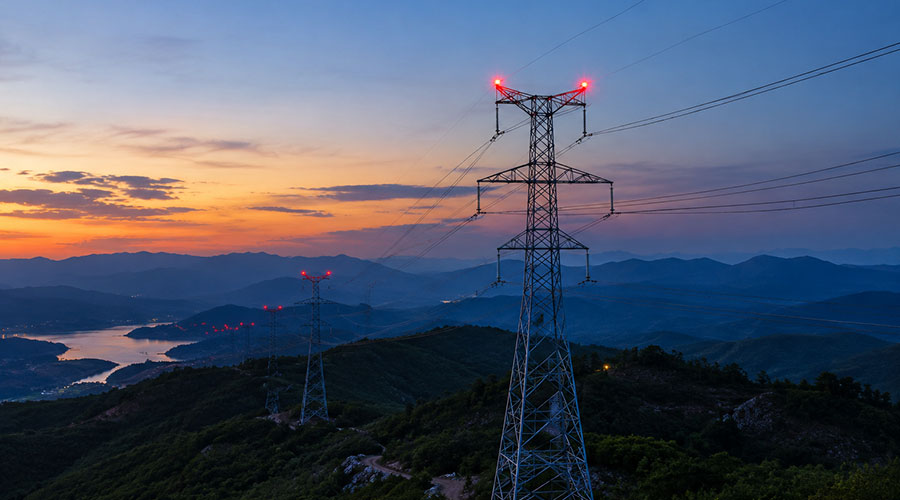
Transmission towers often stand in remote areas, mountains, and open fields where access to electricity and maintenance can be challenging. Obstruction lights for transmission towers help improve visibility for aircraft and support aviation safety. Choosing the right lighting system is essential for reliable operation and meeting applicable aviation requirements.
Two common options are solar-powered and AC-powered obstruction lights. Each has its own advantages depending on the installation location, available power supply, and environmental conditions. Both can be used for transmission tower projects, but the best choice depends on the site location, available power supply, sunlight conditions, and project specifications.
In this guide, we compare solar and AC obstruction lights for transmission towers and explain how to choose a suitable solution for different installation environments.
Ⅰ. Solar vs. AC Obstruction Lights: Key Differences
Before selecting obstruction lights for transmission towers, its important to understand how the two power systems differ.
| Comparison Factor | Solar Obstruction Lights | AC-Powered Obstruction Lights |
|---|---|---|
| Power Source | Solar panels and rechargeable batteries | AC electrical supply |
| External Power Cables | Generally not required for the light’s power supply | Required to connect the lights to the power source |
| Installation | Can simplify installation at sites without grid access | Requires suitable wiring and electrical infrastructure |
| Remote Locations | Well suited to many off-grid applications | Suitable when a reliable power supply is available |
| Weather Dependence | Charging performance depends on sunlight and system capacity | Depends on the reliability of the electrical supply |
| Maintenance | Requires inspection of solar panels, batteries, and lighting equipment | Requires inspection of electrical connections, power supply, and lighting equipment |
| Initial Installation Cost | May reduce power infrastructure and cabling costs | May involve additional cabling and electrical installation costs |
| Long-Term Costs | Depends on battery life, replacement needs, and solar performance | Depends on electricity costs, infrastructure maintenance, and equipment requirements |
Neither option is automatically better for every project. Solar obstruction warning lights can reduce dependence on external power infrastructure, while AC-powered systems may be more practical where a suitable electrical supply is already available.
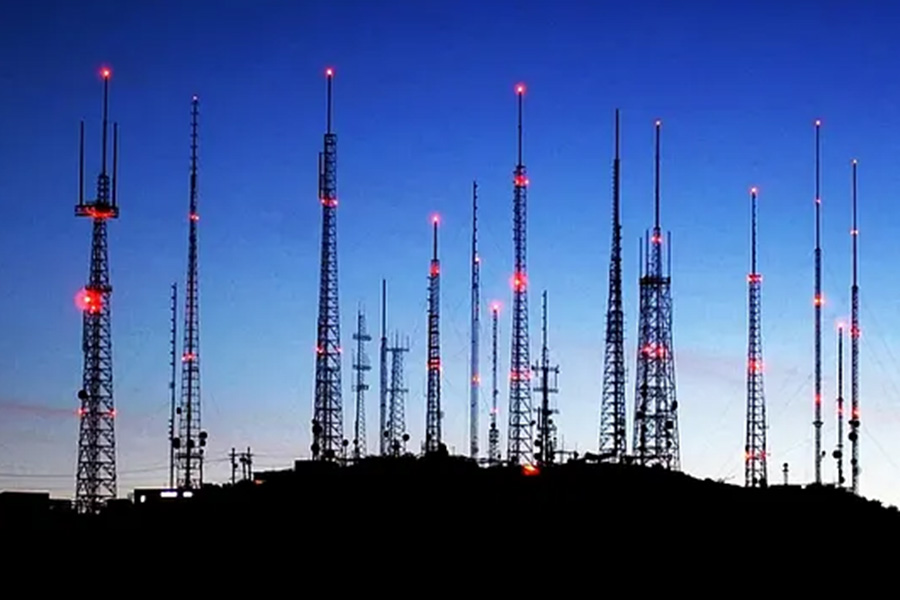

Ⅱ. When Should You Choose Solar Obstruction Lights for Transmission Towers?
Solar obstruction lights use solar panels to charge rechargeable batteries, allowing the lights to operate without a continuous external power connection. They are particularly useful for transmission towers located far from roads, substations, and other electrical infrastructure.
1. Remote Transmission Towers Without Grid Access
Many transmission towers are installed across mountains, valleys, forests, and rural areas. Extending electrical cables to these locations can increase installation time and project costs.
Solar aviation obstruction lights provide an alternative by generating and storing their own power. They can be a practical choice when:
- The tower is far from a reliable electrical supply.
- Installing power cables would be difficult or expensive.
- The project requires independent operation at individual tower locations.
- Reducing external wiring is a priority.
For remote transmission lines, solar-powered aviation obstruction lights can simplify installation and reduce the need for additional power infrastructure.
2. Projects With High Cabling & Installation Costs
The total cost of an obstruction lighting system includes more than the lights themselves.
- AC-powered installations may require power cables, protective equipment, electrical connections, and additional installation work. These costs can increase when towers are spread across a large area.
- Solar obstruction lights can reduce some of these expenses because each unit can use its own solar charging system.
However, solar is not always the cheaper option. The initial cost of the solar panel, battery, mounting system, and associated equipment should be compared with the cost of providing AC power over the project’s expected service life.
3. Locations Where Independent Operation Is Preferred
Solar lights can operate independently of a centralized power supply when designed with adequate solar charging and battery storage. This can be useful for transmission towers where connecting to a shared power system is inconvenient.
For projects with multiple towers, consider whether each light will operate independently or whether the lighting system requires centralized monitoring, synchronized flashing, or other control functions. These requirements should be confirmed before choosing the equipment.

Ⅲ. When Are AC-Powered Obstruction Lights a Better Choice?
AC LED obstruction lights may be the preferred option when a suitable electrical supply is already available and the project requires a conventional wired lighting system.
1. Transmission Towers With a Reliable Power Supply
If a tower is located near suitable electrical infrastructure, AC LED obstruction lights may be a straightforward solution. A reliable supply can reduce dependence on solar charging conditions and battery storage.
AC power may be worth considering when:
- A suitable power source is already available.
- The project has established electrical infrastructure.
- The specified lighting equipment requires AC power.
- The installation design includes appropriate electrical protection.
The available supply must be compatible with the selected light. Voltage, frequency, electrical protection, and any backup power requirements should be confirmed during project planning.
2. Sites With Limited Sunlight
Solar obstruction lights depend on sunlight to recharge their batteries. Prolonged cloudy weather, seasonal changes, snow, and shading can reduce charging performance.
For towers located in regions with long winters or limited sunlight, an AC-powered system may offer a more practical solution if a reliable electrical supply is available.
However, limited sunlight does not automatically rule out solar power. A properly designed system may still be suitable when its solar panel capacity, battery storage, and energy consumption meet the site’s operating requirements.
3. Projects With Specific Electrical or Control Requirements
Some transmission tower projects require a defined lighting configuration, centralized control, remote monitoring, or synchronized flashing.
An AC-powered system may be appropriate when these requirements align with the available equipment and electrical infrastructure.
However, AC power alone does not guarantee synchronization, monitoring, or backup operation. These functions require compatible control equipment and an appropriate system design. Before making a selection, confirm the project’s technical specifications and whether the supplier can provide the required functions.


Ⅳ. How Do Weather and Sunlight Affect Solar Obstruction Lights?
Weather conditions are an important consideration when selecting solar obstruction lights for transmission towers.
A solar-powered obstruction light must collect enough energy to operate reliably, including during periods when sunlight is limited.
1. Solar Panel Performance
The amount of energy a solar panel generates depends on several factors:
- Local sunlight conditions throughout the year.
- Solar panel orientation and installation angle.
- Shading from nearby structures or tower components.
- Dust, snow, and other surface contamination.
- Seasonal changes in daylight hours.
For transmission towers in mountainous or heavily shaded areas, the solar panel’s position should be checked carefully before installation.
2. Battery Capacity and Autonomy
The battery stores energy for nighttime operation and periods of limited sunlight.
When evaluating a solar obstruction light, check the battery capacity and the specified autonomy under the expected operating conditions.
A suitable system should account for the required lighting intensity, operating mode, daily energy consumption, and expected duration of cloudy weather.
For locations with prolonged periods of low sunlight, additional battery capacity or a larger solar panel may be necessary. The final configuration should be based on the manufacturer’s performance data and site conditions.
3. Cold Weather and Extreme Temperatures
Low temperatures can affect battery performance, while high temperatures may accelerate battery aging.
Before selecting solar obstruction lights for towers in extreme climates, confirm the operating temperature range and the suitability of the battery and charging system.
The enclosure, mounting hardware, and solar panel should also be appropriate for local wind, rain, snow, and other environmental conditions.
Ⅴ. Installation & Maintenance: What Should You Consider?
The installation requirements of solar and AC obstruction lights differ mainly in their power supply arrangements.
1. Solar Obstruction Lights
Solar systems can reduce the need for external power cables, making them convenient for towers in remote locations. During installation, consider:
- Selecting a position with sufficient sunlight.
- Avoiding shading from tower members and nearby structures.
- Securing the solar panel and light against expected wind loads.
- Ensuring the battery and charging system are suitable for local temperatures.
- Providing safe access for future inspection and maintenance.
Solar lights still require maintenance. Solar panels may need cleaning, and batteries may need inspection or replacement according to the manufacturer’s recommendations.
2. AC-Powered Obstruction Lights
AC-powered systems require a suitable electrical supply and a properly designed wiring arrangement. Important considerations include:
- Confirming the available voltage and frequency.
- Selecting suitable cables and electrical protection.
- Protecting wiring against environmental exposure and mechanical damage.
- Following applicable grounding and lightning protection requirements.
- Planning safe access for inspection and repairs.
For towers exposed to lightning, the complete installation should follow the project’s electrical protection design and applicable standards.
3. Which Option Is Easier to Maintain?
The answer depends on the installation environment.
- Solar lights may reduce the need to inspect long power cable routes, but battery replacement and solar panel cleaning can become important maintenance tasks.
- AC-powered lights avoid dependence on solar charging, but their electrical supply, wiring, and protective components also require inspection.
For remote transmission towers, the cost of reaching the site may be a significant part of the maintenance budget. Equipment reliability, service life, and ease of replacement should therefore be considered alongside the purchase price.

Ⅵ. Solar vs. AC Obstruction Lights: Which Is More Cost-Effective?
When comparing solar and AC LED obstruction lights, consider the total cost of ownership rather than the initial equipment price alone. The main cost factors include:
| Cost Factor | Solar-Powered System | AC-Powered System |
|---|---|---|
| Equipment | Solar panels, batteries, lights, and mounting components | Lights and compatible power supply equipment |
| Installation | May reduce external wiring and electrical infrastructure | May require power cables, electrical protection, and installation work |
| Energy Costs | Uses solar energy | Uses electricity from the available supply |
| Maintenance | Includes solar panel and battery inspections | Includes electrical supply and wiring inspections |
| Replacement Costs | Batteries and other components may need replacement | Electrical components and lighting equipment may need replacement |
For a remote tower without grid access, solar may reduce overall project costs by avoiding extensive cabling and power infrastructure.
For a tower with an existing, reliable power supply, AC-powered lights may be more economical, particularly when the cost of extending power is low.
A fair comparison should cover the expected operating period and include equipment replacement, maintenance visits, energy costs, and any additional infrastructure.
Ⅶ. How to Choose the Right Obstruction Lights for Transmission Towers Project
The best power supply depends on the site’s actual conditions and the project’s lighting requirements. Use the following guidelines as a starting point.
| Project Condition | Recommended Option to Evaluate | Reason |
|---|---|---|
| Remote tower without grid access | Solar aviation obstruction lights | Reduces dependence on external power infrastructure |
| Tower located near a suitable electrical supply | AC-powered obstruction lights | Can use existing electrical infrastructure |
| Remote mountain site with sufficient annual sunlight | Solar obstruction lights | Can provide independent operation when properly designed |
| Site with prolonged cloudy weather and reliable AC power | AC obstruction lights | Reduces dependence on solar charging |
| Project with high power cable installation costs | Solar obstruction warning lights | May reduce cabling and installation expenses |
| Project requiring a specific wired control arrangement | AC-powered or another specified system | Depends on compatibility with the required control design |
These recommendations concern the power supply only. The selected obstruction lights must also meet the project’s requirements for light intensity, color, flashing mode, visibility, and installation position.
For some projects, a combination of power supply arrangements may be appropriate across different tower locations. Each installation should be evaluated individually.

Ⅷ. Frequently Asked Questions
1. Are Solar Obstruction Lights for Transmission Towers is Suitable?
Yes. Solar aviation obstruction lights can be suitable for transmission towers, particularly in remote areas without convenient access to grid power. The solar panel, battery capacity, operating requirements, and local weather conditions must be evaluated to ensure reliable operation.
2. Are AC-Powered Obstruction Lights More Reliable Than Solar Lights?
Not necessarily. AC-powered lights can avoid dependence on sunlight, but their operation still depends on the reliability of the electrical supply and the condition of the equipment. Solar lights can also provide reliable operation when properly sized for local sunlight conditions and energy requirements.
3. Can Solar Obstruction Lights Work During Several Days of Rain?
They may continue operating if the battery has sufficient stored energy. The actual operating duration depends on battery capacity, charging conditions before the rainy period, light intensity, and operating mode. Check the manufacturer’s autonomy specifications before selecting a model.
4. Do Solar Obstruction Lights Require Battery Replacement?
Yes, batteries have a limited service life and may need replacement. Their lifespan depends on battery chemistry, temperature, charging conditions, and usage. Regular inspection helps identify declining battery performance before it affects the lighting system.
5. Can Solar and AC Obstruction Lights Be Used on the Same Transmission Line?
Yes, different towers along a transmission line may use different power supply arrangements when the project design permits it. Each installation must still meet the applicable aviation lighting requirements. Any synchronization or centralized control requirements should also be considered.
6. What Should I Provide When Requesting a Quote for Transmission Tower Obstruction Lights?
To help identify suitable equipment, provide the following information:
- Tower height and installation location.
- Required light intensity, color, and flashing mode.
- Available power supply or preference for solar operation.
- Local weather and environmental conditions.
- Required control, synchronization, or monitoring functions.
- Applicable project specifications or aviation standards.
This information helps the supplier recommend suitable equipment for the project.
Conclusion
Choosing between solar and AC obstruction lights for transmission towers depends on power availability, sunlight conditions, installation costs, maintenance requirements, and project specifications.
Solar obstruction lights are often worth considering for remote towers where installing external power cables would be difficult or expensive. AC-powered lights may be a practical option where a reliable electrical supply is already available or where the project requires a specific wired system.
Before making a decision, evaluate the total installation and operating costs and confirm that the selected lights meet the applicable aviation requirements.
Looking for obstruction lights for transmission tower project? Contact YFFY with your tower height, installation location, power supply conditions, and lighting requirements to discuss a suitable solution.