Solar Medium Intensity Lamps for Obstacle Warning
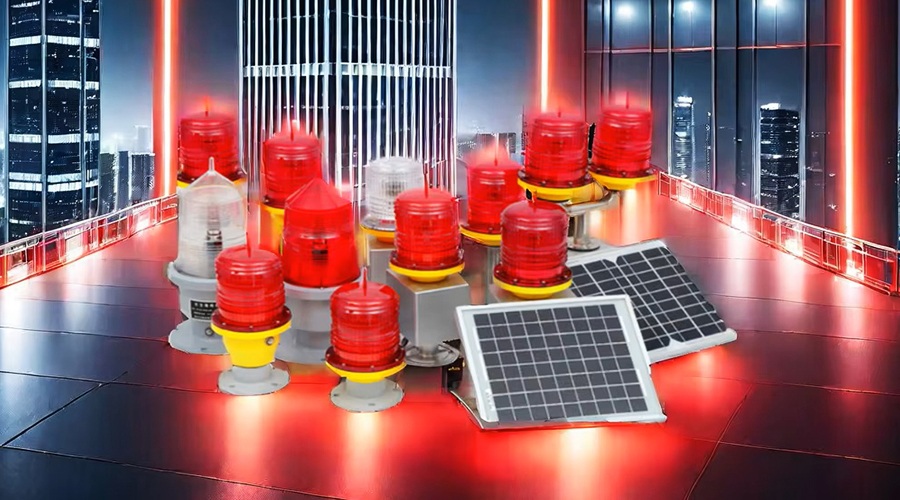
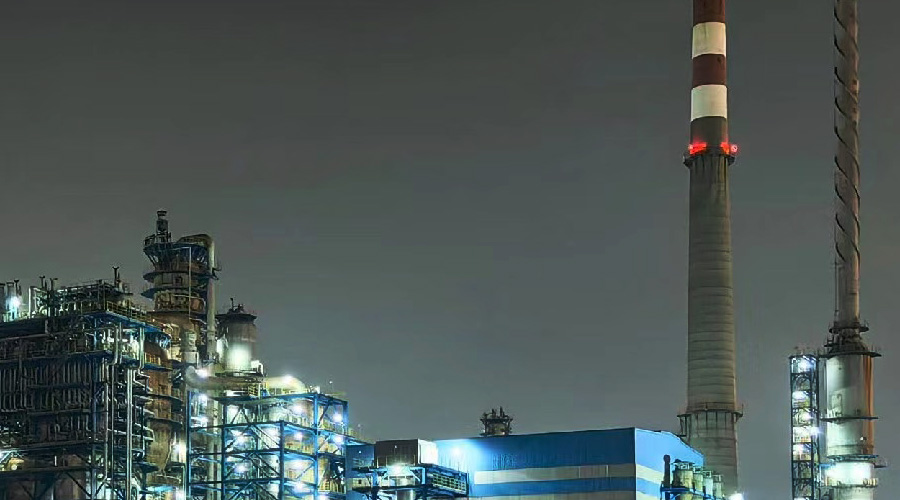
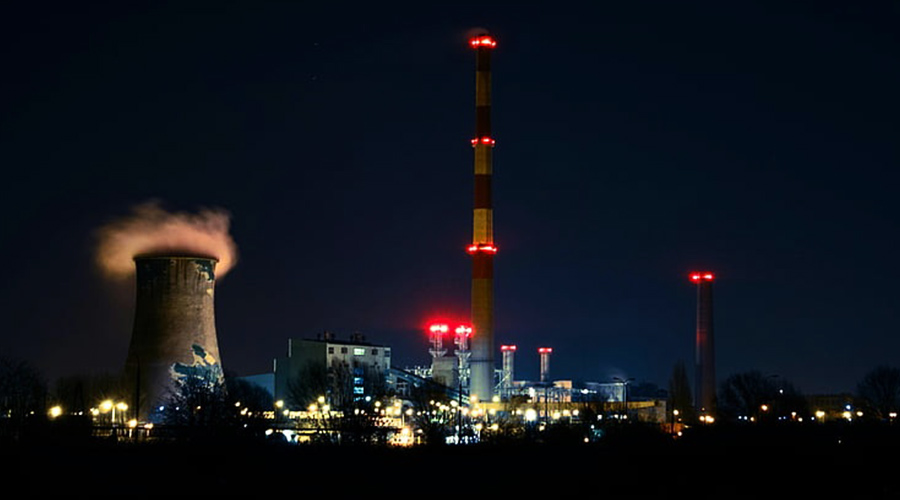
Solar medium intensity lamps are primarily used for obstacle warning at heights between 45 and 150 meters. Common applications include high-voltage transmission towers, communication towers, and other tall structures.
These aviation obstruction lights typically offer:
- Brightness: 2000 lumens
- Flashing: Red color with 20 or 40 flashes per minute (FPM)
- Maintenance-Free Operation: 7 years, integrating solar panels, batteries, and LED light sources
- Reliability: Designed for long-term outdoor use, with low maintenance costs
Application Scenarios for Solar Medium Intensity Lamps
- High-Altitude or Mid-to-High Tower Marking
Solar-powered warning lights can mark obstacles such as communication towers, substations, and transmission line towers, improving visibility and safety at night. - Remote Areas Lacking Power Supply
Provide stable nighttime lighting and warning in areas without regular mains power, such as mountain roads, mine entrances, remote construction sites, and wind/solar power plants. - Temporary or Mobile Installation Points
Ideal for incident sites, construction zones, temporary monitoring points, and emergency rescue areas that require easily deployable, portable, and maintenance-free lighting. - Aviation and Maritime Safety Signage
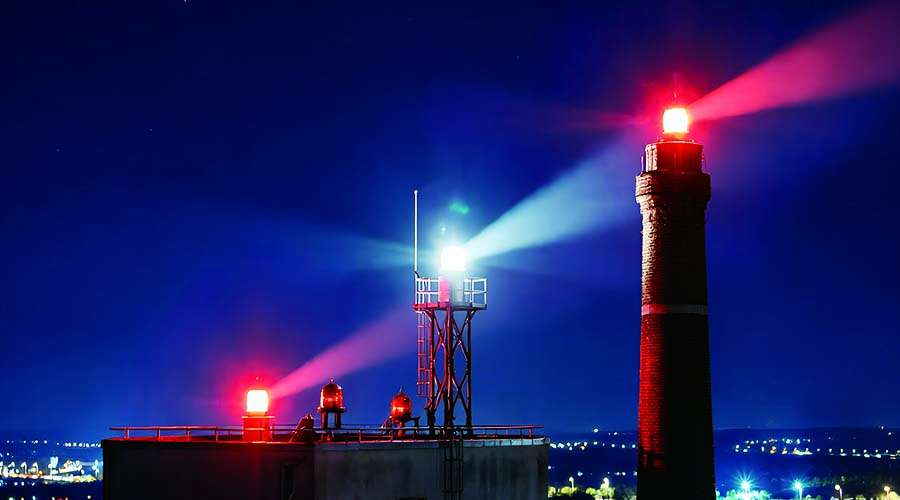
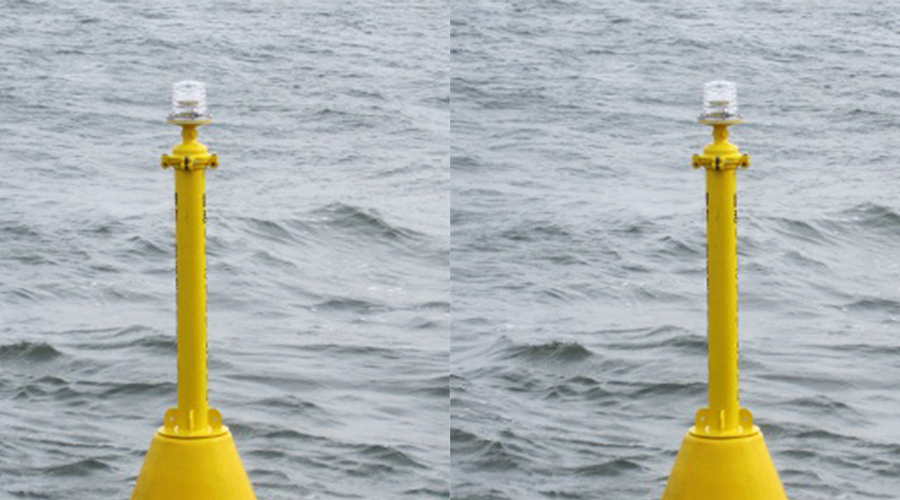
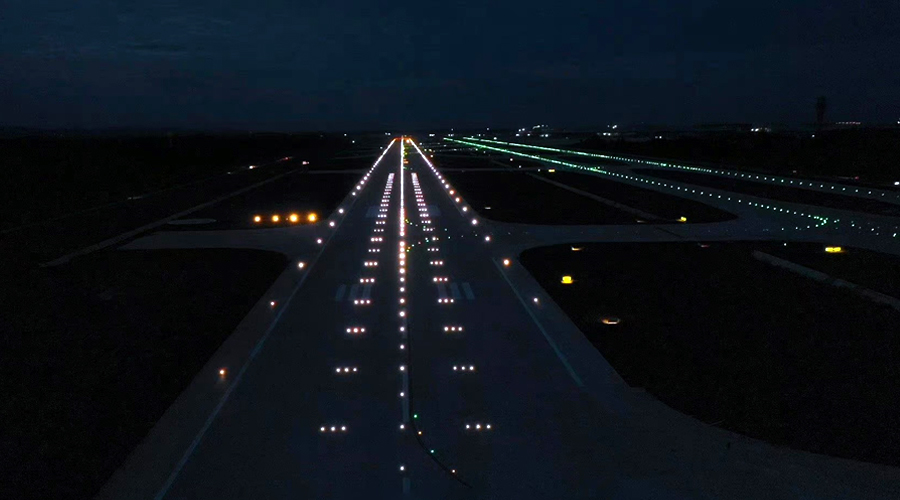
These LED lights enhance nighttime visibility and directional indication around waterways, airport runways, lighthouses, and coastlines. - Traffic Management & Safety Auxiliary Facilities
Temporary obstruction warning lights can be placed at road intersections or construction zones, offering nighttime illumination and warnings in traffic-controlled areas. - Disaster Emergency & Post-Disaster Recovery
Solar-powered lights serve as temporary lighting for communication and rescue points after disasters like earthquakes and floods, improving location identification and personnel safety.


Solar Obstruction Light Installation: Height & Color Requirements
(Note: Specific values may vary depending on the selected light fixture. Refer to product specifications.)
Installation Height
- Medium-Intensity Solar Lights (Traffic and Near-Ground Areas)
- Common Height: 2.5–6 meters
- Purpose: To ensure the light is above eye level, minimizing obstruction and covering a wider area.
- High-Altitude Obstruction Marking (Towers, Power Lines)
- Common Height: 6–15 meters or higher
- Purpose: To improve visibility from a greater distance.
- Temporary/Portable Scenarios
- Common Height: 1.5–3 meters
- Purpose: Provides a balance between portability and clear positioning for quick deployment.
Color &Lighting Effects
- Common Colors
- Red: Primarily used for nighttime warnings and marking high-lift objects like towers and power lines. Red light has better penetration in fog and haze due to its longer wavelength.
- Yellow/Amber: Ideal for low-contrast areas, often used alongside red lights to enhance visibility.
- White (Cool/Warm White): Used for general illumination and attention attraction, with flashing or periodic illumination to differentiate from other light sources.
- Flashing and Constant Illumination Modes
- Flashing Mode: Suitable for long-distance visibility and warnings, especially in low-wind conditions at night.
- Constant Illumination Mode: Provides continuous lighting when required for site availability.
- Color Temperature and Intensity
- Intensity: Typically between 1000–4000 lumens (lm), depending on the coverage distance and ambient background.
- Color Temperature:
- 6000–6500K (Cool White): For improved contrast over long distances.
- 3000–5000K (Warm White to Neutral White): Reduces glare.
Environmental Considerations
- Solar Panel Orientation: Ensure solar panels are oriented to maximize exposure to sunlight for optimal nighttime illumination.
- Safety Boundaries: Consider the safety coverage distance of the solar aircraft warning lights to avoid creating blind spots.
- Environmental Factors: When installing in areas with wind, snow, or rain, ensure the lights have adequate wind resistance, IP rating, and corrosion resistance.
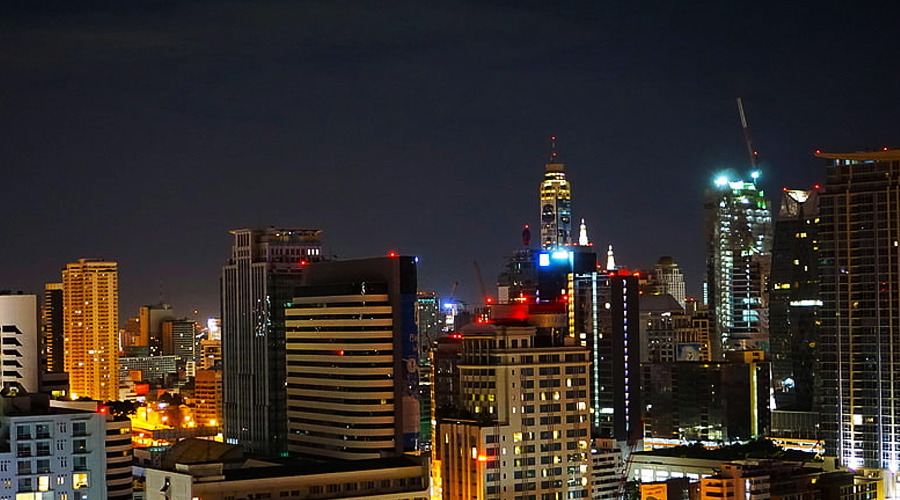

Solar medium intensity lamps, with their integrated design and high energy efficiency, provide a maintenance-free, reliable solution for obstacle marking in high-altitude and remote locations.
Whether for high-voltage transmission towers, communication towers, or emergency sites, these solar LED lights offer stable nighttime illumination and warning functions.
Choosing the right installation height, light color, and lighting effects—while considering environmental factors—will maximize safety performance.
For further information on product specifications and customization options, feel free to contact YFFY Lights.
Application Case Reference