Solar lights are used in marine navigation aids primarily because they provide continuous power in remote waters, eliminating reliance on the power grid or frequent battery replacements, making them particularly suitable for remote or difficult-to-wire areas.
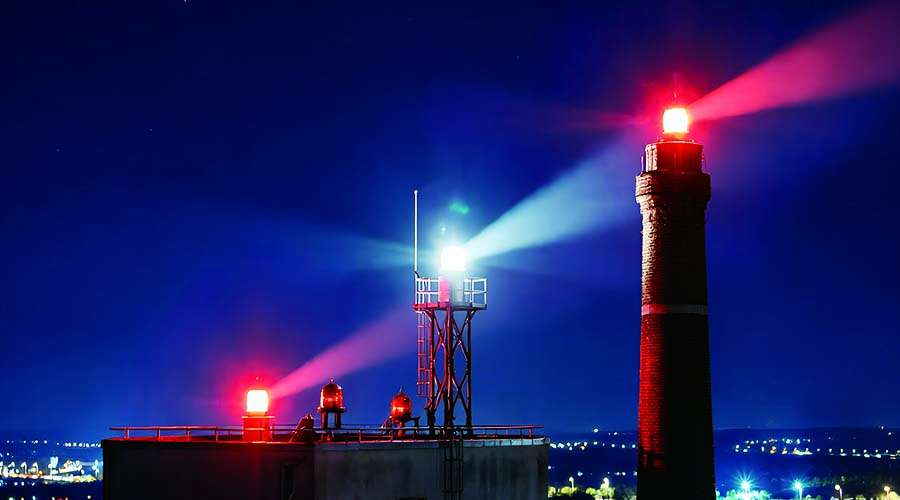
Solar Led lights utilize renewable energy, are environmentally friendly, and have low maintenance costs, making them suitable for long-term deployment on lighthouses, buoys, ships, ports, docks, bridges, and other facilities.
Meanwhile, modern solar-powered marine lights offer high brightness, long lifespan, visibility of 1-20nm, and some models can be customized with 350 flashing modes, significantly improving nighttime navigation safety.
Why Are Indispensable Solar Lights For Marine Navigation Aids?
In the vast ocean, whether it’s merchant ships, fishing boats, yachts, buoys, or offshore platforms, stable and reliable navigation aids are essential for guiding course, identifying obstacles, and preventing collisions.
With the popularization of green energy technologies, solar marine navigation lights are increasingly becoming the core of modern marine navigation systems.
So, why are solar warning lights becoming increasingly popular in the field of marine navigation? What irreplaceable advantages do they possess? Let’s find out.
I. Limitations of Traditional Navigation Aids
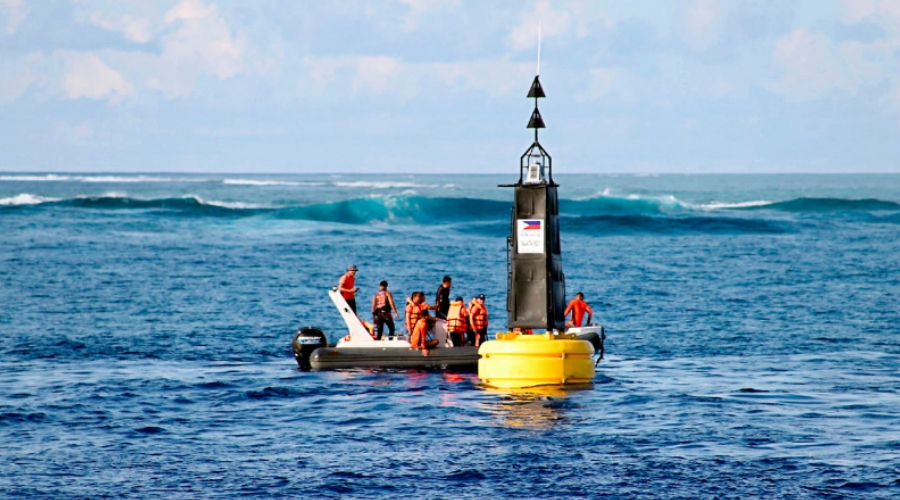
- Previously, marine navigation lights relied heavily on mains power or diesel generators. However, in locations far from land, such as sea areas, buoys, lighthouses, and offshore platforms, laying cables is costly and difficult to maintain;
- Using fuel-fired power generation faces problems such as inconvenient fuel replenishment, high operating costs, and environmental pollution.
- Furthermore, the harsh marine environment—high salt spray, strong winds and waves, and continuous exposure to sunlight—poses severe challenges to the durability and stability of equipment.
- These pain points have driven the industry to seek a lighting solution that requires no external power source, is easy to maintain, and is highly reliable—leading to the development of solar marine warning lights.
II. Five Advantages of Solar-Powered Marine Lights
1. Energy Self-Sufficiency, No External Power Supply Required
- Solar-powered warning lights convert sunlight into electricity through high-efficiency photovoltaic panels and store it in batteries, achieving completely autonomous operation. Even in continuous rainy weather, some YFFY models can operate for more than 15 days, ensuring uninterrupted navigational signals.
2. Green and Environmentally Friendly, Zero Emissions
- Solar marine navigation warning lights do not consume fossil fuels, produce no noise or exhaust fumes, comply with the International Maritime Organization (IMO) and national environmental regulations, and support sustainable marine development and the “blue economy” concept.
3. High Reliability and Robust Weather Resistance
- Modern solar-powered marine lights generally possess IP67/IP68 protection ratings, resisting salt spray, corrosion, UV radiation, and typhoons. They can operate stably in extreme environments ranging from -50℃ to +85℃, adapting to various marine conditions worldwide.
4. Intelligent and Multifunctional Integration
- Some solar lights support GPS synchronized flashing, 350 flashing codes, APP management, and GPRS communication, enabling multi-light coordination, real-time status feedback, and remote fault diagnosis, significantly improving operation and maintenance efficiency.
5. Long Lifespan & Low Maintenance Costs
LED light sources have a lifespan exceeding 100,000 hours, solar panels have a lifespan of up to 30 years, batteries are replaceable, and the overall system design lifespan is 5-8 years, significantly reducing the total lifespan cost.
III. Wide Range of Application Scenarios
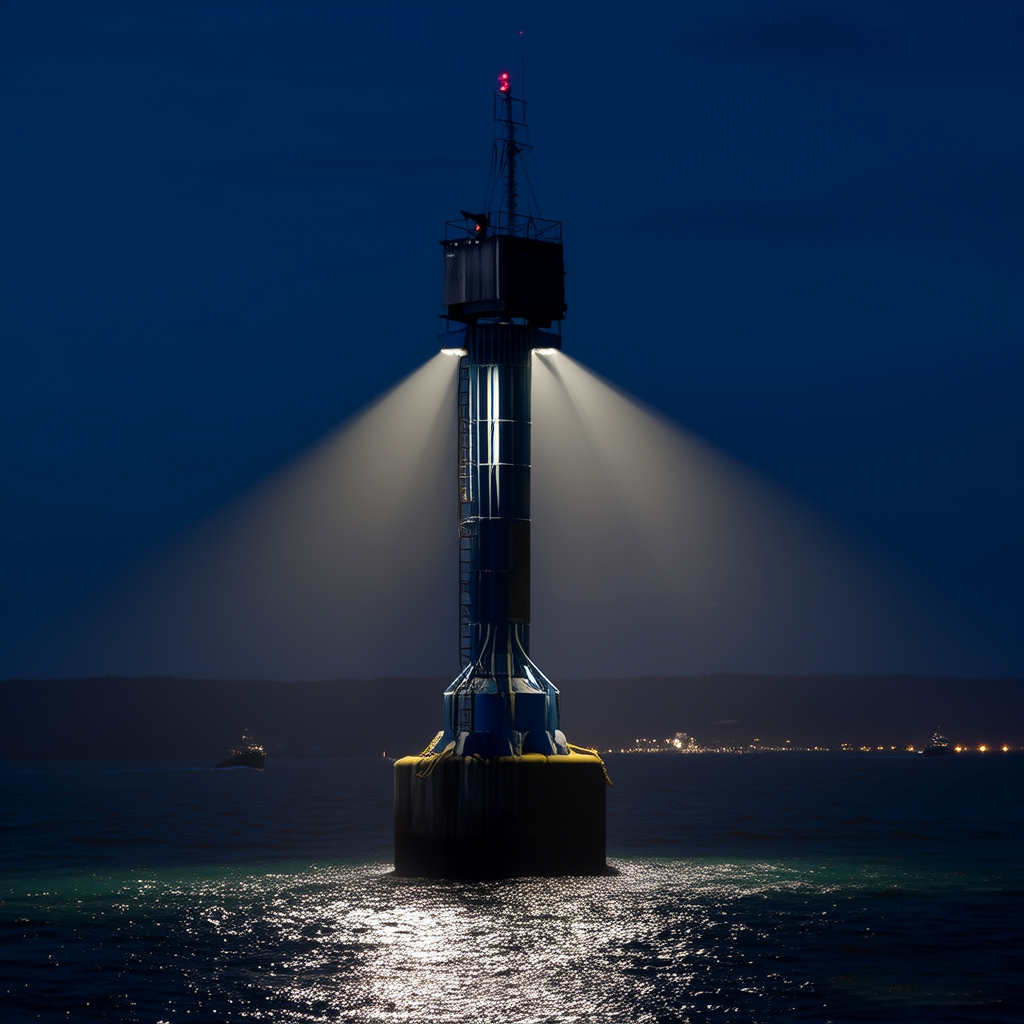
Solar marine navigation lights have been successfully applied in the following scenarios:
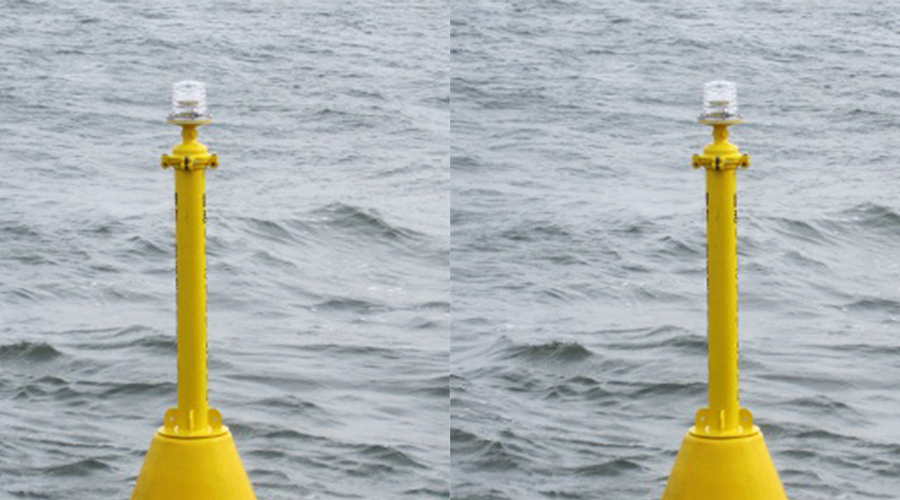
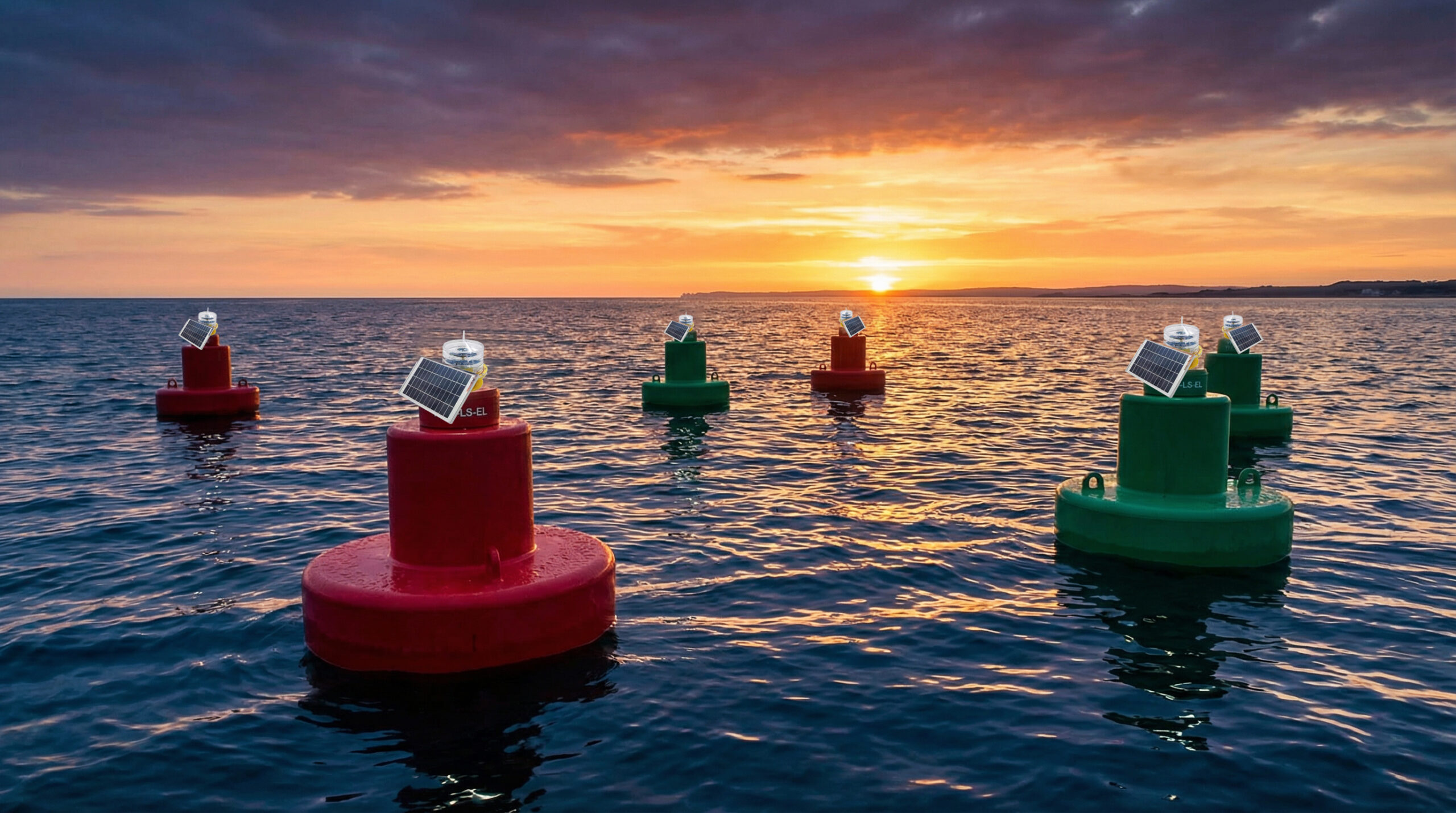
- Navigational marks & buoys: Providing visual identification for nighttime navigation channels
- Ports & docks: Assisting vessels in safe berthing and departure
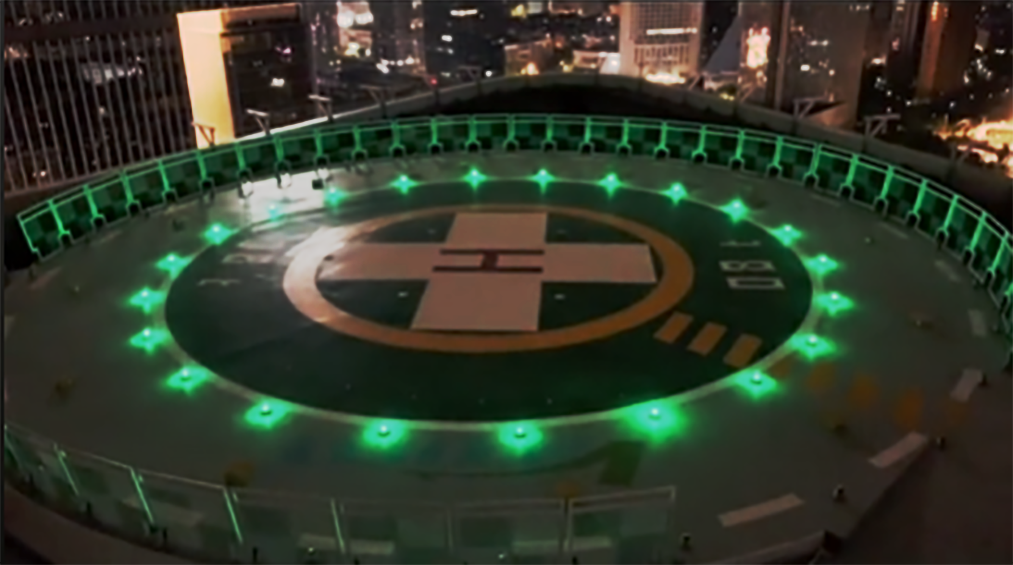
- Offshore platforms & drilling rigs: Serving as obstacle warning lights
- Aquaculture cages & artificial islands: Preventing vessels from accidentally entering work areas
- Bridge navigation openings: Marking clearance height and channel boundaries
- Yachts & small vessels: Meeting international navigation lighting standards (such as COLREGs)
IV. Recommended Product: YFFY-LS-EL Solar Navigation Aid Light
- Among numerous solar marine lights, the YFFY-LS-EL solar lights stands out. This product complies with IALA (International Association of Marine Aids to Navigation) standards, offering an adjustable visibility range of 1-5nm.
- It features a high-efficiency solar panel with a 25% conversion efficiency and a 6000mAh lithium iron phosphate battery, supporting multiple light colors including red, green, white, yellow, and blue.
- It also boasts GPS-synchronized flashing and 350 flashing modes. With IP68 waterproof rating and resistance to winds up to 80 m/s, it comes with a 3-year warranty and is suitable for harsh environments such as buoys, ports, and offshore platforms.
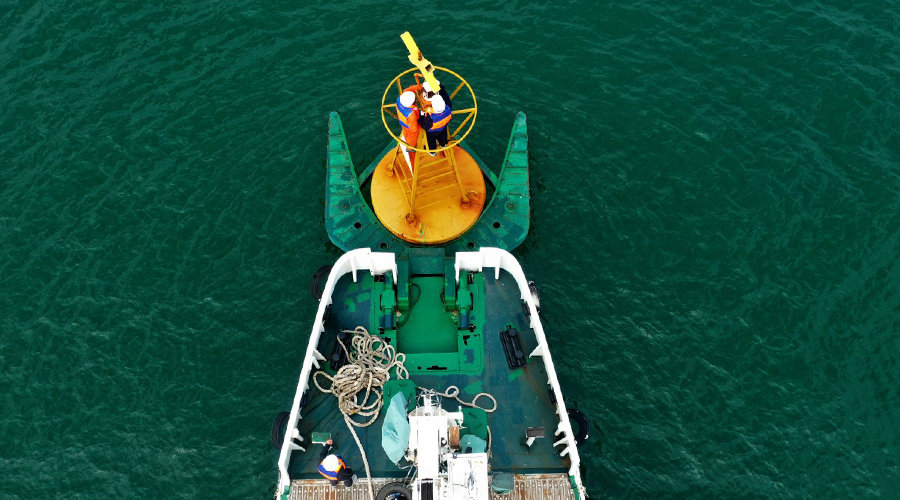
Solar marine navigation lights represent a comprehensive consideration of navigation safety, environmental protection, and operational economics.
With the increasing efficiency of photovoltaic technology and the integration of intelligent control systems, solar marine lanterns will undoubtedly play an even more crucial role in ensuring maritime safety in the future.
Choosing an efficient, reliable, and intelligent solar navigation light illuminates every sea voyage with safety and sustainability.
Solar Buoy Light Effect Case