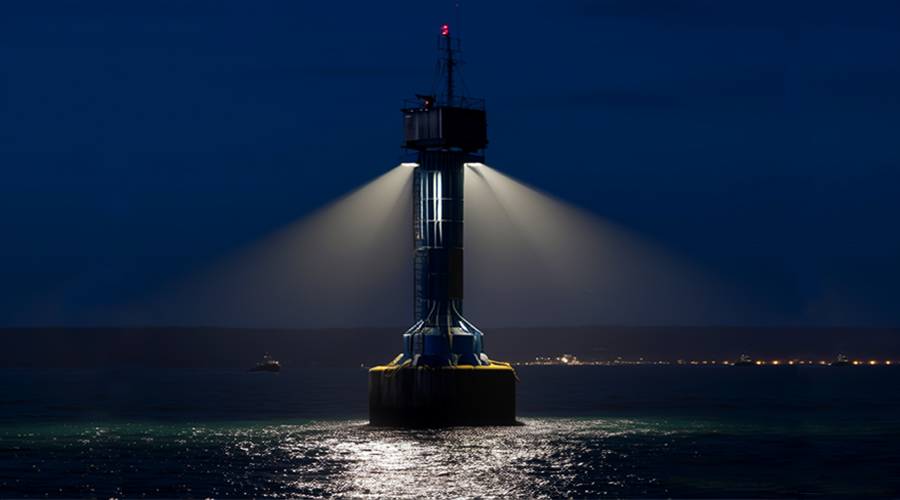
Marine lantern is primarily used in vast sea areas, busy port terminals, and complex inland waterways. Reliable solar-powered marine navigation lights are the “eyes of the sea,” ensuring navigational safety, identifying dangerous areas, and guiding vessels.
Whether used for buoys, navigation aids, offshore platforms, breakwaters, or dock edges, choosing a marine navigation light with a visibility range that matches actual needs directly impacts operational efficiency and the safety of life and property.
Among these factors, the visibility range (NM) is a core selection criterion. As a widely demanded standard, this article will systematically analyze 6NM and 10NM solar navigation lights to help you make scientific, efficient, and compliant decisions.
I. What is the Visibility Range of Marine Lantern?
Visibility range (Nominal Range) refers to the farthest distance at which a light can be seen by the naked eye under standard weather visibility conditions. This parameter reflects not only brightness but also the effective radius of action of the LED warning light in real sea conditions.
- 6NM Marine Lights: Suitable for short-to-medium range navigation and area warning, covering most coastal, port, and inland waterway scenarios, meeting the basic requirements of IALA (International Association of Marine Aids to Navigation) for regional navigation aids.
- 10NM Marine Navigation Lights: Designed for long-range identification, with stronger light intensity and penetration, used in open sea areas, key nodes in main shipping channels, or high-risk areas, providing greater safety redundancy.
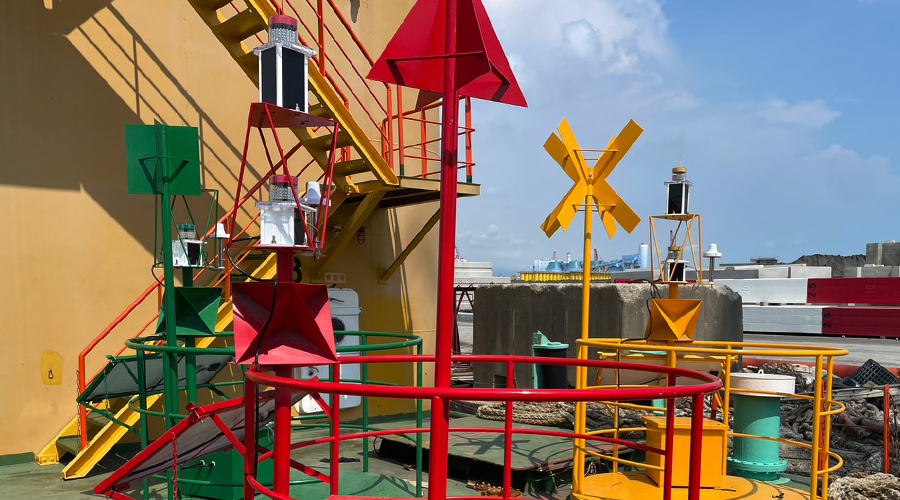
II. Comparison of Marine Light Applications
✅ Application of 6NM Solar Marine Navigation Lights (Short-to-Medium Range, High-Density Waters)
- Inland Waterways & Lakes: Provides clear heading guidance for small vessels, fishing boats, and yachts.
- Ports & Docks: Marks berth boundaries, mooring bollards, breakwater ends, and pier fronts to prevent berthing collisions.
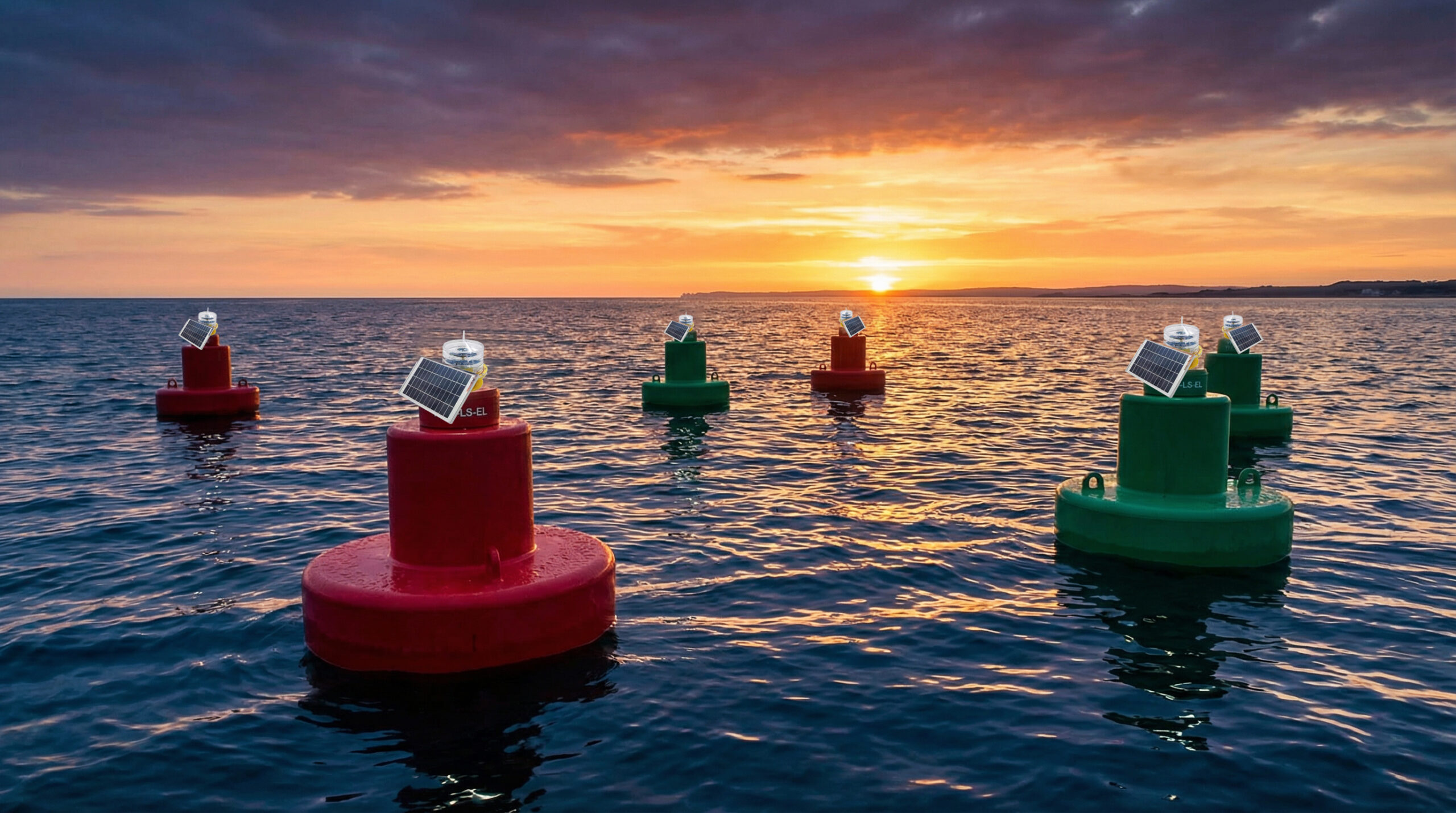
- Small & Medium-Sized Buoys and Beacons: Deployed as side markers, bearing marks, or safety waterway markers within a range of 5–8 nautical miles from the shore.
- Around Offshore Wind Farms/Oil and Gas Platforms: Establishes a medium-distance safety warning circle, reminding passing vessels to maintain a safe distance.
These scenarios typically involve slower vessel speeds and better visibility, where a 6nm visibility distance fully meets safety regulations and operational requirements.
✅ Deployment Scenarios for 10nm+ Solar Powered Navigation Lights (Long-Range, High-Risk, Low-Visibility):
- Navigational Aids in Main Shipping Channels: Such as isolated hazardous objects, turning point buoys, and large lightships, requiring identification at least 10 nautical miles away.
- International Shipping Channels: Ensuring that cargo ships and oil tankers plan their routes in advance and safely change course or avoid collisions.
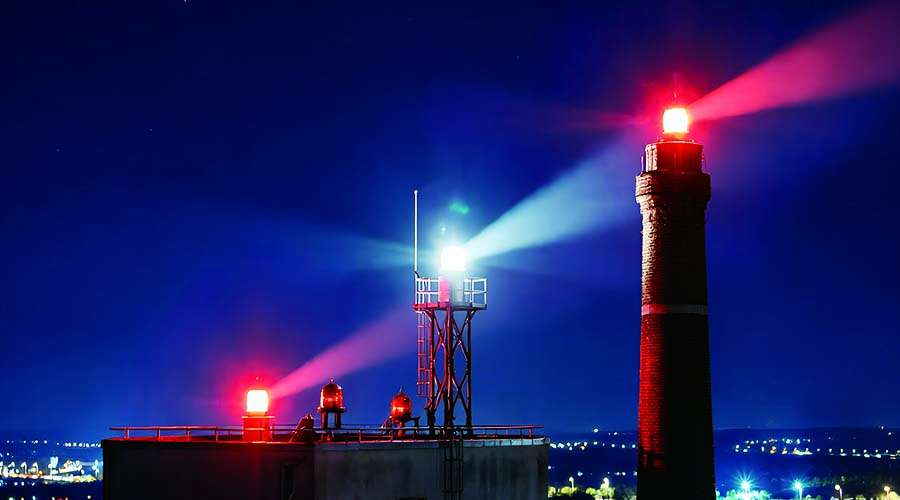
- Deepwater Drilling Platforms, FPSOs, and Cross-Sea Bridges: Providing early visual warnings in adverse sea conditions to prevent collisions.
- Foggy, Rainy, or High-Humidity Sea Areas: Stronger light output effectively combats atmospheric attenuation, enhancing signal penetration.
In these environments, every second of earlier detection equals a significant increase in safety. 10nm+ visibility is an uncompromising technological minimum.
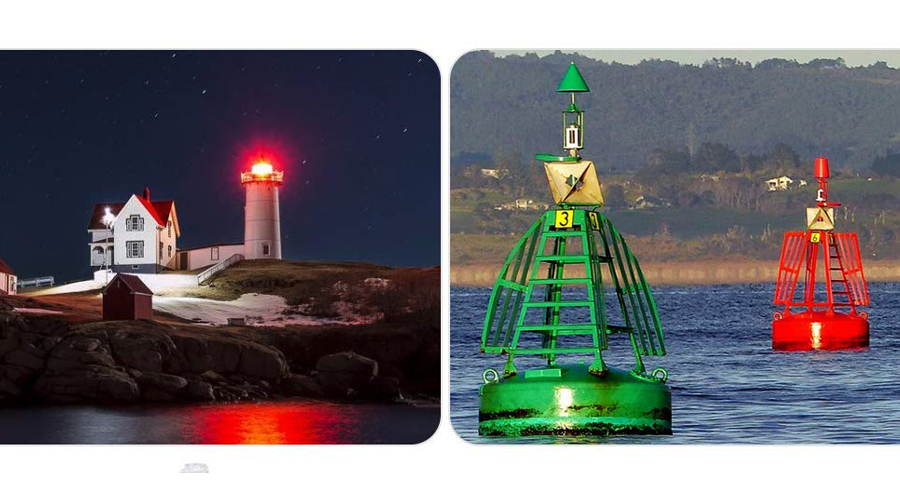
Recommended LED Navigation Warning Lights:
Two High-Performance Solar Marine Warning Lights to Precisely Match Different Needs
After clarifying the application scenario, choosing equipment that is technologically mature, maintenance-free, and compliant with IALA standards is crucial.
🔹 Mid-Range Choice: YFFY-LS/S Solar Marine Light (4~6NM)
Advantages
- IP68 fully sealed protection + aviation-grade die-cast aluminum shell + UV-resistant PC lampshade, resistant to salt spray and corrosion, operating temperature -40℃ ~ +70℃, wind resistance up to 80m/s.
- 24Ah lithium iron phosphate battery + 4×6W monocrystalline silicon solar panels, combined with a low-power control chip, supports more than 15 consecutive days of cloudy and rainy weather.
- 5 light colors available (red, amber, yellow, green, white, blue), 350 IALA standard flashing modes, remote control configuration, flexible adaptation to regulations in various countries.
- Fully automatic light control switch, no manual intervention required, truly achieving “install and use, long-term maintenance-free”.
Applicable Scenarios
- Can be used as a buoy light, marine boat light, dock light, and also as a port mooring bollard, dock edge light, nearshore aquaculture area warning, and small navigational aid beacon.
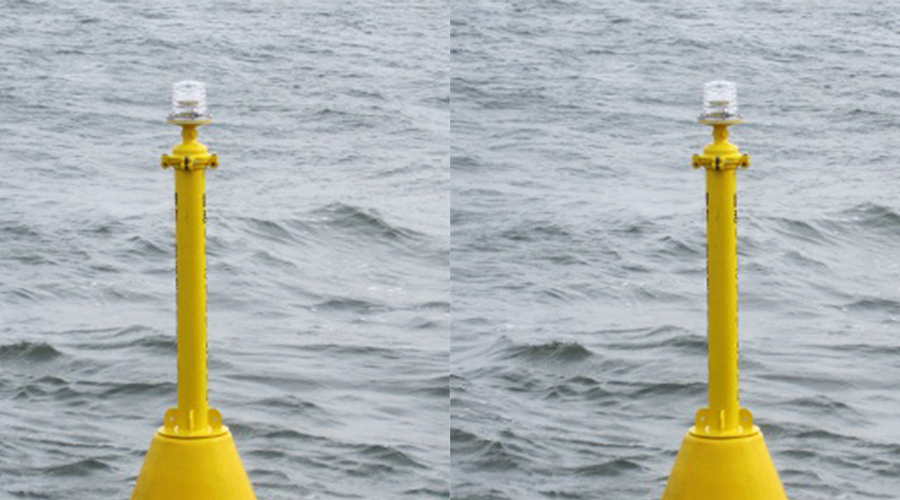
🔹 Long-Range Flagship: YFFY-LS-HT Solar Powered Marine Lantern
Advantages:
- Visibility range of 11-20 nautical miles; utilizes a high-power LED array + precision optical lens to ensure a pure, focused, and penetrating beam.
- Large-capacity energy system (standard 24Ah lead-acid/higher capacity optional), coupled with a high-efficiency solar charging module, ensures continuous operation under extreme weather conditions.
- Also features IP68 protection, wide temperature range adaptability, and wind-resistant design; structural strength optimized for long-term offshore deployment.
- Optional GPS synchronization, AIS integration, or remote monitoring modules support intelligent navigational aid management.
Applicable Scenarios:
- Can be used as a large buoy light, ship light, offshore lighthouse light, deep-water oil and gas platform, cross-sea bridge collision avoidance system, and key turning points on international shipping routes.
III. Selection Decision Checklist
5 Key Questions to Help You Secure Your Answer. Before making a final decision, please ask yourself:
- Is the installation location coastal/port/inland waterway, or open sea/international shipping lane?
- Does the target vessel need to be able to recognize the signal from 10 nautical miles away?
- Do local maritime authorities or IALA have mandatory requirements regarding visibility distance?
- Does the area frequently experience dense fog, heavy rain, or cloudy weather?
- Is the equipment difficult to maintain frequently? Is a solar-powered, maintenance-free solution required?
If most answers point to “nearshore, easy to maintain, moderate visibility,” the 6nm YFFY-LS/S solar lights is an efficient and economical choice; if it involves “open ocean, high risk, low visibility, critical routes,” then the 10nm+ YFFY-LS-HT solar marine lantern provides a safety baseline.
Choosing between 6nm and 10nm solar marine lights is not a simple matter of comparing parameters, but a comprehensive judgment based on geographical environment, regulatory requirements, vessel type, and operational conditions.
In today’s era of accelerated progress in green shipping and smart navigation aids, correctly selecting a solar-powered marine lantern that matches the scenario is not only a compliance requirement, but also a solemn commitment to the safety of life and assets at sea.