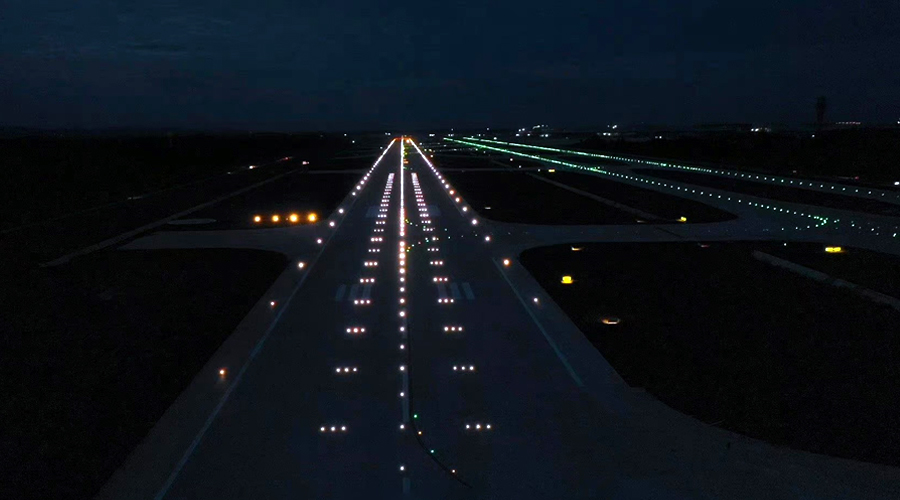
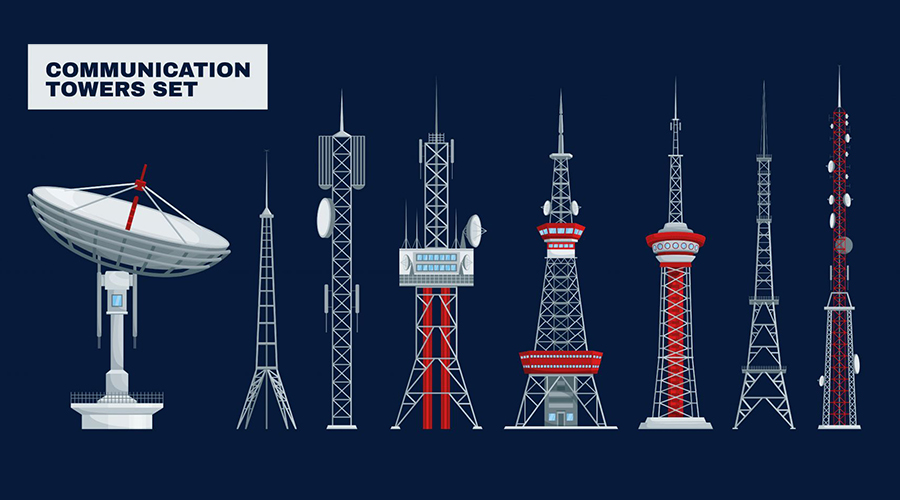
What are solar warning lights for tower? Communication towers, as vital infrastructure, are often built at high altitudes or in remote areas to support communication signal transmission. To ensure aviation safety and tower protection, installing reliable LED warning lights is crucial.
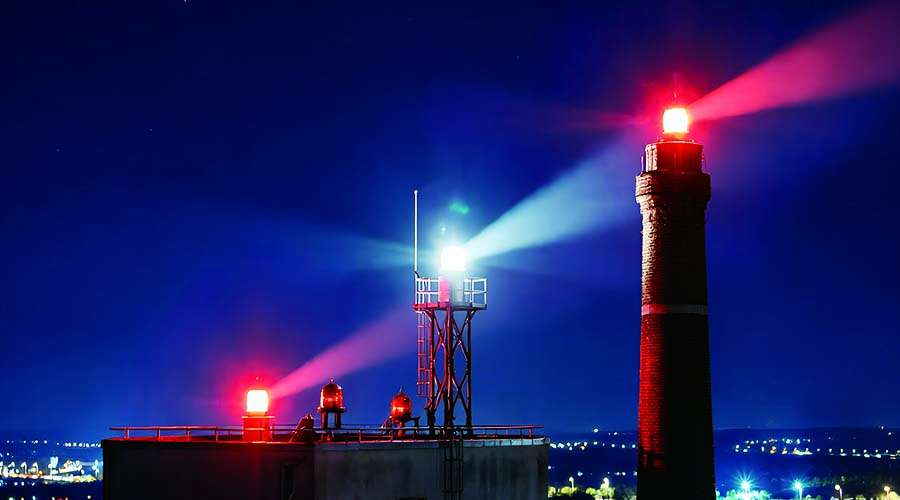
The core function of communication tower warning lights is to alert low-flying objects; therefore, their brightness must meet aviation regulations. Typically, medium-to-high intensity warning lights need to be clearly visible from several kilometers away.
Solar-powered warning lights, with their environmentally friendly, low-maintenance, and easy-to-install features, have become the preferred choice for modern communication towers.
However, with numerous products on the market, how do you choose the most suitable one? This article combines industry standards and professional knowledge to provide you with a practical guide.
How to Choose Solar Warning Lights for Tower?
1. Brightness & Visibility Distance:
Intensity Indicators:
Communication towers are usually located in open areas, requiring solar warning lights to have sufficient brightness both day and night to ensure long-distance visibility.
According to industry standards, the luminous intensity of warning lights should meet specific standards, such as at least 500 candela (cd), to ensure effective warning even in adverse weather conditions.
Flashing Frequency:
When selecting a light source, prioritize LEDs due to their long lifespan, low energy consumption, and stable high brightness output.
Also, consider the flashing mode of the solar tower light (e.g., strobe or constant light) to adapt to different environmental needs (e.g., nighttime or inclement weather).
The International Aviation Organization recommends that aviation warning lights flash at a frequency of 60 to 100 times per minute, a frequency that is attention-grabbing without causing visual fatigue.
2. Solar System Efficiency:
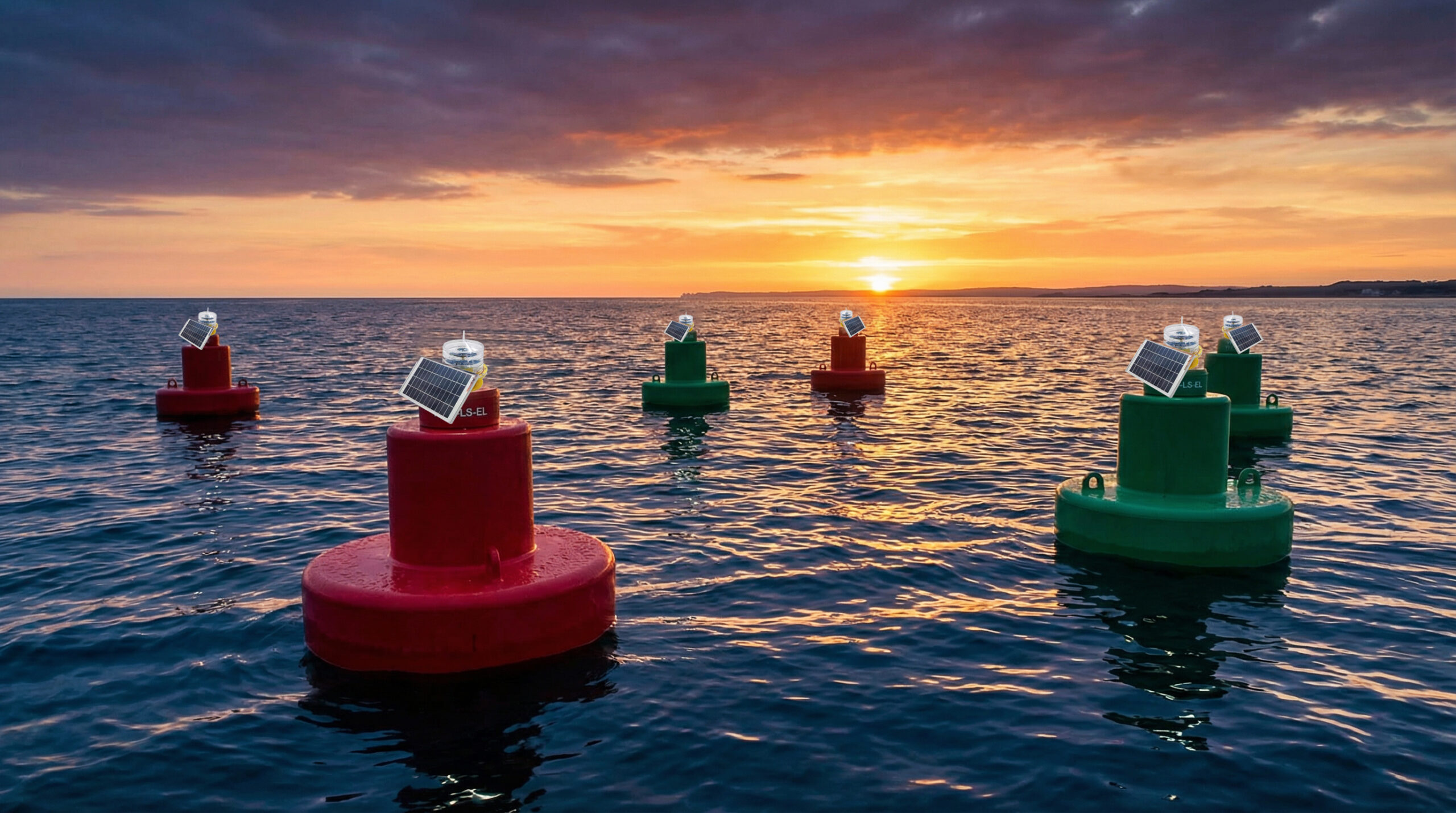
Solar LED warning lights rely on photovoltaic panels for charging; therefore, their solar conversion efficiency and battery capacity must be evaluated.
In areas with insufficient sunlight, selecting high-efficiency monocrystalline silicon solar panels and high-capacity lithium batteries can ensure continuous operation for 7-10 days in cloudy or rainy weather.
Furthermore, a protection rating (e.g., IP65 or higher) provides dust and water resistance, extending equipment lifespan.
3. Installation & Maintenance Ease:
Communication towers are often located in mountainous or remote areas; installation and maintenance should be simplified as much as possible.
Choose lightweight, modular aviation obstruction lights that support wireless installation, avoiding complex wiring. Self-cleaning surfaces and maintenance-free batteries reduce inspection frequency and save labor costs.
4. Environmental Adaptability:
Communication towers may face strong winds, high temperatures, or low temperatures. Therefore, LED solar warning lights need to have a wide operating temperature range (e.g., -20℃ to 60℃) and a corrosion-resistant housing (e.g., aluminum alloy). Lightning protection design should also be considered to enhance overall safety.
5. Compliance & Certification:
Ensure that the solar lights pass international aviation standard certifications such as FAA and ICAO, or meet local regulatory requirements. This not only guarantees safety but also avoids legal risks.
Among many products, YFFY Lights’ solar warning lights are ideal for communication tower applications due to their high brightness, long battery life, and robust design.
For example, the YFFY-LS-C-1 solar warning lights for tower uses high-efficiency solar panels, supports multiple installation methods, and has passed rigorous environmental testing, reliably meeting various challenges. It automatically charges during the day and operates automatically at night, can work continuously for 7-15 days in cloudy or rainy weather, and has a long-distance visibility of 8KM, further enhancing aviation safety.
When selecting solar warning lights for telecom tower, please comprehensively evaluate factors such as brightness, solar energy efficiency, installation and maintenance, and environmental adaptability.