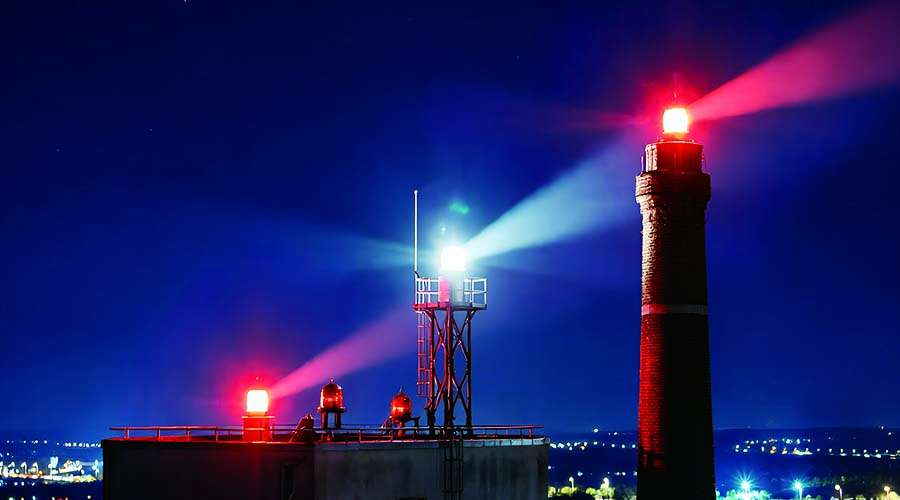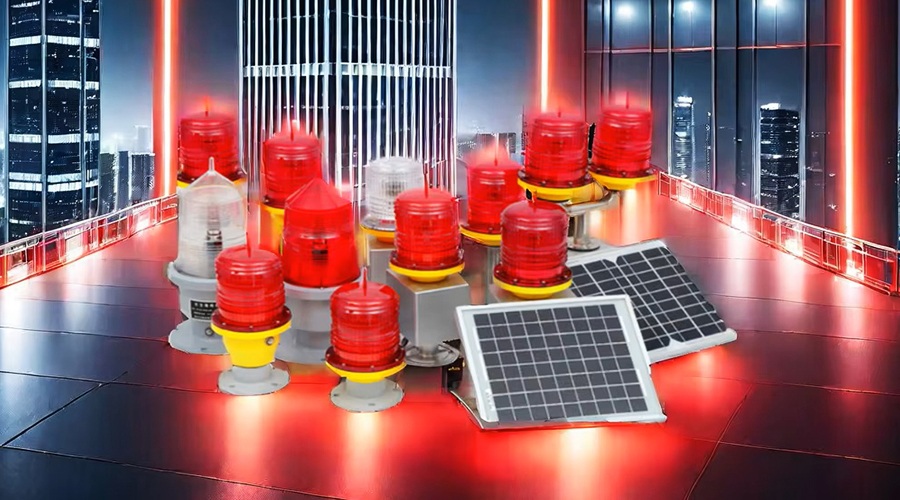

Chimney obstruction lights, also known as low intensity obstruction lights, are aviation warning lights that illuminate buildings or structures with a steady (non-flashing) light to prevent aircraft collisions.
These lights are designated for use at civil airports and must comply with civil aviation industry standards. They can be used on chimneys 45 meters or less in height.
Features of Low Intensity Aviation Obstruction Lights
- 1. Optical Performance
Minimum Nominal Peak Light Intensity: ≥32.5 candelas (cd) (Type A as an example)
Color Requirements: Low-Intensity Obstruction Warning Lights must be aviation warning red (wavelength approximately 630nm)
Viewing Angle: ≥90° horizontally, vertically downward, covering the primary observation area
- 2. Electrical Characteristics
Power Input: Supports AC 220V mains power or solar power (common in remote areas)
Backup Battery: ≥120 minutes of battery life (for power outage emergency use)
Power Consumption Control: LED light source design, single lamp power typically <10W
- 3. Environmental Adaptability
Operating Temperature: 40°C to +70°C (suitable for extreme climates)
Ingress Protection: IP65 or higher (dustproof and waterproof)
Wind and Earthquake Resistance: Withstands typhoons of magnitude 12 or higher and earthquakes of magnitude 8
Chimney Obstruction Lights – Low Intensity Lights
- 1. Core Functions & Applications
Warning Function: A constant red beam marks the chimney’s outline, helping pilots identify potential obstacles.
Safety Compliance: Meets ICAO and national standards for collision avoidance warnings for tall structures.
2. Applicable Conditions & Technical Standards
Height Limit: Applicable only to chimneys ≤ 45 meters in height. If the chimney exceeds 45 meters, medium- or high-intensity obstruction lights must be used in a layered layout.
Optical Parameters: If using Type A low-intensity obstruction lights, the effective light intensity must be ≥ 32.5 cd to ensure visibility at night and in low-visibility conditions.
3. Installation Specifications & Supporting Measures
Installation Location: The top luminaire should be located between 1.5 and 3 meters below the chimney top to ensure effective light projection and visual coverage.
Protection Design: For special environments such as chemical plants, aviation obstacle lights must be corrosion-resistant and waterproof, and equipped with an independent lightning protection grounding system (ground resistance ≤ 10 Ω).
Intelligent Control: A synchronous controller is configured to synchronize multiple lights, reducing blind spots. An intelligent monitoring system monitors lighting status in real time and automatically switches to a backup power source in the event of a fault.
- 4. Additional Considerations
Environmental Protection & Public Welfare: When installing chimney obstruction lights, avoid direct light exposure to residential areas, allowing only diffused light to reach the ground to reduce light pollution.
Energy Solution: A solar warning lights power supply system is preferred, eliminating the need for an external power source and improving installation convenience and energy efficiency.
In general, low-intensity obstruction lights, as aviation lights for chimneys ≤45 meters in height, effectively balance aviation safety and surrounding environmental requirements through strict technical standards and intelligent control systems.
Specific installation of aviation obstruction warning lights should be professionally designed and inspected based on the actual chimney height, location, and environmental conditions.