Marine navigation light are traffic lights installed on certain navigational aids to ensure the safe navigation of ships at night. They emit prescribed light colors and flashing frequencies at night, achieving specified illumination angles and visibility distances.
Navigation lights can be used on fixed navigational aids, buoys, ships, and lighthouses, serving as beacons for navigation and warning. Lighthouses emit recognizable signals at sea day and night, helping ships determine their position and providing hazard warnings.
What are IALA-compliant Marine Navigation Light?
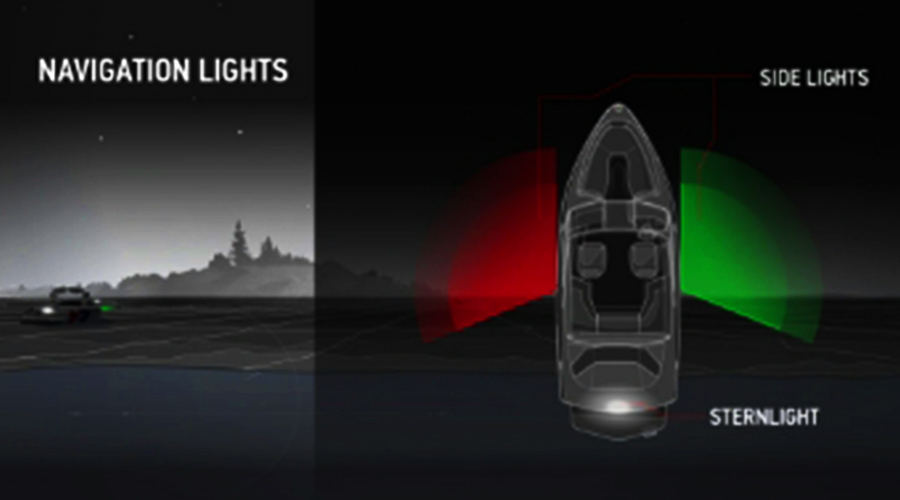
Requirements for Boat Navigation Lights
1. Masthead Light
- Color: White
- Location: Centerline from bow to stern, above the sidelights
- Visibility Angle: 225° (from directly forward of the bow to 112.5° on each side)
- Visibility Distance: Depends on ship length (e.g., at least 6 nautical miles for ships ≥ 50 meters)
2. Side Lights
- Port Light: Red, visibility angle 112.5° (from directly forward of the bow to 22.5° aft of the port beam)
- Starboard Light: Green, visibility angle same as above (to the corresponding position on the starboard side)
- Location: As close to both sides of the ship as possible
3. Stern Light
- Color: White
- Visibility Angle: 135° (from directly aft of the stern to 67.5° on each side)
- Location: Near the stern
4. Towing Lights/Working Lights
- Yellow Towing Light: Used for towing operations, positioned above the stern light.
- All-Around Lights: Red (out-of-control vessel), white (anchored), red and white vertical stripes (restricted work vessel), etc.
Key Requirements of IALA Standards
Continuous & Unobstructed Light Arc:
The horizontal illumination range of marine navigation warning lights must be continuous and unobstructed by superstructures.
Visibility Distance Classification:
Minimum visibility distances are set according to vessel size classifications (e.g., at least 3-5 nautical miles for 12-50 meter vessels).
Vertical Position:
The masthead light must be at least 2 meters higher than the sidelights (when the ship’s length is ≥20 meters).
Electrical Backup:
An independent backup power supply or lighting fixture is required.
Marine Navigation Lights for Special Vessels
- Vessels <12 meters in length: Simplified configuration allowed (e.g., combined-color lights instead of individual sidelights).
- Hovercraft/Ground Effect Vehicles: Must display yellow flashing lights during navigation.
- Anchored Vessels: Display white all-around lights (anchor lights) at the bow/stern.
- Out-of-control Vessels: Two vertical red all-around lights.
Solar-Powered Marine Navigation Lights
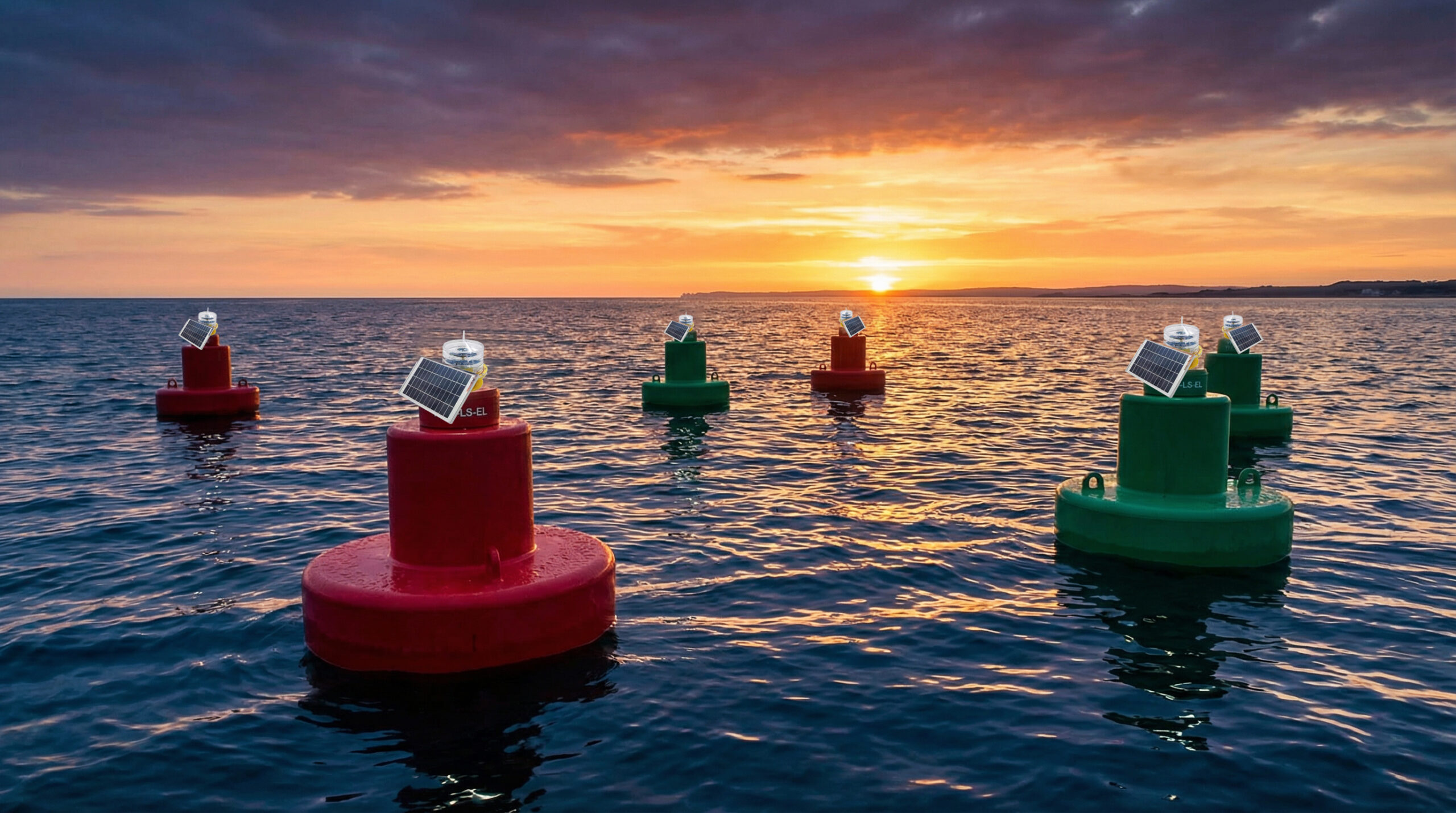
- Due to the lack of power and harsh environment at sea, solar warning lights are commonly used for warning and GPS positioning.
- Solar marine lanterns generally consist of Fresnel plastic lenses, aluminum alloy or engineering PC lamp holders, flashers, daylight switches, batteries, solar panels, and LED light sources. Features include high luminous efficiency, long lifespan, vibration resistance, and maintenance-free operation.
- Marine lights typically require a visibility distance of 1-20 nm, depending on usage needs.
- Solar navigation lights for maritime applications need a 7-21 day rain or shine resistance capability for safe and efficient use and warning.
- Solar marine navigation lights can be customized with GPS-synchronized flashing and 350 flash colors (compliant with IALA or national standard GB4696-84).
Applications of Marine Navigation Warning Lights
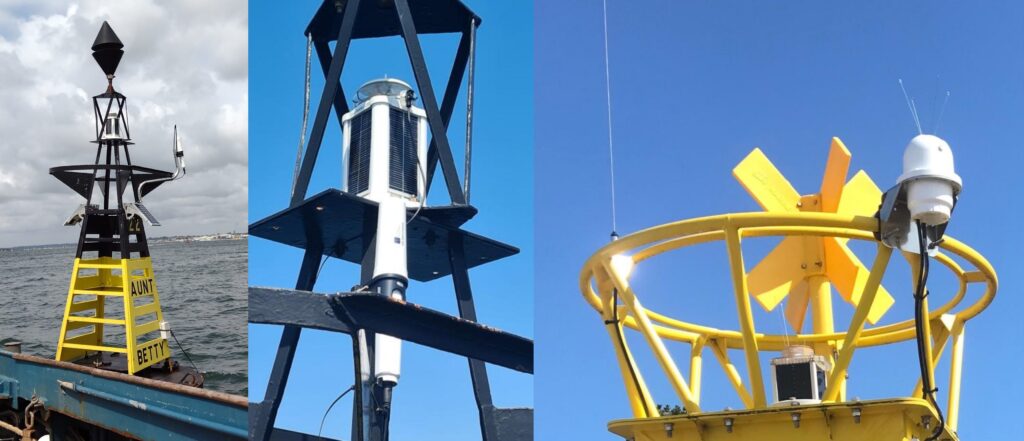
- Solar navigation lights are widely used in buoys, navigation aids, ports, docks, bridges, waterways, and underwater obstacles.
- LED ship sidelight / marine navigation light both are used on large and small vessels, yachts, and decks.
Both marine warning lights and ship sidelights are available in solar and non-solar options. If you have any needs regarding solar Led marine navigation lights, ship sidelights, buoy lights, navigation aids lights, dock lights, etc., please feel free to contact YFFY for further solutions and the best quotes.