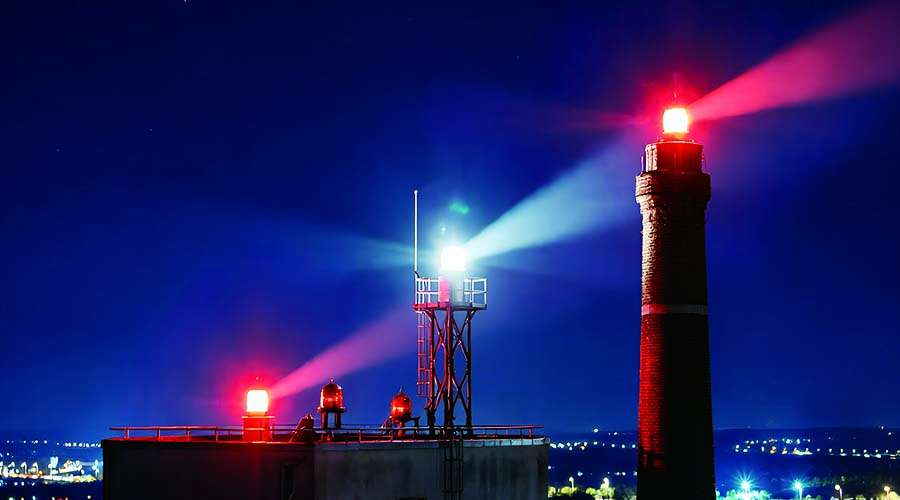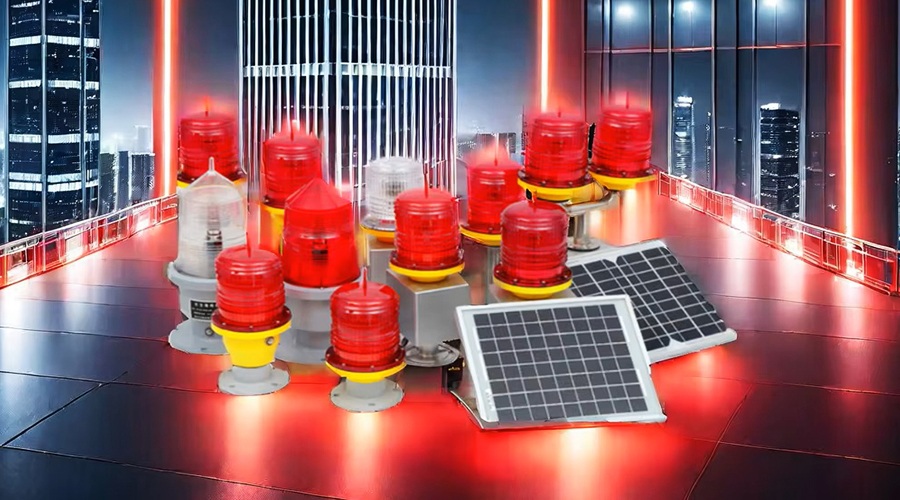
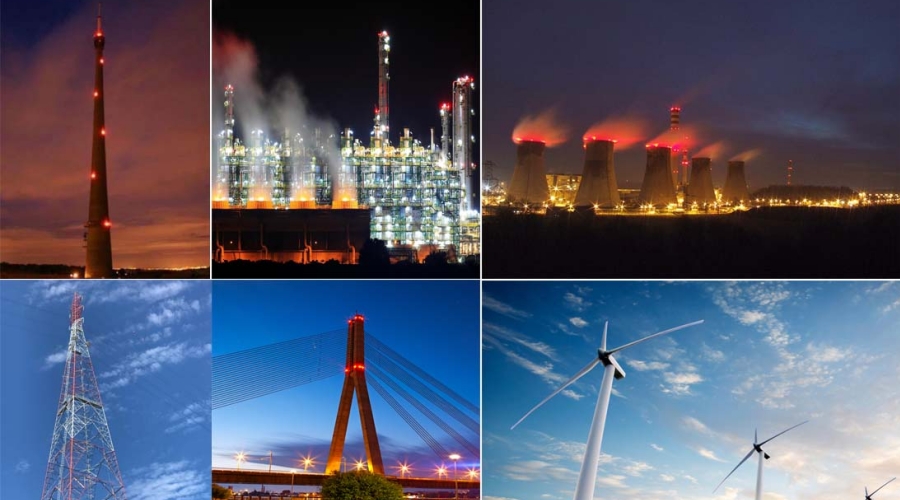
In modern aviation safety systems, the Dual-Head Low intensity Aviation Obstruction Light is widely used on high-rise buildings, communication towers, and various elevated structures for night-time aviation warning. This type of aviation obstruction warning lights adopts a dual-head integrated design (main + backup). When the primary light fails, the backup obstruction lights automatically activate to ensure uninterrupted warning performance.
I. Features & Standards of Dual-Head Aviation Obstruction Light
1) Standards of Low intensity Aviation Obstruction Lights
A Low intensity Light is designed in accordance with international aviation marking principles to ensure safe low-altitude flight navigation.
- Light Color: Steady-burning or flashing aviation red light
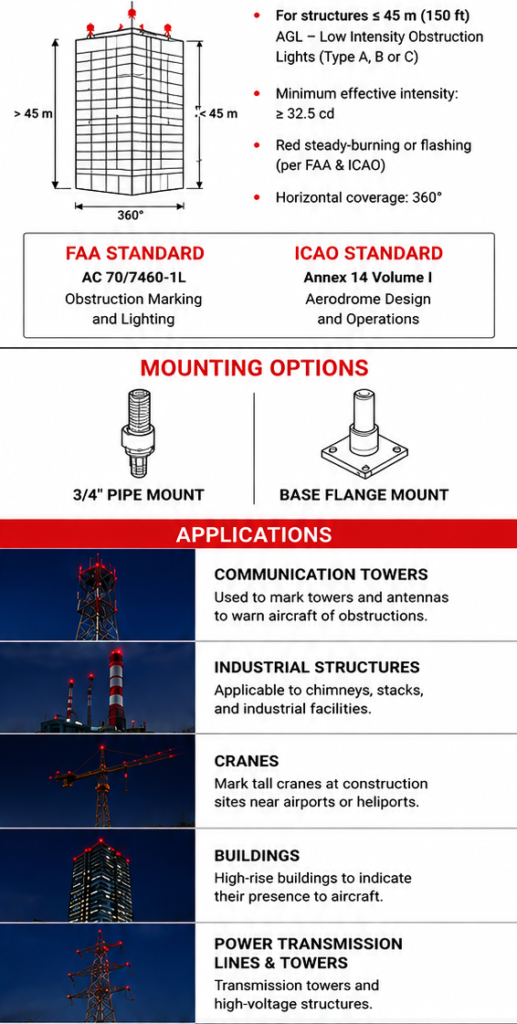
- Effective Intensity: Typically ≥ 32.5 cd (complies with ICAO Low Intensity Type A/B/C requirements)
- Horizontal Illumination: 360° full coverage
- Material Protection: Aluminum alloy or powder-coated metal base; UV-resistant PC lens; protection rating ≥ IP65
- Power Supply Options: AC 220V, DC 48V/24V, or solar-powered systems
The design concept of low intensity lights generally follows ICAO and FAA aviation obstruction marking principles. These guidelines define visual warning requirements for different structures and airspace environments, but final parameters must comply with project-specific engineering standards.
2) Technical Advantages of Dual-Head Aviation Obstruction Light
The dual-head structure significantly improves reliability and visual redundancy in aviaiton obstruction lights (aviation obstruction lighting systems).
- Dual independent light sources improve system continuity
- Maintains partial visual output under single-point failure
- Enhances coverage stability for complex installation angles
- Can be integrated with standard aviation control systems
- Suitable for long-term outdoor operation environments
In aviation obstacle lights systems, this structure is mainly used to enhance operational stability rather than change the fundamental light intensity category.
II. Applications of Aviation Obstruction Light
Installation Height & Basic Usage
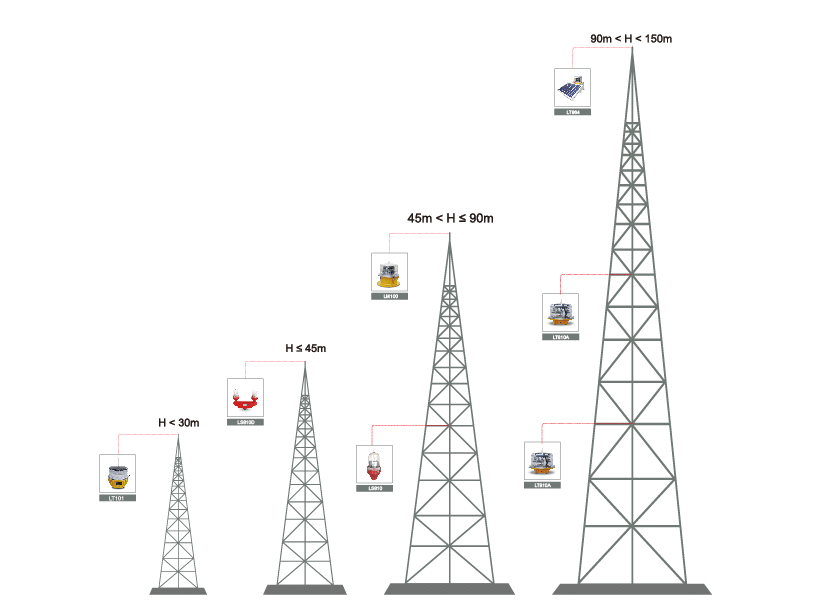
- Such as YFFY-LI/D Dual-head Aviation Obstruction Light suitable for structures below 45 meters above ground (often installed in multiple units)
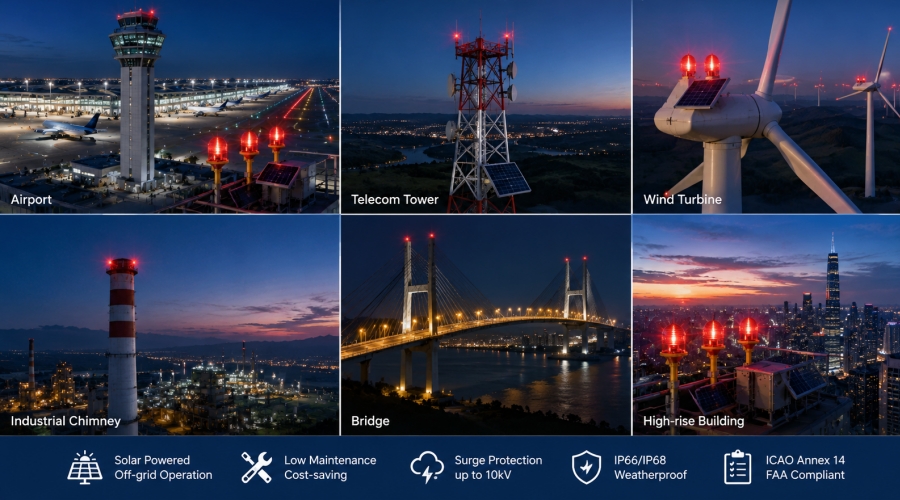
- Common mounting: communication towers, power pylons, chimneys, cranes, and high-rise rooftops, building structures (such as commercial buildings, residential high-rises, and industrial facilities)
- Installation method: 3/4-inch threaded pipe mounting or base flange bolt fixing
Application Scenarios of Obstruction Warning Lights
Aviation obstacle lights are commonly used in the following industries:
- Communication base stations and tower structures
- Structures below 45m (Commercial buildings, residential high-rises, and industrial facilities)
- Wind turbines and wind farm facilities
- Industrial chimneys and emission stacks
- High-rise construction phase marking systems
- Power transmission and substation facilities
- Ports and offshore structures auxiliary marking systems
These environments share a common requirement: continuous and stable aviation visibility for low-altitude flight safety management using aircraft warning light systems.
III. Low intensity Aviation Obstruction Light Case Study
In a coastal industrial communication tower project in Southeast Asia, multiple steel communication towers were located near flight routes. Due to frequent fog and variable lighting conditions, a Dual-Head Aviation Obstruction Low Intensity Light solution was deployed at the top of each tower.
The dual-head redundancy design ensures that when one light source is blocked or under maintenance, the system can still maintain basic visibility through the backup obstruction lights, improving overall operational continuity of the aviation marking system.
If You Are Selecting or Purchasing an Aviation Obstacle Light, You May Consider The Following:
- Power supply requirement: AC/DC mains or solar power?
- Application structure: tower, building, or crane?
- Control method: automatic light sensor control or manual control?
YFFY Lights can recommend suitable models and provide detailed Low Intensity Aviation Obstruction Lights solutions based on your project needs.
IV. FAQ – Aviation Obstruction Light
Q1: Where Are Dual-Head Low Intensity Lights Usually Installed?
They are typically installed at the top or key structural points of communication towers, buildings, industrial chimneys, wind turbine towers, and other tall structures requiring aviation marking.
Q2: What is The Core Purpose of a dual-head Structure?
The core purpose is redundancy. When one light source fails or is blocked, the system can still maintain basic visual warning output.
Q3: How is This Type of Aviation Lights Installed?
It is usually fixed via mounting brackets on elevated structures and connected to on-site power or control systems, installed according to engineering design requirements.
Q4: What Does Daily Maintenance Include?
Mainly light source inspection, electrical connection checks, and structural stability checks of the housing and mounting system.
Q5: Does it Comply With International Aviation Obstruction Standards?
YFFY aviation obstruction lights are designed with reference to ICAO and FAA aviation marking principles to support compliance requirements for engineering projects.