High-Intensity, Medium-Intensity, and Low Intensity Aviation Lights: Which One Do You Need?
When planning construction projects involving high-rise buildings—whether it’s a telecommunications tower, a wind farm, or an industrial chimney—aviation safety is one of the most critical compliance challenges.
The Federal Aviation Administration (FAA) and the International Civil Aviation Organization (ICAO) have strict regulations on how these buildings are marked to ensure pilots can clearly identify them.
However, many project managers and engineers may be confused by these terms. What exactly is the difference between high-intensity, medium-intensity, and low-intensity lights? Do you need a flashing red light or a constantly lit red light?
Choosing the wrong light type can lead to failing inspections or even creating safety hazards. This guide will detail the three main categories of aviation obstruction lights to help you choose the most appropriate solution based on the building’s specific height and location.
🚦 Height Determines Aviation Lights Intensity
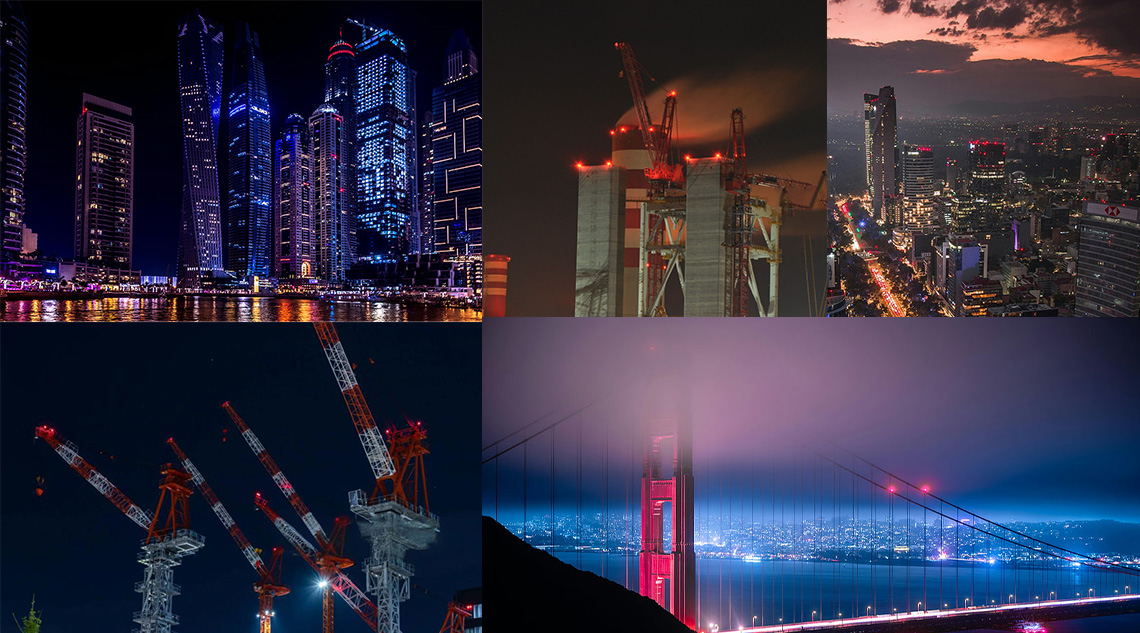
The primary factor in choosing aviation obstacle lights is the building’s altitude (AGL). The higher the object, the greater the light intensity required to ensure visibility from a distance.
The following are the common classifications used in most FAA and ICAO standards:
- Low Intensity: Suitable for buildings less than 150 feet (approximately 45 meters) in height.
- Medium Intensity: Suitable for buildings between 150 feet and 700 feet (approximately 45 to 200 meters) in height.
- High Intensity: Suitable for buildings exceeding 700 feet (approximately 200 meters) in height.
🔴 Low Intensity Obstruction Lights (Type A and Type B)
Low-intensity aviation lights are typically used for lower buildings or as supplemental lighting for the lower floors of high-rise towers. They are generally red and can be displayed in constant or flashing modes.
- Typical Applications: Residential chimneys, small water tanks, buildings less than 150 feet (approximately 45 meters) in height, and roof obstructions.
- Visual Characteristics: Typically a steady red light (compliant with L-810 standard) or a flashing red light.
- Key Features: These LED lights are small and consume little power, making them ideal for solar-powered scenarios with limited battery space.
If your building is low to the ground and not near an airport, a low-intensity steady red light is often standard.
🟠 Medium Intensity Obstruction Lights (Types A, B, and C)
This is the most common category in industrial and telecommunications infrastructure. Medium-intensity lighting serves as a compromise: providing high visibility without consuming as much power as high-intensity systems.
- Typical Applications: Telecommunications towers, wind turbines, and industrial chimneys between 150 and 700 feet in height.
- Visual Characteristics:
- Medium Intensity Type B: Flashing red light (typically used at dusk or night).
- Medium Intensity Type A: Flashing white light (used during the day and at dusk).
- Importance: Medium-intensity obstruction lighting is particularly critical for structures such as wind turbines. They typically flash synchronously and cover the entire wind farm to prevent the “phantom effect”—where pilots mistake a row of flashing lights for a moving aircraft.
⚪ High-Intensity Obstruction Lights (Type A and Type B)
High-intensity obstruction lights are essential when buildings encroach on the airspace used by high-altitude commercial jets. These powerful strobe lights can penetrate thin fog, dense fog, and smog.
- Typical Applications: Supertall skyscrapers, radio towers exceeding 700 feet, and large suspension bridges.
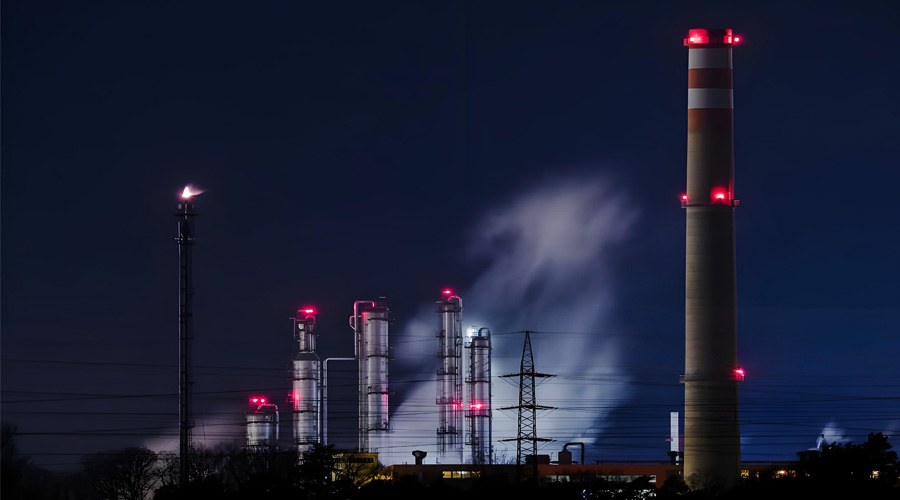
- Visual Characteristics: Flashes white light during the day and dusk. At night, it typically switches to low-intensity red light (i.e., a dual-lighting system) to prevent “light pollution” (light shining into nearby residents’ windows) and reduce the risk of seizures in photosensitive individuals.
- Key Features: These systems typically require a powerful power source and are mostly equipped with control panels that automatically switch between day and night modes using photocells.
📊 Quick Comparison Table about LED / Solar Aviation Lights
To help you make your choice, here is a quick comparison guide for the three main types based on FAA/ICAO general standards. (The table retains its original structure and can be further optimized if needed.)
| Feature | Low Intensity Aviation Lights (L-810) | Medium Intensity Lights (L-864/L-865) | High Intensity Lights(L-856) |
| Structure Height | < 150 ft (45m) | 150 ft – 700 ft (45-200m) | > 700 ft (200m+) |
| Light Color | Red (Steady or Flashing) | Red or White (Flashing) | White (Day) / Red (Night) |
| Primary Use | Buildings, small tanks | Telecom towers, Wind Farms | Skyscrapers, Super-towers |
| Power Source | Often Solar or Low Voltage | AC/DC or Solar | Typically AC Mains |
💡 Other Key Selection Factors Besides Height
Height is certainly a primary consideration, but you must also consider the actual operating environment of the lights.
- Solar Power vs. Wired Power:
If your facility is located in a remote area (such as a ridge or near the coast), laying cables is costly.
Modern medium-intensity solar lights have sufficient power to replace wired systems, provided that the backup battery capacity can meet local weather conditions (e.g., considering cloudy winter days).
- Synchronization Requirements:
If you are illuminating large objects, such as wind farms or wide bridges, all lights must flash synchronously. Ensure that the selected system supports GPS synchronization or RF synchronization.
- Durability:
For coastal areas (such as the Carolinas) or industrial areas, the casing material is crucial. It is recommended to choose luminaires with an IP65 or IP68 protection rating and a housing made of UV-stabilized polycarbonate or stainless steel to resist salt spray and corrosion.
Summary of LED Aviation Lights When You Need
Choosing the right aircraft warning lights is not only about meeting compliance requirements, but also about safety and cost-effectiveness. Installing high-intensity lighting on small towers is an unnecessary waste, while installing only low-intensity lighting on high towers violates safety regulations.
By accurately measuring the building’s height and understanding the specific lighting phases during the day and night, you can select a lighting system that meets both FAA and ICAO standards while minimizing maintenance and energy costs.
Any of your demand on aviation obstruction warning lights, feel free to contact us get the solution!