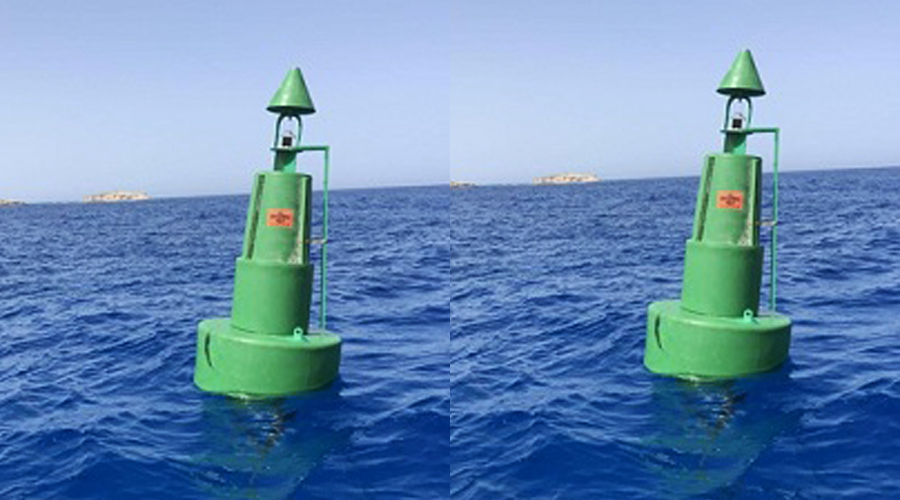
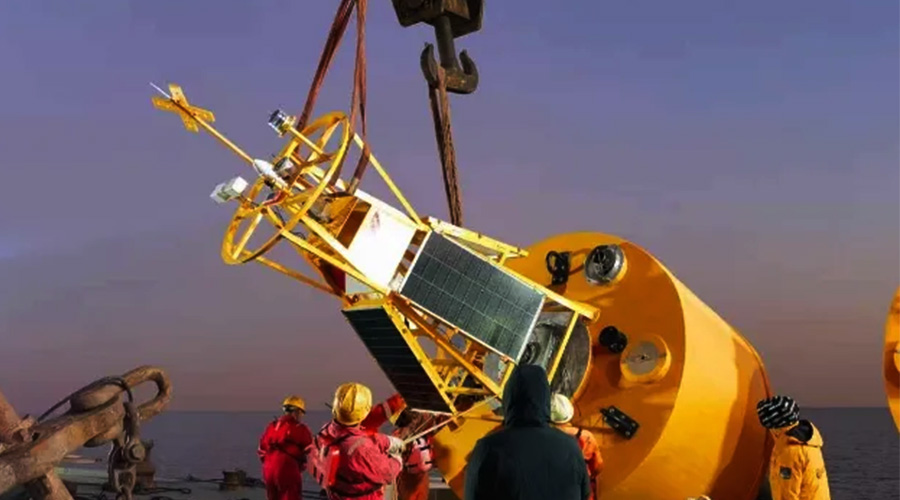
Illuminating the Singapore Strait: Solar Navigation Lights Build a Safety Barrier for Smart Water Quality Monitoring.
The Singapore Strait—a global shipping artery connecting the Pacific and Indian Oceans—is traversed by over 1,000 vessels daily. In this waterway less than 100 kilometers wide, the traffic density consistently ranks among the highest in the world, making navigational safety and marine ecological protection equally important.
To safeguard the “health” of this busy waterway, the Maritime and Port Authority of Singapore (MPA) and its environmental department have jointly deployed multiple buoy-based marine water quality stations.
The most representative of these is the “Neptune” system—eight smart buoys continuously monitor key water quality parameters such as:
- Dissolved oxygen
- pH
- Petroleum hydrocarbons
- Turbidity
They operate 24/7, transmitting data in real time to provide reliable information for:
- Port management
- Ecological early warning
- Climate research
Project Challenge: Navigational Safety Risks for Monitoring Buoys
However, these water quality buoys, carrying high-precision sensors, constantly face the risk of collision in the dense shipping environment.
An accidental collision with a buoy could:
- Damage expensive monitoring equipment
- Interrupt data transmission
- Lead to secondary safety incidents due to buoy capsizing
Enabling water quality monitoring buoys to be clearly visible at night, in foggy, or rainy/snowy weather became a critical issue that the project team urgently needed to address.
Solution: Solar Navigation Lights for Marine Buoys
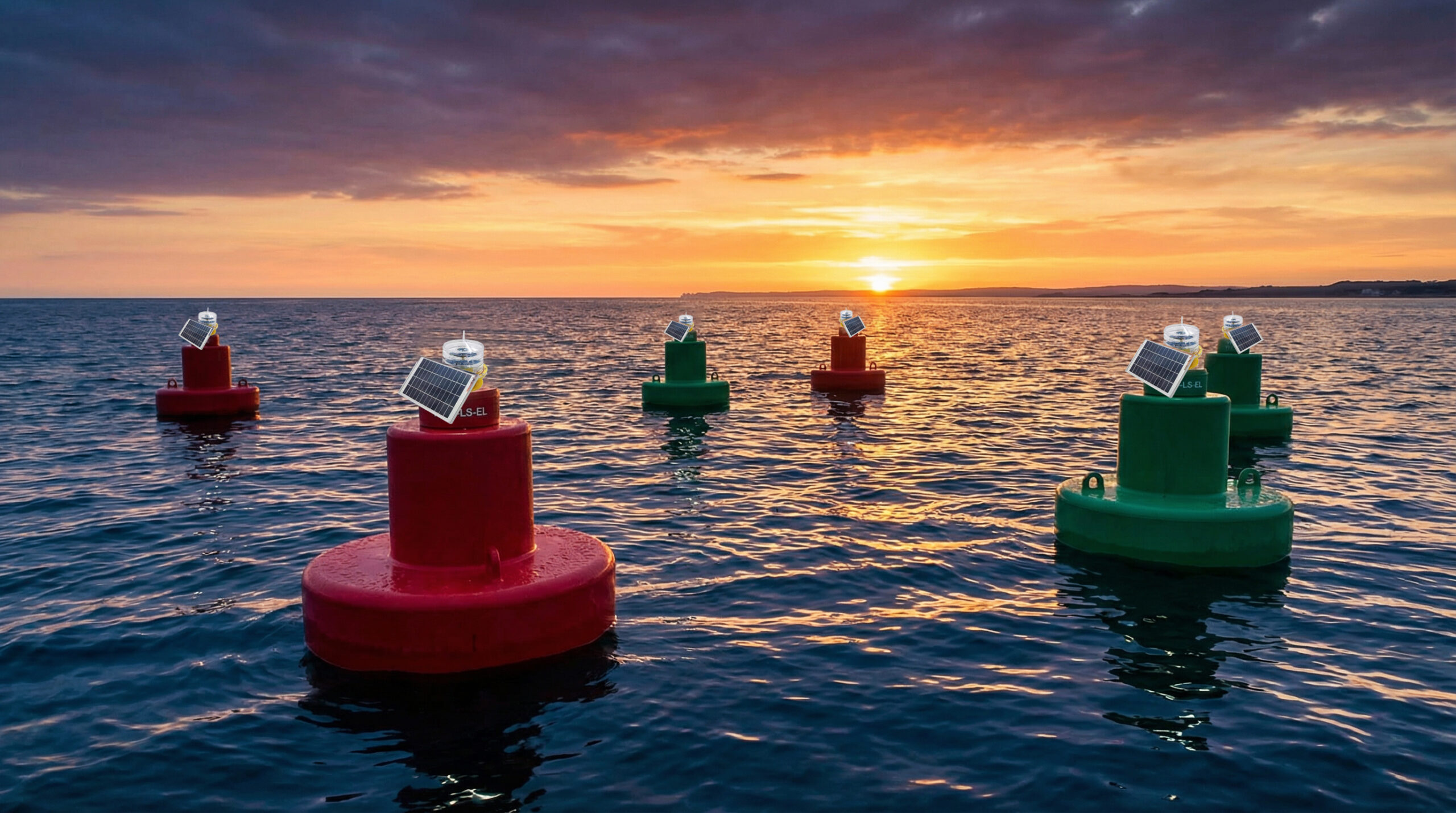
The introduction of the YFFY-LS-E 2-4NM LED solar navigation lights provided the Singapore Straits Oceanographic Station project with a green, reliable, and near-maintenance-free solution.
A Solar Marine Lights Designed Specifically for Channel Buoys
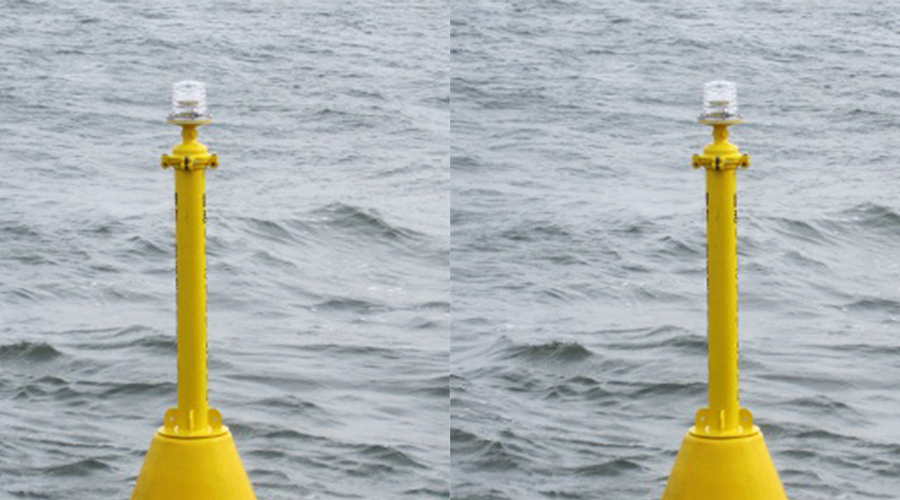
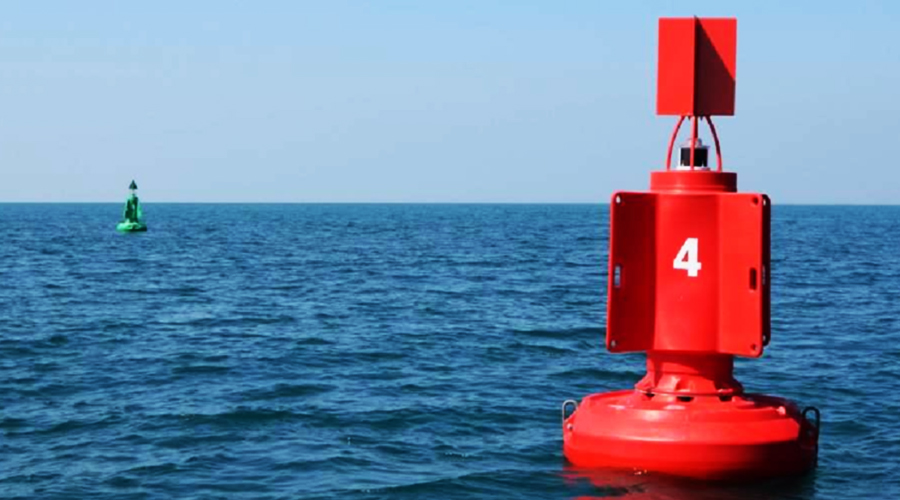
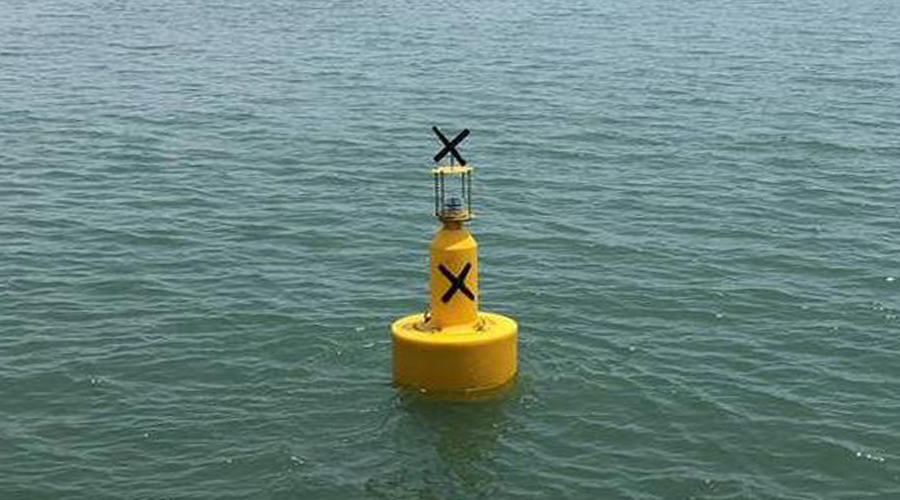
YFFY’s solar-powered marine navigation light is a self-contained LED navigation light specifically designed for:
- Buoys
- Navigation marks
- Ports
- Offshore applications
- Marine Boats
In this project, it is securely mounted on top of each water quality buoy, serving as a “lighthouse” for passing vessels to identify buoys at night and in low-visibility conditions.
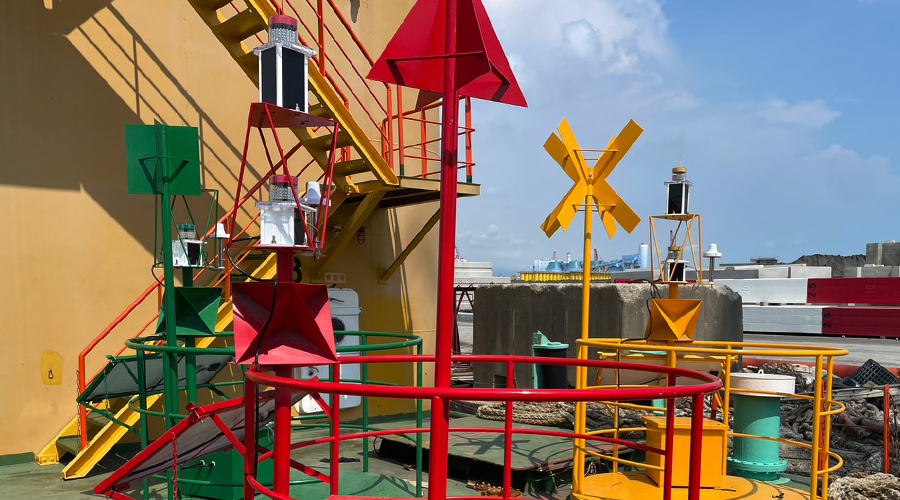
Features & Application Advantages of Solar Navigation Lights
1. 2–4 Nautical Mile Range
The effective range of this solar-powered LED warning light reaches 2–4 nautical miles, fully meeting the visibility requirements of the main channel of the Singapore Strait and surrounding waters.
Whether it’s a giant container ship sailing into the strait or a small work vessel, the buoy’s location can be clearly identified several kilometers away, allowing for early avoidance measures and significantly reducing the probability of collisions.
2. Solar-Powered Self-Supply (No External Power Required)
The product uses:
- High-efficiency monocrystalline silicon solar panels
- High-capacity lithium iron phosphate batteries
It charges during the day and automatically illuminates at night.
Singapore’s geographical advantage (near the equator) ensures:
- Stable sunlight year-round
- Operation even during 15+ days of cloudy or rainy weather
This makes it ideal for offshore buoys without access to mains power.
3. IP68 Protection for Tropical Marine Environments
The Singapore Strait experiences:
- High temperature and humidity
- Severe salt spray corrosion
- Frequent storms and rain
The navigation light features:
- IP68 waterproof and dustproof rating
- UV-resistant housing
- Stainless steel fasteners
It can withstand:
- Force 10 winds and waves
- Long-term salt spray exposure
4. Intelligent Light Control & Flashing Modes
- Built-in photosensitive sensor
- Automatically turns on at night and off at dawn
- Supports programmable flashing modes
It also supports:
- Independent flashing
- Synchronized flashing
This allows project teams to standardize flashing rhythms, helping crew quickly identify monitoring buoys.
5. Long Lifespan & Low Maintenance
- LED lifespan: over 100,000 hours
- Overall design lifespan: 5+ years
Maintenance requirements:
- Only one inspection per year
- Simple cleaning and visual checks
This significantly reduces operational costs.


Installation Requirements for Solar Navigation Lights
To ensure optimal performance in the Singapore Strait:
Installation Height
- Minimum: 1.5 meters above water surface
- Recommended: up to 2 meters
Fixing Method
- Use 316 stainless steel clamps or bolts
- Install rubber shock-absorbing pads
- Regularly check fasteners due to tidal movement (2–3 meters)
Solar Panel Orientation
- Location: ~1° North latitude
- Tilt: 5°–10° southward or horizontal
- Optional: double-sided panels for improved efficiency
Electrical Connection & Testing
- Battery pre-charge ≥ 50%
- Use waterproof connectors + sealant
- Apply UV-resistant heat shrink tubing
- Conduct 48-hour charge-discharge test
Identification & Recording
Each marine lantern should have:
- Unique ID
- Installation date
- Buoy coordinates
- Flashing mode
This data should be integrated into the MPA management system.
Expanding Applications of Solar Marine Navigation Lights
- Marine aquaculture warning
- Offshore energy platforms (tidal/wave)
- Submarine cable and pipeline marking
- Ecological protection zones (coral reefs, sea turtles, birds)
Project Value of Solar Navigation Lights
The project successfully solved the nighttime warning challenge for water quality buoys in a green, reliable, and maintenance-free way.
It ensures:
- Protection of high-value monitoring equipment
- Continuous water quality data collection
- Improved navigation safety
At the same time, vessels receive clear guidance, enabling safer navigation and reducing collision risks.
Solar Navigation Lights are no longer just passive markers, but are becoming intelligent systems that actively safeguard water safety and support marine monitoring networks.