Marine Underwater Lights: High-Brightness, High-Performance LED Solutions
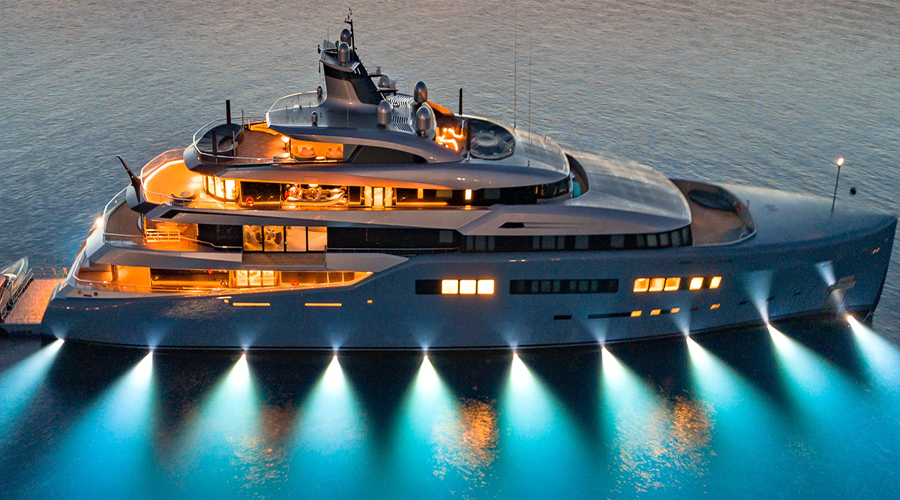
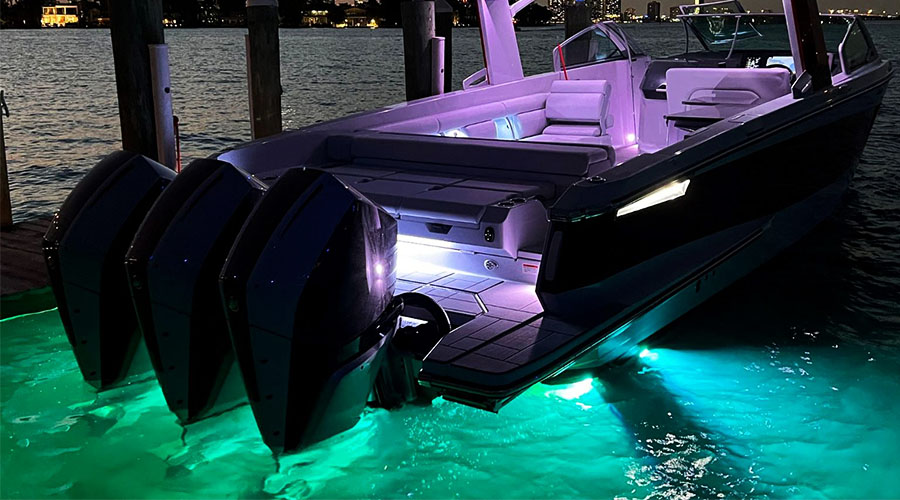
Underwater lights for boats provide powerful LED lighting solutions for various types of vessels and yachts. These LED lights are essential for enhancing both aesthetics and safety, whether used underwater or above the waterline.
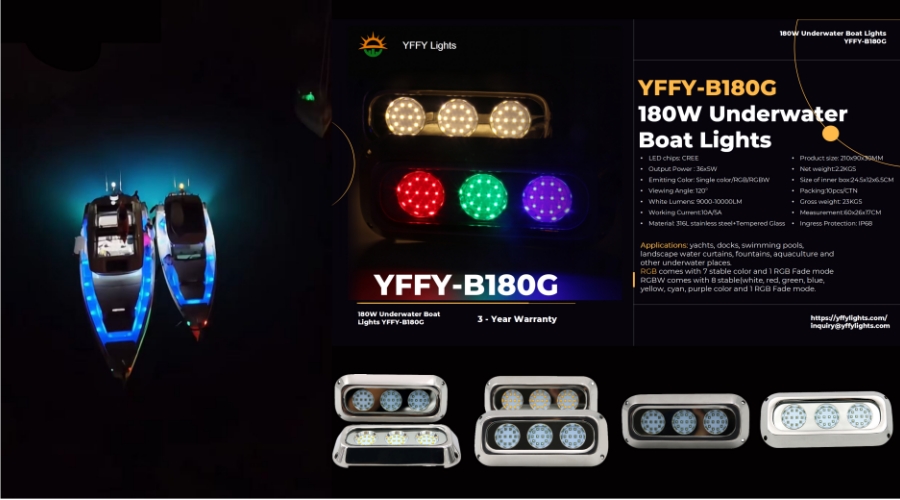
Example: YFFY Underwater Lights for Boats
- Waterproof & Durable: Designed for underwater or surface use.
- High Light Penetration: Ideal for shore displays and highlighting the stern profile.
When choosing marine lights, consider the brightness (lumens), installation method (e.g., through bulkheads), and durability. Let us guide you through the selection process.
How to Choose Underwater Lights for Boats and Yachts?
Installing underwater LED lights is more than just an aesthetic choice; it’s a professional decision impacting safety, regulations, and electrical systems.
I. Technical and Environmental Compatibility
The first consideration should be the ability of the lights to operate stably in the harsh marine environment over the long term.
1. Protection and Corrosion Resistance
The marine environment is highly corrosive to electronics, so waterproof and corrosion-resistant capabilities are essential.
- IP Protection Rating: Choose underwater LED lights rated IP67 or IP68.
- IP67: Temporary submersion (1 meter depth for a short time).
- IP68: Continuous operation under specified water pressure.
- Best for frequent submersion: IP68 is ideal for long-term underwater use.
- Corrosion-Resistant Materials: Opt for lights with marine-grade stainless steel or high-quality engineering plastics treated for salt spray resistance. Ordinary metals may rust quickly in seawater.
2. Advantages of LED Technology
LED technology offers several benefits over traditional halogen lamps:
- Ultra-Low Power Consumption: A 12W LED can match the brightness of a 50W halogen while consuming one-third the current (1.3 amps vs. 4 amps), saving energy and extending battery life.
- Long Lifespan: LED lights can last 22,000–80,000 hours, while halogen lights last only a few hundred hours.
- Durability: LEDs are solid-state, making them more resistant to vibrations and shocks.
- Efficient Heat Dissipation: Good designs with air convection or aluminum housing effectively dissipate heat, ensuring longevity.
For example, the YFFY-B180 marine underwater lights model incorporates essential heat dissipation treatments for maximum reliability.
3. Optical Performance & Light Pollution Control
- Color Temperature & Color Rendering Index: Choose a color temperature based on desired atmosphere (warm light for cozy, cool light for modern). A high Color Rendering Index (CRI) helps reproduce true colors underwater, which is vital for inspections or observations.
- Beam Angle:
- Narrow (15°) for deep penetration.
- Wide (60° or more) for dramatic lighting around the boat.
- Avoiding Glare: Well-designed lights direct light efficiently, preventing glare that could impact crew safety or comfort.


II. Compliance with Standards
Compliance with marine regulations is crucial, even though marine lights aren’t navigation lights.
1. Navigation Safety Compliance
Be aware that certain colored lights, especially blue, could cause legal issues. Blue lights that flash may be mistaken for law enforcement signals. Ensure your choice won’t interfere with other navigational signals.
2. International Standards and Certifications
Check if your chosen marine boat lights meet these key standards and certifications for peace of mind:
| Certification | Requirements | Applicable Regions |
|---|---|---|
| COLREGs & USCG | Ensures no interference with navigation safety. | International |
| ABYC | Safe installation standards for electrical systems. | U.S. |
| UL 1149 | Covers fire protection and electric shock for low-voltage lighting. | U.S. |
| ISO 9001 | Production quality assurance. | International |
| DNV-GL, ABS, RINA | Certifies adherence to environmental and electromagnetic compatibility tests. | International |
3. Electromagnetic Interference (EMI/EMC)
LED lights with poor shielding can create electromagnetic interference, affecting systems like VHF radios or fish finders.
Verify EMC/EMI compliance (e.g., CE certification) to ensure smooth operation with other onboard electronics.
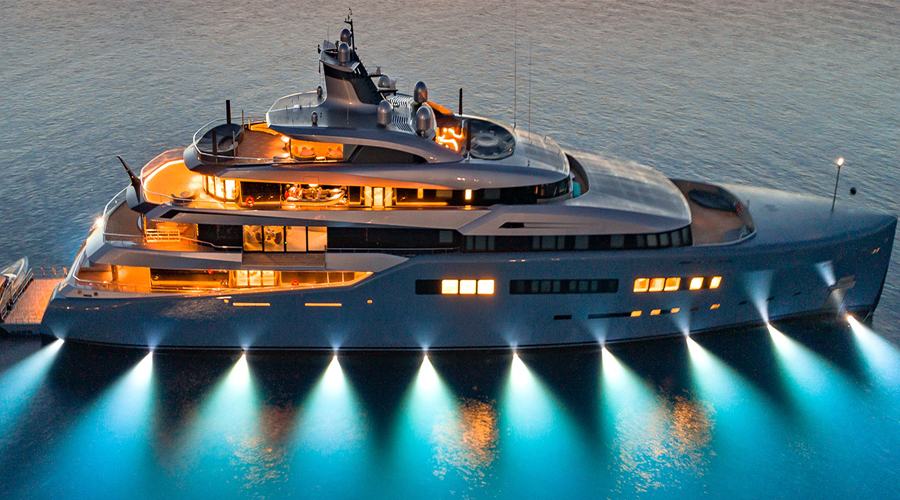
III. Installation & Maintenance Points: LED Underwater Lights For Boats & Yachts
Proper installation and maintenance are critical for long-term functionality.
1. Hull Compatibility
- Material Matching: Ensure the light material is compatible with your hull (e.g., fiberglass, aluminum, wood). For metal hulls, prevent electrochemical corrosion during installation.
- Sealing: Marine-grade sealant must be used when drilling holes in the hull to avoid water leaks. Follow the manufacturer’s installation depth and torque specifications carefully.
2. Electrical System Planning
- Voltage Matching: Ensure lights are compatible with your boat’s voltage system (typically 12V or 24V DC).
- Independent Circuit Protection: Each underwater lamp should have an independent circuit with an overcurrent protection device (fuse or circuit breaker), and the wire gauge should be appropriate to avoid overheating.
3. Maintenance Considerations
Regular inspections are crucial to ensure optimal performance. Check for:
- Cracks in the lampshade
- Water leakage at seals
- Marine organism adhesion affecting heat dissipation
Choosing modular designs for ease of maintenance can help reduce future repair costs.
If you have specific requirements or questions about underwater lights for boats and yachts, feel free to reach out, and we will recommend the best underwater lights for your boat or yacht.