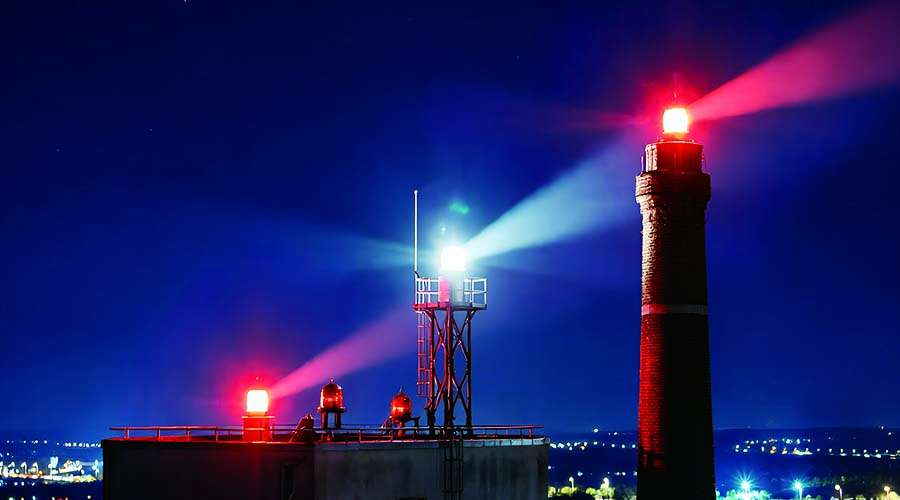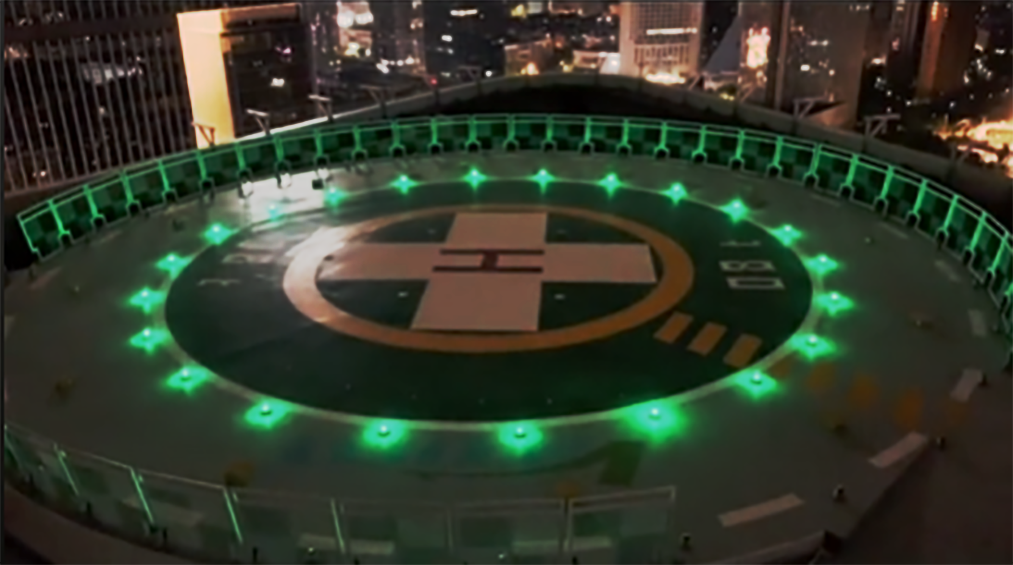

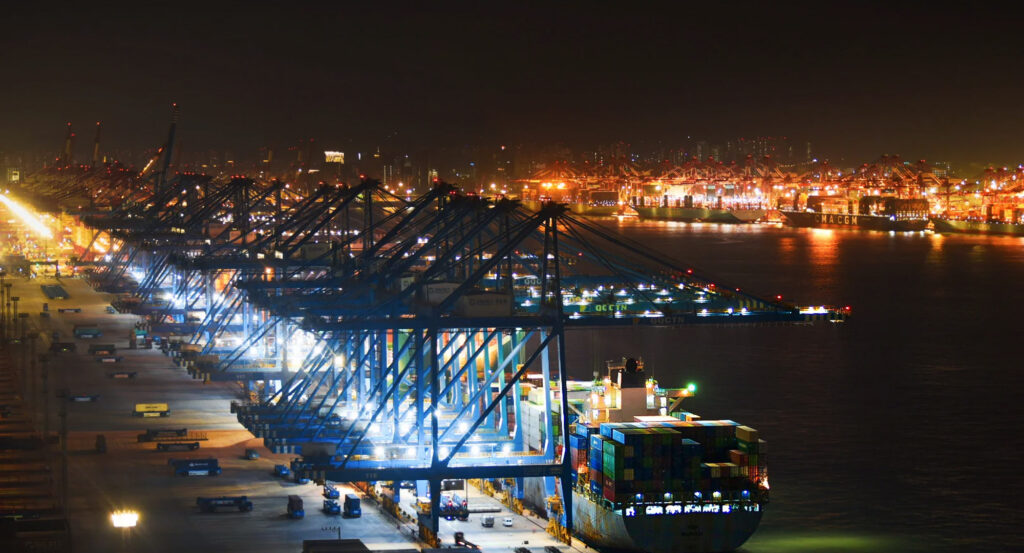
Port Lights – Port entrances are the first gateway for ships entering and leaving the port, and their safety guidance systems directly impact navigation efficiency and accident prevention capabilities.
As key navigational aids regulated by the International Maritime Organization (IMO) and the International Association of Lighthouse Authorities (IALA), port entrance lights play an irreplaceable role in ensuring the safe entry and exit of ships, supporting nighttime operations, and navigating in adverse weather conditions. Their importance is increasingly prominent.
Against this backdrop, solar-powered warning lights, with their advantages of being energy-efficient, flexible in installation, and low in maintenance costs, are gradually becoming the mainstream choice for ports, waterways, and other marine applications.
I. The Role & Selection of Port Lights
1). The Role of Port Entrance Lights
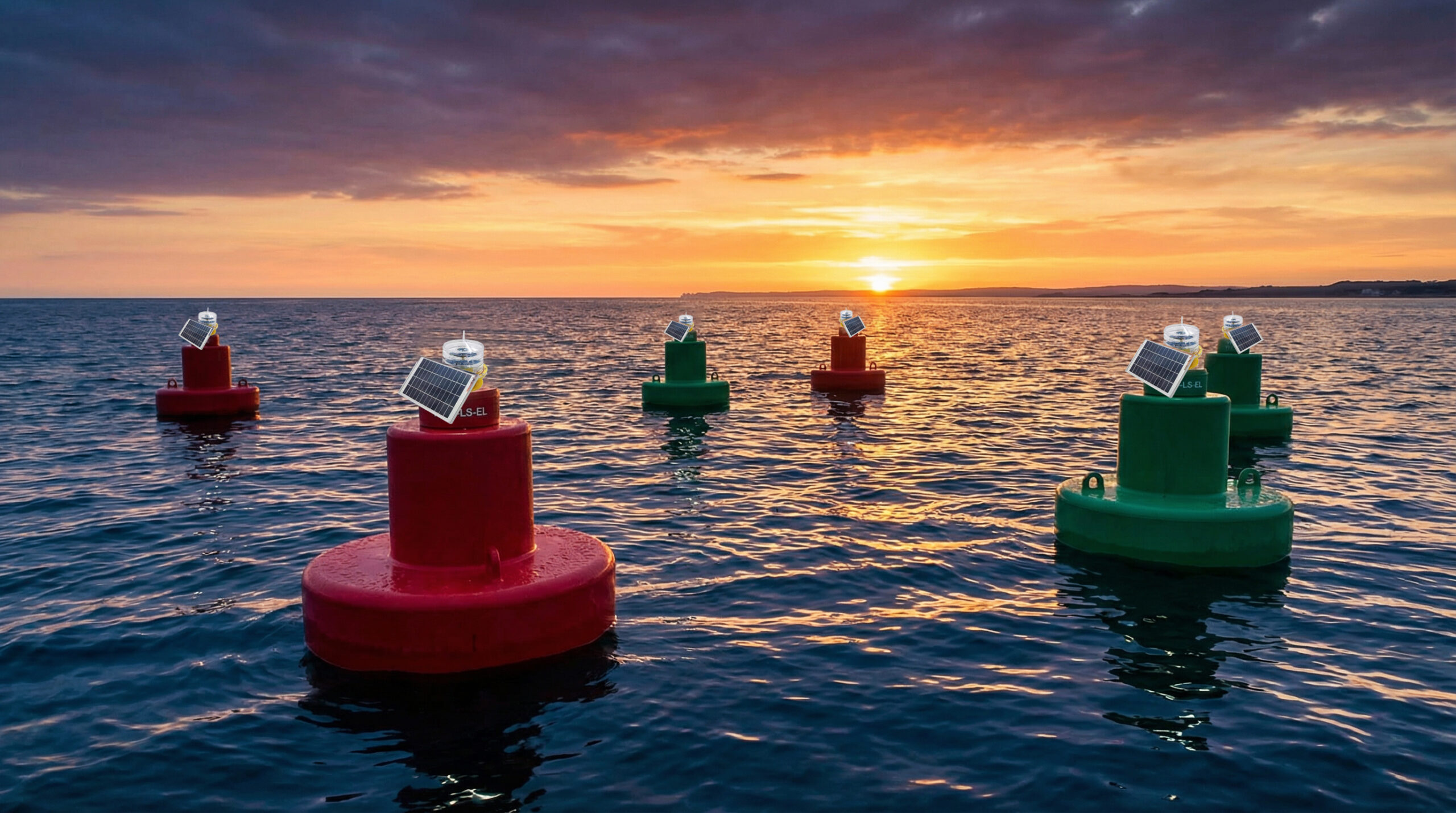
- Identifying Channel Boundaries: Red and green marine lights differentiate between port and starboard sides, guiding ships along the correct route in and out of the port;
- Warning Dangerous Areas: Such as shoals, reefs, construction zones, and anchorage edges;
- Assisting Nighttime and Low-Visibility Operations: Providing visual references for pilotage, berthing, loading, and unloading operations;
- Enhancing Port Intelligence: Integrating GPS synchronization, remote monitoring, and other functions to achieve digital management.
Traditional port marine lights rely heavily on mains power or diesel generators, making deployment difficult and maintenance costs high in remote islands, unmanned buoys, or temporary work areas. Solar marine lights perfectly solve this problem.
2). Why Choose LED Solar Warning Lights?
- a) Green & Environmentally Friendly, Zero-Carbon Operation:
Utilizing solar energy for automatic charging, no external power source is required, aligning with global dual-carbon goals and the trend of green port construction.
- b) High Reliability, Adaptable to Harsh Environments:
IP68 protection rating, salt spray corrosion-resistant materials (such as aviation aluminum and PC lampshades), and a wide operating temperature range of -40℃ to +85℃ ensure long-term stable operation in extreme marine environments such as typhoons, heavy rain, high humidity, and high salinity.
- c) Intelligent Control, Low Maintenance Costs:
Solar marine port lights feature light-controlled automatic on/off, continuous operation in cloudy or rainy weather (7-15 days or more), optional GPS synchronized flashing, and infrared remote control programming, significantly reducing the frequency of manual inspections. Customization of 350 flashing codes is also available.
- d) Meets International Standards
High-quality solar port warning lights meet IALA E-200-1 (navigational beacon color and light intensity standards) and some products meet FAA (Federal Aviation Administration) requirements, suitable for port and waterway projects worldwide.
II. Recommended High-Performance Solar Navigation Lights
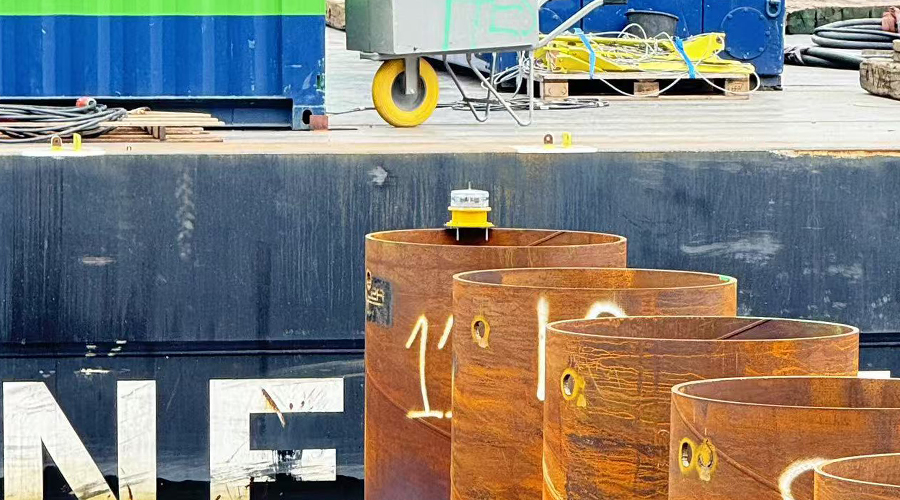
Based on different application scenarios and visibility distance requirements, YFFY Lights offers the following three representative port lights, covering all scenarios from nearshore buoys to offshore lighthouses:
1). Solar Powered Marine Lanterns YFFY-LS-S 6NM
- Visibility distance: 6–10 nautical miles (approximately 11–18.5 kilometers), default 6NM
- Endurance: >15 days (10 hours of operation per day)
- Features: 4 adjustable-angle high-efficiency monocrystalline silicon solar panels, 12V/12Ah lead-acid battery (lithium iron phosphate optional), 350 adjustable flashing modes, with bird deterrent.
- Suitable Scenarios: Main channel lighthouses, large buoys, port entrances, cross-sea bridge navigation marks, oil platforms
✅ Suitable for critical navigation points requiring extremely high long-range identification and reliability.
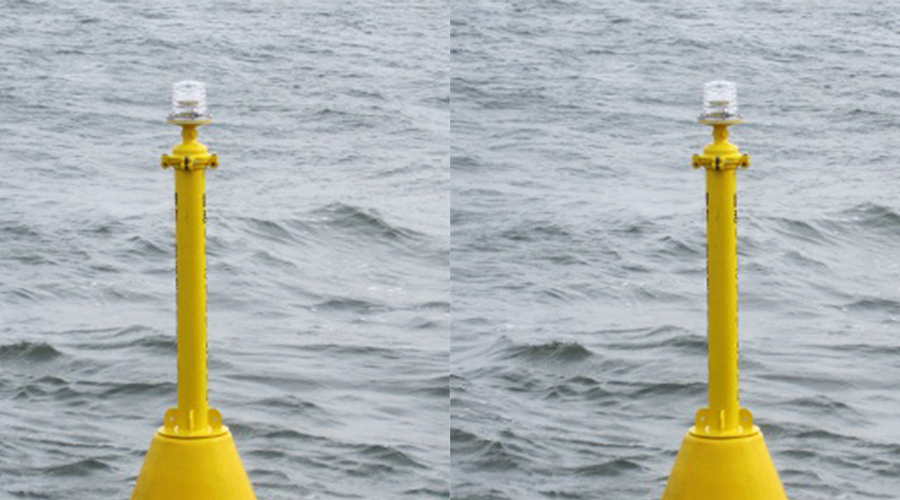
2). Solar Marine Lanterns YFFY-LS-E 2-4NM
- Visibility range: 2–4 nautical miles (approx. 3.7–7.4 km)
- Design features: Compact buoy-specific structure, strong resistance to wind and waves
- Advantages: Optimized for small to medium-sized buoys, easy installation, cost-effective
- Suitable Scenarios: Inland waterways, fishing ports, aquaculture zone boundaries, temporary construction buoys, near-shore navigation aids
✅ Ideal for short-to-medium distance, high-density deployment of ports, buoys, etc.
3). Mini Solar Warning Light YFFY-LS-C
- Visibility range: 1.5–6 km (customizable)
- Dimensions: Only 118mm(D) × 95mm (H), Weight 0.3kg
- Features: Integrated design, magnetic/bolt dual mounting, supports steady beam or 40 flashes/minute
- Certifications: Compliant with IALA and FAA standards
- Applicable Scenarios: Small docks, yacht berths, temporary obstacles, faulty vessel warnings, close-range buoys, etc.
- ✅ Extremely portable, suitable for flexible deployment and multi-functional warning scenarios
III. Recommendations for Port Lights Selection
| Regions | Factors to Consider | Recommend Model |
| China / Southeast Asia / Middle East / Africa | High temperature and humidity, strong salt spray corrosion; Emphasis on high-temperature performance (>60℃) and dust protection; Priority given to products compliant with IALA and IP68 protection, and lead-acid/lithium battery specifications; GPS synchronization/350 flashing codes to be used as needed; | YFFY-LS-S Solar Navigation Lights (Main Entry) + YFFY-LS-E (Secondary) |
| US / EU | Requires local maritime certification (e.g., USCG, UKHO); Some requirements include FAA compatibility; | The YFFY-LS-C solar lights, size and appearance make it easier to meet market demands. |
| Cold / Polar Ports | Low-temperature performance of the battery is critical (below -30℃), LiFePO₄ batteries are recommended (can still operate at -40℃); | The YFFY-LS-S model with an optional LiFePO₄ battery (GPS synchronization and 350 flash codes are supported, 15-20 days of rain resistance) |
| Islands / Unmanned Ports | Emphasis on self-sustaining capability and remote status monitoring. | The YFFY-LS-S model with GPS synchronization and long battery life is the preferred choice. |
General Recommendations:
- Main Channel/Open Sea → Select YFFY-LS-S (6–10NM)
- Nearshore Buoys/Fishing Ports → Select YFFY-LS-E (2–4NM) reee
- Temporary Warnings/Small Facilities → Select YFFY-LS-C (Portable Mini)
IV. Other Applications of Port Entrance Lights
Besides traditional ports, these solar-powered marine warning lights can be widely used in the following marine scenarios:
- Offshore Wind Farms: Marking wind turbine foundations and cable routing areas
- Oil and Gas Platforms and Drilling Vessels: Surrounding safety warnings and nighttime markings
- Cross-sea Bridges and Tunnel Entrances: Preventing ships from colliding with bridge piers
- Aquaculture Areas: Delineating no-navigation boundaries and protecting fish cages
- Shipwrecks or Underwater Engineering Sites: Setting up temporary or permanent warning buoys
- Military Restricted Areas or Offshore Test Sites: Outer perimeter security for classified areas
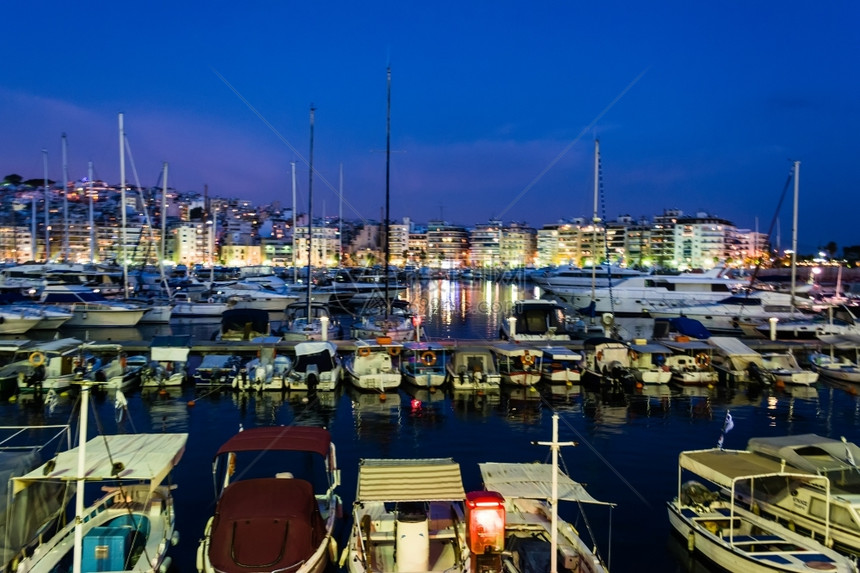
Solar port lights are not only navigation aids but also sensing nodes for the marine Internet of Things (IoT). In the future, they can integrate modules such as AIS, radar reflectors, and water quality monitoring to achieve multi-functional integration.
Driven by both sustainable development and digital transformation, solar marine navigation lights are evolving from “auxiliary equipment” into a core component of “smart marine infrastructure.”
Choosing a highly reliable solar light that meets international standards and is adapted to the local environment is not only crucial for navigation safety but also reflects the modernization level of port operations.