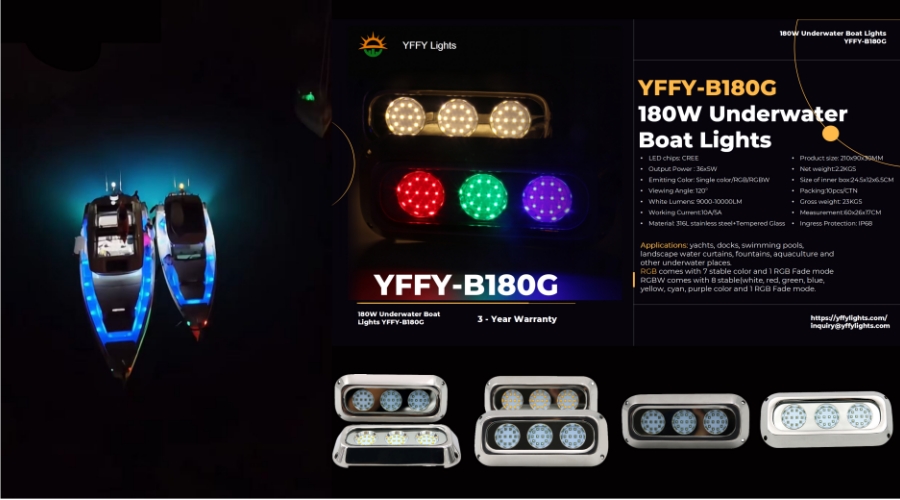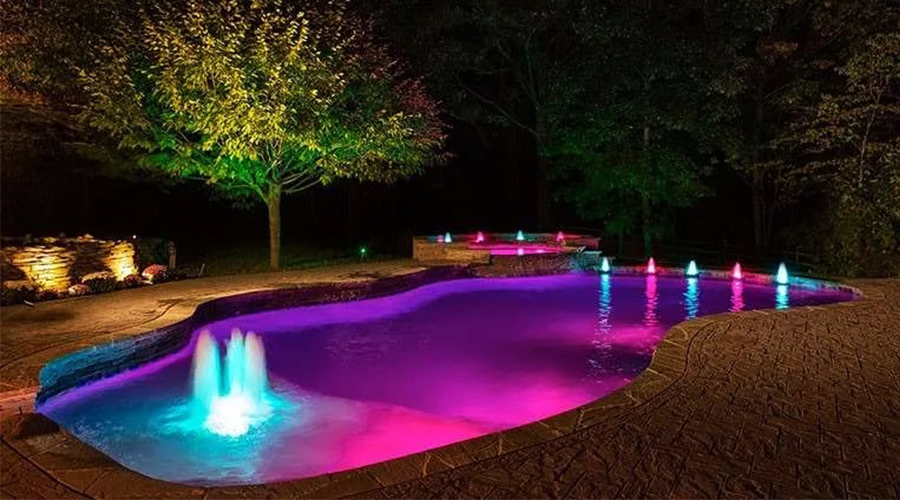
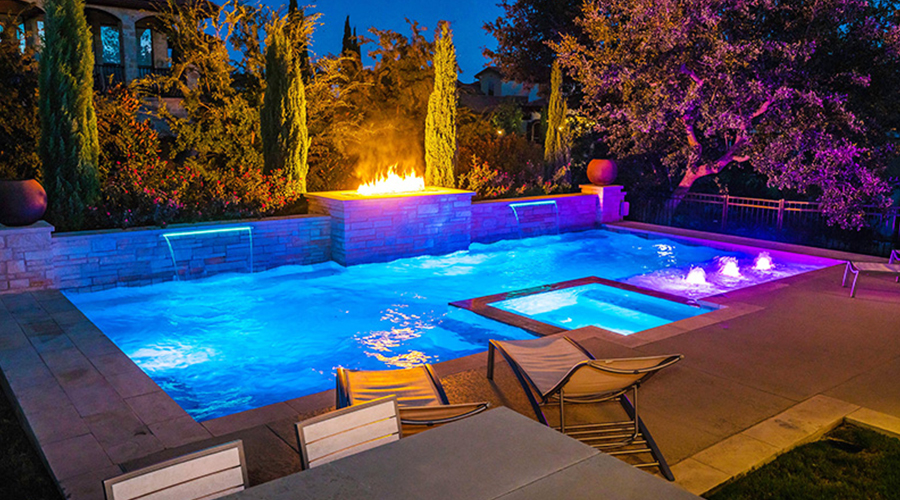
Underwater swimming pool lights are commonly used to enhance the aesthetics and safety of a pool. They provide nighttime illumination, making the pool safe to use even in the dark.
There are various types of underwater lights, including LEDs and halogens. The choice depends on budget, energy consumption, and desired light quality. During installation, attention should be paid to waterproofing and electrical safety.
Things to Note When Installing Underwater Swimming Pool Lights
I. Preparation
Selecting Standard Products
Select pool lights and accessories with a waterproof rating of IP68 or higher and that comply with local electrical codes. Products with CE, UL, and ETL certifications are preferred.
Ensure that the underwater lights have a power rating that matches the pool voltage and are suitable for outdoor/underwater environments.
Appropriate Power Supply & Wiring
Use a dedicated pool power line with a residual current device (RCD/GFCI). The RCD should typically be located near the distribution box and rated for the correct current.
All pool light power and control cables should use waterproof connectors to avoid exposed leads.
Professional Qualifications
The installation of LED underwater light generally requires a qualified electrician to ensure compliance with local electrical installation codes. If you do not have these qualifications, please entrust a professional.
Site & Environmental Assessment
Clean the work area to ensure it is free of water stains, dust, and sharp objects.
Identify obstacles around the pool edge and underwater area to prevent accidental injury during installation.
II. Installation Phase
Power-off Priority
Before unpacking, wiring, or connecting the pool lamps, ensure that the main power supply is completely disconnected and locked/tagged out to prevent accidental access.
Waterproofing & Sealing
Use the manufacturer’s waterproof rings, O-ring seals, and threaded fasteners, and install according to the product instructions.
Appropriate sealing material should be used around the mounting holes of the underwater swimming pool lights to prevent water from seeping into the electrical cavity.
Proper Wiring Routing
The cables from the lighting fixtures to the distribution box should be kept dry and protected from direct water contact.
Use waterproof connectors and waterproof conduit, and route them above water level or in dedicated underground/underwater raceways whenever possible.
Prolonged contact of the cables with pool chemicals (such as chlorine) should be avoided to prevent corrosion. Anti-static and Grounding
Ensure the lamp and metal parts are properly grounded to prevent electrical charges from being carried by the outer casing. During installation, avoid direct contact with exposed conductors in wet conditions.
Positioning & Fixing
Underwater pool lights should be securely fixed to prevent loosening. Avoid impact or vibration between the lamp and movable brackets, pulleys, etc.
Avoid placing the lamp over or near fragile objects such as fish tanks or plant roots.
Controls & Safety Distances
The control switch should be located in a dry area that is easily accessible and away from the water. If an external control box is used, ensure it has a waterproof cover.
Maintain a safe distance from accessible parts of the underwater LED light to prevent children from touching live parts.
III. Operation
Regular Inspection & Maintenance
Inspect the underwater light housing for cracks, seal deterioration, loose connections, and seal integrity at agreed intervals.
If the lamp is overheating, flickering, or has an odor, immediately disconnect the power cord for inspection and contact a qualified professional.
Precautions for Use
Avoid modifying the lamp or replacing parts in the pool unless you have the necessary qualifications and tools.
If cleaning swimming underwater pool lights is necessary, always disconnect the power cord first and use a mild, non-abrasive detergent to avoid damaging the seal around the light.
Safety & Emergency Measures
Learn and mark the location of the nearest power disconnect switch.
In the event of an electric shock or electrocution incident, immediately disconnect the power cord and contact emergency services and personnel.
Choose a compliant, waterproof, and compatible underwater swimming pool lamp. Always prioritize “disconnecting the power cord first” to ensure proper waterproofing and grounding.
If you have any specific requirements, please let me know the specifics of your pool (pool type, underwater light wattage, voltage, availability of an existing distribution box, etc.), and I can provide a more tailored recommendation and quote.