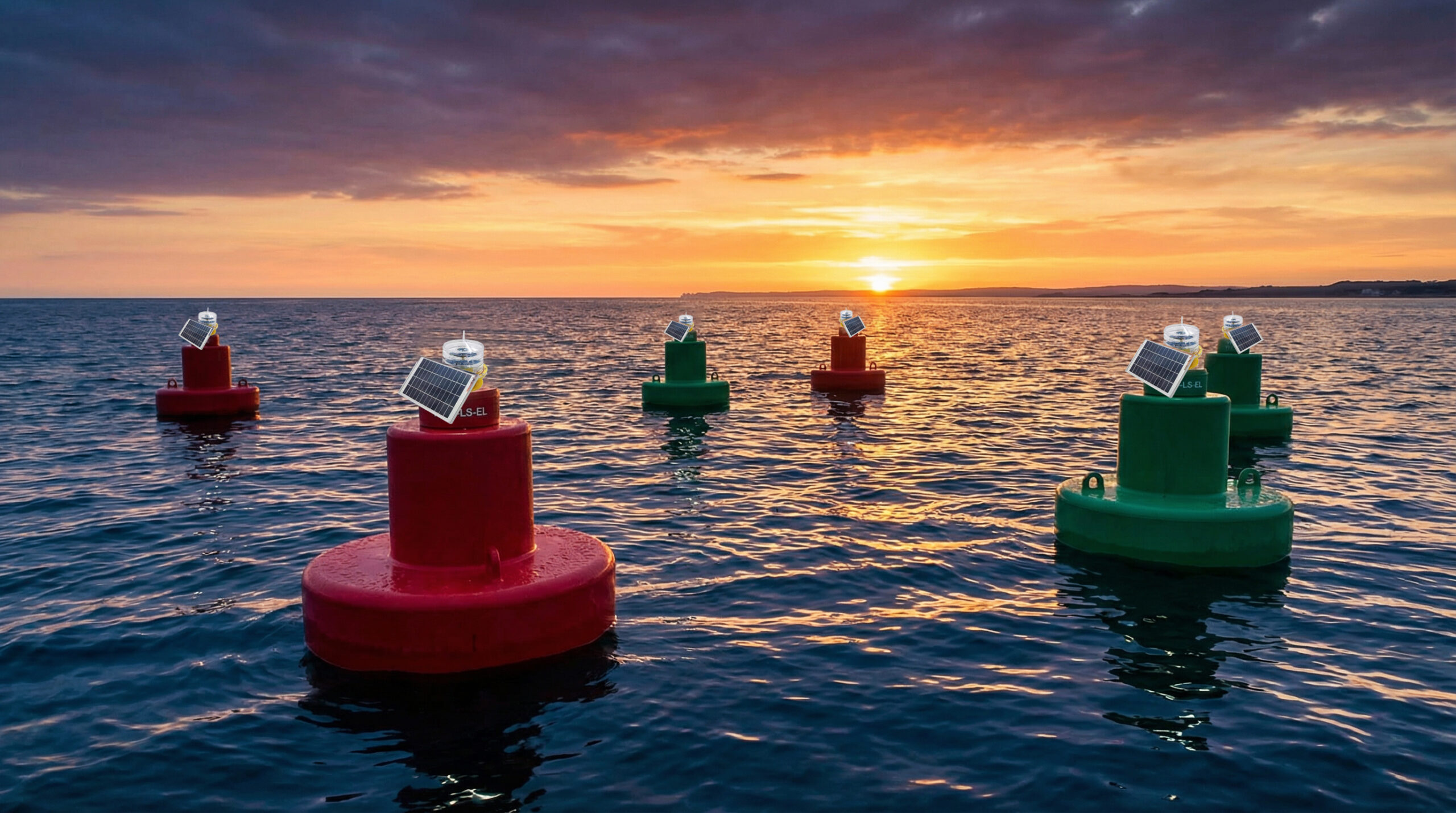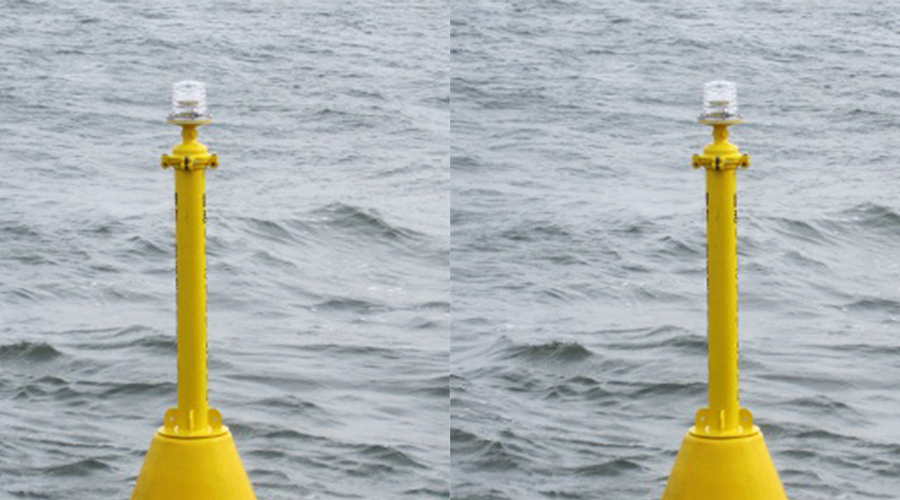
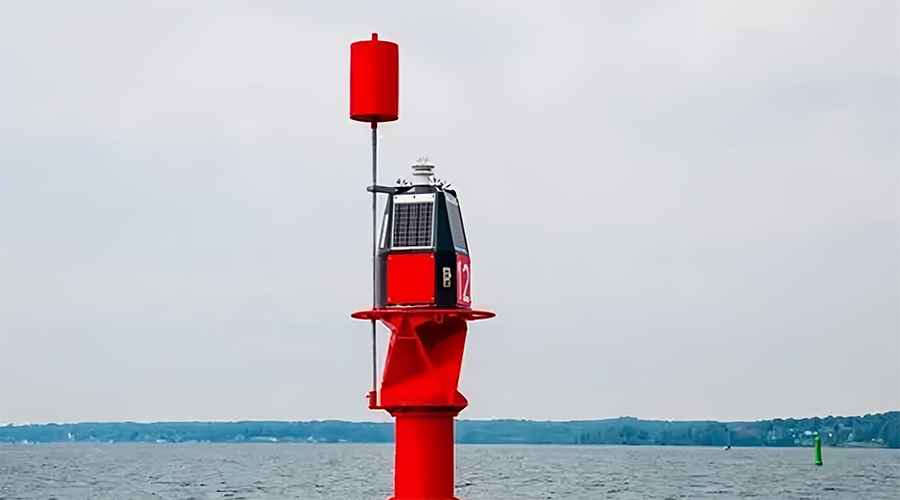
Marine buoy lights are primarily used for navigation and are waterproof and feature automatic lighting control. They are typically solar-powered and come in a variety of colors, such as red, white, yellow, and green, for warning purposes.
The oceans are vast, so choosing the right solar buoy light for your specific area requires considering key factors, including the specific characteristics of the area, lamp specifications, and maintenance and compliance requirements.
Solar Buoy Lights – How to Choose?
1.Usage Requirements
Energy Source: Solar, wind, or seawater cable
Purpose & Scenario
- Navigational Marking (channel center, channel entrance, lamp spacing)
- Warning Signs (danger zone, fish reef area, rocky area, artificial island/pier perimeter)
- Differentiation Requirements for Aquaculture, Fishing, and Fishing Boat Anchorage
2.Key Specifications of Marine Lights
- Light Source & Brightness: LED with 1-20 nm, visual range.
- Light Type & Color: White for general navigation, red/yellow/green for warnings and boundary markings
- Flashing Mode: Steady, flashing, or IALA 350 marine code
- Waterproof Rating: IP Rating (e.g., IP68 is common for marine navigation aids)
- Exterior Materials: Stainless steel, aluminum alloy, high-strength plastic, salt spray and impact resistant
- Weather & wind resistance of the structure: Wind-resistant design, housing sealing, and wear resistance of the float material
3.Recommendations for Different Sea Areas
- High latitudes/rainy areas
Select marine navigation lights with high visibility range and long battery life, such as the YFFY-LS-S 6NM solar-powered marine buoy lights.
- Open seas/areas with strong winds and waves and ample sunshine
Select solar buoy navigation light with high-efficiency LEDs and high battery capacity.
Set a steady-state/low-frequency flashing mode to improve long-range visibility, a 1-4NM solar lights is sufficient.
- Nearshore, around docks, and at waterway intersections
Use a brighter solar-powered marine buoy light with clear color resolution, integrated with GPS synchronization, and a red, 4-6NM solar lights for navigation aids.
- Mineral areas, reefs, and risk areas
Use warning color combinations (such as red/yellow), and solar-powered marine warning lights with mandatory color coding (one of 350 marine codes).
- Aquaculture areas/areas with high fishing activity
To reduce false triggering and impacts on wildlife, choose low-radiation, low-pollution marine navigation lights, such as 2-4 nm.
You can also tell us your requirements for the color, quantity, and visibility distance of your solar-powered marine buoy lights so we can recommend the most suitable one.