The installation of low-intensity lights mainly involves several aspects and compliance with standards. First, the horizontal beam diffusion angle should be 360°. Combined with the building height, geographical location and surrounding environment, it is set comprehensively.
For example, buildings above 45m, especially around the runway and obstacle areas, must be installed compulsorily.
Obstacles below 45m usually require the installation of low-intensity obstacle lights.
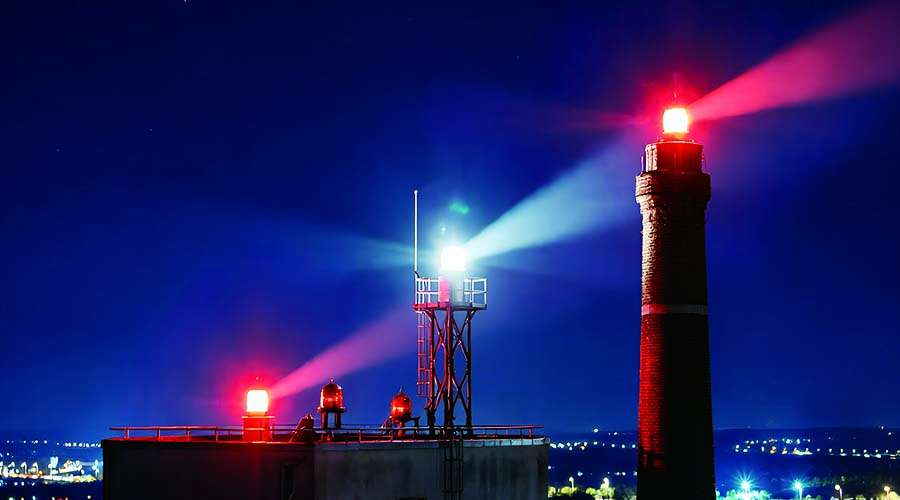
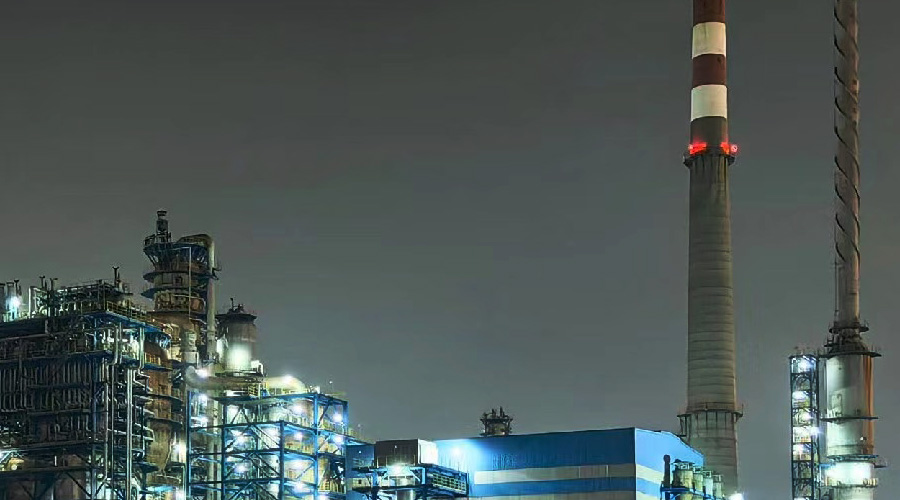
For special structures such as chimneys, top obstacle warning lights should be installed between 1.5-3m from the top.
When the chimney height exceeds 150m, it can be installed within 7.5m below the top. In addition, the installation interface should adopt G3/4 or G1 cylindrical pipe threads.
Installation Standards For Low-intensity Lights
1. Height standards
- Lights must be installed in the 15-kilometer extension area at both ends of the runway and in oversized buildings within a 4-kilometer radius from the center of the runway
- Backup systems are required for super-high buildings of 150-315 meters
2. Equipment selection
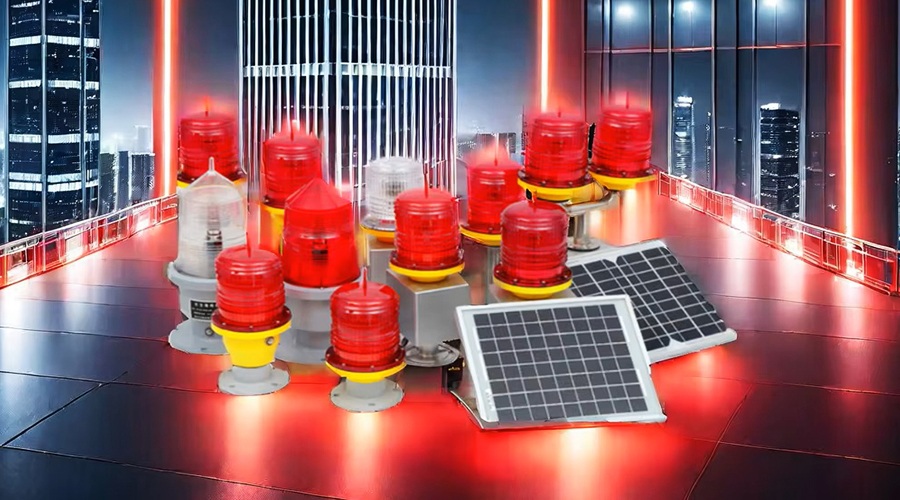
- Optional A/B/E low intensity aviation obstruction lights
- Technical parameters must meet the requirements of beam angle, light intensity and other indicators
3. Installation specifications
- Solar obstacle lights or LED low-intensity aviaiton obstacle lights are arranged on the top/edge to ensure 360° visibility
- When multiple lights are arranged, the spacing is kept uniform, and the vertical spacing of the top lights is ≤105 meters
- G3/4 or G1 pipe thread fixing (special for A/B type)
Installation Process
- Positioning design: optimize the coverage of solar or LED obstacle light based on building features
- Equipment installation: firmly fixed in the predetermined position
- Electrical connection: adapt to voltage requirements
- Debugging verification: ensure compliance with lighting standards
- Maintenance plan: regular inspection and replacement of faulty parts
Special Considerations
- Environmental assessment: avoid line of sight obstruction and risk of explosion/flammable gas
- Safe operation: implement anti-electric shock and anti-fall protection measures
- Specification study: fully understand CAAC technical standards before installation
Whether it is LED low-intensity lights or solar aviation obstacle warning lights, a periodic maintenance mechanism needs to be established after installation, focusing on monitoring the power supply system and light-emitting components to ensure continuous warning function.