Protecting the Skyline: The Ecuador Tower High-intensity Obstruction Lights Project and Aviation Safety Standards.
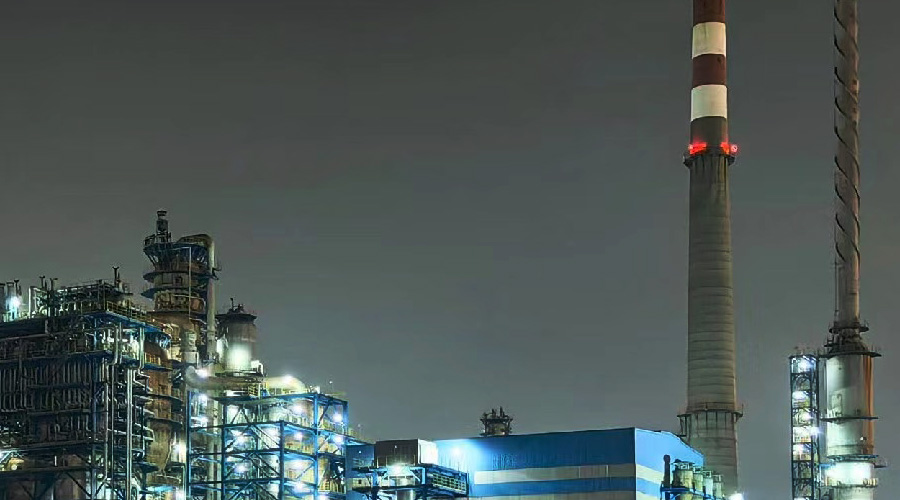
In the ever-growing skylines of modern cities, supertall buildings are not only engineering marvels but also crucial considerations for aviation safety.
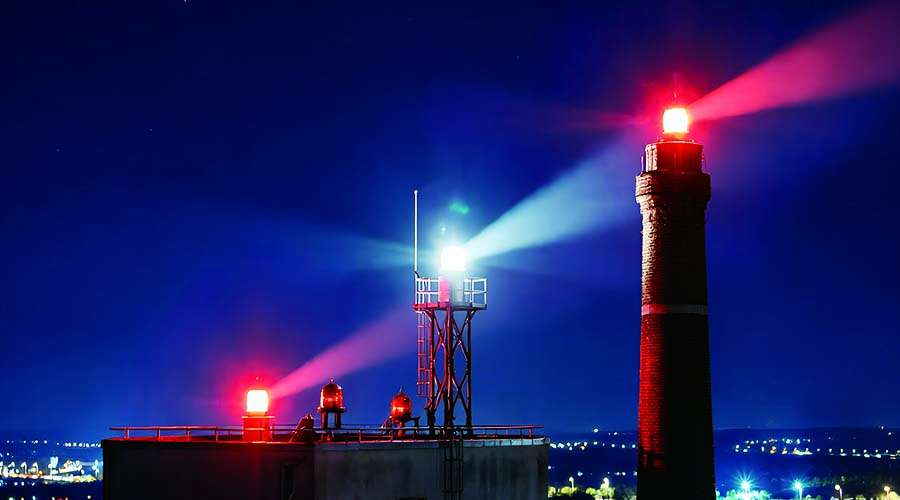
To ensure the safe operation of aircraft at night or in low-visibility conditions, high-intensity aviation obstruction lights have emerged, becoming “skylights” for supertall buildings.
This article uses the Ecuador Tower project as a case study to analyze the technical characteristics of high-intensity obstacle lights and their core role in aviation safety.
I. High-Intensity Omnidirectional Aviation Obstruction Lights
Applications:
- Used to mark tall buildings, chimneys, antenna towers, bridges, and other towering structures, alerting aircraft to take evasive action;
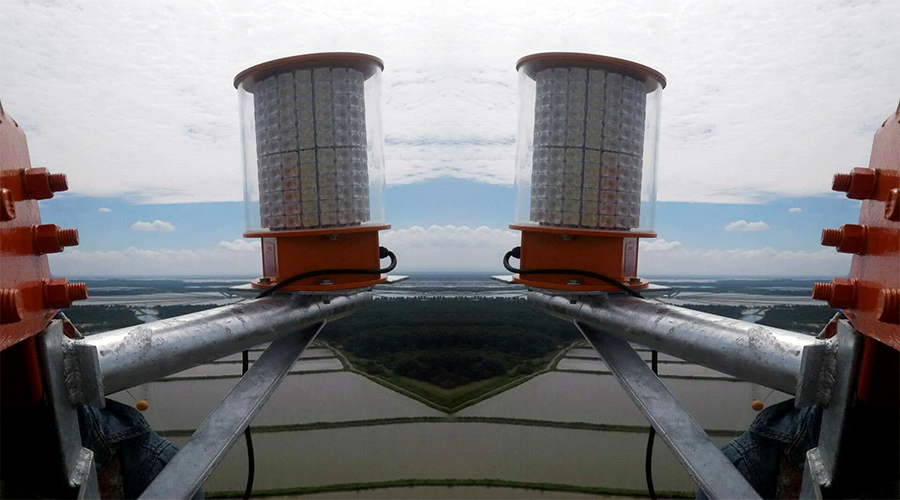
- For supertall buildings or chimneys and towers over 150 meters, a high-brightness white flash is used, with a light intensity reaching 2,000 to 100,000 candela, ensuring long-distance warning in adverse weather conditions such as fog, rain, and clouds.
Characteristics:
- Impact resistant, lightning-proof, windproof, and resistant to severe weather.
Lighting:
- Typically uses white flashing lights, conforming to high-intensity Type A or Type B standards, with a light intensity ranging from 2000 to 100000 candela.
Technology:
- Employs environmentally friendly light sources with a lifespan of over 10 years and low power consumption.
In ultra-high structures like the Ecuador Tower, reaching hundreds of meters in height, medium-intensity red flashing lights alone are insufficient for all-weather warning needs. Therefore, high intensity omnidirectional aviation obstruction lights are essential to create a continuous visual warning zone.

II. Features of High-Intensity Obstruction Lights
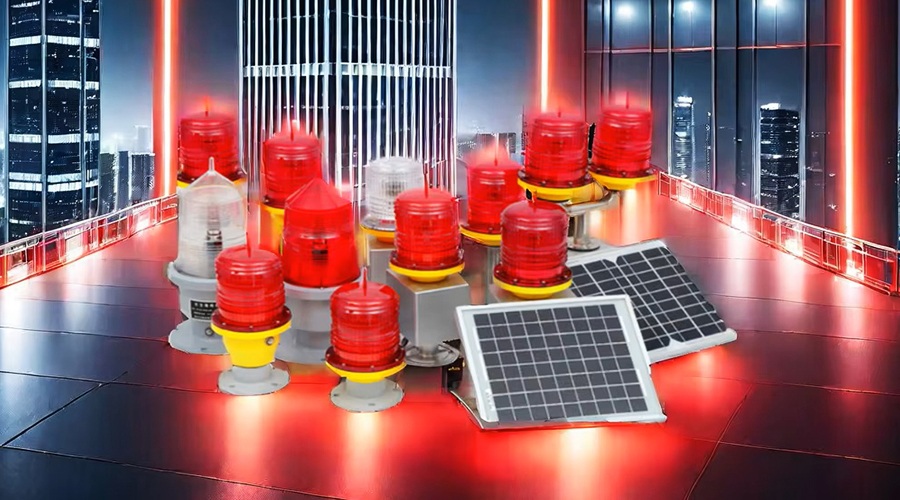
This project selected the YFFY-HI-O high-intensity obstruction lights, which exemplifies the advanced nature of modern aviation warning technology with its superior performance. Its key technical highlights are as follows:
1. Ecuador is located on the equator, experiencing frequent extreme weather events such as lightning, torrential rain, and strong winds.
The YFFY series aviation lights utilize a high-strength, impact-resistant housing with an IP66 or higher protection rating and a built-in lightning protection module, enabling stable operation within a temperature range of -40℃ to +70℃, ensuring uninterrupted warning even under extreme conditions.
2. The high-intensity light emits a white flash. Strictly compliant with ICAO high-intensity Type A and Type B standards, with an intensity range of 2000 cd to 100,000 cd, and through precision optical lens design, achieves 360° omnidirectional horizontal illumination and a vertical beam angle ≥3°, ensuring pilots can clearly identify obstacle outlines from several kilometers away.
3. The aviation obstruction warning light uses an advanced LED light source, consuming only 1/10 the power of traditional xenon lamps, with a lifespan exceeding 100,000 hours (approximately 11 years), significantly reducing maintenance costs. An optional intelligent monitoring system provides real-time feedback on the light’s operating status, enabling remote fault warnings.

III. Installation Standards for High-Intensity Aviation Lights
The installation of aviation obstruction lights must strictly adhere to national and international regulations.
According to the Civil Aviation Law and the Aviation Obstruction Light Specification (MH/T 6012-2015), key requirements include:
Installation Location:
- Must be installed at the highest point and outermost edge of the obstacle to ensure no blind spots in warning.
Spacing Control:
- The vertical spacing between adjacent lights is typically no more than 45 meters, forming a continuous warning strip.
Luminous Intensity & Flashing Frequency:
- High-intensity lights flash at a frequency of 40-60 times per minute to ensure visual impact.
This obstruction lighting project adhered to the above standards throughout its design and construction, using YFFY series products.
These products not only passed the certification of the Civil Aviation Administration of China but also complied with relevant regulations of the International Civil Aviation Organization (ICAO) and the Federal Aviation Administration (FAA), providing a successful model for aviation safety in super-tall buildings worldwide.

The successful implementation of the Ecuador Tower high-intensity obstruction lights project is not only a testament to meeting technical standards but also to respecting and practicing aviation safety regulations. Behind these white flashes piercing the clouds lies the protection of every flight and every life.
In the future, as city skylines continue to rise, LED aviation obstruction warning lights will continue to play the role of “air safety guardians,” ensuring harmonious coexistence between urban landscapes and aviation safety.