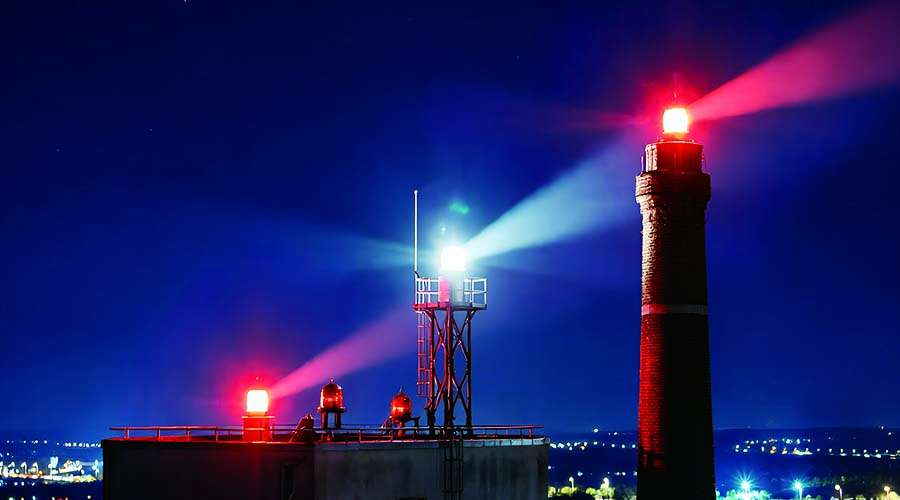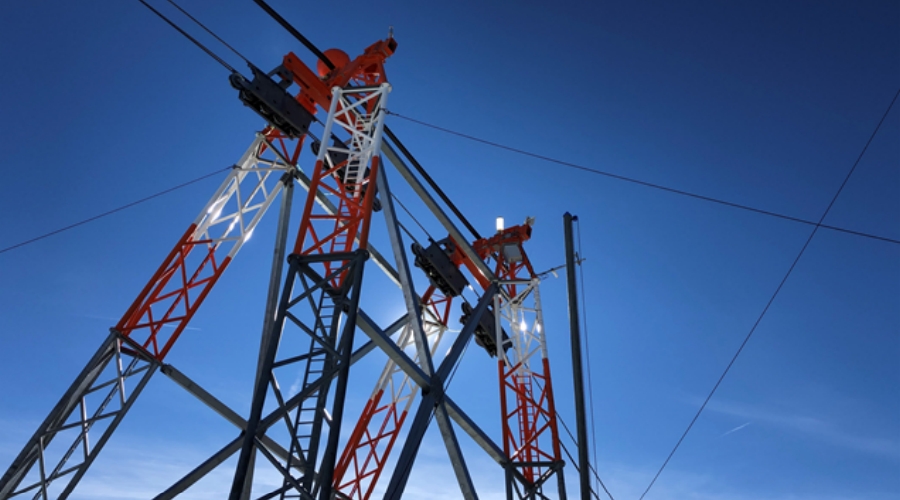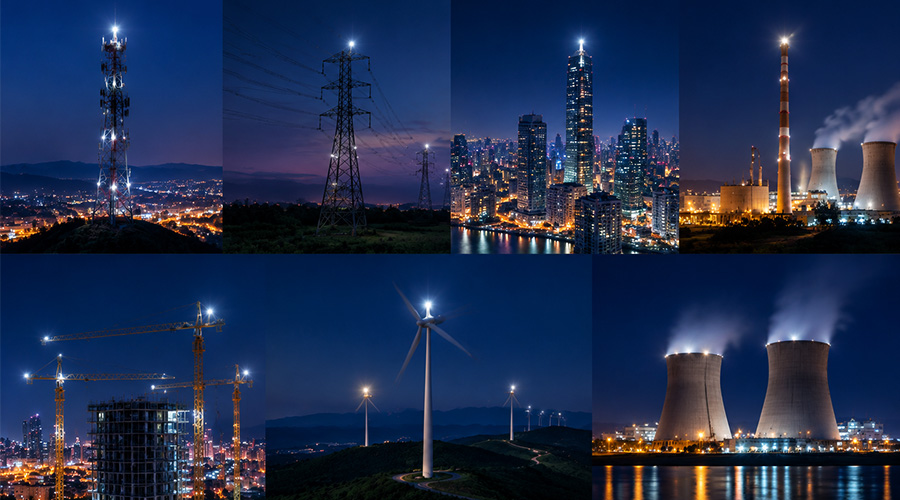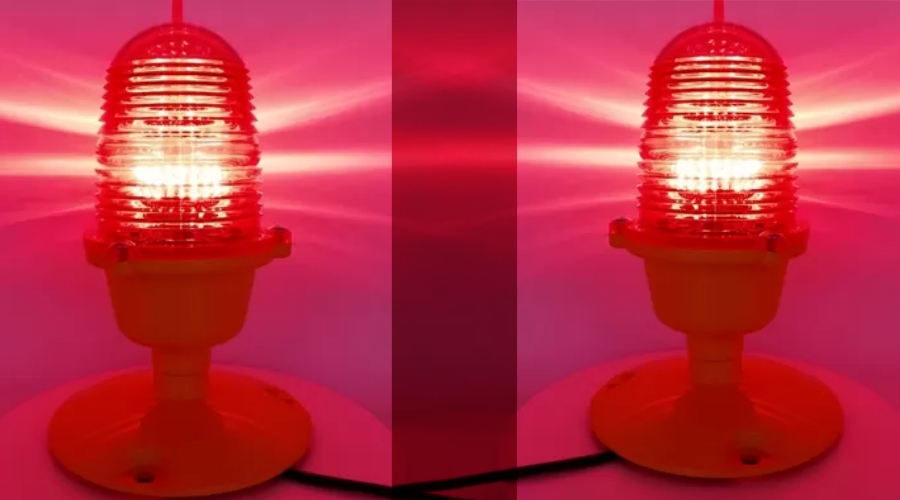
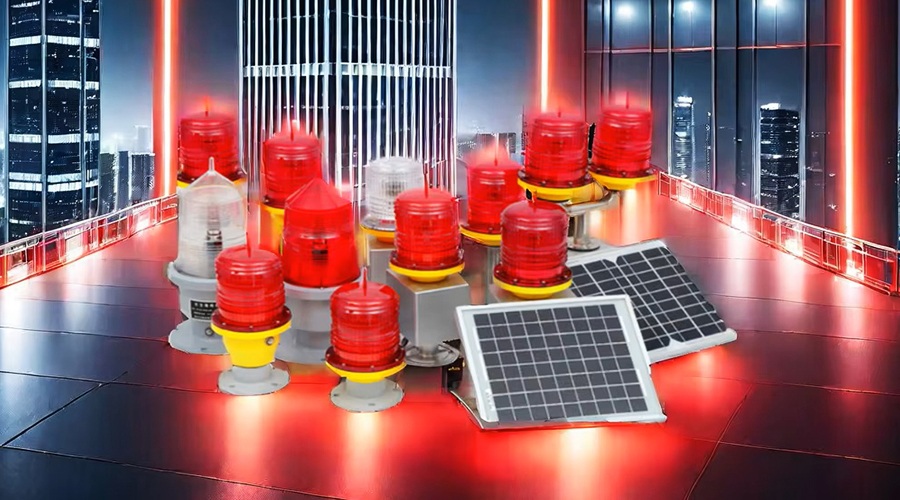
Medium-intensity obstruction lights, as aviation obstruction lighting systems, are not only mandatory under regulations in the construction of high-rise buildings, communication towers, wind turbines, bridges, and even airport perimeter facilities, but also a crucial line of defense for ensuring low-altitude flight safety.
In recent years, a significant trend has been accelerating globally: medium-intensity obstruction warning lights are gradually becoming the preferred solution for new construction and renovation projects.
I. What Are Aviation Obstruction Lights?
How are they defined in international standards? According to the International Civil Aviation Organization (ICAO), aircraft warning lights are classified into three categories based on their light intensity:
- Low Intensity: Typically used for structures below 45 meters in height, with a light intensity ≤ 32 cd (candela);
- Medium Intensity: Suitable for obstacles at heights of 45 to 150 meters (or higher, depending on the environment), with a light intensity range generally from 2,000 cd to 20,000 cd;
- High Intensity: Used for obstacles at very high altitudes or in critical airspace, with daytime light intensity reaching over 200,000 cd. [1]
Medium intensity aviation obstacle lights are further subdivided into two types:
- Type A (white light, for daytime/dusk use only)
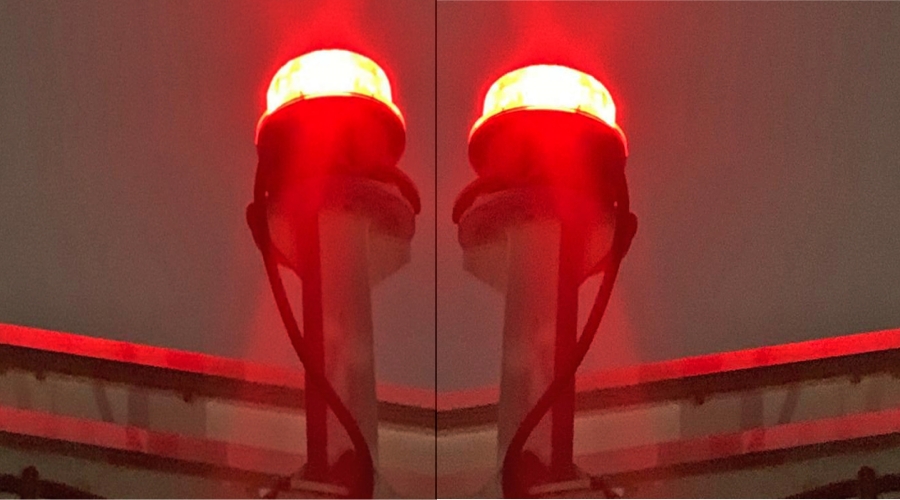
- Type B (red light, for all-weather use, including nighttime) [2]
Why More Projects Choosing Medium-intensity Obstruction Lights?
1. Perfect Height, Wide Range of Applications:
Most common steel towers, chimneys, and wind turbines are around 100 meters tall, falling perfectly within the coverage area of medium-intensity LEDs.
Unlike high-intensity lights, they don’t require complex control systems, making installation and maintenance much simpler.
2. Extremely Energy-Efficient, Extended Lifespan:
Traditional medium-intensity LEDs often use halogen or xenon light sources, resulting in short lifespans (approximately 1,000–2,000 hours), high energy consumption, and frequent replacements.
Modern LED medium-intensity obstruction lights, such as the YFFY-155 LED medium-intensity aviation obstruction light, boast a lifespan of 50,000–100,000 hours, reducing power consumption by over 60%, and possess excellent vibration resistance and high/low temperature resistance (-40℃ to +70℃), significantly reducing the dangers and costs of tower climbing maintenance.
According to FAA statistics, projects using LED medium-intensity systems can reduce 10-year maintenance costs by 40–70% compared to traditional solutions. [3]
3. Light-Friendly, Reduced Complaints
Especially the red-light type of medium-intensity lamps, which emit a soft red light at night, unlike some high-intensity white lights which are glaring. This greatly reduces light pollution to surrounding residents and makes the project easier to pass environmental and community approvals.
4. Intelligent Control, Green Solar Energy
Intelligent Management:
The new generation of aviation obstruction lights can be remotely switched on and off and their status monitored, making management very convenient.
Solar Power Supply:
For remote locations without power (such as monitoring towers on high mountains), solar-powered obstruction warning lights are a perfect solution. They charge during the day and work at night, offering flexible installation and being environmentally friendly.
III. Optimal Applications of Medium-Intensity Obstruction Lights
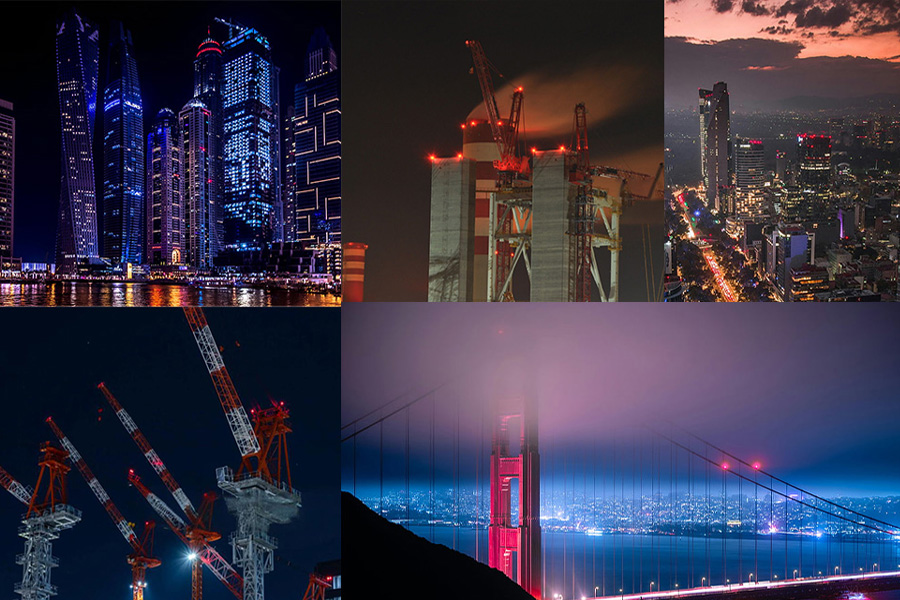
For communication towers, transmission towers, monitoring towers, and tall industrial chimneys, medium-intensity lamps are almost a tailor-made choice:
- Height Matching:
These structures are usually within the optimal operating height of medium-intensity, high-altitude obstruction lights.
- Durability:
The environment at the top of towers and chimneys is harsh, and medium-intensity warning lights can withstand wind, sun, and vibration for a long time.
- Flexible Installation:
Especially for solar aviation obstruction warning lights, they eliminate the hassle and cost of laying cables for retrofitting old chimneys with power supply difficulties or for iron towers in remote areas, making them a safe and economical choice.
Choosing medium-intensity lights (especially solar-powered models) is not a compromise, but a smart, affordable, and responsible option. It reliably ensures aviation safety with lower long-term costs, while also considering the needs of the surrounding environment and modern management.
If you are looking for a reliable obstruction lighting solution for iron towers, chimneys, or high-rise buildings, LED / solar-powered medium-intensity obstruction lights are undoubtedly the most efficient choice you should consider.
References:
- [1] Annex 14 – Airports and FAA AC 70/7460-1L document;
- [2] ICAO Annex 14, Volume I, 6th Edition (2018), Section 6.2; FAA Advisory Circular 70/7460-1L (2020);
- [3] FAA Report: Benefits of LED Obstruction Lighting, 2021