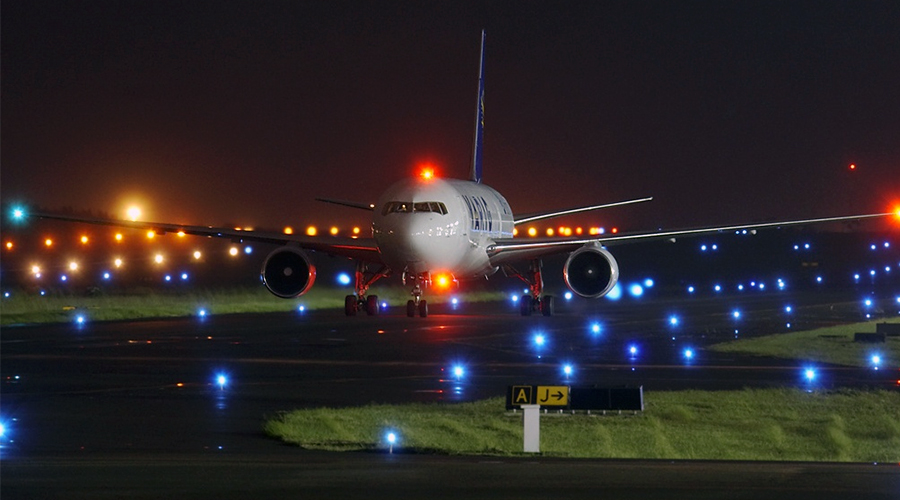
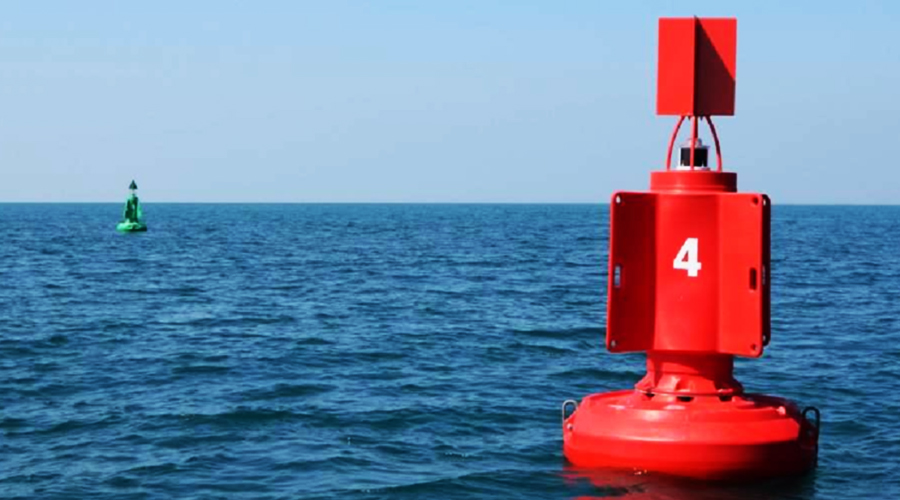
Marine navigation light, there has two distinct but related meanings in the maritime field.
- Lights installed on ships: Lights carried and displayed by the ship itself to indicate its movement, type, size, etc., and to prevent collisions.
- Lights serving ships: Lights installed on buoys, navigation aids, and on land structures such as ports, docks, and bridges to provide guidance for ship navigation; these are called navigational aid lights.
Today, we will primarily understand and discuss navigation lights used for maritime safety.
What is IALA?
First, IALA (International Association of Lighthouse Authorities) is a global, non-profit professional technical organization. Its main goal is to coordinate navigational aid services globally by developing unified standards, guidelines, and recommendations to ensure safe, economical, and efficient maritime navigation.
IALA has specific standards for the light characteristics (such as color, rhythm, and cycle) of LED solar powered marine navigation lights used in international waterways or those requiring identification by ships from different countries.

What is an IALA Compliant Marine Navigation Light?
Standard-compliant marine navigation lights specifically refer to LED marine warning lights on fixed navigation aids designed, manufactured, and deployed according to IALA (Advanced Information and Navigation Assistance) guidelines.
They primarily serve navigation aids and are a different system from the ship’s own navigation warning lights (such as port red and starboard masthead lights).
The core purpose of these LED warning lights is to provide ships with clear and unambiguous information regarding their position, danger warnings, or channel boundaries. Their “compliance with standards” is mainly reflected in the following aspects:
1. Flashing Patterns
This is the core of the IALA standard. Different flashing patterns (rhythms) represent different navigational meanings. Common IALA standard rhythms include:
- Single Flash: Flashes only once within a fixed period. Used to mark important points, such as turning points and hazard signs.
- Consecutive Flashes: Flashes rapidly 2-4 times consecutively within a fixed period. For example, “two consecutive flashes” is often used to mark the side of a channel.
- Equal Brightness/Darkness: Bright and dark times are equal. Commonly used for safety water markings (such as the center of a channel).
- Morse code: For example, “Morse U” (2 short flashes followed by one long flash) indicates an area of particular danger.
- Long flash: A single flash lasts at least 2 seconds. Commonly used in pilotage routes or important turning points.
- Constant light: Always on. Usually used only in inland waterways or ports with complex background lighting; less common at sea.
2. Light colors of navigation lights
According to the IALA maritime buoy system (globally divided into Zone A and Zone B; China, the Americas, Japan, and South Korea belong to Zone B):
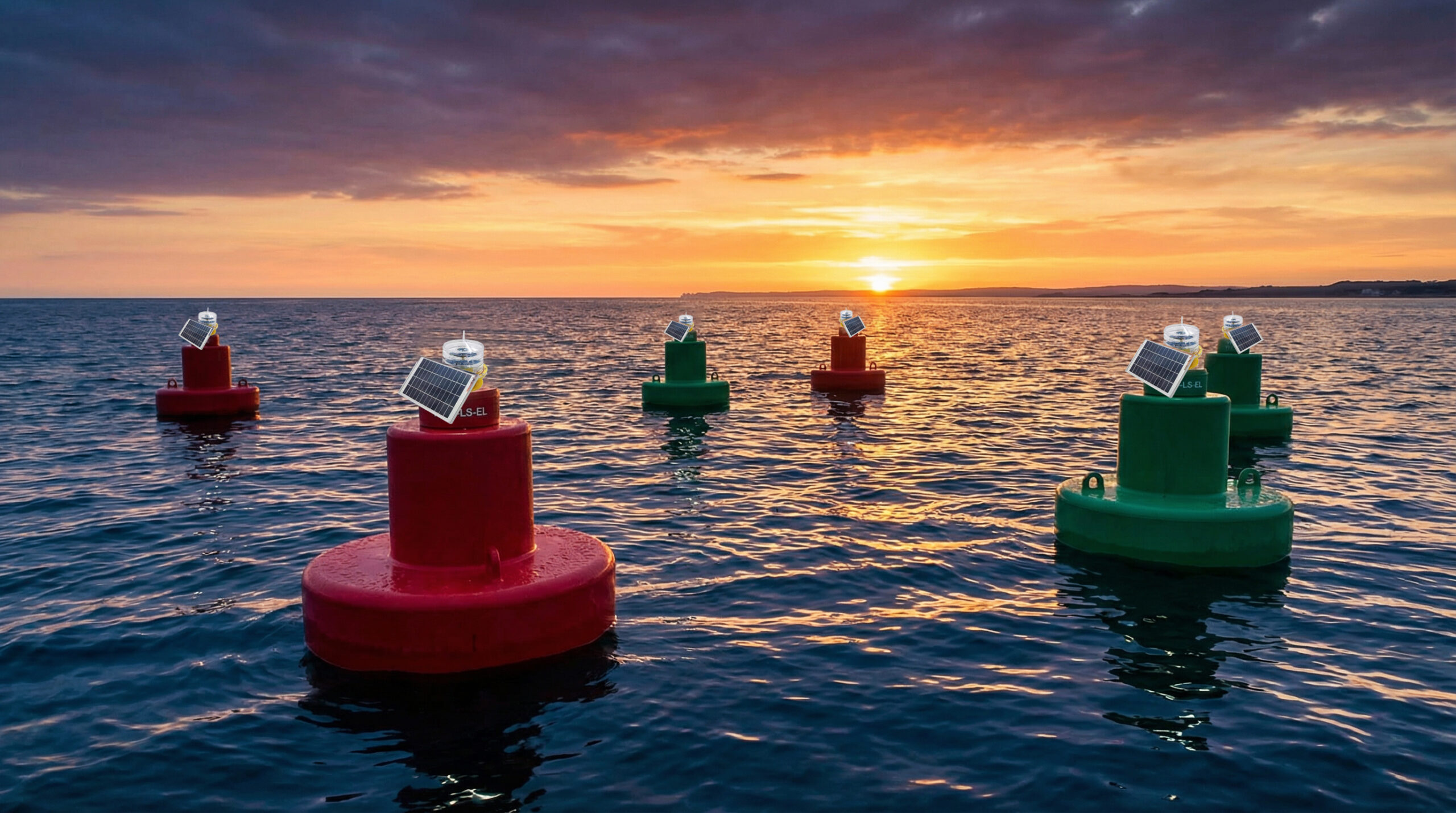
- Red: Indicates the left-hand limit of the channel (in Zone B: vessels traveling from the open sea towards port should pass with the red buoy on the port side).
- Green: Indicates the right-hand limit of the channel (in Zone B: green buoys should pass with the green buoy on the starboard side).
- Yellow: Used for special purposes, such as indicating quarantine zones, pipelines, cables, etc., without conflicting with red and green channel markers.
- White: The most common, used for most other types of markers, such as safe water markers, isolated danger markers, and bearing markers.
3. Technical Performance Parameters
- Light Intensity & Range:
IALA specifies the required light intensity and nominal range for different types and locations of marine lights. LED solar power navigation lights must achieve the required brightness and visibility distance through optical design (lenses, LED chip arrangement).
- Period & Accuracy:
The flashing cycle (time to complete one full cycle) of the marine navigation light must be highly accurate and stable. For example, a light with a nominal cycle of 5 seconds must have an error within an extremely small range (e.g., ±0.1 seconds) to ensure accurate identification.
- Reliability & Environmental Adaptability:
It must be able to operate stably for extended periods in extreme marine environments (high salinity, high humidity, large temperature differences, typhoons, freezing). LED lights, due to their long lifespan, low power consumption, and good shock resistance, have become the mainstream light source for modern navigation lights.
- Energy System:
As marine buoy lights, for buoys far from the power grid, a reliable energy system is essential. Currently, “LED + high-efficiency solar panel + intelligent charge/discharge controller + energy storage battery” is the standard configuration, ensuring normal operation even during continuous cloudy or rainy days.
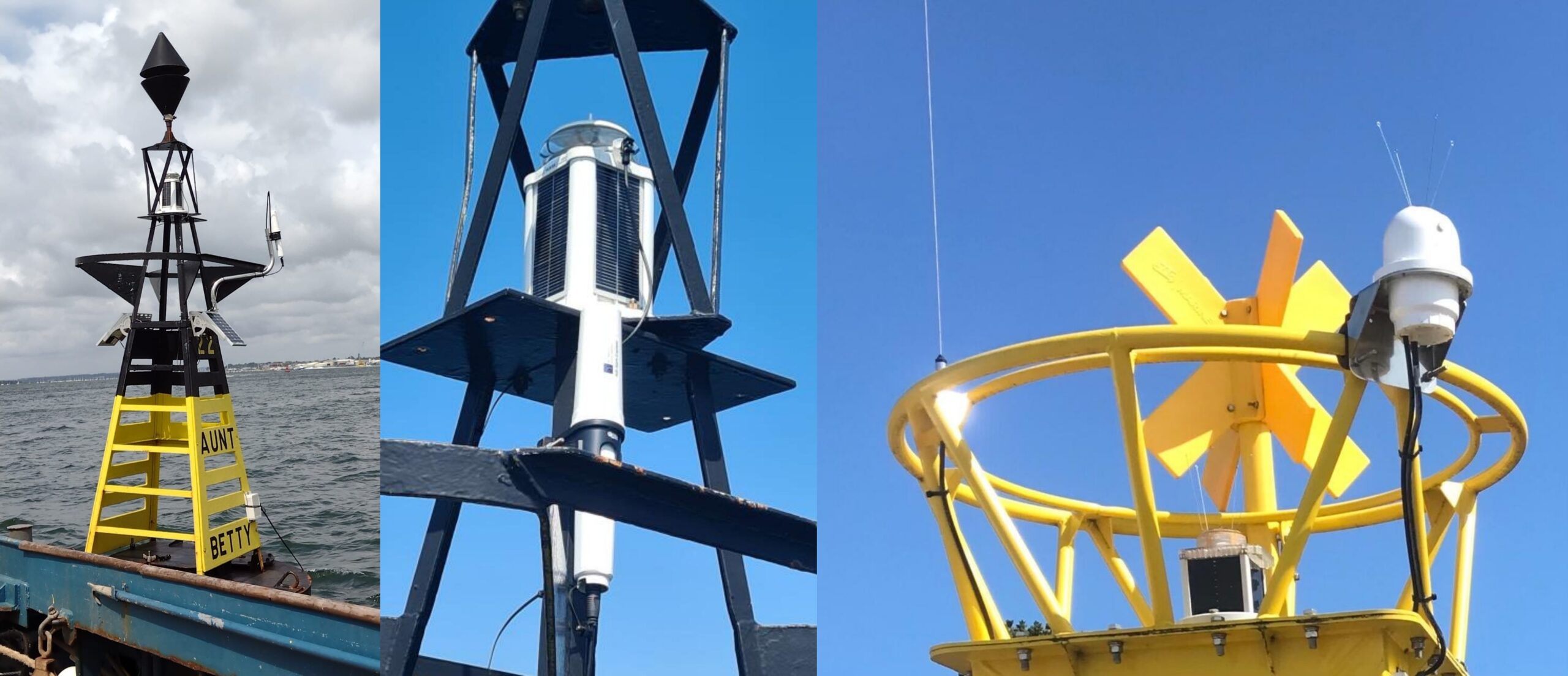
Applications & Standards of Marine Navigation Lights
- Buoys & Navigation Aids:
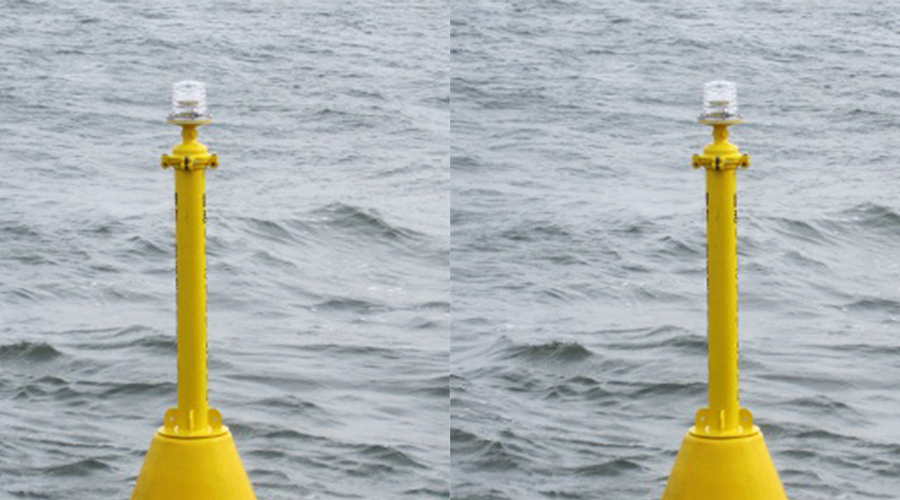
These are the direct applications of IALA-compliant marine navigation warning lights. The color, top mark, and light rhythm of each buoy must be strictly set according to its role in the waterway (lateral marks, safety water markers, isolated hazard markers, bearing marks, etc.).
- Ports, Bridges and Docks:
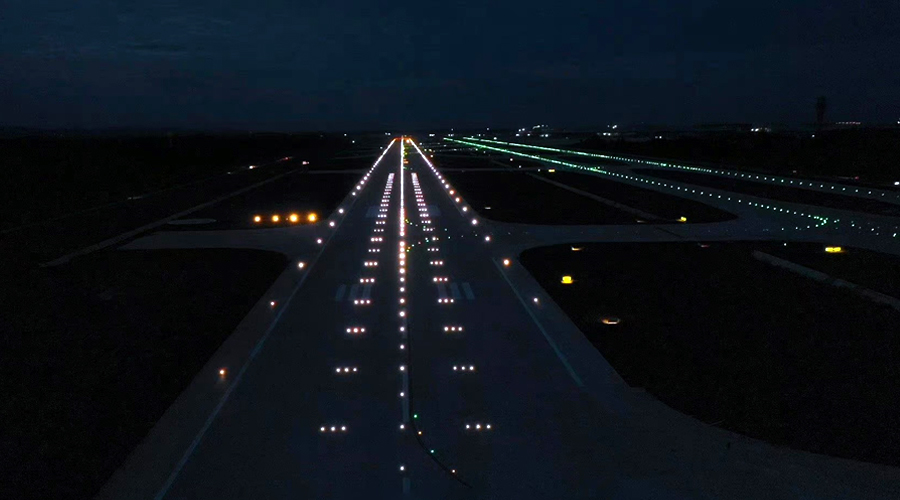
Marine lanterns installed on these fixed structures also need to comply with IALA standards.
- Bridges:
Red lights on bridge piers indicate obstacles, while green lights on bridge arches indicate passable passages; their light rhythms are clearly defined.
- Port Breakwater Heads:
Important navigational warning lights are usually installed to mark the boundaries of port entrances; their light rhythm and color are crucial.
- Dock Boundaries:
Marine lights are also installed at the protruding corners or ends of docks to warn vessels.
An IALA-compliant marine navigation light is a system integrating specific optical, electrical, mechanical, and communication technologies. It is not merely a “light,” but a sophisticated device that conveys a standardized navigational language to ships.
Its core value lies in “global uniformity.” No matter where a ship comes from in the world, as long as the crew sees the red light flashing twice in a row, they know, “This is the port side boundary of the channel; I need to pass it on the port side.” This communication without language barriers greatly ensures navigational safety at night and in poor visibility conditions.
Therefore, when selecting LED solar-powered marine lights for buoys, navigation aids, ports, bridges, and other similar applications, the primary task for manufacturers and maritime authorities is to ensure that the light characteristics (color, rhythm, cycle, range) fully comply with the relevant IALA standards and possess the quality for long-term reliable operation in harsh marine environments.
Products Recommended
YFFY-LS-C-1 Solar Warning Lights : 4NM visible range; 12days anti-rainy days ; Flash & Steady can switch to use.
YFFY-LS-SJ Solar Marine Lights: 6-8NM visible range, 350 Flash Codes, 12-18 anti-rainy days.