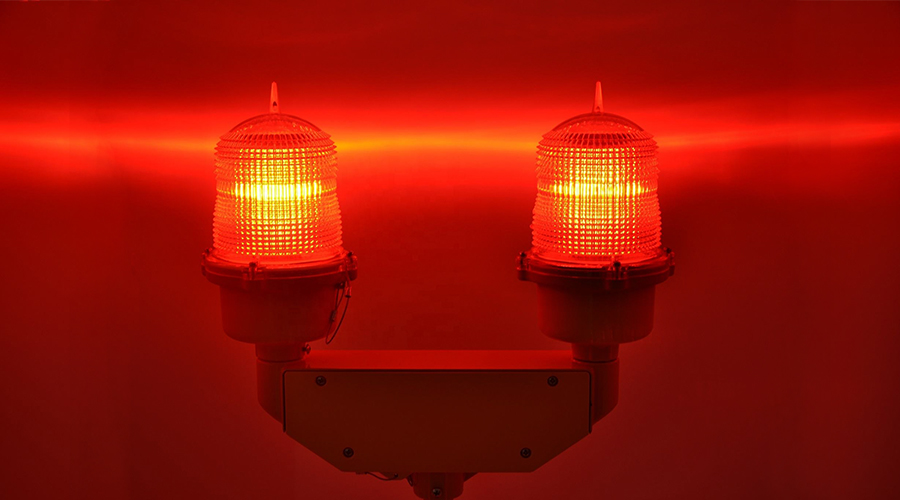
Dual-head obstruction lights are warning lights specifically designed for high-altitude obstacles. In modern urban construction and industrial development, high-rise buildings, power transmission towers, communication base stations, and other high-altitude structures are increasingly common.
These facilities may pose a potential threat to aircraft (such as airplanes and helicopters) at night or in low visibility conditions.
To effectively warn aircraft and ensure air and ground safety, dual-head obstruction warning lights have emerged and become a key piece of equipment for identifying high-altitude obstacles.
Features of Dual-Head Obstruction Warning Lights:
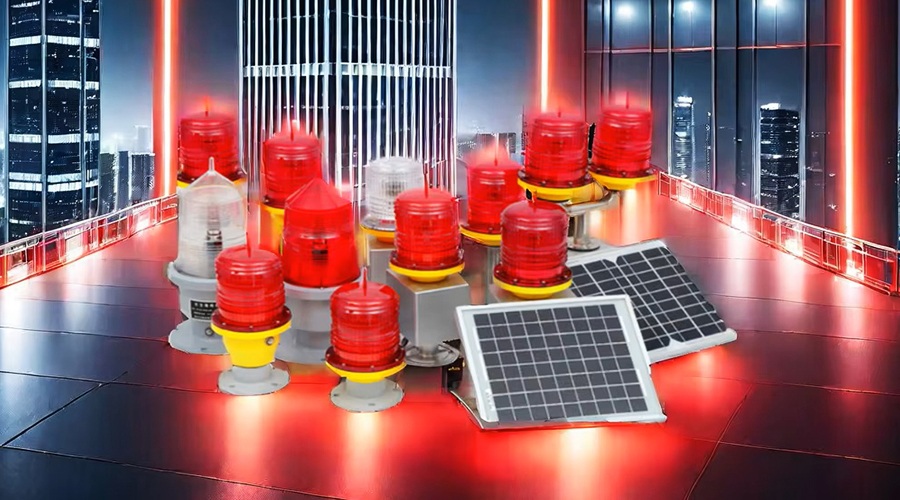
These aviation obstruction warning lights are typically equipped with two independent lamp heads that can emit high-intensity flashes simultaneously or alternately.
This design not only improves visibility but also enhances reliability; even if one lamp head fails, the other can still function normally.
Obstruction warning lights typically use LED light sources, featuring energy efficiency, long lifespan, and strong penetration, making them suitable for various harsh environments.
With their unique design and wide range of applications, dual-head aviation obstacle lights play an irreplaceable role in aviation safety, energy, communications, and the construction industry.
Applications of Dual-Head Obstruction Lights
- High-Rise Buildings and Urban Landmarks
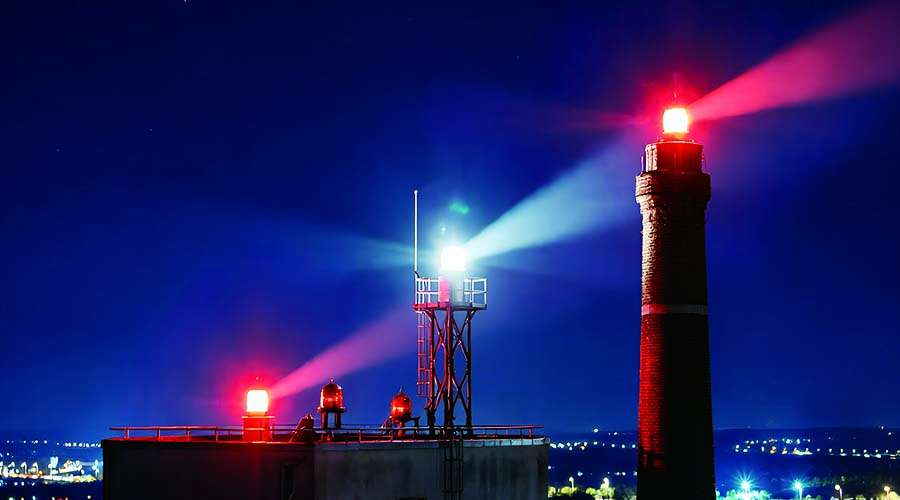
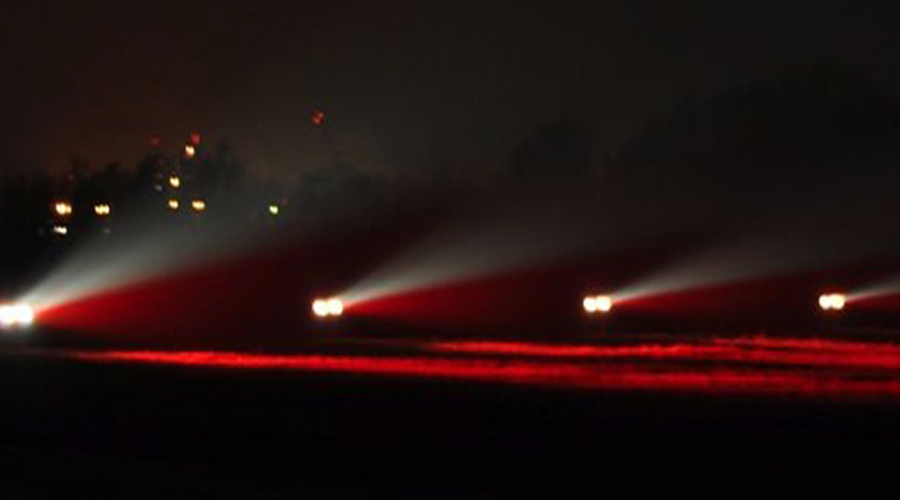
With the rise of skyscrapers and television towers, aircraft warning lights are widely installed on building rooftops, using flashing lights to alert pilots to avoid obstacles. For example, in foggy or nighttime conditions, these lights effectively identify building outlines, preventing collisions.
- Power & Energy Facilities
In wind farms, high-voltage power towers, and substations, dual-headed warning lights are used to mark tall structures, ensuring the safety of low-flying aircraft. Their durability can withstand extreme outdoor weather conditions such as strong winds and thunderstorms.
- Communication & Broadcasting Towers
Communication base stations and broadcasting towers are often located in remote or high-altitude areas. Dual-headed aviation lights provide 360-degree coverage, ensuring the safety of maintenance personnel and aircraft. The multi-head design also allows for alternating flashing, enhancing the warning effect.
- Transportation & Bridge Engineering
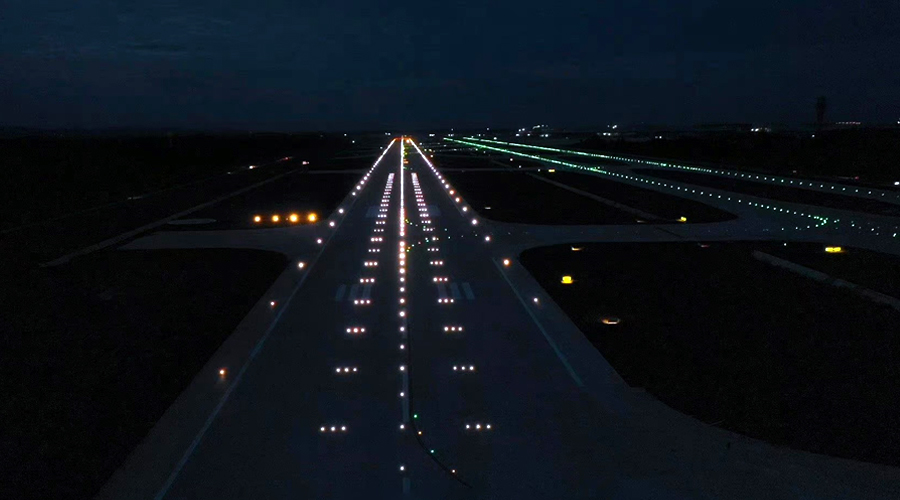
Large bridges and airport perimeter facilities often install dual-headed aviation lights to warn low-flying helicopters or small aircraft. The waterproof and corrosion-resistant properties of the lights make them suitable for coastal or humid environments.
5. Industrial & Chemical Industries:
High towers and chimneys in chemical plants and oil refineries require stringent safety protection. Dual-headed aviation warning lights can flash red or white light to alert pilots to dangerous areas.
Aviation obstruction warning lights are the “guardians” of high-altitude safety, with applications spanning multiple critical sectors from construction to energy. Among numerous products, the YFFY-DL10D dual-head obstruction lights stands out for its superior performance. Made of high-strength materials, it boasts IP-rated protection, is suitable for various high-altitude scenarios, and ensures long-term stable operation.
If you are planning a high-altitude safety solution, consider learning more about these aviation lights to add an extra layer of security to your project.