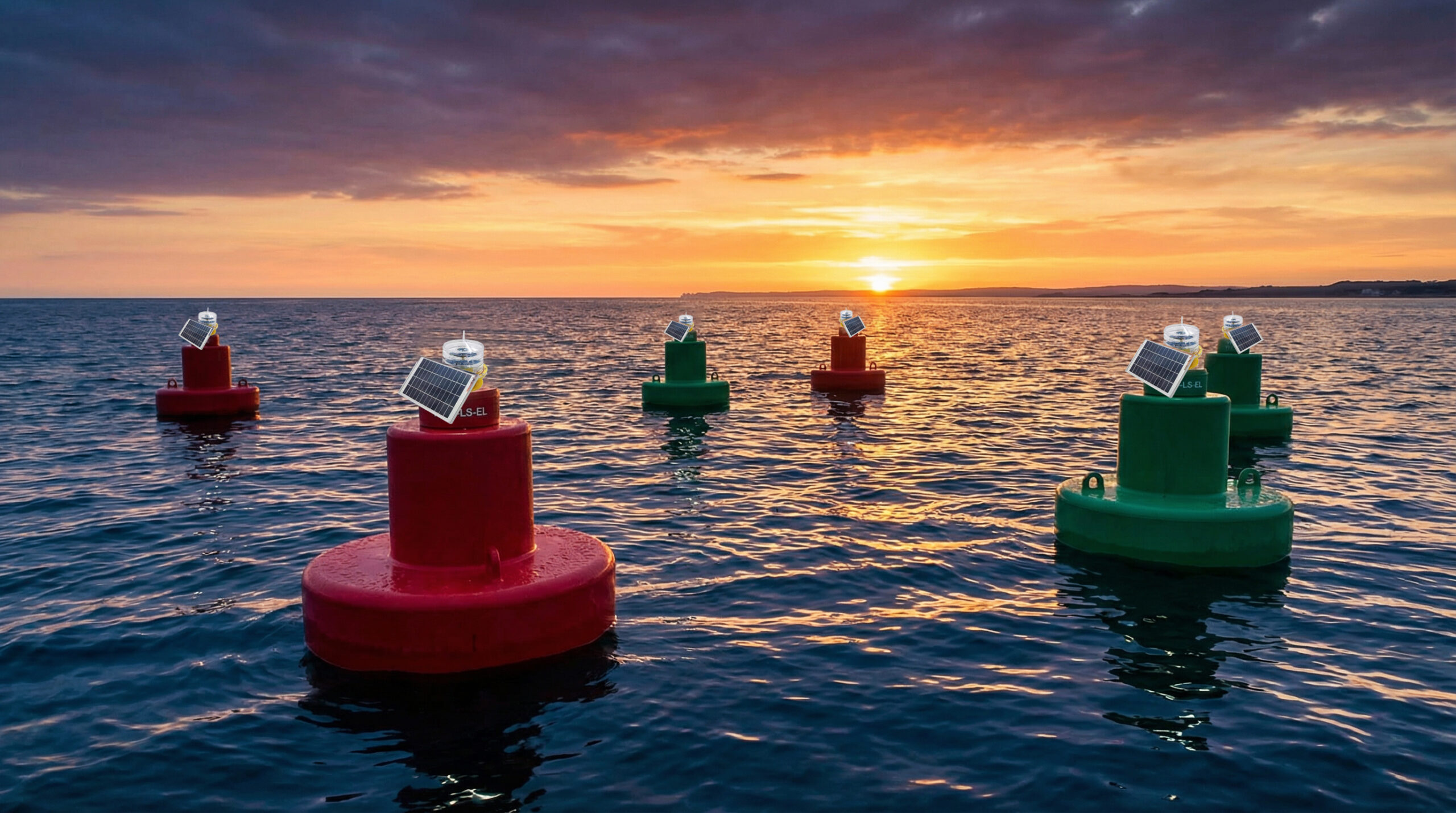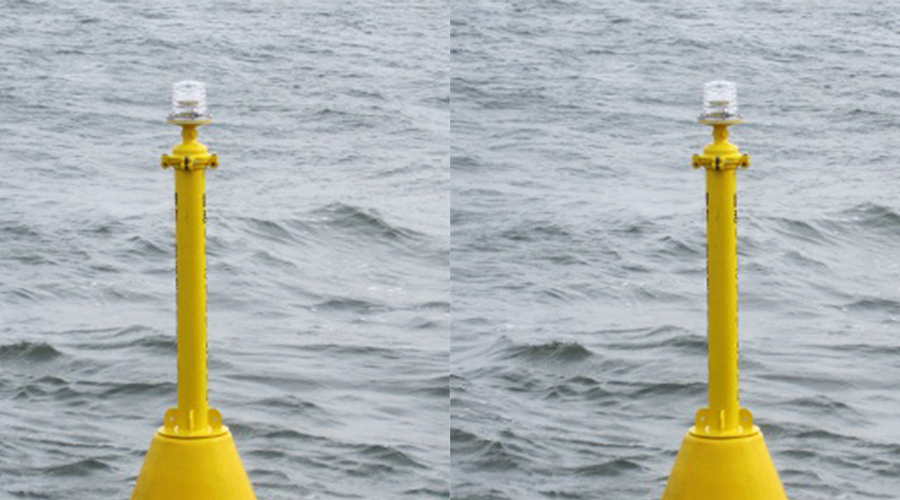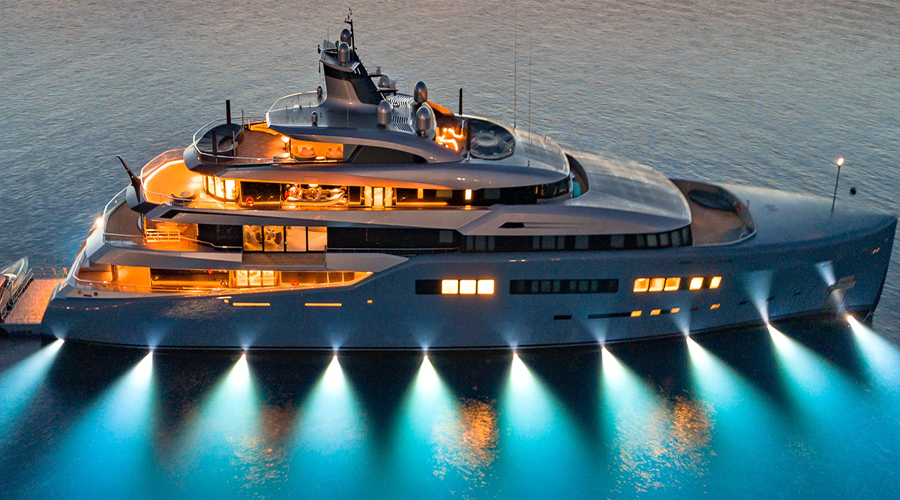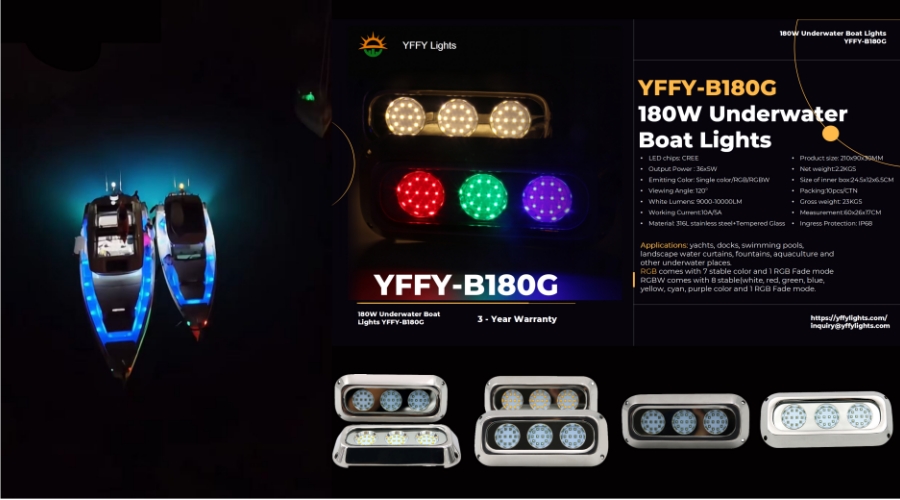
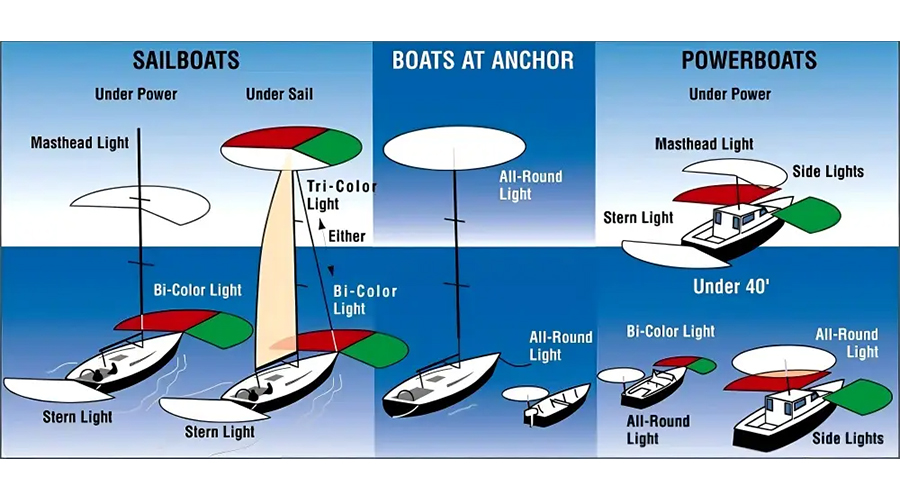
Ship navigation lights are essential marine warning lights for nighttime navigation safety. According to International Maritime Organization (IMO) regulations, they use lights of varying colors and positions to indicate a vessel’s type, navigation status, and direction to other vessels. Solar navigation lights help avoid collisions and ensure maritime traffic safety.
The installation and use of navigation lights must strictly comply with relevant regulations to ensure the accuracy and reliability of light signals.
Different types of vessels (such as motor vessels, tugboats, and fishing vessels) have specific requirements for navigation warning lights, such as masthead lights, sidelights, sternlights, and towing lights. The visibility ranges of these marine lights are also clearly defined.
Visibility Standards For Ship Navigation Lights
The visibility range of solar marine navigation lights is directly related to the size and type of vessel. Larger vessels typically require their lights to be visible at greater distances due to their size and operational requirements.
The following outlines standard visibility ranges based on light type and vessel size:
1) Motor vessels over 50 meters
- Masthead lights: Must be visible at least 6 nautical miles away. Sidelights (red and green): Must be visible at least 3 nautical miles away.
- Sternlight: Must be visible at 3 nautical miles away.
- Towing light: Must be visible at 3 nautical miles away.
2) Power-driven vessels between 12 and 50 meters in length
- Mastlight: Must be visible at least 5 nautical miles away.
- Sidelight: Must be visible at 2 nautical miles away.
- Sternlight: Must be visible at 2 nautical miles away.
3) Power-driven vessels under 12 meters in length
- Mastlight: Must be visible at least 2 nautical miles away.
- Sidelight: Must be visible at 1 nautical mile away.
- Sternlight: Must be visible at least 2 nautical miles away.
4) Sailboats & vessels under 20 meters in length
Sidelights, sternlights, and all-round white lights: Must be visible at least 2 nautical miles away.
5) Anchored vessels
Anchor light: Must be visible at least 3 nautical miles away.
For vessels less than 50 meters in length, anchor lights are omnidirectional white; vessels over 50 meters in length may require additional anchor lights.
Arc of Visibility
The arc of visibility refers to the specific horizontal angle over which a solar-powered marine navigation light or LED navigation light must be visible. This ensures that other vessels can determine its direction and movement regardless of the angle at which it approaches.
The arcs of visibility for different navigation lights are defined as follows:
Masthead Light: The masthead light must be visible over a 225-degree arc, from directly in front of the vessel to 22.5 degrees aft on either beam. This ensures that the masthead light is clearly visible to vessels approaching from the bow or sides.
Sidelights (Red and Green): The sidelights have a visibility range of 112.5 degrees, from directly in front to 22.5 degrees aft on either beam. This setting allows for differentiation between vessels approaching from port or starboard.
Sternlight: This marine taillight must be visible over a 135-degree arc and shines aft (towards the rear). This ensures visibility to vessels approaching from behind.
All-around lights (such as anchor lights): These marine lanterns must cover a full 360-degree arc, ensuring visibility from all directions. All-around white lights are typically used on anchored vessels or small vessels without separate masthead and stern lights.
If you have any questions or needs regarding ship navigation lights and solar-powered marine lights, please feel free to contact us.