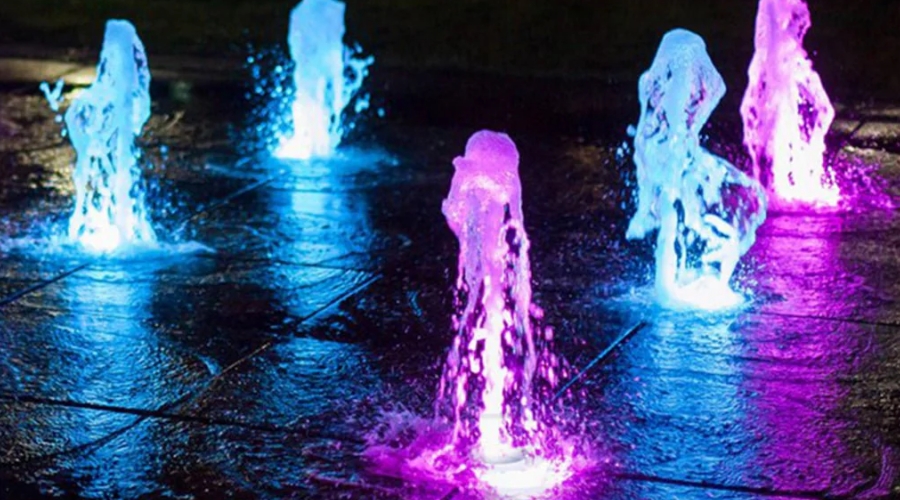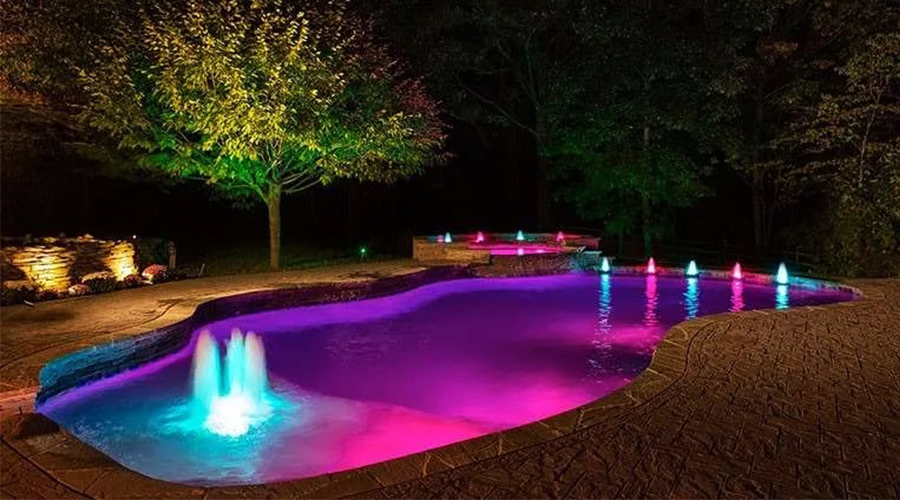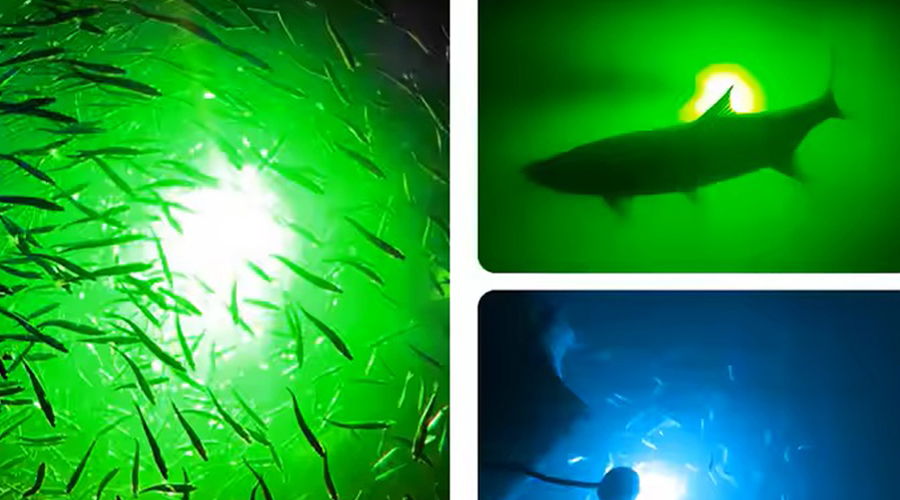

Fountain lamp are often used for landscape lighting or water features. Underwater lighting or pool lighting often operates in humid environments with large temperature fluctuations, making heat dissipation a critical issue.
Poor heat dissipation can lead to accelerated light decay, shortened lifespan, and even failure of the fountain LED.
Therefore, in addition to quality issues, heat dissipation of the LED beads in underwater fountain lights is also crucial.
The following are professional solutions and targeted product recommendations for improving the heat dissipation efficiency of LED beads in underwater fountain lamps:
1. Basic Structure Upgrade
High Thermal Conductivity Base Material: Utilizing an aircraft-grade aluminum alloy housing and copper-core PCB (thermal conductivity ≥ 200 W/m·K), this design reduces junction temperature by over 15°C compared to conventional plastic housings.
Three-Dimensional Heatsink Fins: This uniquely shaped fin structure, designed through finite element simulation, increases surface area while directing water flow to create a natural cooling channel.
Key Implementation Tip: Ensure high-conductivity silicone grease (recommended > 3.0 W/m·K) is applied between the fountain light body and the mounting surface.
2. Fluid Mechanics Optimization
Forced Water Cooling System: A spiral flow channel is designed inside the lamp body, utilizing the flow of fountain water to achieve a water exchange rate of approximately 6 times per minute.
Flow Direction Control: The water inlet angle is optimized through CFD simulation (a 45° angle is recommended) to avoid the formation of eddy current dead zones.
3. Electrical Performance Control
Intelligent Pulse Width Modulation (PWM): A constant current driver equipped with a temperature feedback system automatically reduces power when the junction temperature exceeds a threshold.
Distributed Power Supply: Multiple LEDs are connected in parallel, with the maximum operating current of each LED controlled to 70% of the rated value.
4. Enhanced Protection Technology
Nano-coating: An 8μm-thick hydrophobic nano-coating (contact angle >150°) is applied to the circuit board surface to prevent condensation without compromising heat dissipation.
Double-sealed structure: O-ring + epoxy resin potting, achieving an IP68 protection rating.
Recommended Product – YFFY-PT054G LED Fountain Lamp
- Case Material: 6063-T5 Hard Anodized Aluminum Alloy
- Heat Dissipation Structure: Honeycomb Matrix Heat Dissipation Holes + Wave-Shaped Side Wings
- Waterproof Design: IP68 Deep Waterproofing + Pressure-Compensated Exhaust Valve
- Light Source: 18W High-Brightness LED Integrated Module with this underwater led lights
- Operating Temperature Range: -20°C to +50°C
- Special Processing: Vacuum Coated Heat Dissipation Layer + Graphene Thermal Adhesive
- Measured Data Comparison: Under continuous full-load operation, the internal temperature of this underwater fountain lamp is approximately 22°C lower than that of traditional products, and the light flux maintenance rate remains above 92% after 5,000 hours.
Installation Recommendations:
Preferably use stainless steel embedded hardware to prevent heat transfer from concrete vibration;
The spacing between each fountain light group should be at least 1.5 times the spray height to ensure air circulation;
Regularly clean the nozzle filter to prevent clogging that affects water cooling.