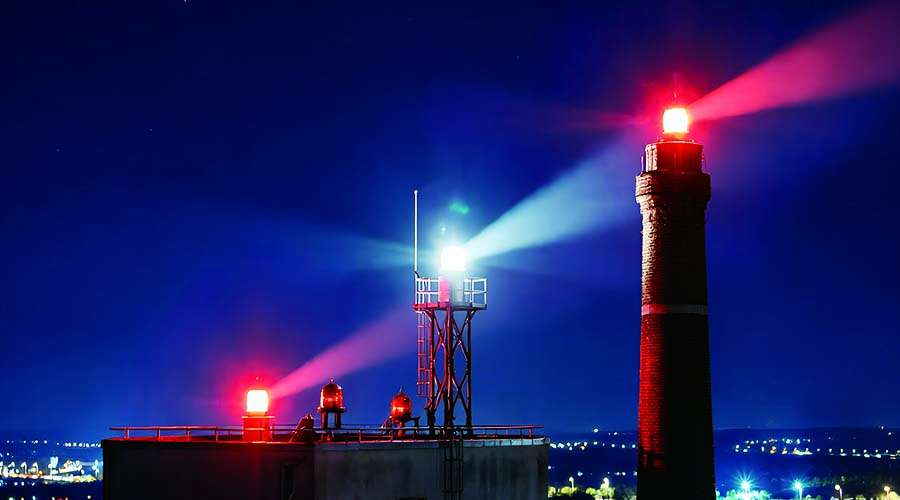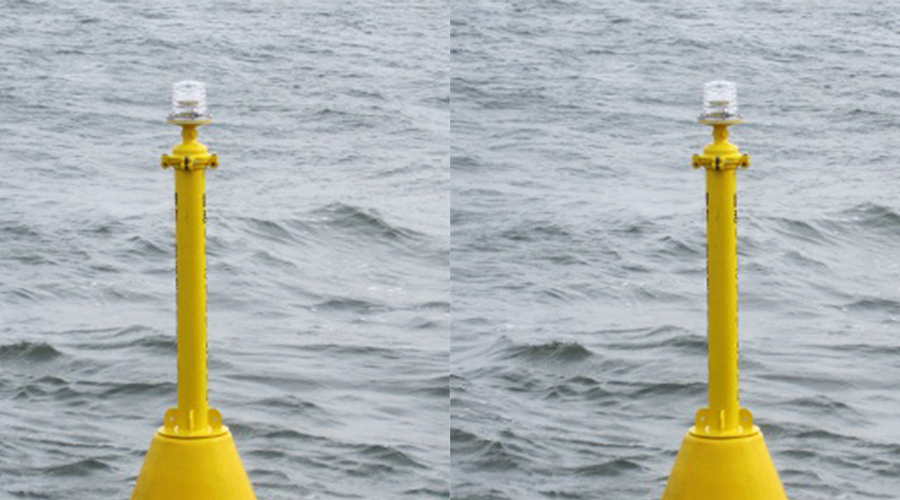
Solar aviation obstruction lights are navigation aids mandated by the International Civil Aviation Organization (ICAO). Aviation obstruction lights are navigational aids designed to provide visual warnings to aircraft near tall buildings, communication towers, and wind turbine towers.
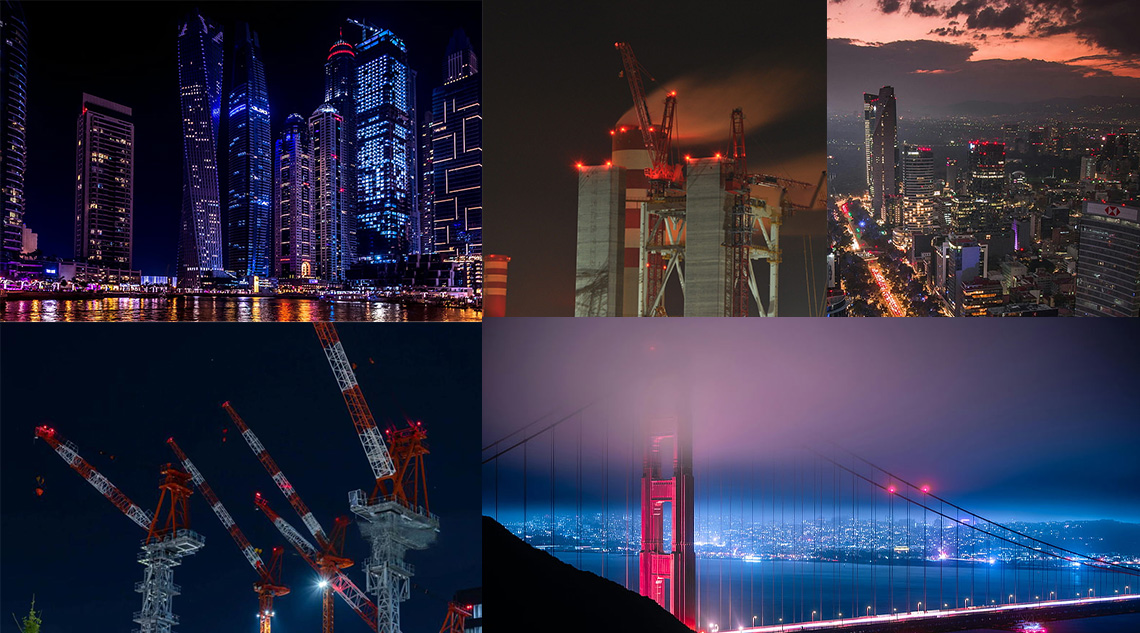
High-rise buildings are springing up like mushrooms on modern city skylines. These are not only the product of human ingenuity and architectural technology, but also pose new challenges to air traffic safety. Especially for super-tall buildings powered by solar power systems and equipped with tower & cranes, aviation obstruction lights installed on top of them have become crucial for aircraft safety.
This article will provide an in-depth understanding of this critical equipment: aviation obstruction lights on the rooftops of solar tower cranes.
With the acceleration of urbanization, the number of skyscrapers continues to increase, and these towering structures have significantly altered the existing landscape of the sky. For low-flying aircraft and helicopters, accurately identifying and avoiding these potential obstacles has become particularly important. Precisely in response to this need, the International Civil Aviation Organization has established standards requiring all buildings above a certain height to be equipped with aviation obstruction lights to ensure flight safety at night or in low visibility conditions. One innovative solution that has emerged in recent years is new types of aviation obstruction lights powered by solar energy.
These Led lights are typically installed in highly visible locations atop buildings, such as on crane platforms supported by pylons. This location is chosen for its wide visibility, making it easily visible to pilots, and also because of the abundant sunlight, which facilitates efficient operation of the solar panels. Compared to traditional mains electricity, solar-powered systems are not only more environmentally friendly and energy-efficient but also offer stable operation in remote areas or those without grid coverage, greatly improving system reliability and adaptability.
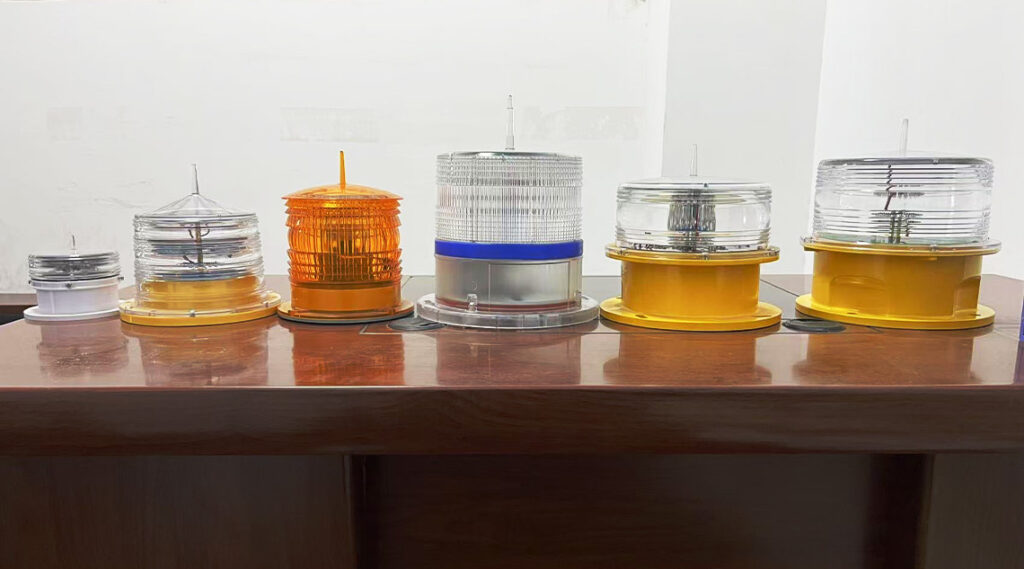
From a technical perspective, a complete solar aviation obstruction light system primarily consists of the following components:
- First, the top-mounted light unit emits a specific color (usually red) and automatically adjusts its brightness based on ambient light.
- Second, the solar cell modules connected below collect solar radiation and convert it into electrical energy for storage at night.
- Finally, the control circuit module, the “brain” of the entire system, implements various functions such as timer switching and fault detection.
- Finally, the support structure ensures that all components are securely fastened together while also being able to withstand the effects of inclement weather.
In actual applications, designers will also consider a variety of factors to optimize the design. For example, adjustments are made to account for variations in sunlight intensity at different latitudes, ensuring sufficient flight time even during the short winter daylight hours. Highly waterproof and dustproof casing materials extend service life.
Redundant backup mechanisms are implemented to switch to backup mode and continue normal operation quickly should the main power supply fail. All of these details demonstrate the engineers’ unwavering commitment to safety and reliability.
Beyond basic functionality, modern aviation obstruction lights also offer aesthetic appeal. Many designers are incorporating artistic elements into their designs, transforming these once-drab safety devices into unique additions to urban landscapes. Some even incorporate dynamic LED effects to showcase local cultural characteristics, creating a design that is both practical and creative.
It is worth noting that with the development of the Internet of Things (IoT), intelligent aviation obstruction lights are gradually gaining popularity. These products not only enable remote status monitoring but also transmit data in real time to a management center for analysis and processing, enabling more refined management and maintenance. In the future, we may see the emergence of more advanced versions integrated with artificial intelligence algorithms, capable of autonomously learning and optimizing operating parameters to improve efficiency and service quality further.
As an integral part of modern urban development, solar aviation obstruction lights on towers, cranes, and high-rise building rooftops carry a vital mission. More than just simple warning signs, they epitomize technological progress and social development. As related technologies continue to advance and improve, we believe more and more advanced solutions will emerge to safeguard our blue skies.