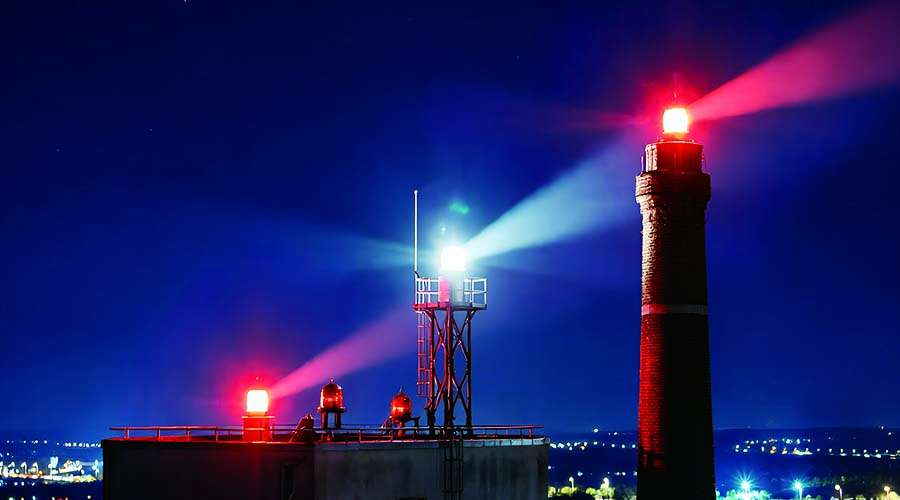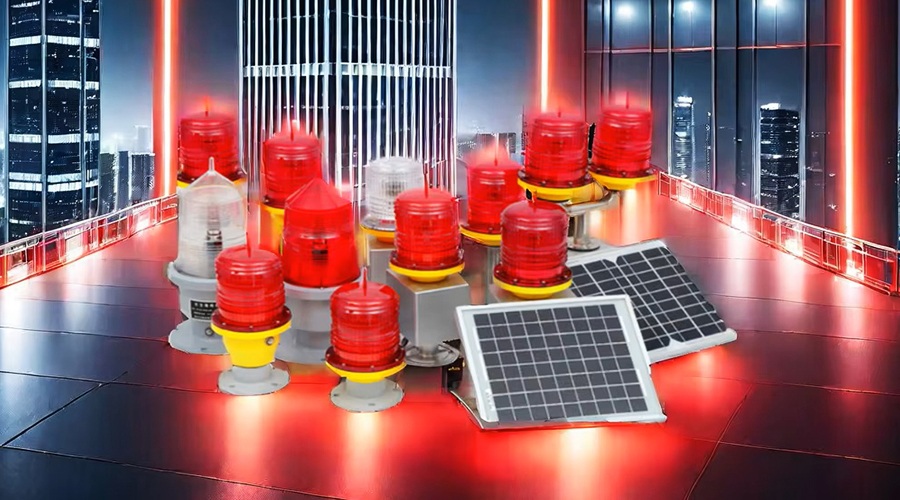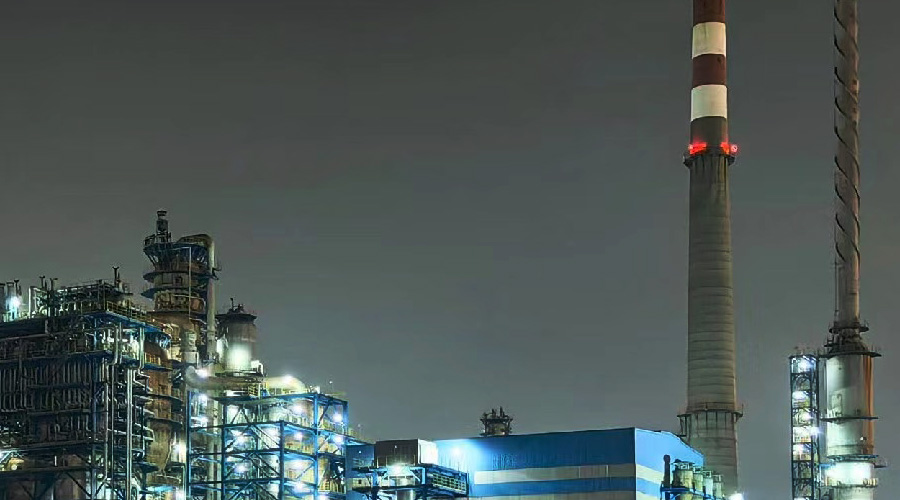
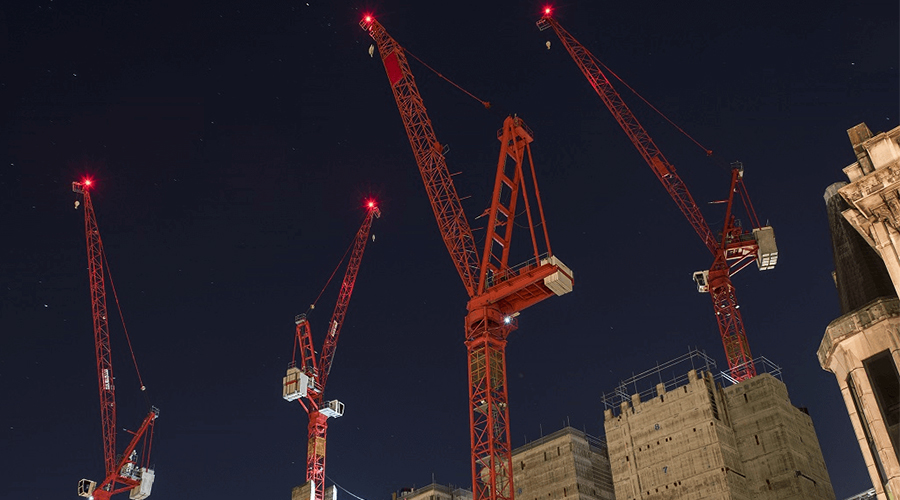
High-intensity obstacle lights are mainly used to mark obstacles higher than 150 meters, such as high-rise buildings, towers and chimneys, to warn aircraft. Type A high-intensity aviation obstruction lights emit white flashes, and their light intensity changes all day long according to the ambient brightness.
Aviation obstacle lights usually use LED light sources, which have low power consumption but can meet the needs of synchronous flashing. It is suitable for coastal areas and complies with relevant international standards.
Installation Standards For High-intensity Obstacle Lights
1. Main standards & regulations to follow
International Civil Aviation Organization (ICAO): has established global standards for the installation of aviation obstruction lights. For example, ISO 7010 and ICAO Annex 14 have clear provisions on the color, flashing frequency, brightness, etc. of obstruction lights.
China National Standard (GB/T 25741): Specific requirements for the design, installation, maintenance and other aspects of obstruction lights.
2. Installation height & position
High-intensity obstruction lights are usually installed on the top of obstacles to ensure that the lights can be recognized by flying aircraft within a certain distance.
The specific height depends on the height of the obstacle and the airspace requirements of the area where it is located. Obstacle lights are usually required to be installed for obstacles above 150 meters.
3. Lighting layout
Obstacle warning lights should be evenly distributed on the edge of the obstacle to ensure that the lights can be seen from all angles.
Depending on the shape and height of the obstacle, multiple aviation obstruction lights may need to be installed to ensure all-round visibility.
4. Light type & brightness
High-intensity obstacle lights must meet certain brightness standards (such as brightness level, flashing frequency) and have good visibility both during the day and at night.
Weather-resistant and corrosion-resistant materials must be used to ensure long-term stable operation.
5. Power supply & control
A stable power supply must be configured, and a backup power supply (such as UPS) must be available to ensure that it still works during a power outage.
It must have automatic flashing and synchronization control functions and meet the flashing frequency and synchronization standards.
6. Maintenance & testing
Regularly check the installation status, light brightness and power supply system of high-intensity obstacle lights.
Maintain and replace in accordance with standard regulations to ensure that the lights remain effective.
Regarding aviation lights, high-altitude obstacle lights, aviation obstacle warning lights, etc., if you have specific application scenarios, I can help you provide more detailed products and services. Please feel free to contact us.