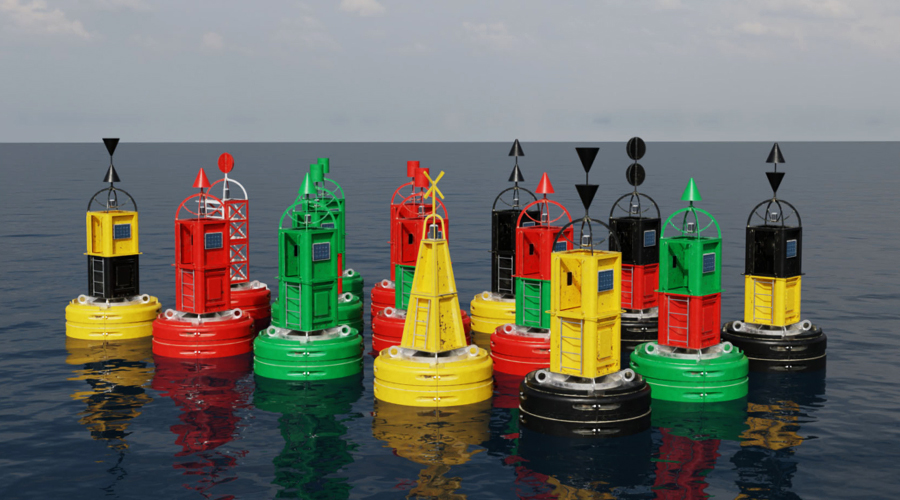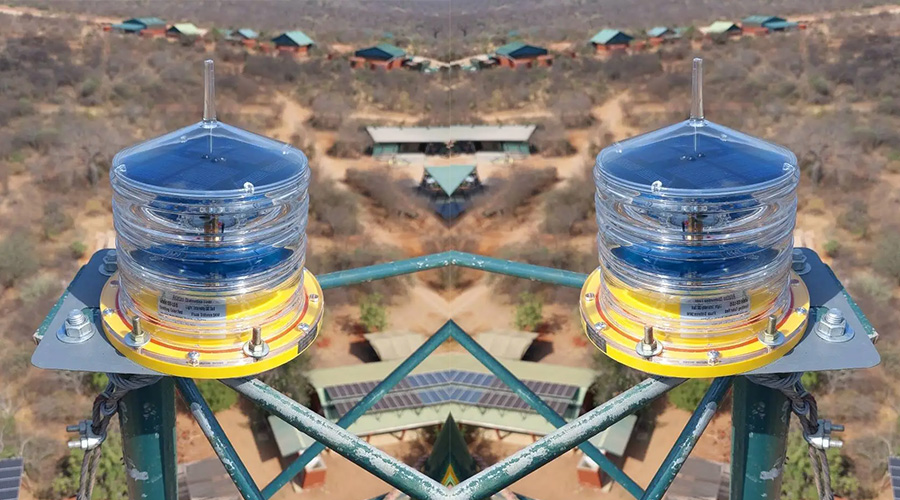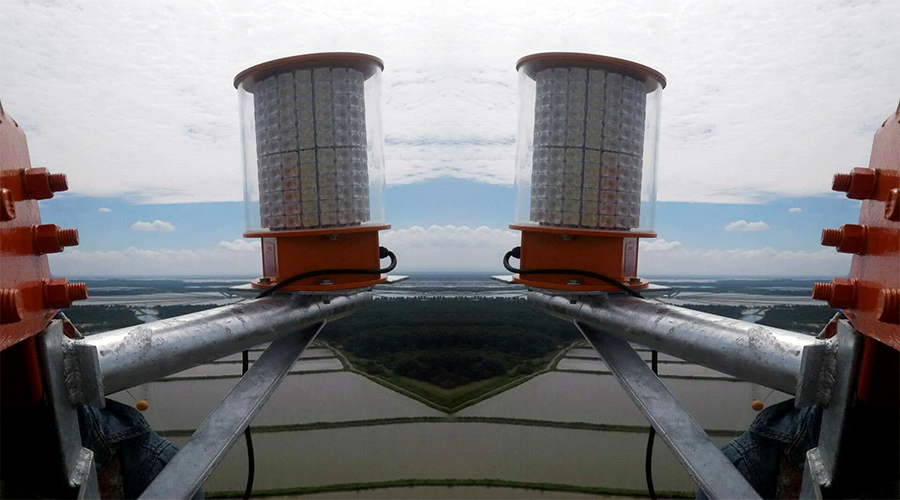
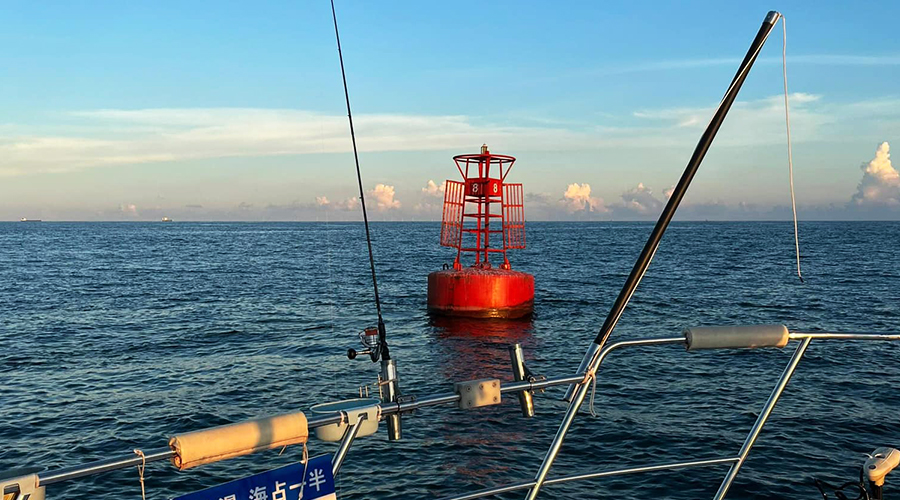

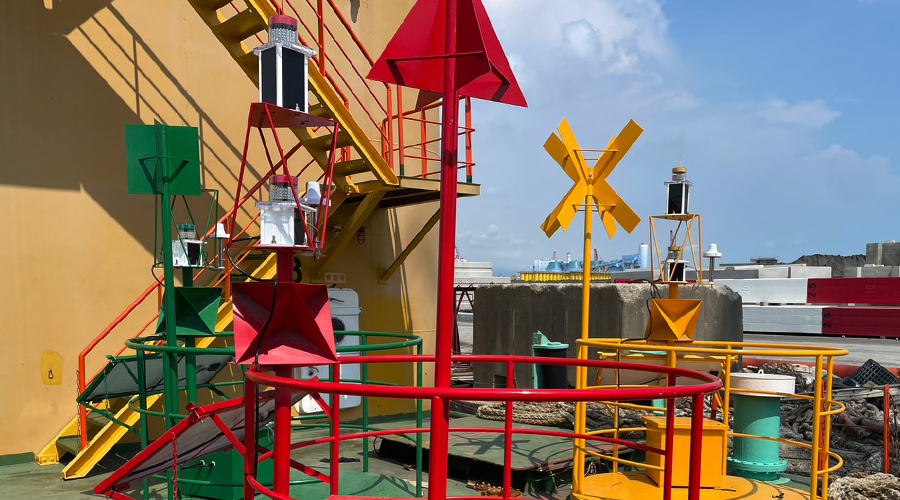
Solar navigation lights are marine warning lighting devices powered by solar energy, primarily used for ship navigation, buoys, navigation aids, port and waterway markings, and obstacle warnings.
These solar-powered warning lights are powered by rechargeable nickel-metal hydride batteries or lithium batteries, equipped with automatic light control, and use low-power LED chips as the light source, offering a 360° horizontal and over 7° vertical beam angle.
Some models integrate GPS synchronization and 256 adjustable light quality functions. Applications cover inland waterways, coastal ports, buoys, navigation aids, and bridges.
How Solar Navigation Lights Revolutionize Maritime Navigation & Environmental Protection?
High-efficiency energy utilization:
- Solar marine navigation lights utilize high-efficiency monocrystalline silicon solar panels and high-performance lithium battery energy storage systems to achieve energy self-sufficiency.
- Even during continuous cloudy or rainy days, the intelligent power management system can ensure stable operation for 7-15 days, completely solving the industry pain points of difficult wiring and high maintenance costs associated with traditional navigation lights.
- This independent power supply characteristic is particularly suitable for remote islands, inland waterways, and sea areas far from the power grid.
Intelligent Light Control Technology:
- Solar lights equipped with a photosensitive intelligent control system, these navigation lights automatically turn on at dusk and off at dawn.
- The high-intensity LED light source, professionally designed for light distribution, provides a 6-nautical-mile visibility range compliant with the International Association of Marine Aids to Navigation (IALA) standard, ensuring reliable navigation guidance under various weather conditions.
- Compared to traditional light sources, LED chips have a lifespan of up to 100,000 hours, significantly reducing replacement frequency and maintenance costs.
Resistant to Extreme Marine Environments:
- For example, the YFFY-LS-S solar navigation lights, in addition to meeting 4-6 nm visibility requirements, IALA 350 flashing modes, and GPS synchronization, features a 316 stainless steel body and aerospace-grade aluminum components. Its fully sealed structure achieves an IP68 protection rating, resisting salt spray corrosion, wave impact, and UV aging.
- It has undergone rigorous testing and can operate stably in temperatures ranging from -30℃ to +70℃, adapting to various climatic conditions from tropical seas to frigid polar regions.
Dual Environmental Advantages:
- Solar marine lights operate with zero carbon emissions, producing no light pollution and protecting the circadian rhythms of marine life.
- The installation process eliminates the need for underwater cable wiring, avoiding damage to the seabed ecosystem. This green navigation solution is becoming an important component of the global maritime sector’s efforts to achieve carbon neutrality.
Significant Economic Benefits:
- While the initial investment may be slightly higher than traditional navigation warning lights, solar warning lights can recoup the investment difference within 3-5 years through savings in electricity and maintenance costs.
- Clear indicator lights and diagnostic functions make troubleshooting intuitive and simple, significantly reducing reliance on professional maintenance personnel.
- With no grid connection fees, monthly electricity bills, or frequent bulb replacements, the total cost of ownership is reduced by over 60%, bringing significant long-term economic benefits to port management and maritime agencies.
Applications of Solar-Powered Marine Navigation Lights
- Ports & Waterways: Identifying safe channels, hazardous areas, and port entrances
- Bridges & Structures: Marking obstacles such as bridge piers and offshore wind turbine foundations
- Aquaculture Areas: Defining aquaculture areas and ensuring operational safety
- Recreational Marinas: Providing navigation guidance for yachts and small vessels
- Emergency Deployment: Rapidly responding to temporary waterway changes or emergencies
With the global emphasis on a sustainable marine economy, solar navigation lights are transitioning from an alternative option to standard equipment. These not only provide reliable and economical navigation solutions, but also represent a significant step in the maritime industry’s transition to green operations.
For any organization requiring marine lanterns, such as buoys, vessels, navigation aids, and ports, solar-powered navigational warning lights are an excellent choice in terms of economy, environmental friendliness, and practicality.