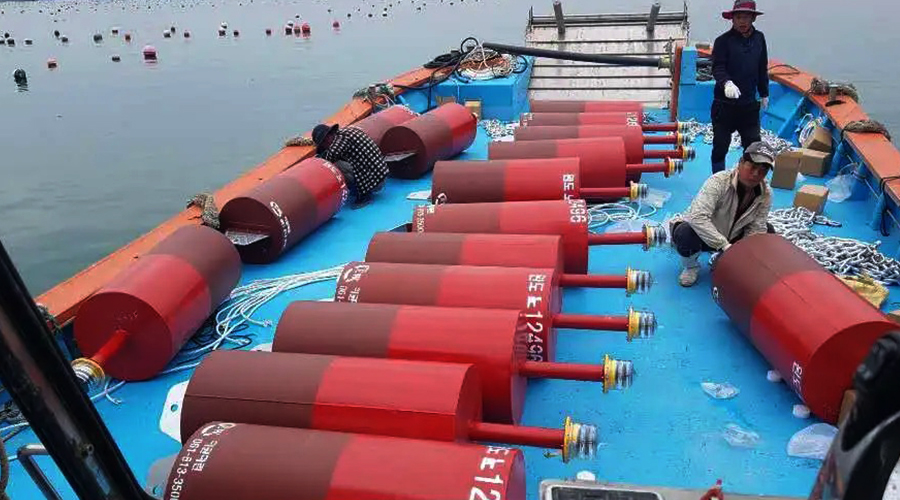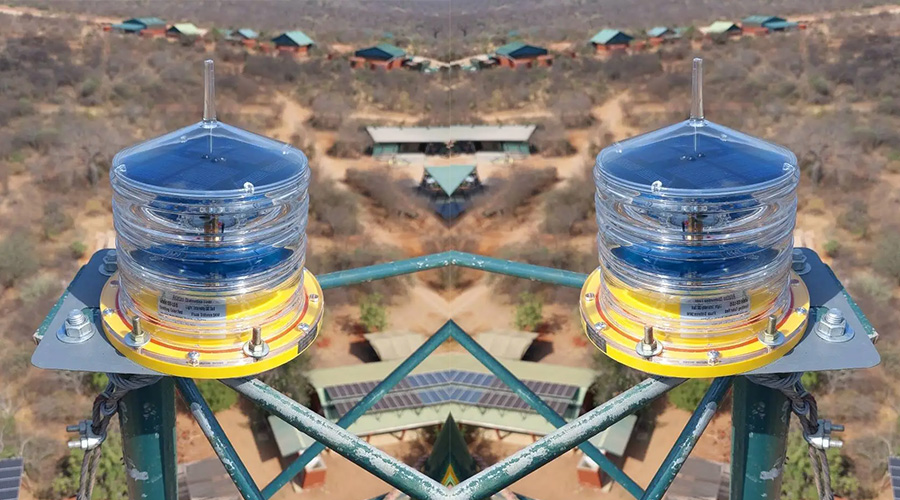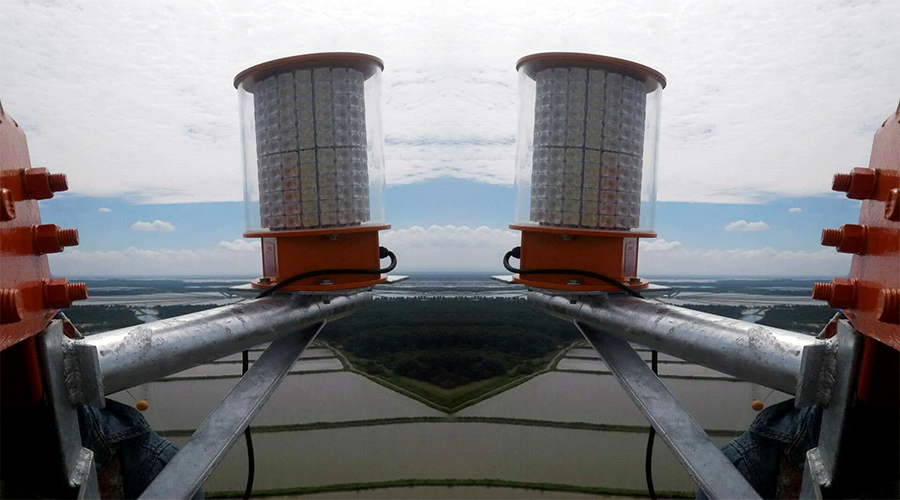
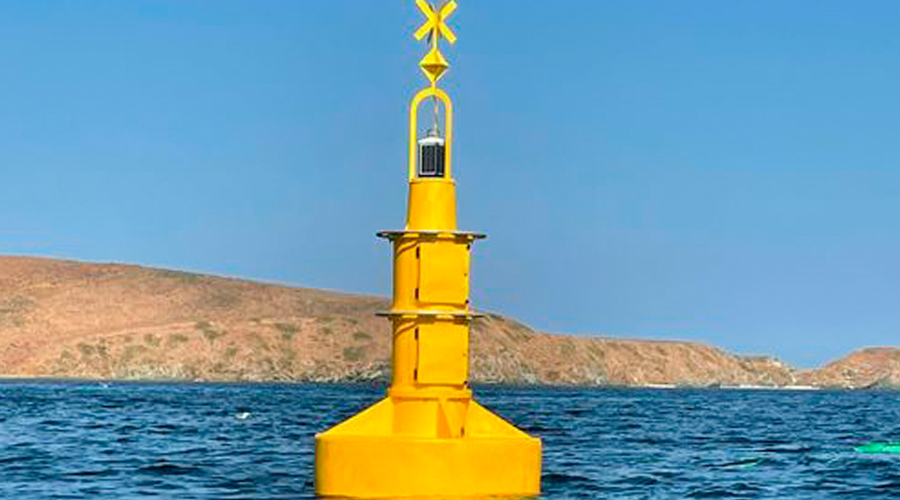

Solar warning lights utilize solar energy as their power source, making them independent and sustainable. In remote or power-starved areas, solar lights can operate continuously without the need for an external power source, reducing maintenance costs. They also minimize environmental impact because they don’t rely on fossil fuels.
Solar LED warning lights provide warning signals at sea, helping ships navigate safely. They are durable and adaptable to harsh marine environments.
Why Need: Solar Warning Lights For Navigational Aids
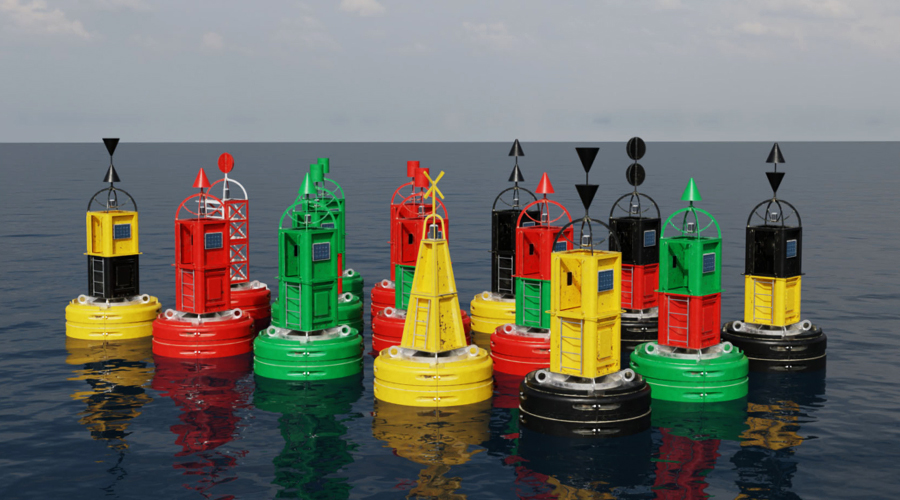
The following are the main reasons of solar warning lights for navigational aids (such as beacons and buoys) are equipped with solar marine warning lights:
✅ All-weather visibility ensures navigation safety | 🌊 Adaptability to harsh marine environments | ⛽ Independent operation without an external power source | 🌿 Green and zero-emission | 💰 Reduced long-term operation and maintenance costs
1. Enhance visual identification & prevent collisions
Daytime/all-weather operation: Vessels rely on lights to identify their position at night. Solar marine navigation lights use high-frequency flashing (especially a combination of red/green steady light and flashing light) to significantly improve navigational aids’ visibility in low-visibility conditions such as darkness, fog, and heavy rain.
Clearly indicate dangerous areas: Mark potentially hazardous areas such as reefs, shoals, construction areas, and pipeline terminals, warning ships to maintain a safe distance or bypass them.
Distinguish between different waterways: Using lens colors (red on the port side, green on the starboard side) guides ships along the correct course to avoid misdirection.
Typical scenario: At night, a cargo ship can use the flashing light of a solar-powered buoy mounted on a navigation beacon to adjust its course in real time and avoid underwater rock formations.
2. Overcoming Unique Ocean Challenges
| Challenge | Traditional Power Supply | Advantages of Solar Solution |
| High humidity & salt spray corrosion | Cables prone to rust and short-circuit | Sealed battery compartment + anti-corrosion coating |
| Wave impact & violent shaking | Fragile wiring susceptible to breakage | All-in-one integrated structure (no exposed wires) |
| Remote unmanned locations | Difficult access for grid power/fuel delivery | Off-grid autonomy with self-generated storage |
| Extreme weather (typhoons) | High risk of generator damage | Modular design resistant to winds over Level 12 |
| Bird/marine organism fouling | — | Smooth surface treatment reduces biofouling |
3. Examples of Typical Application Scenarios
| Scenario Type | Recommended Configuration | Key Function |
| Nearshore fixed light beacon | 5W solar panel + LiFePO₄ battery + LED light head; 1-4NM Solar Warning Lights | Prevent fishing vessel groundings; mark aquaculture zone boundaries |
| Channel buoy | 20W monocrystalline silicon panel + supercapacitor + flash controller; 6-8NM Solar Marine Buoy Lights | Maintain stable illumination despite wave fluctuations |
| Bridge pier fender marker | High-power LED array with radar reflector; 10NM Solar Marine Navigation Lights | Prevent collisions with bridge piers |
| Oil platform warning zone | Explosion-proof solar obstruction light + audible alarm module | Alert vessels entering/exiting platforms |
| Military exercise restricted area | Camouflage-shelled covert lighting with IR supplementary light | Nighttime concealment to avoid friendly fire |
4. FAQs
Q: Can it function properly in rainy weather?
→ A: The integrated solar design allows for automatic charging during the day and automatic operation at night. Depending on the model and power rating, it can withstand 6-20 days of rainy weather.
Q: Can the brightness and on/off function be adjusted?
→ A: Customizable GPS synchronization is available, along with remote control for 350 flashing codes and on/off control.
Q: What are the advantages compared to traditional zinc-air batteries?
→ A: The solar solution extends lifespan by over five times, avoids heavy metal contamination, and reduces replacement costs by 80%.
Solar warning lights are used in navigational aids, buoys, ports, docks, oil platforms, and more. By combining renewable energy, industrial-grade protective design, and intelligent control technology, they perfectly address the challenges of traditional aids to navigational in terms of power supply reliability, environmental adaptability, and ease of maintenance.
With the increasing efficiency of photovoltaics and the integration of IoT technologies, LED solar marine lights will become an increasingly indispensable navigational aid for maritime safety.