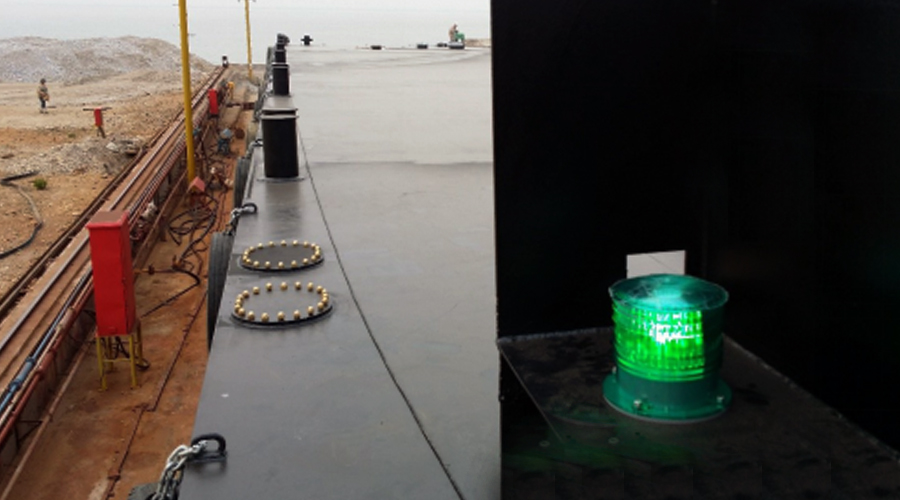

Solar warning lights for ports: At a crucial moment when a large cargo ship slowly enters the port area, the warning lights on both sides of the channel flash steadily, providing clear navigation for this behemoth.
These seemingly ordinary marine warning lights represent the transformation of port lighting systems from traditional grid power to fully solar-powered self-sufficiency.
Traditional Marine Navigation Lights
In modern port operations, lighting systems undertake multiple critical tasks: navigating ships, ensuring operational safety, preventing intrusion, and assisting nighttime operations.
Traditional port lighting relies primarily on grid power, a solution that has revealed numerous problems over long-term operation.
Large port areas are vast, requiring extensive lighting equipment to cover key locations such as the wharf embankment, breakwaters, and channel buoys. This equipment typically operates for extended periods, especially during long winter nights when power consumption increases significantly.
Traditional grid power requires laying underground cable networks, a project particularly challenging in the complex terrain of ports. Factors such as saline soil, seawater erosion, and heavy machinery can all damage cables, leading to frequent maintenance needs.
Power outages or cable failures in grid-powered lighting systems can lead to widespread lighting failures, directly impacting port safety and operational efficiency.
Solar Warning Lights For Ports
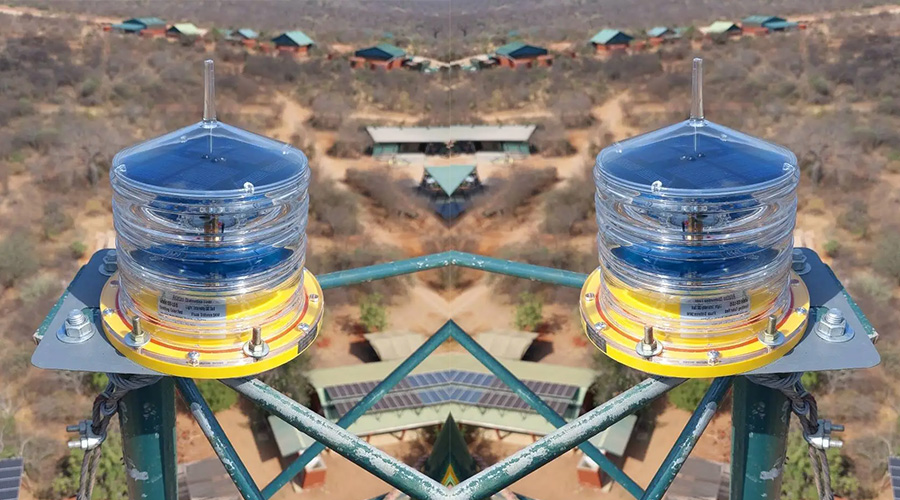
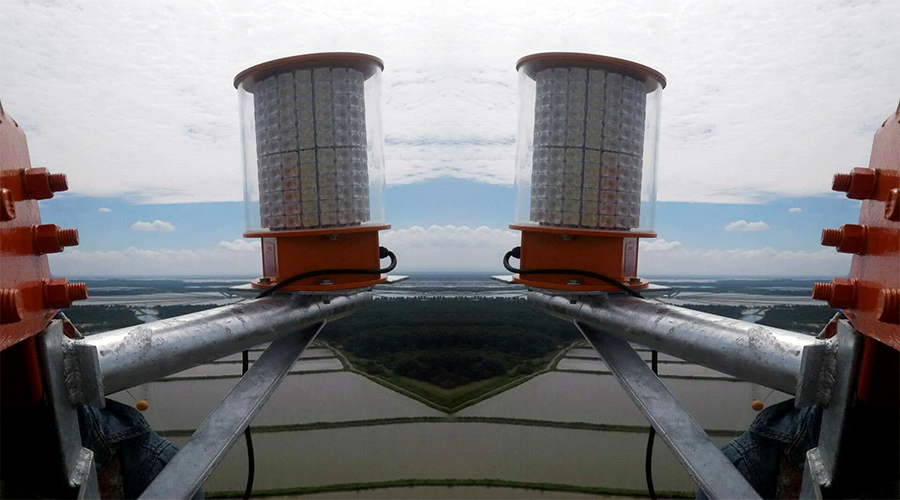
Faced with the limitations of traditional lighting, solar-powered warning lights offer an innovative solution. Taking the YFFY-LS-E Solar Warning Lights for Ports as an example, these lights typically have a strong beam range of over 3km and can maintain reliable operation even in harsh weather conditions.
The core advantage of these solar marine warning lights lies in their energy autonomy. The high-efficiency solar panels on top of the lights autonomously absorb solar energy and store it in integrated high-capacity batteries, enabling completely independent operation without grid connection.
The products feature an IP67-rated waterproof and dustproof design, able to withstand the salt spray corrosion and strong winds common in port environments.
Their intelligent light control system automatically adjusts the operating mode according to ambient light intensity, charging during the day and illuminating at night, and can continue operating for several days even in cloudy or rainy weather.
In terms of installation, solar warning light eliminate the constraints of cable wiring, allowing for rapid deployment anywhere in the port area, especially suitable for navigational markers, bollards, and dock edges far from power sources.
Application Scenarios of Solar Lights
Solar marine navigation warning lights have a wide range of applications in ports, each creating value directly or indirectly.
Channel Marking & Navigation
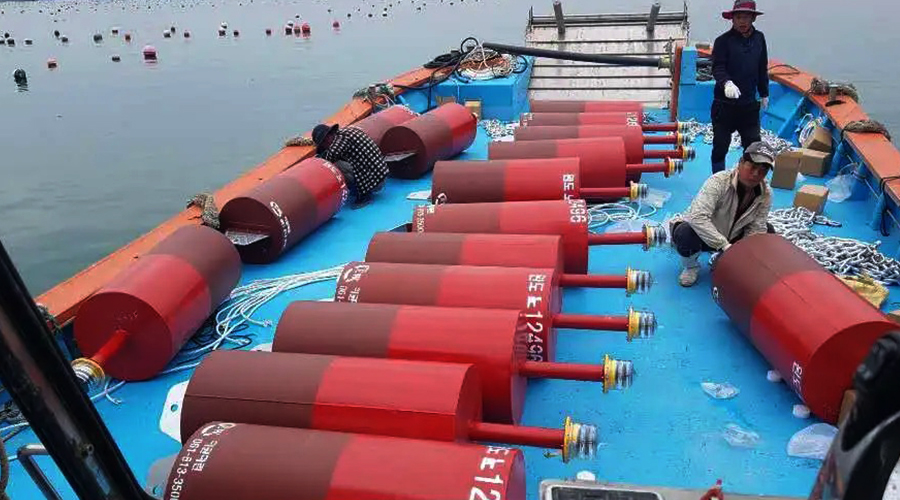
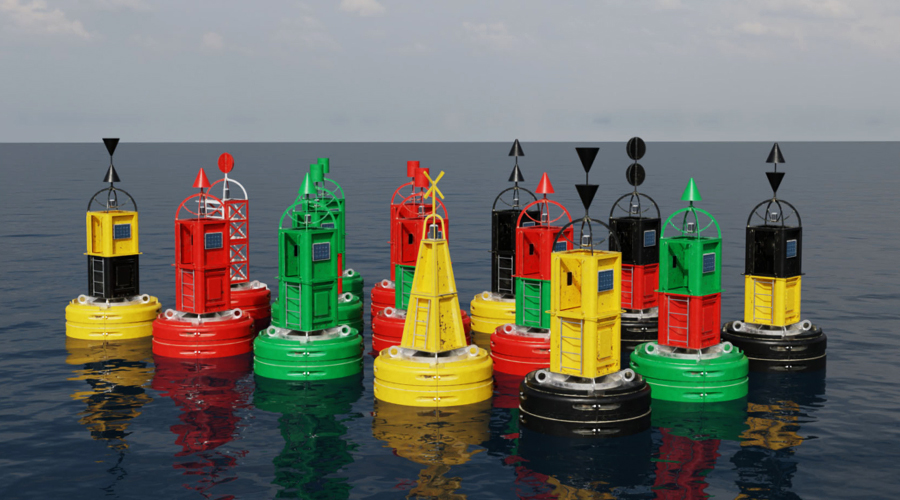
These LED warning lights, installed on buoys, lighthouses, and channel edges, provide clear navigation guidance for vessels entering and leaving the port. Their strong beam range ensures visibility to crew members in all weather conditions, significantly reducing the risk of vessels deviating from their course.
Dock Operation Area Safety
Navigation warning lights can identify the boundaries of work areas, hazardous areas, and temporary passageways, ensuring safety during nighttime loading and unloading operations. Their flexible deployment allows ports to quickly adjust the layout of safety markings according to operational needs.
Temporary Construction & Maintenance Areas
Solar Led warning lights provide an ideal temporary warning solution. They can be put into use immediately without power connection and can be easily moved to the next location needed after construction is completed.
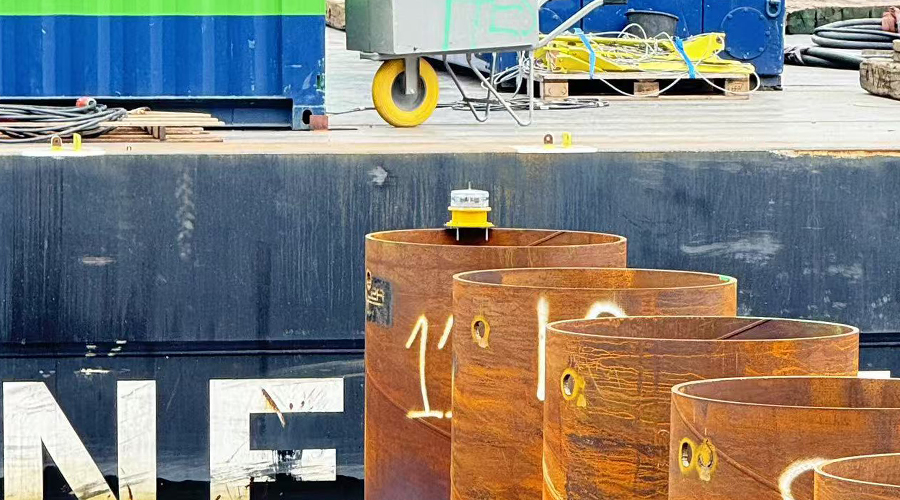
With increasing global emphasis on environmental protection, the port industry is actively promoting green transformation. Using solar warning lights for ports is a wise and economical choice.
These devices operate entirely on renewable energy, producing no carbon emissions and directly supporting the port’s goal of reducing its carbon footprint. Furthermore, they do not rely on fossil fuel power generation, avoiding environmental pollution during the power generation process.
At the end of the product life cycle, the main materials of the solar warning light (such as aluminum alloy shell, solar panel, lithium battery) can be recycled, which is in line with the concept of circular economy.