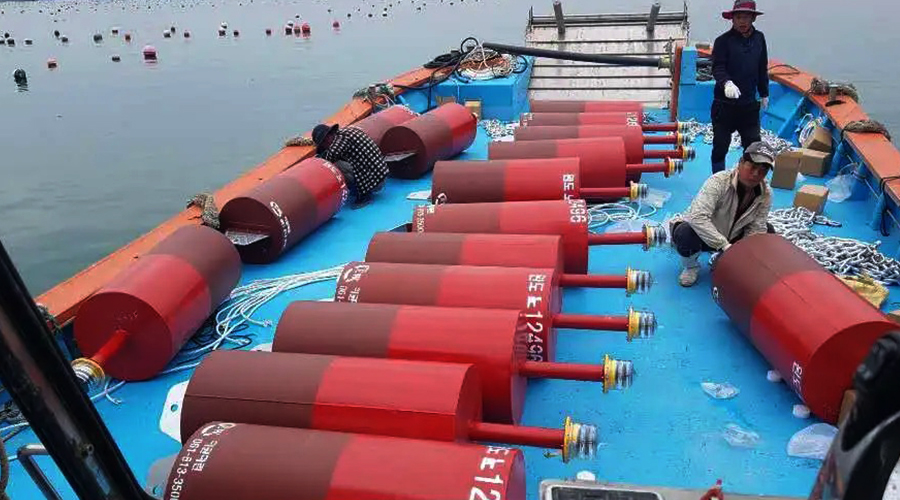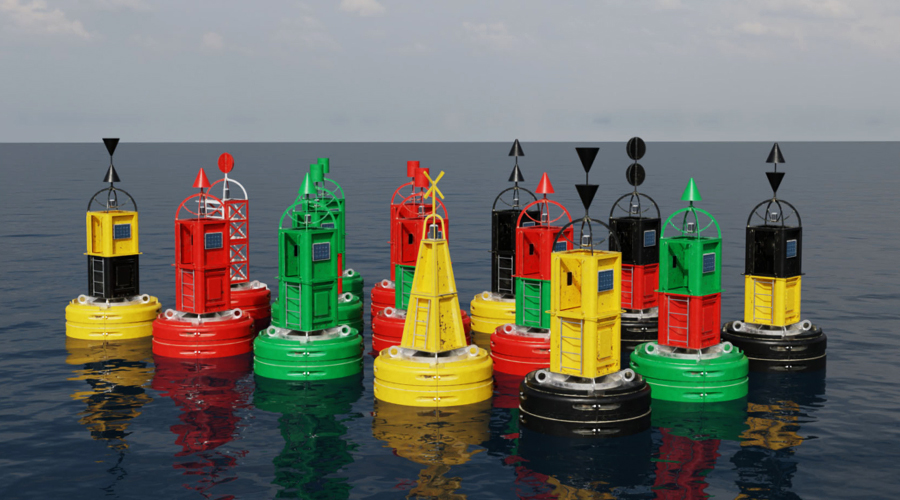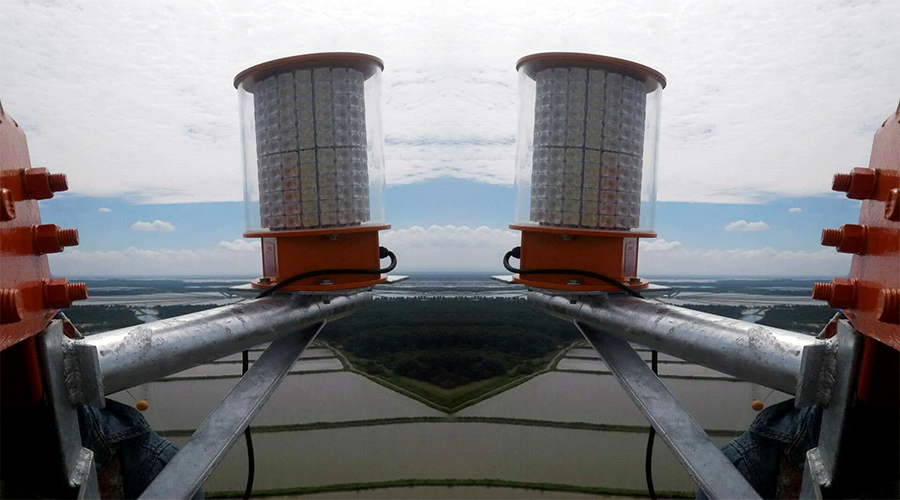
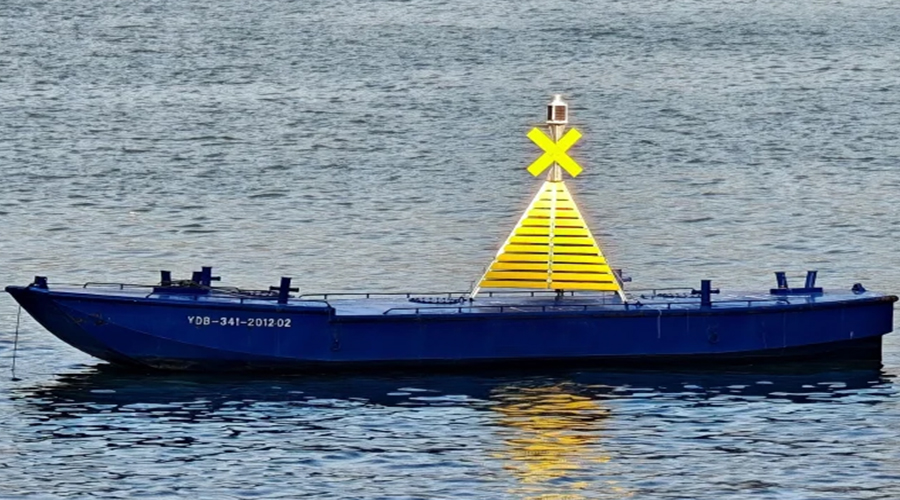

Marine navigation lights, also known as navigation light, are specific light signaling systems installed on ships or fixed or floating structures at sea (such as buoys and navigation aids) according to IALA standards. They are used to indicate their presence, type, movement, relative bearing, and operational status during sunset to sunrise or when visibility is limited.
Their color, arc, location, and visibility distance are subject to extremely strict regulations, globally standardized, and are the primary basis for crew situational assessment and collision avoidance actions.
Characteristics of Marine Navigation Lights
1. Alternating Current Light System
Essence:
Alternating current is part of the ship’s main power network.
Power Source:
Ship’s main generator (diesel/heavy oil), shaft generator, or shore power when in port.
Path:
Generator → Main switchboard → Lighting switchboard/transformer → Navigation light controller/changeover switch → Navigation warning light.
Key Component:
The navigation warning light control board monitors filament failures and automatically switches to a backup bulb when the bulb fails, ensuring uninterrupted operation. This is a mandatory requirement of SOLAS (International Convention for the Safety of Life at Sea) for international voyages.
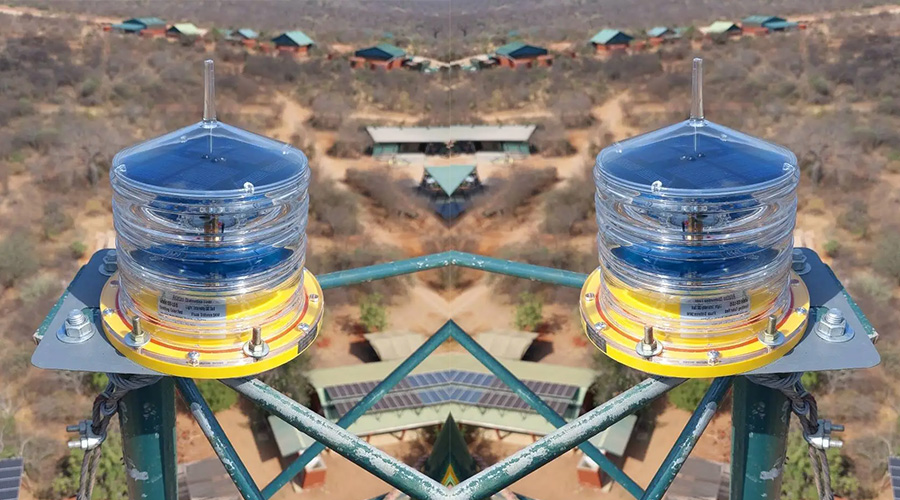
2. Solar Lighting System – Independent Integrated Marine Warning Light
- Essence: A complete, self-sufficient off-grid power generation system.
- Power Source: Solar panels (requires salt spray and UV resistance).
- Energy Storage: Deep-sea circulating batteries or lithium battery packs (requires wide temperature tolerance).
- Management Core: Solar charge/discharge controller. High-quality solar panels automatically charge during the day and automatically discharge at night.
- Load: Almost 100% ultra-high efficiency LED lights, as their extremely low power consumption is a prerequisite for the feasibility of solar power.
- Customized Functions: Integrated light control, time control, telemetry (status reporting via AIS or radio), and fault alarms.
Marine Warning Light Application Comparison
| Dimensions | Solar-powered LED Navigation Lights | AC LED Navigation Lights |
| Main Applications | 1. Navigation aids/beacons: buoys, lighthouses, and beacons. Most classic and widespread application. 2. Small fishing boats & sailboats: No reliable main power source. 3. Emergency backup for large vessels: as a power source for emergency navigation light that comply with convention requirements. | 1. All commercial vessels: Cargo ships, oil tankers, container ships, passenger ships, etc. 2. Large fishing vessels and engineering vessels. 3. Military ships. |
| Advantages & Disadvantages | Advantages: Energy-saving, environmentally friendly, saves manpower, material resources, and electricity. A malfunction of a single lighthouse or buoy does not affect the entire network. Disadvantages: Prolonged rain, fog, and panel contamination (seabird droppings, salt crystals) can affect charging. However, YFFY marine navigation lights mostly have bird deterrents, which can greatly reduce this issue. | Advantages: Ship-grade reliability. Multiple backups (main generator, emergency generator, batteries), 24/7 uninterrupted power supply. Meets the highest safety standards. Disadvantages: Dependent on the ship’s main systems. Marine lights will go out in the event of a total power failure (requiring activation of the emergency lighting system). |
| Maintenance and Costs | Advantages: Zero fuel cost, simple maintenance (regular cleaning and battery replacement). Disadvantages: Requires regular (usually every 3-10 years) battery replacement, which is the main long-term cost. | Advantages: Low marginal cost as part of a ship’s system. Light bulb replacement is simple. Disadvantages: Continuous fuel consumption costs. Complex maintenance due to aging wiring. |
| Installation and Deployment | Advantages: No need to lay submarine cables, extremely flexible and rapid deployment, particularly suitable for remote, deep waters, or areas with complex seabeds. Disadvantages: Requires consideration of wind and wave resistance structural design. However, YFFY marine navigation lights typically have holes at the bottom for mounting to buoys, navigation aids, or vessels. | Advantages: Fixed installation on board, integrated design. Disadvantages: Laying and maintaining submarine cables is extremely expensive for shore-based or offshore facilities. |
How to Choose Marine Navigation Warning Lights
For fixed points in the ocean (way markers):
Wind-powered or solar LED marine warning lights are the absolute mainstream and first choice. Their economic efficiency and deployment flexibility are irreplaceable.
For moving vessels (especially commercial vessels):
AC power is the mainstay, and is central to regulations and safety culture. Solar power can serve as an excellent supplement and backup, used to reduce daily energy consumption, charge emergency systems, or provide silent illumination while at anchor.
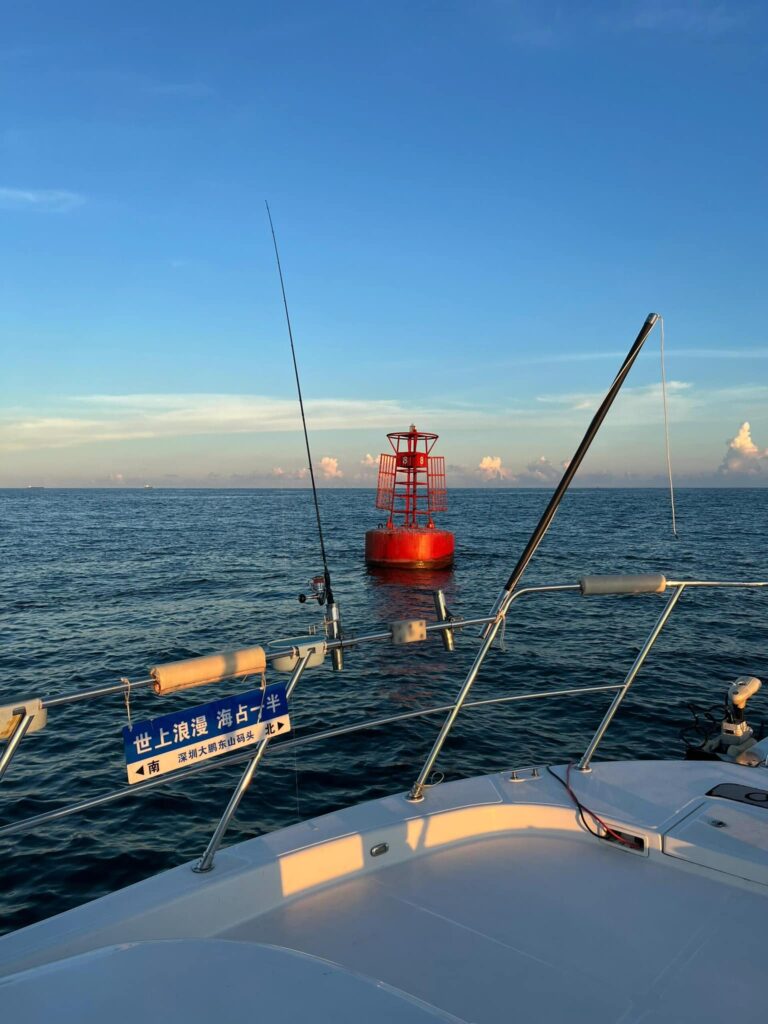
For example, the 4nm YFFY-LS-E solar marine warning lights.
Decision Logic:
1. Is it subject to international maritime conventions (such as SOLAS)?
Yes → Redundancy requirements for main and emergency power supplies must be prioritized. AC power systems are the foundation, and solar lights can serve as a value-added backup.
2. Is it a fixed-location navigation aid?
Yes → A hybrid wind/solar marine lantern system is strongly recommended. For example, the widely used YFFY-LS-S solar marine navigation lights with 6-8NM, 350 flashing modes, up to 20 days of rain and fog resistance, GPS synchronization function, basically meeting the needs of various marine navigation aids.
3. Is it a small, generator-less vessel?
Yes → A high-quality solar power system is the only feasible night/all-weather navigation solution.
4. Is extreme environmental protection and quiet operation sought (e.g., ecological research vessels, high-end sailboats)?
Yes → Solar power can be extensively integrated into the main/backup system to power LED navigation lights and living loads.
Marine navigation lights are a highly standardized, technologically advanced, and regulated safety language system. On the vast, dark ocean, light and color establish orderly traffic rules for vessels, silently guiding their course, preventing collisions, and protecting lives and property. For any seafarer, “recognizing lights” and “lighting lights” are fundamental skills as important as steering and lookout.