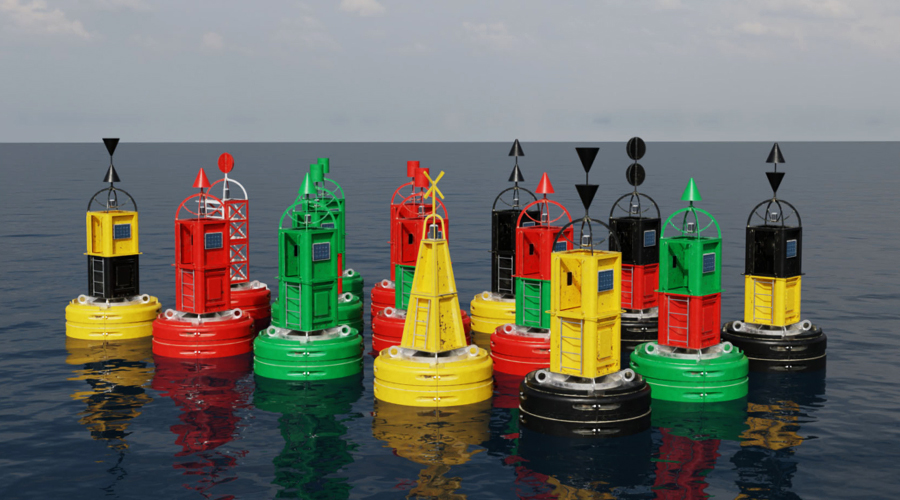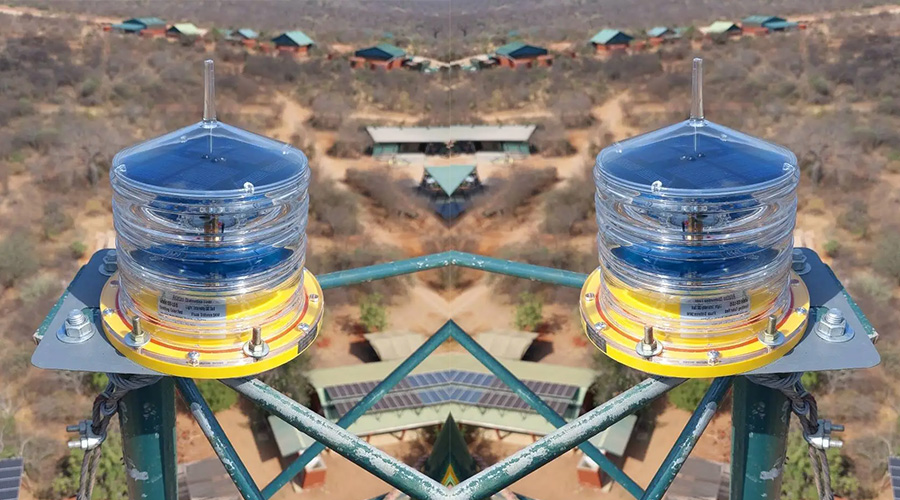

The GPS synchronization function of solar navigation lights (including navigation lights, aviation obstruction lights, road warning lights, etc.) refers to using high-precision timing signals from the Global Positioning System (GPS) or the BeiDou satellite system to enable multiple LED solar lights distributed over a wide area to flash or operate with a completely consistent time reference.
In other words, it allows for remote control adjustment of a unified mode (e.g., “on for 0.5 seconds, off for 0.5 seconds”) to execute switching actions at the same absolute time point.
What Are the Benefits of GPS Synchronization for Solar Navigation Lights?
The GPS synchronization function of solar-powered marine lights is widely used in the maritime field, but its core requirements, technical focus, and role differ significantly depending on the carrier (ships, buoys, navigation aids) and scenario (ports, docks). Specific differences are as follows:
1. Ships (Ships/Vessels)
On ships, GPS synchronization is mainly used for navigation light control and fleet coordination, rather than for single-ship light flashing synchronization (single-ship navigation lights are usually constantly on or at a fixed frequency, and do not require synchronization of multiple warning lights).
Main Functions:
- Fleet/Formation Coordination:
In naval exercises, maritime search and rescue formations, or large towing operations, multiple vessels synchronize via GPS time, causing their signal lights or deck work lights to flash at a unified rhythm, demonstrating the overall unity of the formation and facilitating aerial reconnaissance or command and control identification.
- Light Synchronization:
High-end ship systems utilize GPS timestamps to strictly align specific light signals in time, ensuring the temporal consistency of the evidence chain.
- UAV/Helicopter Takeoff and Landing Guidance:
On ships with helicopter decks, landing guidance lights may require microsecond-level synchronization with signals from shore-based or other auxiliary equipment to ensure that the visual signals received by the pilot are free from delay or deviation.
Special Requirements:
- Vibration Resistance & High Dynamics:
Solar navigation lights must withstand the ship’s violent rolling and high G-forces.
- Electromagnetic Compatibility (EMC):
Ships have dense radar and communication equipment; the GPS module must possess extremely strong anti-interference capabilities.
- Redundancy Design:
Typically requires dual GPS antenna inputs to prevent synchronization loss due to a single point of failure.
2. Buoys
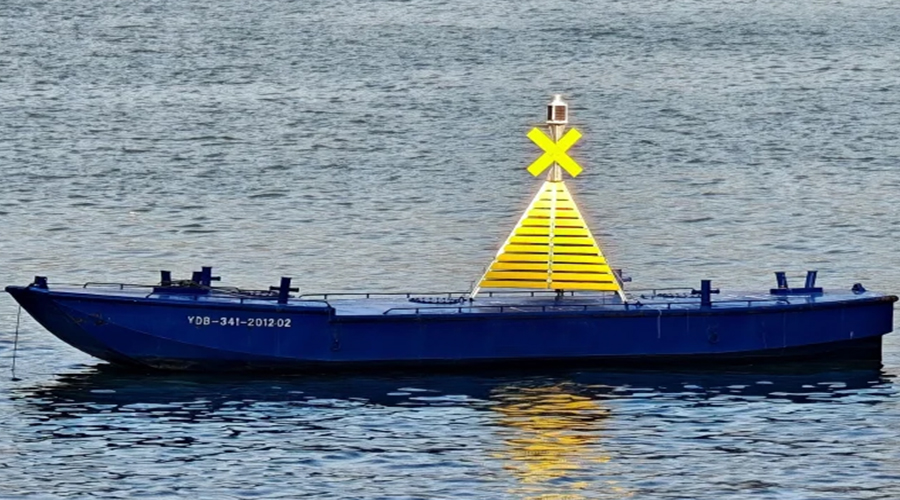
Buoys are one of the most mature applications of GPS synchronization technology in marine navigation warning lights, especially large anchored buoys and array buoys.
Main Functions:
- Array Synchronized Warning:
When multiple buoys are used to mark a large area (such as shipwreck areas, aquaculture areas, or temporary no-navigation zones), GPS synchronization causes the buoy lights to flash simultaneously.
This allows crew members to immediately identify an “area” rather than scattered obstacles, preventing accidental entry.
- Specific Code Identification:
By synchronizing complex flashing combinations (such as “three consecutive flashes”), a unique identification is given to the group of buoys, which can be accurately matched on nautical charts.
For example, the YFFY-LS-S solar navigation lights meets GPS synchronization requirements and also supports 350 different flashing codes, which can be adjusted as needed.
Special Requirements:
- Low Power Consumption:
Buoys rely entirely on solar energy and batteries. The GPS module typically operates intermittently (only waking up for calibration on the last second) and remains in sleep mode to conserve power.
- Corrosion Resistance and Sealing:
Solar buoy lights must meet IP68 or higher protection standards and withstand high salt spray environments.
- Self-Recovery Capability:
Buoys rise and fall violently with waves, and GPS signals are easily blocked. The system must be able to quickly relock and automatically restore synchronization after signal loss, without manual intervention.
3. Aids to Navigation (AtoN)
This is a broad concept, including fixed or semi-fixed facilities such as lighthouses, beacons, and buoys. This is where synchronized flashing effects are most impressively applied.
Main Functions:
- Delineating Channel Boundaries:
Solar-powered marine light beacons placed on both sides of long-distance channels form two parallel “light bands” synchronized with GPS, clearly guiding the channel direction at night or in low visibility conditions.
- Marking the Outlines of Large Facilities:
Such as the pier lights of cross-sea bridges and the solar warning lights of offshore wind farms. Synchronized flashing can completely outline the large outlines of facilities, preventing ship collisions.
- Eliminating Visual Confusion:
Without synchronization, the individual flashing of dense solar navigation lights can cause visual confusion, making it difficult for the operator to judge distance and position. After synchronization, they will be visually perceived as a single target.
Special Requirements:
- High Precision (PPS):
Typically requires microsecond-level synchronization accuracy to ensure the sequence is completely imperceptible to the naked eye.
- Remote Monitoring & Management:
Requires integrated telemetry and remote control functions, allowing the management center to remotely issue synchronization commands or modify the flashing mode.
- Long-Term Stability:
Fixed facilities must be maintenance-free for several years, and the GPS module must possess extremely high reliability.
4. Ports:
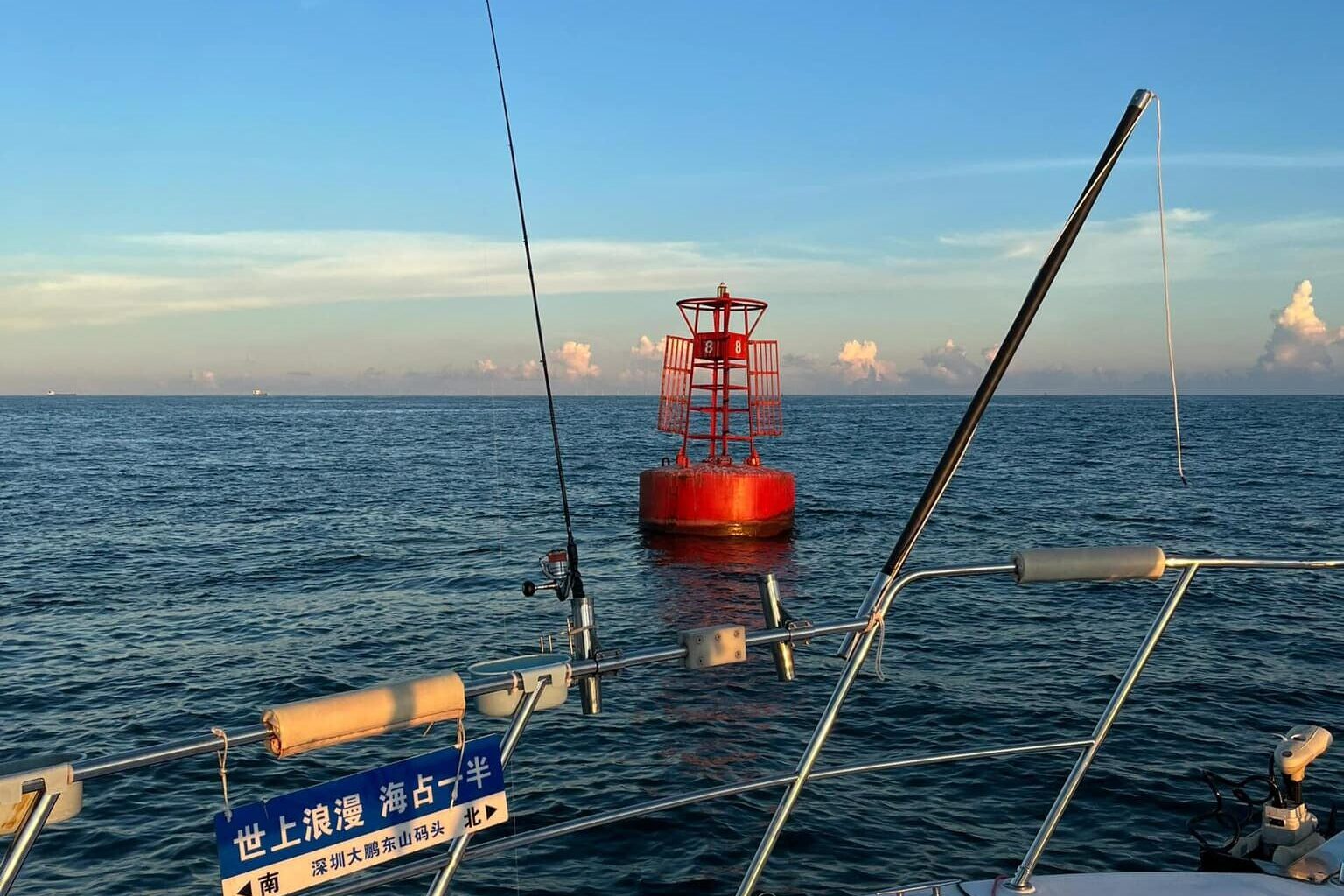
Port waterways are busy with traffic; GPS synchronization is primarily used for traffic organization and safety monitoring.
Main Functions:
- Dynamic Channel Management:
In ports heavily affected by tides or requiring time-based passage, synchronized marine lights can be used to quickly switch channel indication modes (e.g., green light for channel A during morning peak, switching to channel B during evening peak).
- Hazard Area Warning:
In dredging areas and underwater pipeline laying areas within ports, temporary synchronized flashing light buoys are deployed to create a conspicuous “light wall,” forcing vessels to detour.
- Pilot boarding/disembarkation point marking:
At specific pilot stations, synchronized lights can serve as high-precision visual beacons to assist pilot vessels in accurate berthing.
Special requirements:
- Flexibility & programmability:
Port conditions change rapidly, requiring solar lights to support frequent mode switching and remote programming.
- Resistance to light pollution interference:
Port background lighting is complex (streetlights, searchlights), necessitating synchronized lights with high brightness and specific flashing frequencies to stand out from background noise.
- System integration:
The solar navigation lights must be able to integrate with the port’s VTS (Vessel Traffic Management System) for automated response.
5. Wharves/Docks
Synchronized lighting applications are relatively limited in wharf areas, primarily focusing on large structure protection and special operations.
Main functions:
- Collision fender warning:
At corners of large LNG or oil terminals, synchronized flashing LED solar navigation lights are installed to clearly mark the wharf edge, preventing scratches when large vessels berth.
- Mooring Operation Coordination:
In automated terminals, synchronized lights serve as visual signals, working in conjunction with automated mooring robots to indicate operational status (e.g., a synchronized red light indicates “Do Not Approach,” and a synchronized green light indicates “Mooring Permit”).
- Emergency Evacuation Guidance:
In emergencies, synchronized lights along the terminal edge can flash sequentially (a running light effect) to guide personnel to specific exits.
Special Requirements:
- Explosion-proof Requirements (Ex-proof):
Oil and gas terminals must use explosion-proof synchronized lighting fixtures that meet ATEX or IECEx standards.
- Impact Resistance:
The terminal front is susceptible to ship impacts; solar-powered navigation lights must possess extremely high mechanical strength.
- Wired/Wireless Hybrid Networking:
Due to the relatively concentrated space at terminals, wired connections to the main controller are sometimes used, supplemented by GPS as a time reference, to ensure absolute synchronization reliability.
Summary Comparison Table
| Application | Core Role | Key Performance Indicators | Typical Form |
| Ships | Formation coordination, signal consistency, AIS linkage | Marine Lights: Vibration resistant, high dynamic adaptability, dual GPS redundancy, strong electromagnetic compatibility | Intelligent navigation light controllers, deck-coordinated signal lights |
| Buoys | Area demarcation, array synchronization identification, hydrological data time alignment | Buoy Lights: Ultra-low power consumption (intermittent wake-up), signal loss self-recovery, IP68/IP69K waterproof and corrosion resistant | Solar navigation lights, marine monitoring buoy lights |
| Navigation aids | Channel boundary delineation, large facility outline marking, elimination of visual confusion | Navigation Aids Lights: Microsecond-level synchronization accuracy, remote telemetry and control, long-term maintenance-free stability | Lighthouses, beacons, offshore wind turbine warning lights, pier lights |
| Ports | Dynamic channel management switching, temporary work area warnings, pilotage markings | Port Lights: Flexible remote programming, anti-backlight interference, integrated with VTS system | Intelligent floating buoys, variable message signs |
| Docks | Collision fender warnings, automated operation status indications, emergency evacuation guidance | Dock Lights: Explosion-proof certification (ATEX/IECEx), high mechanical strength and impact resistance, wired | Wireless hybrid networking | Explosion-proof fender lights, mooring robot indicator lights |
Regardless of the scenario, the fundamental purpose of GPS synchronization for solar navigation lights is to transform scattered individual light sources into an ordered collective signal.
This not only enhances visual recognizability and aesthetics, but more importantly, it reduces the cognitive load on navigators through standardized light signals, thereby significantly improving maritime traffic safety.