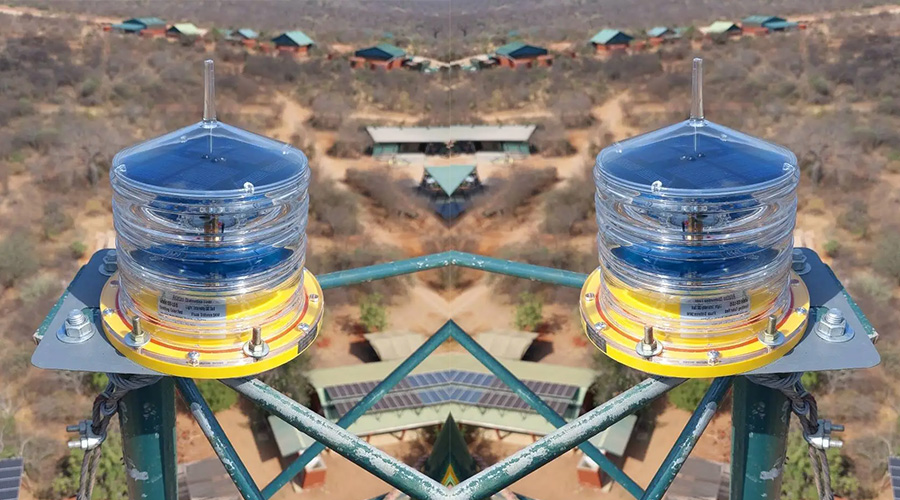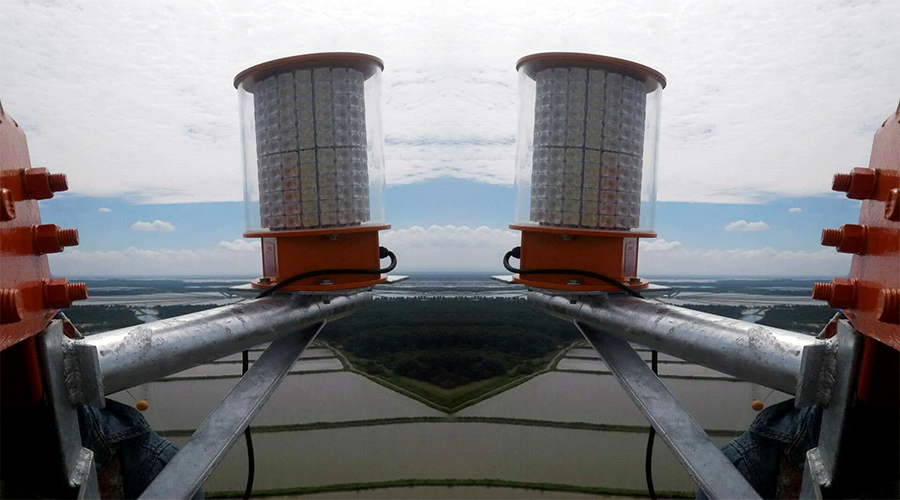
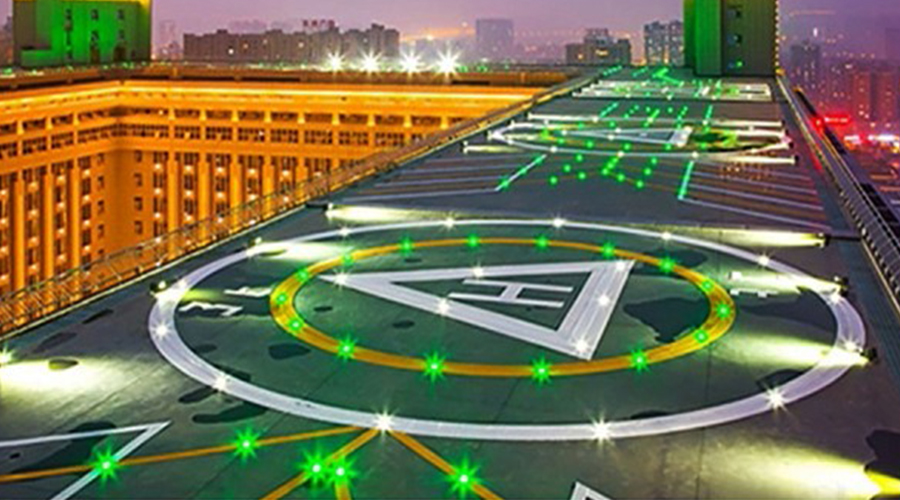

Solar helipad lights are airport lighting fixtures powered by solar energy, primarily used for apron lighting and warning purposes.
Its core components include solar panels, batteries, LED lights and control circuits. Solar panels convert solar energy into electrical energy, store it in batteries, and use it for LED lights.
This type of lamp usually has the characteristics of automatic control, adjustable flashing modes, and a wide operating temperature range. The advantages of this type of airport warning light are energy saving and environmental protection, and low installation and maintenance costs.
Features of Solar Helipad Lights
1. Energy self-sufficiency
Powered by monocrystalline silicon/polycrystalline silicon solar panels, with lithium battery energy storage system, to ensure continuous operation on rainy days or at night (usually 3-7 days of battery life).
Eliminate the cable laying and grid dependence of traditional lights, and reduce operation and maintenance costs.
2. Intelligent control
Light control sensor: automatically switches according to ambient light, stores energy during the day and illuminates at night.
Remote monitoring: Real-time monitoring of lamp status (brightness, power, fault) through wireless communication (such as LoRa, 4G/5G) to achieve intelligent management.
Adjustable mode: Supports constant light, flashing, directional light and other modes to meet the needs of different scenarios.
3. High reliability & safety
Anti-harsh environment: Waterproof and shockproof design, adapt to extreme conditions such as high temperature, low temperature, salt spray corrosion.
Aviation-grade optical standards: Meet the light intensity, color and flashing frequency specified by ICAO to avoid pilot glare or misjudgment.
Redundant backup: Some systems are equipped with small wind power generation or supercapacitors to enhance energy security.
4. Economic & environmental protection
Initial investment: Although higher than traditional lighting, it saves electricity and line maintenance costs in the long run.
Life cycle: The life of LED light sources can reach more than 50,000 hours, and the life of solar panels is usually more than 20 years.
Zero emission: Reduce dependence on diesel generators or city electricity and reduce carbon footprint.
Application of Solar Airport Heliport Lights
1. Airports in remote areas
Small airports in Africa, South America or Pacific island countries, such as small airports, use solar heliport lights to solve the problem of power shortage.
Example: Some navigation lights at Lukla Airport in Nepal (mountainous terrain, unstable power) are powered by solar energy.
2. Temporary emergency runways
In post-disaster rescue, modular solar warning light arrays are quickly deployed to build temporary take-off and landing sites.
Example: Japan’s earthquake-stricken areas used solar temporary runway lights to support the take-off and landing of rescue aircraft.
3. Green airport upgrades
Many airports in Europe and the United States (such as Frankfurt Airport in Germany and Denver Airport in the United States) have replaced some traditional lights with solar airport warning lights as part of their sustainable development plans.
4. Drones & general aviation
At drone cargo hubs or general aviation airports, solar helipad lights provide low-cost lighting solutions.