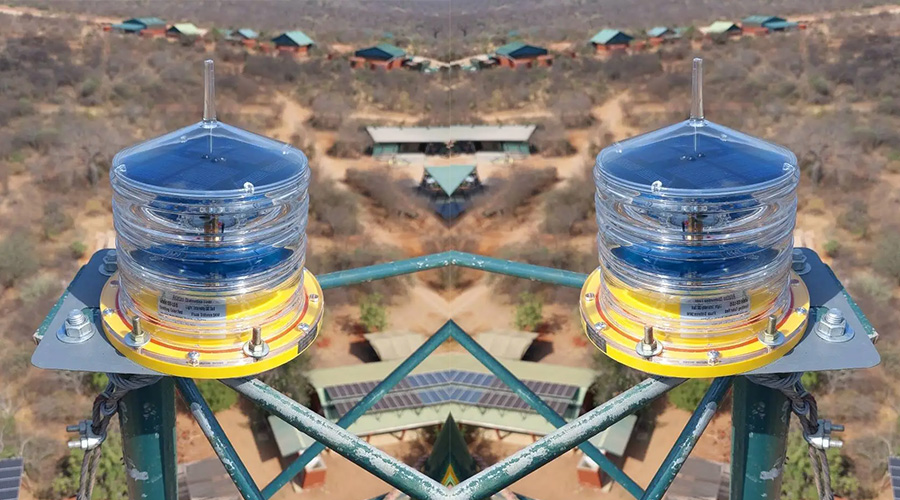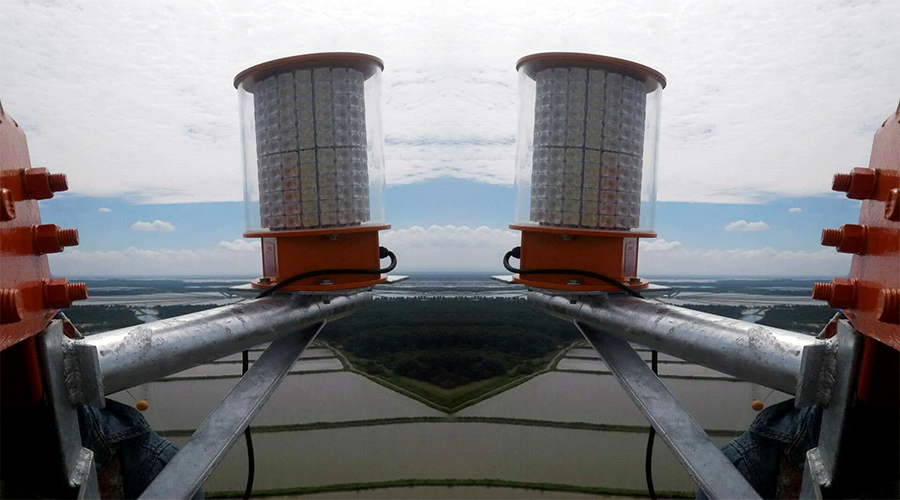
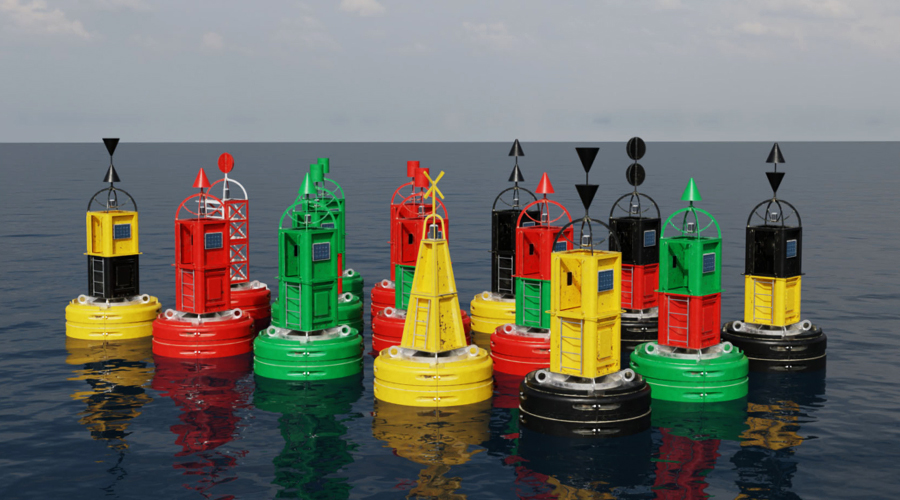

Solar buoy lights are becoming the core of modern navigation aids, profoundly changing the product forms of buoy manufacturers and the operational methods of maritime departments.
As the global shipping industry accelerates its transformation towards intelligent and green technologies, navigation aids, as key facilities for ensuring navigation safety, are also entering a critical period of technological upgrading.
In the past, buoy lights mainly relied on batteries or shore power, which not only resulted in high maintenance costs but also severely limited deployment in remote waters. Solar buoy navigation lights, with their self-powered, intelligently controllable, and virtually maintenance-free characteristics, are gradually changing this situation.
For buoy manufacturers, this means upgrading their products from simple “light emitters” to “smart nodes” integrating clean energy, intelligent control, and remote communication;
For port and waterway management departments, it means access to a more reliable, economical, and flexible new model of navigation aid services.
So, what market competitiveness can manufacturers gain by adopting next-generation solar marine buoy lights, such as the YFFY Lights series? And what specific value can they inject into the actual operation of navigation aid systems?
I. The Value of Solar Buoy Lights to Buoy Manufacturers 🌊
1. Building a Complete Product Matrix
Solar marine lanterns typically have a visibility range of 1-6NM to 11-20 nautical miles and are available in basic and intelligent models.
This allows manufacturers to meet the diverse needs of customers in different waters and with different budgets with a single brand product line, providing a one-stop solution from inland waterways to the open ocean.
2. Reducing Overall Costs & Increasing Profits
- Reduced After-Sales Maintenance: Solar warning lights generally use LED light sources with a lifespan exceeding 100,000 hours, corrosion-resistant PC material lamp covers, and aviation-grade aluminum/marine-grade bases, significantly reducing after-sales replacement costs due to product failure.
- Optimized Inventory Management: For example, the YFFY-LS-C-1 solar buoy lights offers 256 different flashing qualities compliant with IALA standards through a built-in rotary switch. Manufacturers can use a single universal model to cover multiple flashing needs, reducing the variety of different light qualities in stock and inventory pressure.
3. Cultivating a Brand Image of Technological Leadership and Green Environmental Protection
- High-Efficiency Energy Technology: The marine navigation light utilizes monocrystalline silicon solar panels with a conversion efficiency of up to 23% and low-power microcontroller control, showcasing the company’s strength in core optoelectronic technologies and contributing to establishing a “high-efficiency, energy-saving” technological brand image.
- Extreme Environment Adaptability: The product boasts an IP68 protection rating, withstands winds of up to 80m/s, and can operate within a temperature range of -55℃ to 85℃. These robust specifications have earned the brand a reputation for “reliability and durability” in the market.
- Professionalism: Equipping the buoy with a navigation light featuring 350 flashing codes provides manufacturers with greater possibilities, profits, and reputation in terms of usability, convenience, and cost-effectiveness.
Ⅱ Benefits of Navigation Aid Systems 🚢
1. Operational Reliability & Autonomy
- Extended Operating Range: For example, the YFFY-LS-SJ solar marine navigation light can operate continuously for over 20 days in cloudy or rainy weather, ensuring uninterrupted light signal even in prolonged severe weather. This significantly improves the continuity of navigation services and reduces the risks and costs of emergency voyages for maintenance.
- Maintenance-Free Long-Term Operation: High-quality components enable truly maintenance-free operation. YFFY also offers marine lights with solar panels designed for a lifespan exceeding 20 years, allowing for autonomous operation year after year after installation.
2. Flexible Deployment and Intelligent Control
- Plug and Play, Flexible Adjustment: Integrated design (such as the YFFY-LS-C-1 solar lights) eliminates the need for on-site wiring. Navigation personnel can easily adjust the flash quality on-site, making it ideal for temporary channel adjustments or rapid deployment missions.
- Remote Monitoring and Intelligent Diagnosis: Some YFFY solar buoy lights support GPS synchronization, GSM monitoring (customized), and mobile app control (customized), allowing management to monitor equipment status in real time, provide fault warnings, and remotely configure equipment. This drives the transformation of navigation aid management from “manual periodic inspections” to “intelligent condition maintenance.”
3. Enhanced Navigational Efficiency and Ship Safety
- High Light Intensity & Precise Light Distribution: Advanced LED optical design enables navigation lights like the YFFY-LS/HT to achieve a visual range of 11-20NM with a low power consumption of ≤20W, ensuring clear visibility of light signals at long distances and in various sea conditions.
- Unified Standards for Multiple Scenarios: Solar marine warning lights can be used as both maritime navigation lights and aviation obstruction lights through simple parameter adjustments. This helps to unify maintenance standards across different navigational aid applications, reducing overall operational complexity.
4. Achieving Optimal Lifecycle Economics
- Zero Electricity Costs & Extremely Low Maintenance: Completely self-sufficient solar power eliminates long-term electricity costs. With core components boasting lifespans of several to decades, their total lifecycle cost is significantly lower than traditional power supply methods.
- Forward-looking technological compatibility: Products strictly adhere to IALA international standards, featuring GPS synchronization and positioning. Some products also reserve interfaces for RS232/485 and remote monitoring, ensuring compatibility between current investments and future upgrades to smart navigation channels and port intelligent management systems.
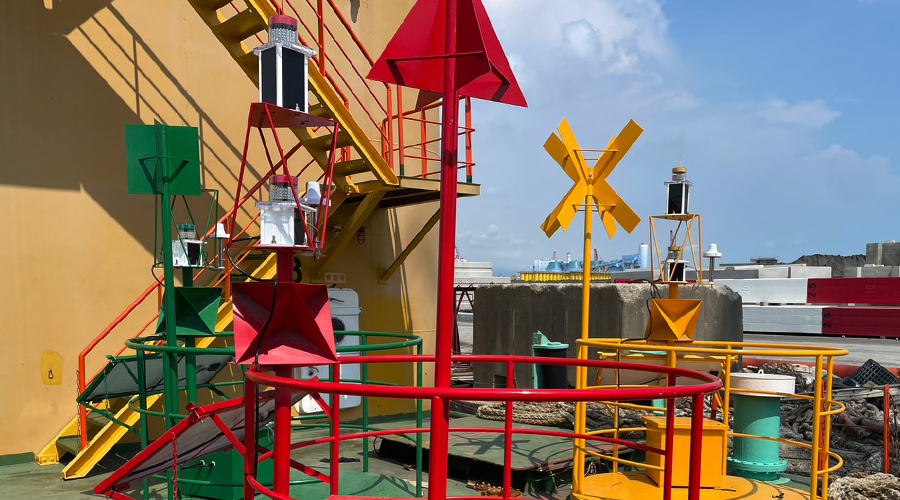
Solar buoy lights are not only an innovation in maritime safety lighting tools but also a key entry point for the digitalization and intelligentization of navigation aids.
For manufacturers, it serves as a springboard for product premiumization and internationalization; for operators, it is a core means of cost reduction, efficiency improvement, safety assurance, and green practices.
With the further integration of the Internet of Things and new energy technologies, future solar buoys will be more than just “lights”—they will be intelligent sensing terminals within a smart ocean network.