
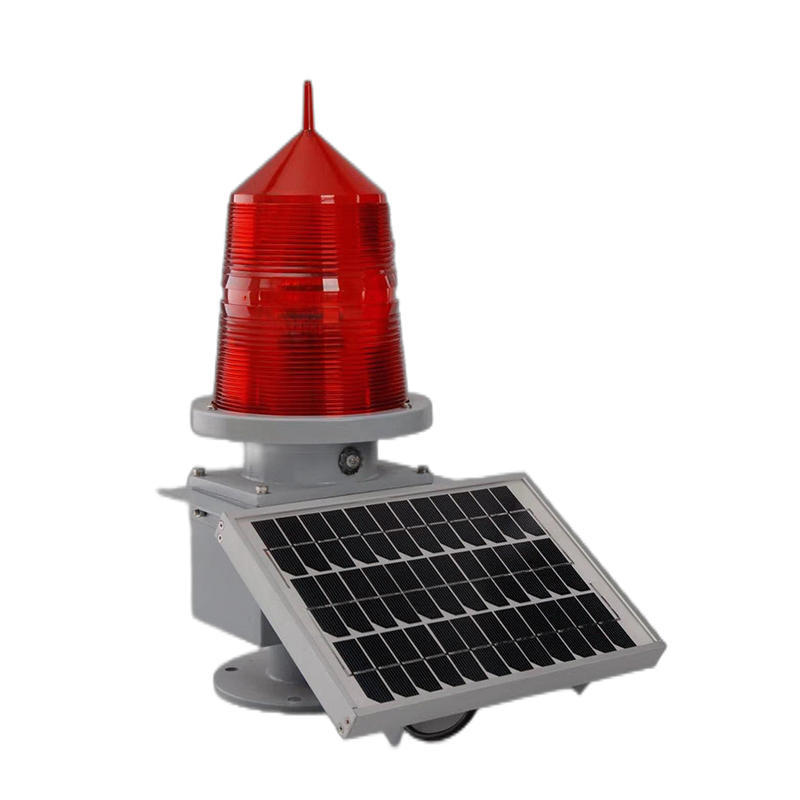
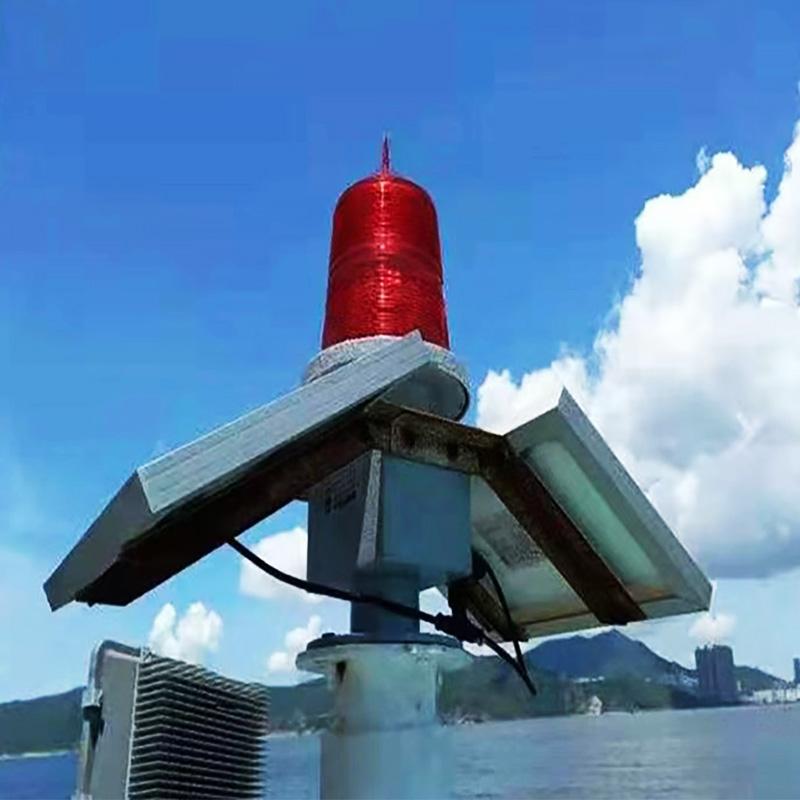
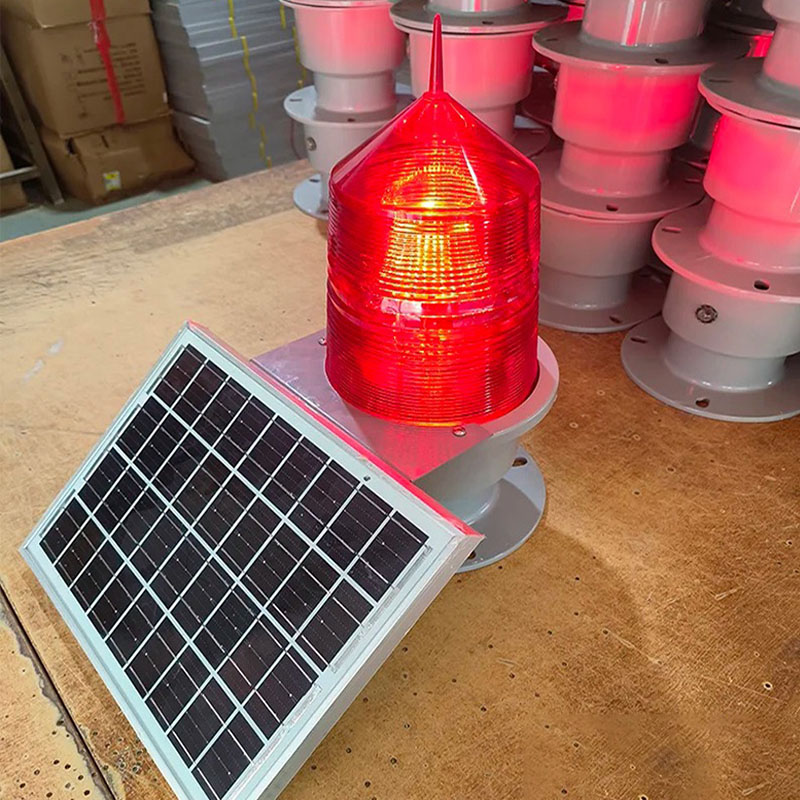
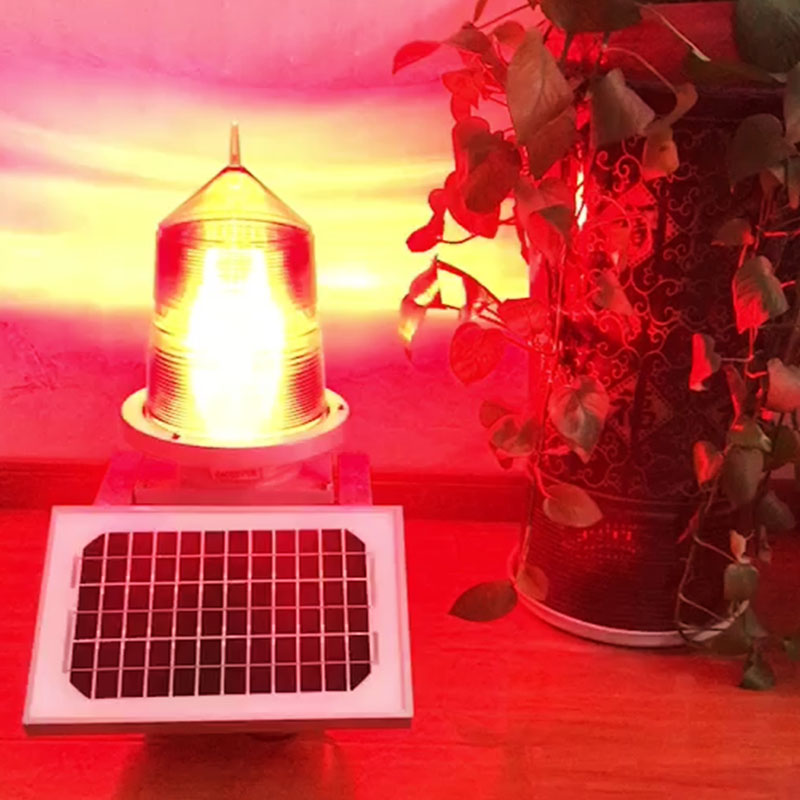
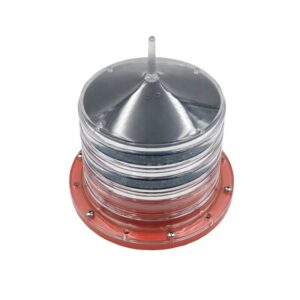
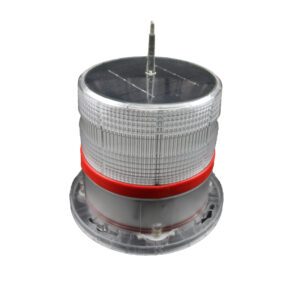
Solar medium intensity lights are typically used to warn of obstacles at heights between 45 and 150 meters, such as towers or buildings.
These aviation obstruction lights integrate solar panels, batteries, and LED light sources, requiring low maintenance and capable of continuous operation for up to 7 years.
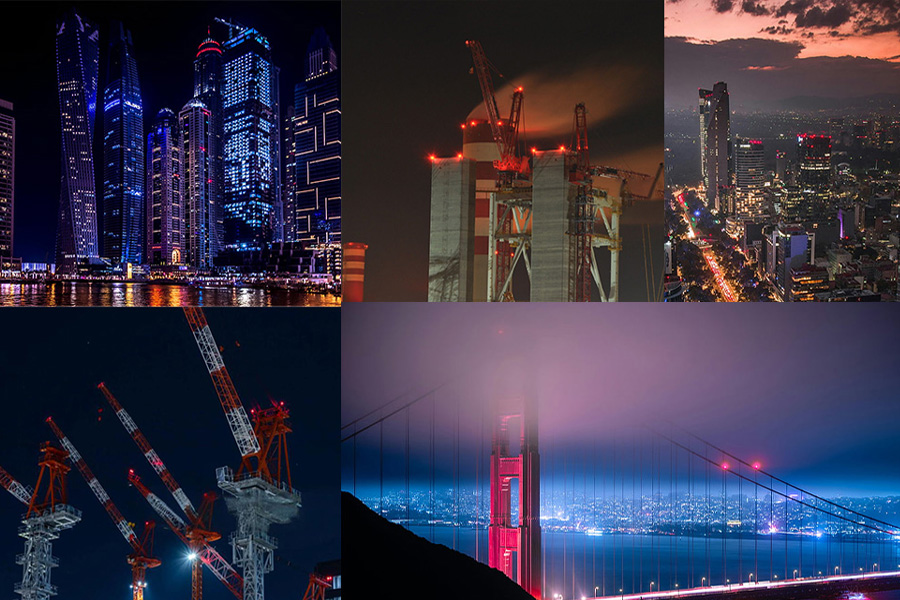
They are suitable for nighttime warning around airports, power transmission line towers, communication towers, or high-rise buildings in cities.
Compared to traditional lighting, solar power is more environmentally friendly and saves energy costs. They offer stronger nighttime visibility and a certain degree of interference resistance, making them suitable for scenarios requiring rapid nighttime identification.
Features of Solar Medium-Intensity Obstruction Lights
Typical brightness of solar-powered medium intensity warning lights is 2000 lumens, flashing red, and meets aviation safety standards.
For example, YFFY’s LED warning lights are designed specifically for medium-height obstacles, support portable use, and are widely used for nighttime warning of power and communication infrastructure.
The main advantages of medium intensity solar lights compared to other types of warning lights include:
Self-powered & low-maintenance:
- Built-in solar panels and batteries eliminate the need for external power cords, resulting in low on-site maintenance costs.
- 7 years of maintenance-free operation (installed according to specifications, with regular cleaning of optical components).
Flexible Installation & Deployment
- Rapid deployment in remote areas without stable power supply;
- Highly portable, suitable for temporary or mobile obstacle marking (e.g., new tower construction, line rerouting, temporary construction site cordon).
Environmentally Friendly and Low Operating Costs
- Led solar medium intensity lights using clean solar energy, long-term operating costs are low, with relatively low transportation and labor costs, resulting in a competitive total cost of ownership.
Consistent Nighttime Visibility Aligned with International Standards
- Brightness is typically in the medium range (e.g., approximately 2000 lumens), with a red warning light, meeting the visibility requirements of aviation and civil safety standards, and offering high nighttime visibility.
Interference Resistance and Environmental Tolerance
- Solar LED lights are rainproof, dustproof, and temperature resistant, enabling stable operation in complex outdoor environments.
Long Maintenance Cycles & Short Downtime
- The overall design leans towards “plug and play,” allowing for quick component replacement in case of failure, minimizing on-site downtime.
Customizability
- Solar aviation obstruction lights with white/red dual-color and GPS-synchronized flashing are customizable.
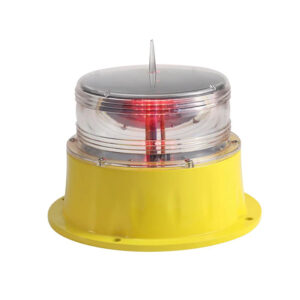
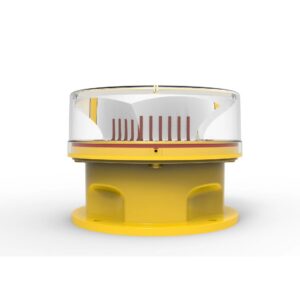
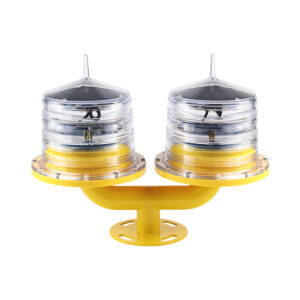
Parameters of YFFY-155S Solar Medium Intensity Lights
|
Type
|
Type A & Type B Solar medium aviation obstruction light
|
Light Source
|
Solar LED
|
|
Operating Voltage
|
DC 12V
|
Rated Power
|
5-10W
|
|
Light Color
|
Red light
|
Flash Rate
|
20-60 beats/minute (adjustable)
|
|
Light Control
|
50~200LX
|
Effective Light Intensity
|
>2000CD – Medium intensity type
B (red) & Type A (white)
|
|
Light Source Life
|
>100.000 hours
|
Working Environment
|
-40℃~+70℃
|
|
Normal Insulation Voltage Strength
|
2000V/50Hz.1mA,
1min no breakdown, fly phenomenon
|
Protection Level
|
IP65
|
|
Dimensions
|
Height 550mm x Diameter 180mm
|
Chassis Size
|
The diameter of the chassis is 180mm, and
the distance between
|
|
Light Weight
|
9.2 kg
|
Install Holes Size
|
150mm and 4-12mm holes are evenly distributed.
|
|
Battery Capacity
|
12V 7ah-12ah
|
Battery Size
|
L151 * W65 * H95mm
|
|
Warranry
|
2-3 years
|
Package Size
|
30 * 57 * 30cm
|
Application Scenarios for Medium-Intensity Aviation Obstacle Lights
- New Construction or Relocation Sites:
Temporarily marking construction areas, closed zones, and personnel access routes to prevent accidental entry into dangerous areas.
- Around Communication Towers/Power Facilities:
Areas requiring nighttime visibility, such as tower bases, antenna areas, and access roads.
- Temporary Construction Transportation Routes and Exploration Areas:
Nighttime warning and guidance around highways, railways, and pipeline corridors.
- Shutdown, Maintenance, or Emergency Repair Scenarios:
Temporary solar-powered LED warning lights in equipment maintenance and repair areas for easy relocation and redeployment.
- Natural Environmental Challenges:
Nighttime marking and warning in areas without stable mains power, such as wilderness, mountains, and beaches.
- Events & Temporary Road Closures:
Scenarios requiring flexible deployment, such as competitions, emergency drills, and temporary area closures.
Solar Obstruction Warning Light – Color Selection Recommendations
- Red (Standard warning color, high nighttime visibility):
Most commonly used, meets aviation/civil safety standards, suitable for “prohibited, warning, dangerous” scenarios.
- Orange/Amber (highly warning, good penetration in foggy and rainy weather):
Used as an auxiliary warning color for construction sites, temporary road closures, traffic guidance, etc.
- Yellow-Green (high visibility, high contrast during the day):
Used for more neutral or navigational scenarios such as indicating routes, boundaries, and border lines.
- Combined or Multiple Lighting Modes:
For complex scenarios, consider a solar aircraft warning lights with a main red light and a backup orange/yellow-green light for switching, or implement selectable color/flashing modes on the same solar medium intensity lights.
Key Points for Installation and Wiring of Solar Medium Intensity Lights
- Fixing Method:
Use shockproof and wind-resistant brackets and fasteners to ensure stability under strong winds and vibrations.
- Orientation and Coverage Angle:
Determine the direction of the light head according to the site layout, prioritizing coverage of entry and exit paths, boundary lines, and warning sign areas.
- Cleaning and Maintenance:
Clean the lens regularly and check the contact and temperature of the light source, battery, and control unit.
- Protection Rating:
For outdoor use, it is recommended to choose a model with an IP65 or higher protection rating, which is rainproof and dustproof.
- Sunlight and battery capacity:
In areas with ample sunlight, smaller capacity batteries can be selected, but energy storage on cloudy days should still be considered;
In areas with frequent rain, higher capacity batteries should be selected to ensure continuous nighttime brightness.
Reviews
There are no reviews yet.