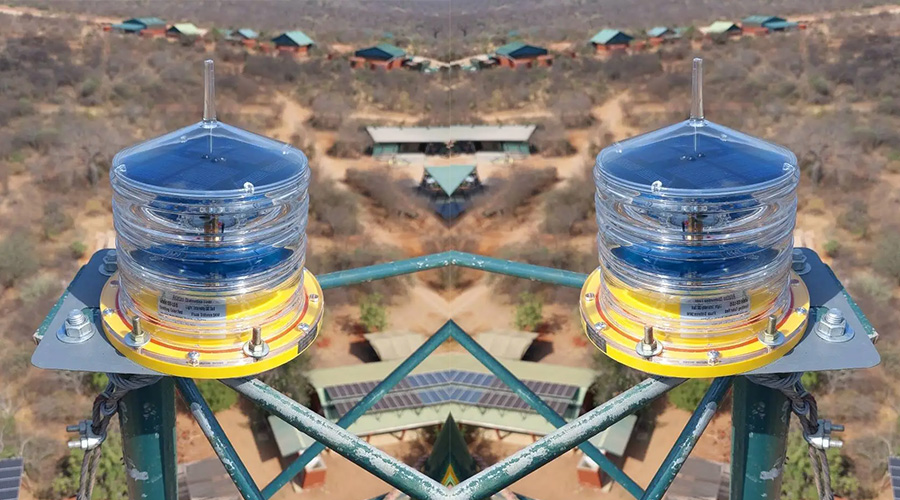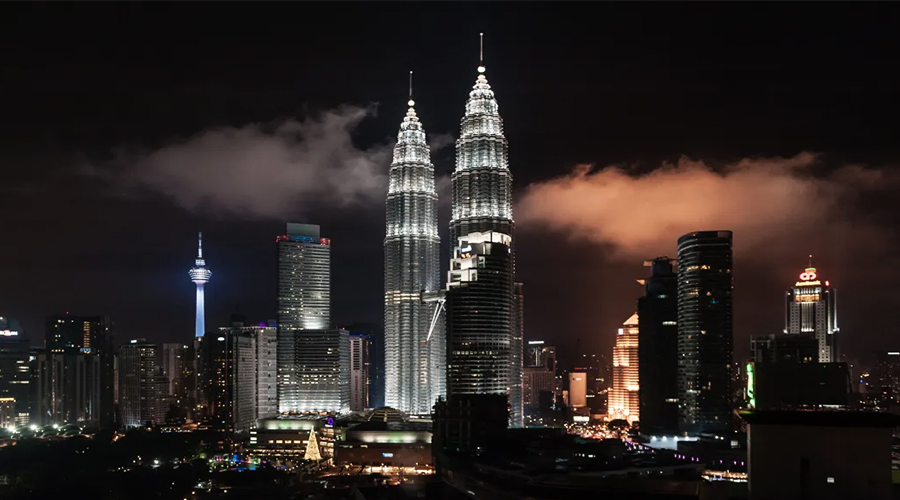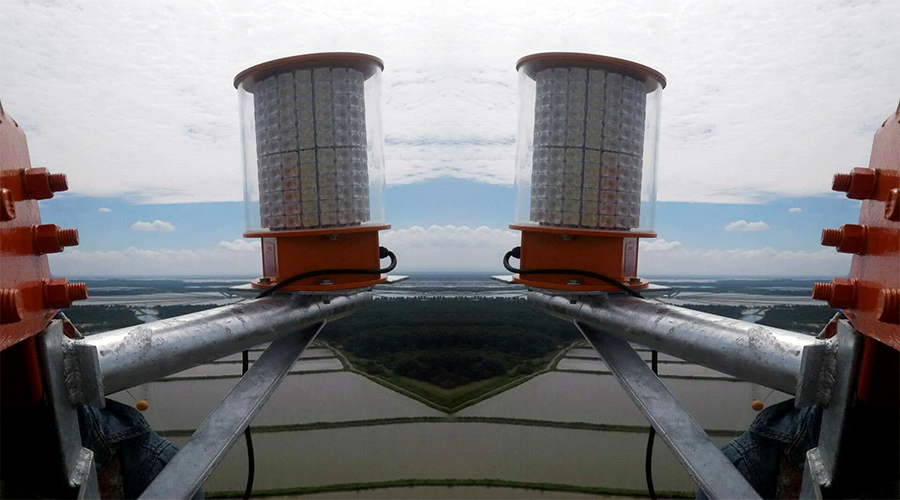


Building obstruction lights, also known as aviation obstruction lights, are special lights mounted on buildings or other obstructions to warn aircraft at night or in low visibility.
They are commonly installed on structures such as high-rise buildings, bridges, chimneys, and transmission towers to ensure flight safety. Obstruction warning lights are typically red, white, or yellow, and the type and brightness of the lights vary depending on the height and environmental conditions.
When selecting obstruction light, it’s important to consider the building’s height, the complexity of the surrounding environment, and regulatory requirements.
How Should Aviation Obstruction Lights be Selected For Different Types of Buildings?
The selection of aviation obstacle lights is primarily determined by the building’s height, ambient brightness, and whether there is movement or flashing.
They are categorized into three types: low-intensity, medium-intensity, and high-intensity.
Tall buildings (over 150 meters) typically require high-intensity warning lights, while shorter buildings may use low- or medium-intensity warning lights. The color is selected based on background brightness and whether there is a need to indicate moving objects.
Select Obstruction Lights Based on Building Height
High-Rise Buildings (150 meters and above)
High-intensity aviation obstruction warning lights are recommended, and high-intensity lights should be installed at least below the top to ensure aviation safety. Both LED and solar-powered aviation lights are acceptable.
Low- to medium-rise buildings
Low- or medium-intensity aircraft warning lights can be selected based on actual conditions. These lights should be installed as close to the top of the object as possible.
Select the light type and color based on ambient brightness and movement.
Fixed Obstacles
For fixed obstacles, red obstruction warning lights should be used.
Moving Obstacles or Objects Requiring Movement Instructions
For moving obstacles or objects requiring movement instructions, yellow or blue lights, such as Type C or Type D low-intensity aviation obstruction warning light in the ICAO standard, can be used.
Other Important Considerations
Structures Such as Chimneys
For structures that are significantly affected by smoke, such as chimneys, overhead obstruction warning lights should be located to minimize smoke contamination.
Comply with International Standards
The selection and configuration of aviation obstruction lights should be based on the relevant standards of the International Civil Aviation Organization (ICAO) to ensure they meet international safety regulations.
Obstruction lights are available in both AC and DC solar-powered warning light series. You can choose the appropriate aviation obstruction light for your installation based on your environment, location, and budget.
If you have any questions, please feel free to contact us for advice on selecting the right LED aviation obstruction light.