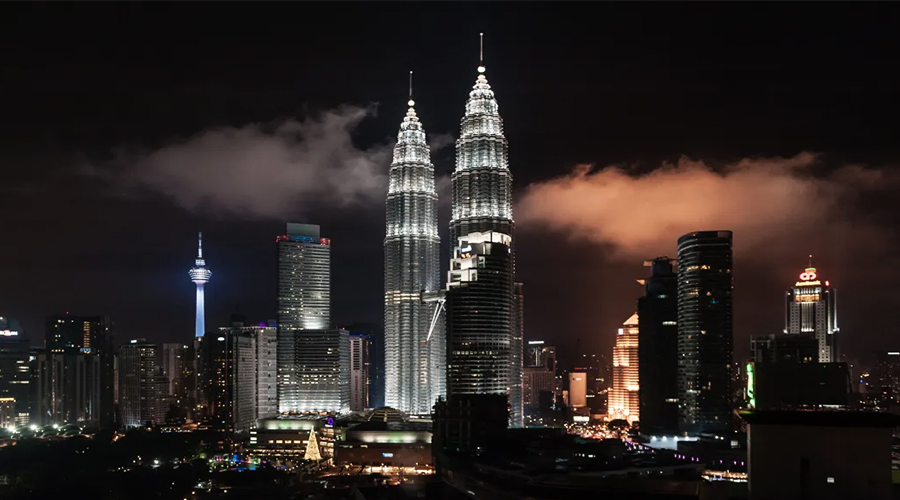

Decades of Dedicated Protection for the “Twin Towers”: The Story of YFFY Obstruction Light and Aviation Safety at the Petronas Twin Towers in Downtown Kuala Lumpur, Malaysia.
Since 2015, a steady, bright white light has been flashing regularly atop the iconic Petronas Twin Towers in downtown Kuala Lumpur, Malaysia.
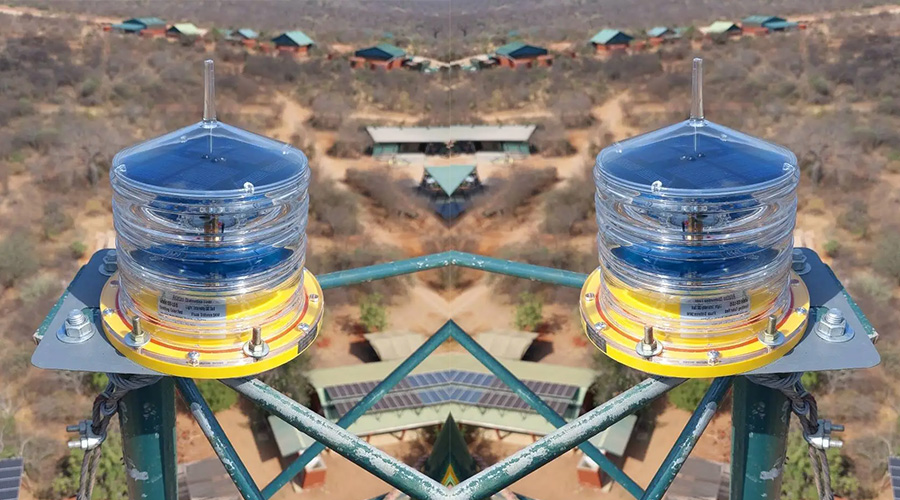
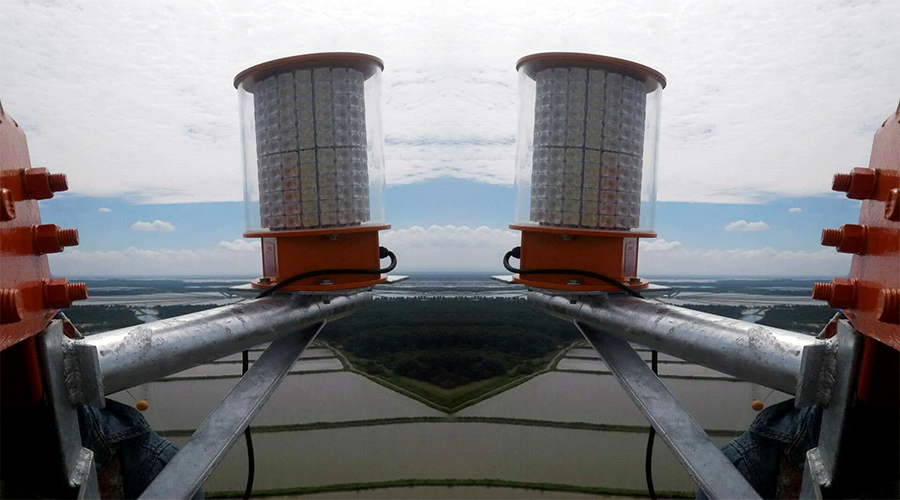
This light comes from our YFFY-HI-A0 high-intensity aviation obstruction light Type A , which carries a simple yet crucial mission: to mark the presence of this supertall building for passing flights, thus safeguarding aviation safety.
I. Why are High-Intensity Obstruction Lights Necessary for the Twin Towers?
The Petronas Twin Towers, at 452 meters tall, were once the world’s tallest twin skyscrapers.
According to the International Civil Aviation Organization (ICAO) and national aviation safety standards, ordinary red medium-intensity obstruction lights are insufficient to meet the all-weather, especially daytime, warning distance requirements for supertall buildings exceeding 150m in height.
Therefore, high-intensity aircraft warning lights must be installed at the highest point and outermost edge of the building to form a continuous warning line.
The Twin Towers are a prime example of such a requirement for high-intensity obstruction lights. The lights installed at their tops need to be clearly identifiable by pilots from several kilometers away, even in strong sunlight.
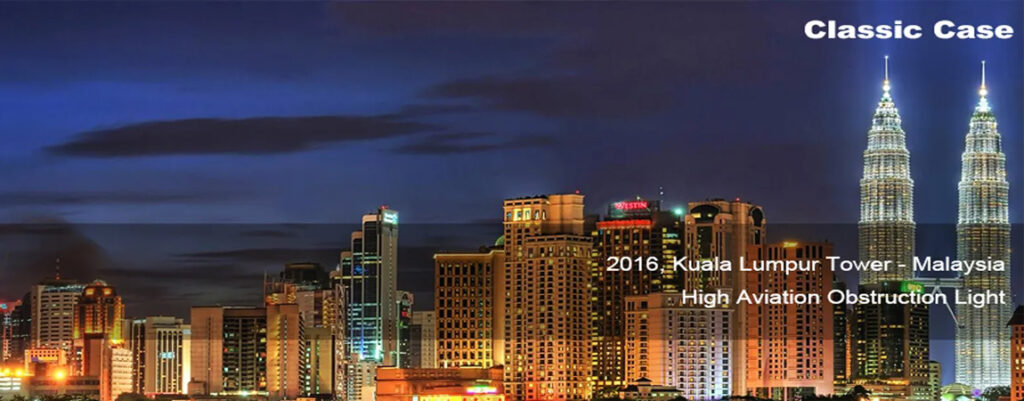
II. Aviation Obstruction Light Installation Scheme for Twin Tower Heights
For supertall buildings like the Twin Towers, reaching a height of 452 meters, a single type of obstruction warning light cannot cover all height levels and weather conditions.
A comprehensive scheme must be adopted, primarily using a high-intensity obstruction light system, supplemented by medium and low-intensity light systems, to construct a complete vertical warning chain from the ground to the top of the tower.
1. Top Area (Highest Point and Antenna Tip): High-intensity Type A White Flash Light
- Applicable Height:
The highest point of the building and a certain range below it (usually referring to the portion above 150 meters).
- Light Type:
High-intensity light Type A, such as the YFFY-HI-A0 aviation obstruction lights
- Light Color & Mode:
White flash. Operating day, dusk, and night, with automatic intensity adjustment (maximum intensity during the day, approximately 200,000 candela; intensity decreases at dusk/night, but still maintains high brightness).
- Installation Location:
The highest point of the Petronas Twin Towers. Due to the complex spire structure of the Twin Towers, lights must be installed at both the highest and second-highest points to ensure the highest outline is visible from any angle.
- Function:
Provides the strongest penetrating warning at long distances (up to 10 kilometers or more) and in severe weather (such as the thunderstorms common in Malaysia).
2. Intermediate Area (150 meters to the top): Medium-intensity lights combined with high-intensity lights
- Applicable Height:
Starting from 150 meters above ground, extending upwards to below the high-intensity lights at the top.
- Lighting Fixture Type:
Option A (Mainstream): Continue using high-intensity Type B or medium-intensity Type A red flashlights.
Considering the height of the Twin Towers, to ensure continuous escort, medium-intensity lights Type A red flashing lights (flash frequency 20-60 times/min, intensity 20,000 candela) will be installed on each floor or specific structural level.
Option B (More stringent): If local regulations are extremely stringent, high-intensity white lights can also be interspersed on intermediate floors, but care must be taken to avoid light pollution to the ground.
- Installation spacing:
Vertical spacing should not exceed 45 meters (generally recommended at 30-45 meters per floor) to ensure no blind spots in the vertical direction.
- Special structural treatment:
The Twin Towers have a skybridge on floors 41-42, approximately 170 meters high. This is a prominent horizontal structure, and medium-intensity or high-intensity obstruction lights must be installed at both ends and the highest point of the skybridge to mark this unique lateral obstruction.
3. Bottom area (ground to 150 meters): Medium/low intensity red obstruction warning lights
- Applicable height: Ground to below 150 meters.
- Lamp Type: Medium-intensity Type B or low-intensity red constant-brightness lamp.
- Light Color and Mode: Constant red or flashing red.
- Function: To mark the lower half of the building’s outline for identification by low-flying helicopters or aircraft during approach.
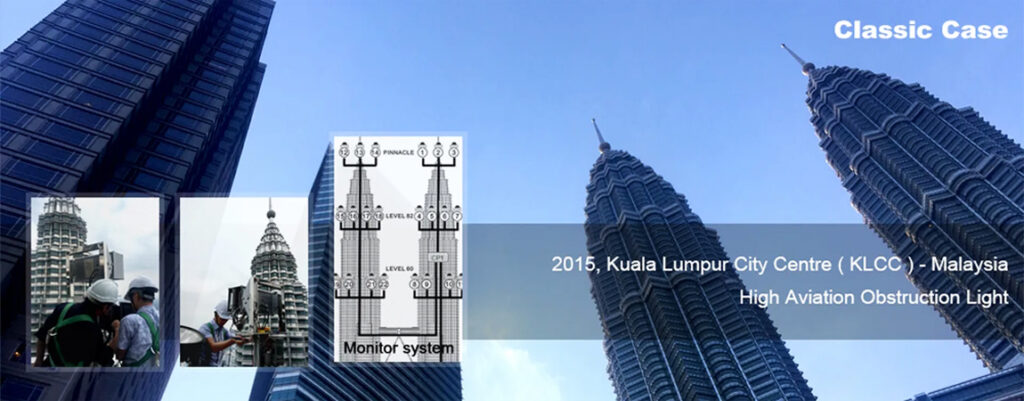
III. Installation Precautions and Technical Requirements
1. Weather Resistance and Corrosion Resistance:
- Kuala Lumpur has a tropical rainforest climate with high temperatures, high humidity, and frequent thunderstorms.
- Lamp fixtures must have an IP68 waterproof and dustproof rating, and the housing must be made of UV-resistant and salt spray-resistant materials (such as die-cast aluminum with a special coating or stainless steel).
- High-efficiency lightning protection modules (SPDs) must be installed to prevent damage to the circuitry from tropical thunderstorms.
2. Redundancy Backup Design:
- Given the importance of the Petronas Twin Towers, critical nodes (especially the high-intensity lights at the top) should employ a dual-head or multi-head redundant design. When the main light fails, the backup light automatically illuminates to ensure continuous operation.
- The power system should be equipped with a UPS (Uninterruptible Power Supply) to prevent light outages caused by mains power fluctuations or brief power outages.
3. Light Pollution Control:
- While high-intensity white lights are required at the top, in nighttime mode, the system should automatically reduce light intensity based on ambient light sensors to meet aviation safety requirements while minimizing light interference to nearby residents and tourists.
4. Maintenance Access and Safety:
- Installation locations must consider ease of future maintenance. The Petronas Twin Towers have window cleaning machine (BMU) tracks on the exterior; lighting fixtures should be installed as close as possible to or within the reach of the BMU to reduce the risks of working at heights.
- Lighting fixtures should be designed to be modular for easy and quick replacement of faulty components.
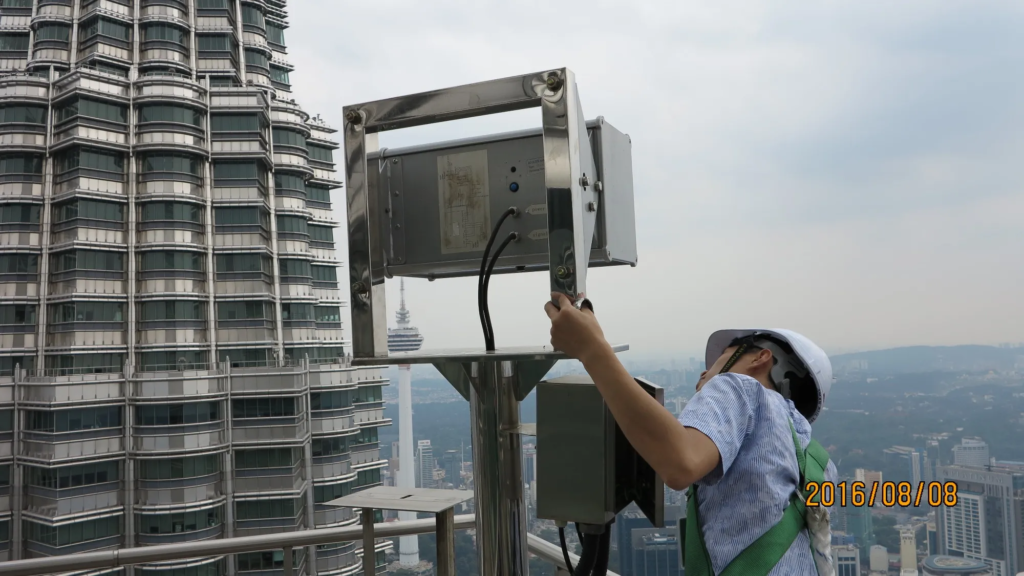
Through this scientifically layered design and stringent installation standards, the Petronas Twin Towers in Kuala Lumpur can maintain their perfect image as a world landmark while ensuring aviation safety.
Since 2015, we have provided aviation obstruction light solutions that meet these stringent standards, ensuring the safe operation of the Twin Towers for over a decade.